Analysts note lack of public top-level communication between US and Israel in recent days and say Biden administration appears to only be reacting to events

People gather near a damaged building at the scene of an Israeli missile strike in the southern suburbs of Beirut, Friday, Sept. 20, 2024. (AP Photo/Bilal Hussein)

People gather near a damaged building at the scene of an Israeli missile strike in the southern suburbs of Beirut, Friday, Sept. 20, 2024. (AP Photo/Bilal Hussein)

WASHINGTON  — The Biden administration is taking a more hands-off approach than usual during a week of dramatic escalation between Israel and the Hezbollah terror group in Lebanon, with top US officials holding back from full-on crisis diplomacy for fear of making matters worse.

The public restraint follows explosions of the terror group’s pagers and walkie-talkies and an Israeli airstrike targeting a senior Hezbollah operative in Beirut, which threaten to spur all-out war between Israel and its enemies in the Middle East and doom already faltering negotiations for a cease-fire in the Hamas conflict in Gaza.

The escalation came even as two Biden administration officials stopped in the region this week to appeal for calm. It heightens the impression that Prime Minister Benjamin Netanyahu’s hard-right government is paying ever less attention to the mediation efforts of its key ally, despite depending on the US for weapons and military support.

“The United States looks like a deer in the headlights right now,” said Brian Katulis, a senior fellow for US foreign policy at the Middle East Institute think tank in Washington. “In terms of words, deeds and action … it’s not driving events, it’s reacting to events.”

There has been no publicly acknowledged US contact with Netanyahu since senior White House official Amos Hochstein visited Israel on Monday to warn against escalation. The first wave of device explosions — widely blamed on Israel, which didn’t acknowledge responsibility — struck the next day.

And Gaza cease-fire negotiations were at such a delicate point that Secretary of State Antony Blinken visited only Egypt in a trip to the region this week because traveling to Israel in support of a deal might cause Netanyahu to say something that undermines the US-led mediation, US officials said.

US Secretary of State Antony Blinken, left, meets with Egypt’s Foreign Minister Badr Abdelatty in El-Alamein, Egypt, Tuesday, Aug. 20, 2024. (Kevin Mohatt/Pool Photo via AP)

Asked if the US still had hope for a deal in Gaza — which the administration calls crucial to calming regional conflict — US President Joe Biden said Friday that he did and his team is pressing for it.

“If I ever said it wasn’t realistic, we might as well leave,” Biden told reporters. “A lot of things don’t look realistic until we get them done. We have to keep at it.”

In the meantime, the White House and State Department have declined to comment publicly on the Hezbollah devices exploding Tuesday and Wednesday, killing at least 37 people and injuring thousands more, including civilians, in what analysts believe was a highly sophisticated Israeli intelligence operation.

Nor would they offer any assessment of an airstrike Friday in a densely populated part of Beirut — the deadliest such strike on Lebanon’s capital in years — which killed a Hezbollah commander. Hezbollah acknowledged at least 14 more of its operatives were killed in the strike, including senior leaders.

Israel and Hamas have followed past rounds of direct US diplomatic outreach with fiery rhetoric or surprise attacks that the US sees as setting back the effort for a truce.

Blinken appeared to loop in the pager explosions as the latest example of that.
When mediators seem to make progress in a Gaza deal, often there’s an “incident, something that makes the process more difficult, that threatens to slow it, stop it, derail it,” Blinken said in Egypt, in response to reporters’ questions about the pager attacks.

A photo taken on September 18, 2024, in Beirut’s southern suburbs shows the remains of exploded pagers on display at an undisclosed location. The pagers were used by Hezbollah and the attack has been blamed on Israel. (AFP)

There may yet be high-level contact with Netanyahu when he travels to New York for next week’s UN General Assembly gathering of world leaders, said US officials with knowledge of the discussions who spoke anonymously to discuss the administration’s strategy. But the officials also acknowledge that the situation has become so precarious that taking a public stance either firmly in support or critical of Israel would probably do more harm than good.

In Washington, State Department spokesman Matthew Miller batted away a question about whether months of Biden administration visits to the Middle East without a cease-fire deal to show for them was making Blinken and other officials look like “furniture” in regional capitals.

“So far, we have been successful of keeping it from turning into an all-out regional war,” Miller said. He credited US messaging — sometimes through intermediaries, to Iran, its proxies in the region and to Israel.

The Biden administration pointed out that Defense Secretary Lloyd Austin has been in contact this week with his Israeli counterpart, Yoav Gallant. Gallant’s job, however, is said to be in jeopardy.

Critics accuse the administration of pushing a deal on Gaza that’s repeatedly failed to win buy-in from the warring sides and has been outpaced by the growth of the conflict. The administration could do more diplomatically, including by working harder to rally Middle Eastern countries to intensify pressure on Israel, Iran and the latter’s proxies to stop fighting, said Katulis, the Middle East Institute analyst.

A Palestinian man rides a donkey-pulled cart in front of buildings heavily damaged in Israeli bombing, in Beit Lahiya in the northern Gaza Strip on September 14, 2024, amid the ongoing war between Israel and the Hamas terror group. (Omar AL-QATTAA / AFP)

US officials rejected assertions that they have given up on either a Gaza cease-fire or preventing the conflict from spreading to all-out war in Lebanon.

“We’d be the first ones to recognize … that we are not closer to achieving that than we were even a week or so ago,” national security spokesman John Kirby said Friday.

“But ain’t nobody giving up,” Kirby said, reiterating that the US was working with fellow mediators Qatar and Egypt to put together a final Gaza proposal to present to Israel and Hamas. “We’re still going to keep the shoulder to the wheel. We’re still going to keep trying on this.”


“Part of the decision is that there is no intention to continue playing this symmetric game that Israel has been playing with Hezbollah so far,” Lt. Col. (res.) Yaron Buskila told Maariv.

 Civil Defense members work near the site of an Israeli strike in the southern suburbs of Beirut, Lebanon, September 20, 2024.  (photo credit:  REUTERS/Mohamed Azakir TPX IMAGES OF THE DAY)
Civil Defense members work near the site of an Israeli strike in the southern suburbs of Beirut, Lebanon, September 20, 2024.
(photo credit: REUTERS/Mohamed Azakir TPX IMAGES OF THE DAY)
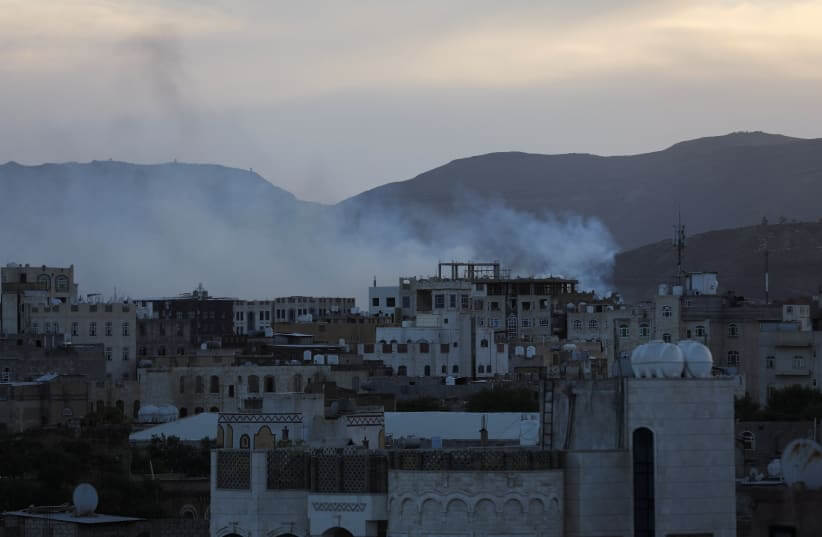
Friday’s IDF strike on Beirut, which killed nearly a dozen members of Hezbollah’s Radwan Force senior commanders, including the unit’s chief, Ibrahim Aqil, sent a message that Israel has decided to “take the gloves off” in its engagements with Hezbollah, Israel Defense and Security Forum CEO Lt. Col. (res.) Yaron Buskila told Maariv in the immediate wake of the strike.

“The strike itself in the Dahiyeh district of Beirut is essentially a statement. It doesn’t matter who the target was. The fact that terrorists were struck in Beirut is a very significant message from Israel to Hezbollah,” Buskila said.

He continued, “Part of the decision is that there is no intention to continue playing this symmetric game that Israel has been playing with Hezbollah so far, and Israel understands that Hezbollah can respond significantly. For Israel, there is readiness for war, and the center of gravity is shifting to northern Israel. The IDF has decided that the Northern Command will become the main arena, while Gaza will become secondary. This is not just an empty statement; it’s a real, significant one, saying we are entering a campaign, even if it means entering a much tougher war.”

Buskila continued, saying, “I think if Hezbollah believed that with the pager and radio attacks, Israel would stop because it didn’t want escalation, the strike in the heart of Dahiyeh is a very clear message to the contrary.”

He went on to say, “Iran and Hezbollah can understand that Israel is determined to move forward, and it’s also a message to the Americans. The Americans don’t want Israel to go into a campaign against Lebanon right now.”

 Rescuers gather next to a destroyed building, after an Israeli strike where a top Hezbollah military commander was targeted, Lebanese authorities said, in Beirut, Lebanon, September 20, 2024. (credit: Reuters TV/AL MANAR TV via REUTERS)Enlrage image
Rescuers gather next to a destroyed building, after an Israeli strike where a top Hezbollah military commander was targeted, Lebanese authorities said, in Beirut, Lebanon, September 20, 2024. (credit: Reuters TV/AL MANAR TV via REUTERS)

“They are focused on maintaining regional stability. However, we are unwilling to accept what has been. What was will not continue to be. Israel is not just saying this in words, but also in actions. We want to return our residents to their homes safely, without the threat of Hezbollah sitting right on the border.”

“Israel will utilize everything at its disposal to strike Hezbollah and restore peace”

In conclusion, he said: ” Negotiations have failed so far, and Hezbollah hasn’t withdrawn or reached any agreements. As a result, we are prepared to use all available force. Even without relying on American munitions—since their supply has diminished, as Kamala Harris clearly stated—Israel will utilize everything at its disposal to strike Hezbollah and restore peace to the northern border.”


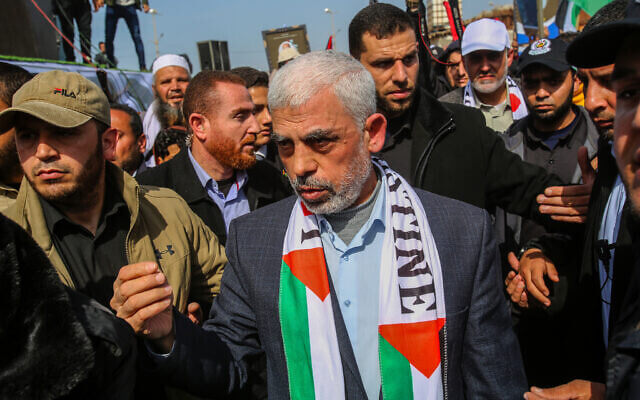
The head of Iranian Ayatollah Khamenei’s office was reported to have also declared that the response to the assassination of Hamas political leader Ismail Haniyeh “is coming soon.”

 Rescuers gather next to a destroyed building, after an Israeli strike where a top Hezbollah military commander was targeted, Lebanese authorities said, in Beirut, Lebanon, September 20, 2024. (photo credit: Reuters TV/AL MANAR TV via REUTERS)
Rescuers gather next to a destroyed building, after an Israeli strike where a top Hezbollah military commander was targeted, Lebanese authorities said, in Beirut, Lebanon, September 20, 2024.
(photo credit: Reuters TV/AL MANAR TV via REUTERS)
The Saudi Al-Hadath channel reported on Friday evening that Prime Minister Benjamin Netanyahu’s advisor spoke with fellow Saudi media outlet Al-Arabiya and said: “Israel has escalated the confrontation with Hezbollah. If Hezbollah does not cease its attacks, we will expand our targets,” following the assassination of Hezbollah official Ibrahim Aqil earlier in the day.

Netanyahu’s advisor was also attributed with saying: “The previous red lines no longer exist.”

A diplomatic source told the Al-Hadath channel that: “Aqil’s assassination is a political and military message (from Israel) that any escalation by Hezbollah will be met with further escalation in the Dahieh neighborhood.” The Lebanese Health Ministry reported that the death toll from the IDF strike has risen to 14 and is expected to increase further.

It was also reported that US Defense Secretary Lloyd Austin told his Israeli counterpart Yoav Gallant: “We are increasingly concerned about the escalation between Israel and Lebanon and fear miscalculations.” However, it was also reported that Austin stated: “We affirm the firm, permanent, and unwavering commitment of the United States to Israel’s security.” Meanwhile, it was reported that the Pentagon announced USS aircraft Harry S. Truman would head to the eastern Mediterranean next Monday.

Global reactions

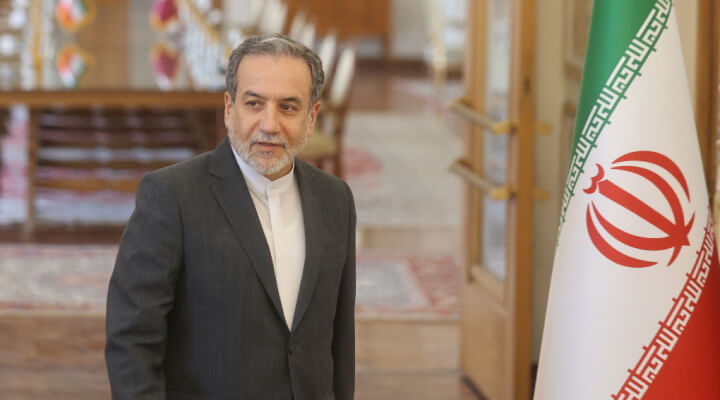
In terms of global reactions to Friday’s events, it was reported that the head of Iranian Supreme Leader Ali Khamenei’s office announced that the response to the assassination of Ismail Haniyeh “will come soon.” According to reports, the spokesperson for the Iranian Foreign Ministry claimed that “the Zionist entity rejects the ceasefire and seeks to escalate tensions and broaden the conflict.”

 People watch Lebanon's Hezbollah leader Sayyed Hassan Nasrallah delivering a televised address, as they sit at a cafe in Beirut, Lebanon September 19, 2024.  (credit: REUTERS/MOHAMED AZAKIR)Enlrage image
People watch Lebanon’s Hezbollah leader Sayyed Hassan Nasrallah delivering a televised address, as they sit at a cafe in Beirut, Lebanon September 19, 2024. (credit: REUTERS/MOHAMED AZAKIR)

In addition, it was reported that French President Emmanuel Macron told Netanyahu that he has a responsibility to prevent escalation on the northern front, to which the Israeli leader replied: “Instead of putting pressure on us, pressure should be applied to Hezbollah.”

Opposition Leader Yair Lapid also attacked Netanyahu following the dramatic events in Lebanon, writing: “Netanyahu, what are the goals? It’s been 11 months of neglect in the South and the North. And the most important act of all – bringing the 101 hostages home. What about that? Only after operational successes do you run to the media. You are responsible for the greatest disaster in the country’s history, and this is your legacy.”