2 officials tell NY Times some systems provided following Iranian request for weapons; Sergei Shoigu, secretary of Russia’s security council, meets Iran’s president in capital

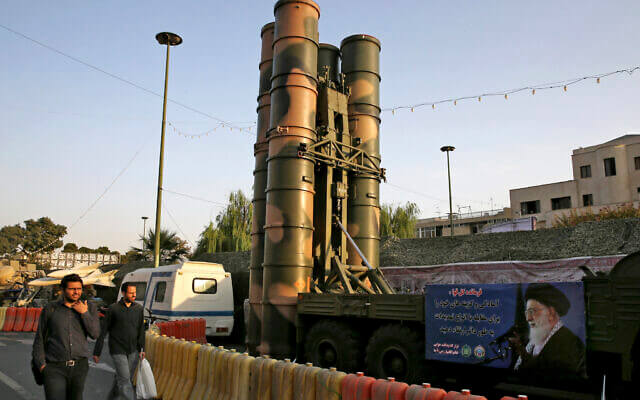
A Russian-made S-300 air defense system sits on display at Baharestan Square in Tehran, Iran, September 24, 2017. (AP Photo/Vahid Salemi, File)

A Russian-made S-300 air defense system sits on display at Baharestan Square in Tehran, Iran, September 24, 2017. (AP Photo/Vahid Salemi, File)

Iranian officials say Russia has begun delivering advanced air defense and radar equipment to Iran after Tehran asked the Kremlin for the arms, the New York Times reported Monday.

While local Iranian media reported that Tehran had requested the equipment, a member of the Islamic Revolutionary Guards Corps and another official confirmed to the Times that not only had the request been made, but that deliveries had started.

The development came with the Middle East on edge at the expectation of a direct Iranian attack on Israel as revenge for Israel’s alleged assassination of Hamas political leader Ismail Haniyeh in Tehran on July 31.

Iran says Israel must be “punished” for Haniyeh’s assassination and has vowed to take action, raising worries that its response could bring the restive Middle East closer to all-out war. Iranian proxy group Hezbollah has also threatened to hit Israel from Lebanon following the assassination of its military leader Fuad Shukr in an attack near Beirut last week claimed by Israel.

Israel has said it is ready to defend itself and will hit back at any aggression. According to a report by the Ynet outlet, at a Sunday meeting, Prime Minister Benjamin Netanyahu discussed with the country’s security chiefs the option of preemptively striking Iran to foil an imminent attack. On Monday, Defense Minister Yoav Gallant said the country must be ready to quickly go on the offensive in the event of an Iranian assault.

The Times report did not say what equipment Iran had requested from Russia or what had been delivered. Iran already has some Russian-made S-300 air defense systems, though Moscow now has the more advanced S-400 system.

In April Iran carried out an unprecedented direct attack on Israel it said was revenge for the killing of a senior army commander in a Syria strike it blamed on Israel. The wave of some 300 missiles and drones was almost entirely intercepted by Israeli air defense systems in cooperation with the US and a roster of allies and Arab countries in the region. It caused only minor damage, though a young Bedouin girl was seriously hurt by falling shrapnel.

At the time, Israel apparently responded by striking an S-300 system near a nuclear site in Iran, though it did not confirm the matter.

Iranian President Masoud Pezeshkian (R) meeting with Russia’s Security Council Secretary Sergei Shoigu, in Tehran, on August 5, 2024 (Iranian Presidential Office / AFP)

The Times report came as Iranian state media said the country’s new President Masoud Pezeshkian told a visiting senior ally of Kremlin leader Vladimir Putin that Tehran is determined to expand relations with its “strategic partner Russia.”

“Russia is among the countries that have stood by the Iranian nation during difficult times,” Pezeshkian told Sergei Shoigu, the secretary of Russia’s security council, Iranian state media report.

In further comments reported during the meeting with Shoigu, Pezeshkian said Israel’s “criminal actions” in Gaza and the assassination of Haniyeh in Tehran last week “are clear examples of the violation of all international laws and regulations.”

Tehran has for years been arming and training proxy groups around the Middle East including Hezbollah, Hamas and Yemen’s Houthis to attack Israel and others.

War erupted on October 7 when Palestinian terror group Hamas led a devastating cross-border attack on Israel that killed 1,200 people, during which terrorists abducted 251 people to the Gaza Strip. Israel responded with a military offensive to destroy Hamas in Gaza and free the hostages.

Russia, which has largely backed Hamas and allied terror groups since the October 7 massacres, has condemned the killing of Haniyeh and called on all parties to refrain from steps that could tip the Middle East into a wider regional war.

Shared positions between Iran and Russia “in promoting a multipolar world will certainly lead to greater global security and peace,” Pezeshkian was quoted saying.

Shoigu was Russia’s defense minister before being moved to the security council in May. He was shown earlier by Russia’s Zvezda television meeting Rear Admiral Ali Akbar Ahmadian, a senior Islamic Revolutionary Guard Corps commander who serves as secretary of the Supreme National Security Council.

A long exposure picture shows the Iron Dome system firing an interceptor at a drone fired from Lebanon in the Golan Heights, August 5, 2024. (Maor Kinsbursky/Flash90)

The day after October 7, Iran’s proxy Lebanese terror group Hezbollah began attacking Israel’s northern border saying it was supporting Gaza. Amid near-daily attacks by Hezbollah including rocket and drone fire that has displaced tens of thousands of people, the Israel Defense Forces has hit back at the group.

The spiraling violence has raised concerns that it could escalate into a second war. Iran and Hezbollah’s vows to avenge the recent assassinations have further jolted those concerns. The US and some countries in the region are frantically trying to de-escalate the situation to prevent a regional war from exploding.
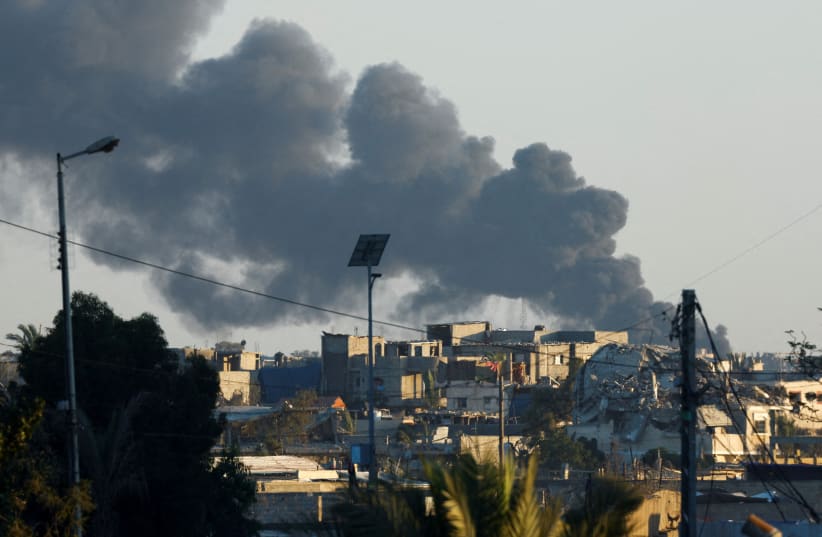
Senior IDF officers have suggested to Gallant and Netanyahu not to wait for an attack from Hezbollah but to initiate another preemptive Israeli strike.

 An Israeli firefighter works to put out a fire in Kiryat Shmona, amid cross-border hostilities between Hezbollah and Israeli forces, in northern Israel July 29, 2024.  (photo credit: REUTERS/AMMAR AWAD)
An Israeli firefighter works to put out a fire in Kiryat Shmona, amid cross-border hostilities between Hezbollah and Israeli forces, in northern Israel July 29, 2024.
(photo credit: REUTERS/AMMAR AWAD)
Amid escalating tensions, senior IDF officers have proposed to the Defense Minister and the Prime Minister to preempt Hezbollah and strike Lebanon. “The chances of escalation on the northern front are increasing. It would be prudent to lead the initiative,” according to a Channel 13 report.

In light of the tense anticipation of Iran and Hezbollah’s response following the assassination of Ismail Haniyeh in Tehran, and Fuad Shukr in Lebanon, senior IDF officers have suggested to Defense Minister Yoav Gallant and Prime Minister Benjamin Netanyahu not to wait for an attack from Hezbollah but to initiate another preemptive Israeli strike, as reported on Channel 13 on Monday evening.

According to the publication, senior IDF officials recently proposed to the political echelon to launch another attack against Hezbollah in Lebanon before a response from the Shia terror group arrives. According to these senior officials, “We must undermine the enemy’s perception that we are waiting for their move.” They also added, “The chances of escalation on the northern front are increasing regardless. It would be wise to be the ones leading this initiative.”

Possible plans for pre-emptive strike presented to top brass

The report states that the proposal was presented yesterday in several discussions with senior political officials. Although the proposal was considered and evaluated, it has not yet been accepted by the political echelon. The Prime Minister’s Office has not commented, and the IDF spokesperson stated that they do not comment on classified discussions.

Last week, the IDF assassinated Nasrallah’s right-hand man, Fuad Shukr, in Beirut in response to the disaster in Majdal Shams, where 12 children were killed by a direct hit from a Hezbollah rocket on a soccer field.

 Members of Hezbollah carry the coffin of Fuad Shukr, a senior Hezbollah commander who was killed by an Israeli strike on Tuesday, during his funeral in Beirut's southern suburbs, Lebanon August 1, 2024.  (credit: REUTERS/Alkis Konstantinidis TPX IMAGES OF THE DAY)Enlrage image
Members of Hezbollah carry the coffin of Fuad Shukr, a senior Hezbollah commander who was killed by an Israeli strike on Tuesday, during his funeral in Beirut’s southern suburbs, Lebanon August 1, 2024. (credit: REUTERS/Alkis Konstantinidis TPX IMAGES OF THE DAY)

Hezbollah confirmed Shukr’s death about a day after the attack. The following day, Hezbollah Secretary-General Hassan Nasrallah gave a speech. In his speech, Nasrallah stated that the war “has entered a new and open phase” on all fronts, including Gaza, southern Lebanon, Yemen, Iraq, and Iran.

He added, “Hezbollah’s red line continues to rise with each assassination it encounters,” and claimed, “We are in a new phase of confrontation. The Israelis rejoiced – now they will cry.”


Blinken emphasized that the US believes that Iran and Hezbollah will retaliate, but unlike the Iranian strike against Israel on April 13, the possible scenarios are less clear.

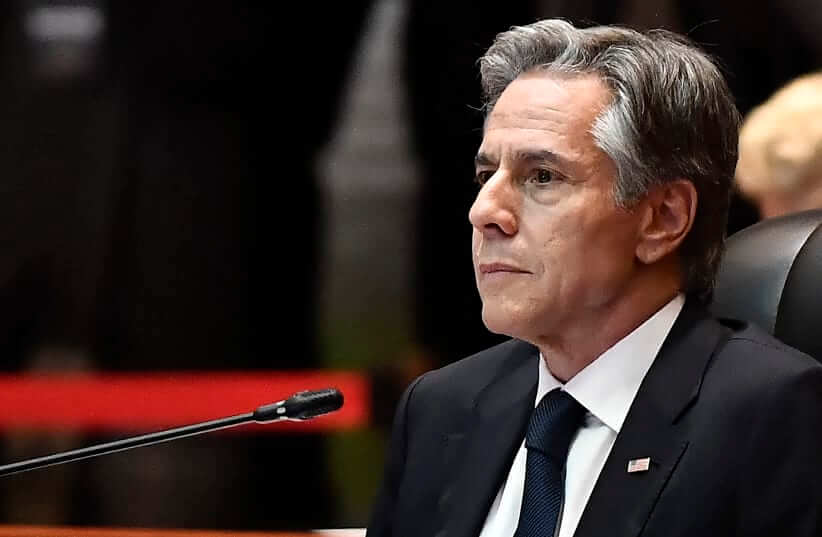
 US Secretary of State Antony Blinken takes part in the 14th East Asia Summit Foreign Ministers' Meeting during the 57th Association of Southeast Asian Nations (ASEAN) Foreign Ministers' Meeting in Vientiane on July 27, 2024. (photo credit: SAI AUNG MAIN/AFP via Getty Images)
US Secretary of State Antony Blinken takes part in the 14th East Asia Summit Foreign Ministers’ Meeting during the 57th Association of Southeast Asian Nations (ASEAN) Foreign Ministers’ Meeting in Vientiane on July 27, 2024.
(photo credit: SAI AUNG MAIN/AFP via Getty Images)
An attack by Iran and Hezbollah against Israel could begin as early as Monday, US Secretary of State Antony Blinken told his counterparts from the G7 countries in a Sunday conference call, Walla reported on Monday, citing three officials familiar with the matter.

The purpose of the call was allegedly to coordinate US’s closest allies and make last-minute attempts to put diplomatic pressure on Iran and Hezbollah to minimize their retaliatory actions.

Separately on Sunday, three US and Israeli officials also told Axios reporter Barak Ravid that the attack could occur on Monday. An Israeli official also told CBS News that while Iran’s April 13 attack was mostly thwarted, Israel was anticipating a “more aggressive” retaliation this time around.

The sources told Walla that, in his meeting, Blinken emphasized that the US believes that Iran and Hezbollah will retaliate, but unlike the Iranian strike against Israel on April 13, the possible scenarios are less clear.

Blinken said that the US does not know the exact timing of the attacks but stressed that they could begin as early as the next 24-48 hours – that is, starting on Monday, the sources told Walla.


(L-R) Ismail Haniyeh, Antony Blinken seen over an anti-Israel mural in Tehran, Iran (credit: VIA REUTERS)Enlrage image
(L-R) Ismail Haniyeh, Antony Blinken seen over an anti-Israel mural in Tehran, Iran (credit: VIA REUTERS)

In the April 13 attack, Israel was assisted by the United States, Great Britain, France, Qatar, Egypt, Jordan, Saudi Arabia, the United Arab Emirates and Bahrain in intercepting the Iranian drones and missiles. The coalition successfully intercepted 99% of the missiles.

On Monday morning, Western diplomats told KAN that it would be possible to restore the regional coalition that confronted the April attack. The diplomats told the Israeli state broadcaster there was no reason the parties would not cooperate again and that “everyone has an interest that the event does not turn into a regional war.”

US attempts to deescalate

The sources said to Walla that Blinken asked the other foreign ministers to exert diplomatic pressure on Iran, Hezbollah, and Israel to exercise maximum restraint.

Blinken also told G7 foreign ministers that the buildup of US forces in the region was for defensive purposes only, the sources said.

It was announced on Sunday that the US military will deploy additional fighter jets and Navy warships to the Middle East, the Pentagon said on Friday, as Washington seeks to bolster defenses following threats from Iran and its allies Hamas and Hezbollah.

According to the sources, Blinken said that the goal is to limit the impact of the attacks by Iran and Hezbollah on Israel and emphasized that this is the best way to prevent an all-out war.

One source who was in the conversation said that Blinken sounded frustrated when he briefed the other ministers on the talks with Israel regarding the hostage deal and a Gaza ceasefire.

“We felt we were close to a breakthrough in the Gaza deal, but then the assassination happened in Tehran. Now we need the deal more than ever,” Blinken said.

American Defense Minister Lloyd Austin spoke on Monday with Defense Minister Yoav Gallant. He reiterated the firm support of the United States for Israel’s security and its right to self-defense against the threats from Iran, Lebanon, Hezbollah, the Houthis, and other terrorist organizations supported by Iran. They discussed the reinforcement of American forces, which they said are needed to protect US personnel, support the defense of Israel, and deter and reduce tensions in the region.

Austin also expressed his firm support for a ceasefire in Gaza and a deal to release the hostages.

The commander of the US Army’s Central Command, General Michael Korilla, arrived in Israel on Monday to finalize coordination with the IDF in preparation for the possible attack by Iran and Hezbollah, senior Israeli officials said.

Preparations on the Home Front

The G7 ministers reportedly expressed concern at the “heightened tension” in the region and called on “all involved parties once again to refrain from perpetuating the current destructive cycle of retaliatory violence, to lower tensions and engage constructively toward de-escalation.”

US Secretary of State Antony Blinken with the assorted foreign ministers of the G7 FOreign Ministers during NATOs 75th anniversary summit in Washington, US, July 11, 2024. (credit: REUTERS/KEN CEDENO)Enlrage image
US Secretary of State Antony Blinken with the assorted foreign ministers of the G7 FOreign Ministers during NATOs 75th anniversary summit in Washington, US, July 11, 2024. (credit: REUTERS/KEN CEDENO)

Prime Minister Benjamin Netanyahu held a meeting on Sunday night with Defense Minister Gallant and the heads of the military and the intelligence community to discuss the impending attack by Iran and Hezbollah and the possible Israeli response, senior Israeli officials said.

“Iran and its agents are looking to surround us with a stranglehold of terror. We are determined to stand up to them on every front and in every arena – near and far. Whoever seeks to harm us will pay a very heavy price,” Netanyahu said on Sunday.

An Israeli official told NBC news on Monday that Israel is preparing to endure a multi-day attack from Iran and Hezbollah.

“They’ll just try to wear us out,” the official told NBC, adding that, as opposed to Iran’s attack in April, the coming attacks could span several days as Hezbollah fires at Israel from the north and Iran launches longer-range weapons from the east.

The regional picture

Other countries in the region are also preparing for a dramatic escalation and are making efforts to try and prevent it. Multiple countries, such as Japan and Turkey on Monday morning, have asked citizens to leave Lebanon due to fear of escalation.

Jordanian Foreign Minister Ayman Safadi made a rare visit to Tehran on Sunday – the first such visit by a Jordanian foreign minister in almost a decade.

Jordan is allegedly concerned zbout an Iranian missile and drone attack that would be expected to pass through its airspace.

During the attack on April 13, Jordan intercepted Iranian drones that were making their way towards Israel and allowed American and Israeli fighter jets to use its airspace to intercept Iranian drones and cruise missiles.Safadi met with the acting Iranian Foreign Minister Ali Bagheri and conveyed him a message from King Abdullah II to the President of Iran, according to a statement from the Jordanian Ministry of Foreign Affairs.

“I came to express concern about the escalation in the region. I did not come here to convey a message from Israel or to receive a message from Israel,” Safdi said after his meeting in Tehran.

Several Iranian officials vowed that the country would avenge Hamas leader Ismail Haniyeh’s assassination, as Israel remains on high alert for a potential attack and the United States is sending additional forces to the region.

Iran’s Islamic Revolutionary Guards Corps said on Saturday that revenge would be “severe and at an appropriate time, place, and manner,” blaming the “terrorist Zionist regime” for Haniyeh’s death.