

The report notes that Tehran has enriched enough uranium to 60 percent purity for at least three bombs and has ‘cemented its role as a threshold nuclear state’


Iranian Supreme Leader Ayatollah Ali Khamenei, right, visits an exhibition of the country's nuclear achievements, at his office compound in Tehran, Iran, June 11, 2023. (Office of the Iranian Supreme Leader, via AP, File)

Iranian Supreme Leader Ayatollah Ali Khamenei, right, visits an exhibition of the country’s nuclear achievements, at his office compound in Tehran, Iran, June 11, 2023. (Office of the Iranian Supreme Leader, via AP, File)

Iran’s leadership is conducting a “strategic debate” over whether the time has come for it to start making nuclear weapons, The New York Times reported on Thursday, citing four Iranian officials, including diplomats and members of Iran’s powerful Islamic Revolutionary Guard Corps.

Pointing out that three senior officials close to Iran’s Supreme leader Ali Khamenei have publicly declared in recent weeks that Iran’s ostensible no-nuclear-weapons doctrine is reversible if the country deems itself to be facing an existential threat, the Times reported that Iran’s “power circles” are discussing whether it is “time to weaponize the nuclear program and build a bomb.”

It noted that Iran has enriched enough uranium to 60 percent purity for at least three bombs. It has also installed 1,400 “next-generation centrifuges” at its Fordow enrichment facility in recent weeks, and would thus be able to double that inventory in weeks or months should it so choose. (Uranium enriched to 60% can be converted to bomb-grade fuel in days or weeks, the report stated.)

The Fordow facility is buried so deep, the report added, quoting military officials, that it would require “repeated, precise strikes by the United States’ largest “bunker buster” to reach down that deep.

Citing interviews with a dozen American, European, Iranian and Israeli officials, and with outside experts, the Times assessed that Iran has now “cemented its role as a ‘threshold’ nuclear state, walking right up to the line of building a weapon without stepping over it.”

An Iranian technician works at the Isfahan Uranium Conversion Facilities, February 3, 2007. (AFP PHOTO/ BEHROUZ MEHRI)

While US officials told the paper there is no evidence of a current Iranian effort to weaponize the uranium, “Israelis argue that such efforts are indeed underway, under the guise of university research.”

The Times tied Iran’s recent “nuclear expansion” to its unprecedented missile and drone attack on Israel in April, and said some of Iran’s leaders believe that attack, which was almost entirely thwarted by Israel and US-led allies, underlined “the need for a far more powerful deterrent.”

“Even though it would still take more than a year to actually produce a weapon,” the Times said, “the question is whether American or Israeli spy agencies would detect the move and be able to stop it.”

If Iran had been enriching uranium at current levels a few years ago, when the region was not as tense as it is today, “Israel would almost certainly be considering military options to strike Iran’s nuclear facilities,” the paper further said, citing a European diplomat involved in discussions with Iran.

On Tuesday, at a meeting at the Pentagon with US Defense Secretary Lloyd Austin, Defense Minister Yoav Gallant, in public comments in English, said that “time is running out” in the fight to prevent Iran from obtaining nuclear weapons, and stressed that Israel and the US must work together to prevent the threat from being actualized.

“The greatest threat to the future of the world and the future of our region is Iran,” Gallant said. “Now is the time to realize the commitment of the American administrations over the years to promise to prevent Iran from possessing nuclear weapons.”

According to an Axios report yesterday, citing three Israeli officials, Prime Minister Benjamin Netanyahu reestablished a series of working groups two weeks ago to deal with Iran’s nuclear program, amid concern that the Islamic Republic could aim to move toward the bomb as early as January.

The renewed attention to Iran’s nuclear program came after new intelligence indicated that Iran could be looking to “shorten the timetable” for going nuclear, according to Yaakov Nagel, a former national security adviser who remains close to the prime minister.

The Iranian research is taking place “under an academic umbrella,” Nagel said, and is believed to be without official approval from Supreme Leader Ali Khamenei. Intelligence officials in the US and Israel believe that Khamenei knows of the activity but is seeking to preserve a measure of deniability, he said.

Netanyahu re-establishes working groups on Iran nuclear program

Netanyahu re-establishes worki

Officials tell Axios that Netanyahu two weeks ago re-established working groups made up of members of Israel’s defense establishment, the Ministry of Foreign Affairs and the intelligence community to focus on Iran’s nuclear program.

Benjamin Netanyahu

Benjamin NetanyahuChaim Goldberg/Flash 90

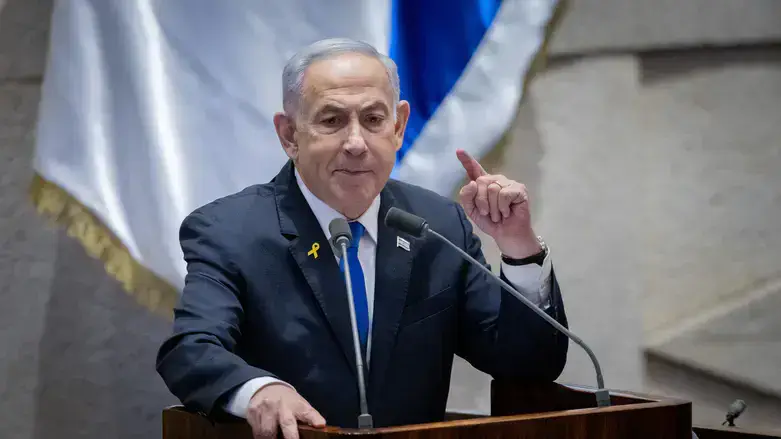
Prime Minister Benjamin Netanyahu two weeks ago re-established working groups made up of members of Israel’s defense establishment, the Ministry of Foreign Affairs and the intelligence community to focus on Iran’s nuclear program, three senior Israeli officials told Axios’ Barak Ravid on Wednesday.

Israel and the US are concerned Iran will try to advance its nuclear technology, including weaponization efforts, in the weeks leading to the US presidential elections, according to two Israeli and two US officials.

Israeli and US officials said US leaders’ attention might be divided between the campaign and the continued crisis in Gaza, and the US could struggle to respond quickly to any Iranian nuclear advances during this period.

The officials also said there is concern Iranian leaders might try to use the post-election transition period in the US to “break” towards a nuclear weapon.

One U.S. official said the US intelligence community still thinks Iran is not actively pursuing a nuclear weapon but it has taken provocative nuclear steps “that will not go unchallenged.”

Senior Israeli officials told Axios that Netanyahu’s directive to national security adviser Tzachi Hanegbi to re-establish the teams came after a period of about a year and a half during which the working groups were frozen.

News of the working groups being re-established follows recent concerning reports from the International Atomic Energy Agency (IAEA) on Iran’s nuclear program.

The IAEA’s most recent report determined that Iran has started up new cascades of advanced centrifuges and plans to install others in the coming weeks after facing criticism over its nuclear program.

That report came a day after the IAEA said that Iran has rapidly installed extra uranium-enriching centrifuges at its Fordow site.

The IAEA released a report at the end of May which found that Iran has further increased its stockpile of uranium enriched to near weapons-grade levels.

Previously, the IAEA found that, between June and November last year, Iran slowed down the enrichment to 3 kg per month, but that jumped back up to a rate of 9 kg at the end of the year.

That move was part of Iran’s scaling back of its compliance with the 2015 nuclear deal it signed with world powers, in response to then-US President Donald Trump’s withdrawal from the deal in 2018.


ng groups on Iran nuclear program


Syrian army says the Israel Air Force struck several targets in the south of the country. Sources say the strike targeted a structure belonging to the pro-Iranian militias.

Syrian sources on Wednesday evening reported an air strike on the outskirts of Damascus.

The reports said that the country’s air defense systems had been activated following the strike.

Sources in Syria identified with the regime and the opposition attributed the attack to Israel.

The strike took place in the town of Sayyidah Zaynab, where there is extensive activity by pro-Iranian militias, members of the Iranian Revolutionary Guards and the Hezbollah terrorist organization.

The Syrian army reported that shortly before midnight, the Israel Air Force launched an attack from the direction of the Golan Heights against several targets in the south of the country.

The army also claimed that two Syrians were killed, a soldier was injured, and property was damaged. It added that the air defense systems intercepted some of the missiles.

Sources identified with the opposition said the strike targeted a structure belonging to the pro-Iranian militias.

Another report said that, near the time of the strike in Damascus, a radar position of the Syrian army was struck in As-Suwayda.

Last Friday night, Arab-language media reported an air strike in Al Bukamal in Syria, located near the border with Iraq.

Explosions were heard in the area following the strike.

Al-Arabiya TV reported that the strike targeted what was described as “military headquarters”. Other reports said a weapons truck was attacked as well.

In May, Syrian media reported that eight Syrian soldiers were injured in air strikes that targeted a building in the Damascus area and which were attributed to Israel.