CSA released its “Abraham Accords Expansion Opportunities: Middle East Analysis” report on October 8, assessing nine Muslim-majority countries without formal diplomatic
Prime Minister Benjamin Netanyahu, US President Donald Trump, Foreign Affairs Minister of Bahrain Abdullatif bin Rashid Al Zayani, and Foreign Affairs Minister of the United Arab Emirates Abdullah bin Zayed bin Sultan Al Nahyan participate in the signing ceremony of the Abraham Accords.(photo credit: Alex Wong/Getty Images)ByTHE MEDIA LINE STAFF
The Council for a Secure America (CSA) has ranked Kuwait as the Middle Eastern country most likely to join the Abraham Accords, followed by Lebanon and Syria, as changing political and security conditions reshape prospects for normalization with Israel.
CSA released its “Abraham Accords Expansion Opportunities: Middle East Analysis” report on October 8, assessing nine Muslim-majority countries without formal diplomatic relations with Israel: Kuwait, Lebanon, Syria, Saudi Arabia, Oman, Qatar, Iraq, Yemen, and Iran.
More than 80% of Israelis surveyed by CSA in June 2026 support the Abraham Accords, which established relations between Israel and the United Arab Emirates, Bahrain, Morocco, and Sudan in 2020.
CSA Executive Director Jennifer Sutton said recent events have “reinforced the need for America’s continued engagement in the region.”
The rankings were based on expert analysis, primary and secondary sources, and CSA polling. Researchers examined domestic political power, government structures, public opinion, statements by political leaders, relations with Israel and the United States, regional alliances, economic and energy interests, and ongoing conflicts. CSA said the rankings measure both governments’ willingness and political ability to normalize relations and could change as regional conditions evolve.
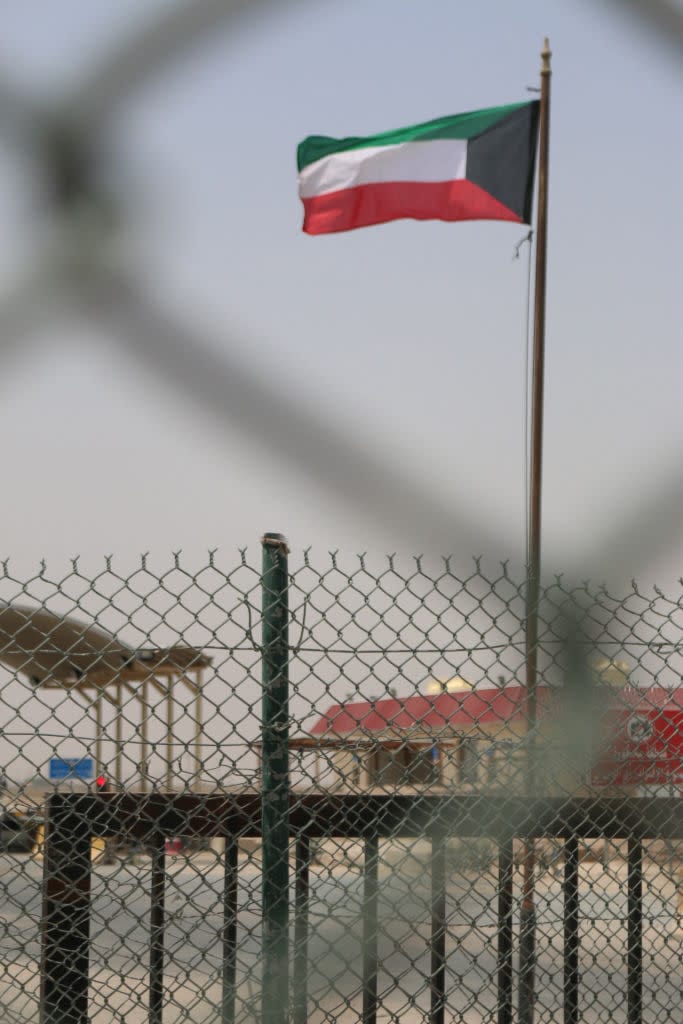
A Kuwaiti flag flutters on the Gulf emirate’s side of the Safwan border crossing with Iraq, south of the Iraqi port city of Basra, on July 17, 2014. (credit: HAIDAR MOHAMMED ALI/AFP via Getty Images)
Kuwait thought to be closest to normalization with Israel, CSA survey shows
Kuwait ranked first despite its longstanding opposition to normalization and laws barring trade with Israel. CSA pointed to
Mishal Al-Ahmad Al-Jaber Al-Sabah’s growing authority since suspending parliament in May 2024, closer ties with the UAE, and strong security ties with Washington. Kuwait also came under Iranian attack during the 2026 Iran War. Israel’s ambassador to the UAE, Yossi Shelley, said in September that Kuwait could join the accords within six months.
Lebanon placed second following significant diplomatic activity with Israel. The countries signed a US-brokered “Trilateral Framework” in June under which Lebanon recognized Israeli sovereignty for the first time, followed by additional talks. CSA polling found 41% of Lebanese believed peace with Israel was likely, although only 32% supported normalization. Hezbollah’s continued presence and failure to fully disarm remain major obstacles.
Syria ranked third after talks with Israel accelerated following the fall of the Assad regime. President Ahmed al-Sharaa said in September that the countries had “almost reached agreements on 90%” of their outstanding issues, with a security agreement potentially preceding peace negotiations. CSA found 54% of Syrians believed peace was likely, 53% supported a security arrangement and 46% supported normalization. The dispute over the Golan Heights remains a key obstacle.
Saudi Arabia, previously seen as a leading candidate for normalization, has moved further away since October 7, 2023, and the 2026 Iran War. Crown Prince Mohammed bin Salman said in November 2025 that he was prepared to work toward joining the accords, but CSA said the Iran war and concerns over Israel’s regional alliances have made Riyadh increasingly wary.
Oman has also become less likely to normalize despite a history of contacts with Israel. Sultan Qaboos bin Said hosted several Israeli leaders, but under Sultan Haitham bin Tariq, Oman has repeatedly rejected normalization and strengthened its role as a mediator with Iran and other regional actors.
Full normalization with Qatar dependent on peace agreement with Palestinians
Qatar maintains working contacts with Israel and serves as a mediator between Israel and Hamas, but says full diplomatic relations depend on an Israeli-Palestinian peace agreement. CSA said Doha’s ties with Iran and support for the Muslim Brotherhood make accession to the accords unlikely in the near term.
Iraq remains an unlikely candidate because of Iranian influence and a 2022 law criminalizing normalization with Israel. CSA singled out Iraqi Kurdistan as an exception, citing its longstanding contacts with Israel and greater public openness toward diplomatic relations.
Yemen’s continuing civil war makes normalization highly unlikely. The Iran-backed Houthis are actively hostile to Israel, while other Yemeni factions have previously expressed openness to relations. CSA said a future postwar government could reconsider the issue, but little movement is possible while the country remains divided.
Iran ranked last. Relations with Israel ended after the 1979 Islamic Revolution, and decades of hostility have developed into direct warfare. CSA concluded that normalization is not possible under Iran’s current regime.
The IDF said precision munitions and aerial surveillance were used to reduce the risk of civilian harm
i24NEWS
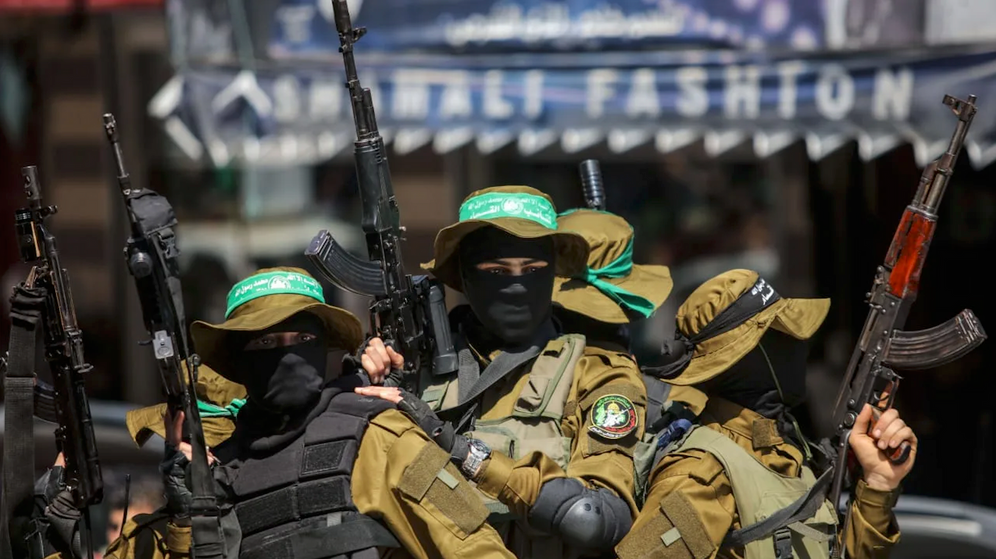
Masked gunmen from the Qassam brigade, the militia wing of Hamas in Gaza CityWissam Nassar/Flash90
Israeli forces struck three weapons storage facilities, a rocket launch site and an observation command center across the Gaza Strip over the past 24 hours, the Israel Defense Forces and Israel Security Agency said.
The facilities held dozens of weapons, including rockets, explosive devices, mortars and Kalashnikov rifles, along with other combat equipment, according to the joint statement.
Recommended
In Daraj Tuffah, forces targeted an observation command center that the agencies said Hamas used to direct activities against Israeli troops operating nearby. A rocket launch site was also struck in the Al-Furqan area.
The IDF and ISA said residents received advance warnings before the strikes. They said precision munitions and aerial surveillance were used to reduce the risk of civilian harm.
The agencies said operations would continue to disrupt Hamas’s military capabilities and prevent the rebuilding of infrastructure or stockpiling of weapons.
Inside Gaza: The IDF’s mission three years after October 7
Israeli forces under the Southern Command remain deployed in the area in accordance with the agreement, the statement said, and will continue to act against immediate threats.
Prime Minister Benjamin Netanyahu warned that Hamas may try to influence Israel’s October 27 election with attacks, saying Israel would thwart such efforts and respond with “tremendous force.”
Prime Minister Benjamin Netanyahu gives an address at the October 7 memorial ceremony on Mount Herzl, Jerusalem, October 5, 2026.(photo credit: MARC ISRAEL SELLEM/THE JERUSALEM POST)ByJERUSALEM POST STAFF Updated: Prime Minister Benjamin Netanyahu warned Hamas on Tuesday against attempting attacks ahead of Israel’s October 27 Knesset election, saying Israel would thwart such efforts and respond with “tremendous force” if the terrorist organization tried to influence the vote.
“Precisely because Hamas is so weak, it will try to challenge us with the remnants of its forces ahead of the elections in an attempt to influence them,” Netanyahu said at the opening of the cabinet meeting.
“We are prepared for this. First and foremost, we will thwart such attempts, and in any event, we will respond with tremendous force if they make that mistake,” he added.
Netanyahu opened his remarks by commemorating those killed in the October 7 massacre and the war that followed.
Prime Minister Benjamin Netanyahu and President Isaac Herzog attend the October 7 memorial ceremony on Mount Herzl, Jerusalem, October 5, 2026. (credit: MARC ISRAEL SELLEM/THE JERUSALEM POST)“On the eve of October 7, we remember with sorrow and pain our heroes who fell in the Israel-Hamas War, and our brothers and sisters who fell in the horrific massacre in the Gaza border communities,” he said.
“Women, men, children, babies who were murdered and burned by the Hamas monsters. In the past three years, we have eliminated 4,000 of those 6,000 monsters. None of them has immunity. We will reach them all, and Hamas rule in Gaza will be eradicated,” Netanyahu continued.
Netanyahu: Two major developments have occurred since Oct. 7 massacre
The prime minister said that two major developments had taken place over the three years since the Hamas-led October 7, 2023, terror attack.
“First, we turned the tables. The State of Israel is the strongest country in the Middle East, and our enemies are weaker than ever,” he said.
“Second, over these three years, the Tekuma region has come back to life. Ninety percent of the residents have returned to their homes, and many others have joined them. There is tremendous momentum in construction and rehabilitation across the Gaza border communities, cities, kibbutzim, and moshavim. Young couples are coming there to begin new lives. This is the victory of the spirit over evil, the victory of Israel over its enemies.”
The government’s Tekuma Administration said in July that more than 1,000 rehabilitation projects had been carried out in the Gaza border region, with the remaining displaced communities progressing toward their returns as part of the continued reconstruction of communities devastated on October 7.
“The exact same thing is happening in the North,” Netanyahu added. “I say to all our enemies: Look at what we did to you on seven fronts in the war. Don’t mess with us.”