President seems to contradict Kushner who touted ‘robust’ talks with Iran a day earlier; Trump claims Strait of Hormuz open and de-mined, despite limited traffic amid fears of Iranian strikes
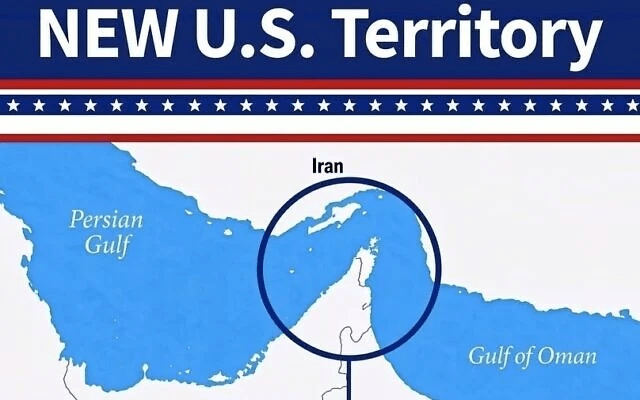
A map posted by US President Donald Trump, showing the Strait of Hormuz as a “New US Territory,” August 18, 2026. (Via Truth Social)
US President Donald Trump said Tuesday that no talks with Iran are under way or scheduled, as he posted a map showing the Strait of Hormuz as a new American territory in a fresh jibe at Tehran.
“There are no talks or conversations going on, or scheduled, with the Islamic Republic of Iran. The Naval Blockade remains in full force and effect,” Trump wrote on his Truth Social network.
A day earlier, Fox News said Trump had confirmed to the network that the US had a backchannel with Iran’s Islamic Revolutionary Guard Corps and that officials in Washington were speaking directly with IRGC officials.
On Monday, the president’s senior aide and son-in-law Jared Kushner spoke of “robust” conversations between the US and Iran, while acknowledging that Tehran wasn’t yet ready to make a deal that is satisfactory to Washington.
But on Tuesday, Trump denied the talks. He also wrote that the US blockade of Iran’s ports remained in place, and claimed that the Strait of Hormuz was “open and operating,” even though ship traffic is down dramatically compared to before the war.
Trump additionally declared that “all water mines have been removed or detonated,” though he has made a number of contradictory claims regarding whether or not mines were ever planted in the first place in the strait, a key waterway for the global supply of oil.
US President Donald Trump speaks as he meets with lifeguard Ryder Williams in the Oval Office of the White House, August 17, 2026, in Washington. (AP Photo/Manuel Balce Ceneta)
Separately, the US president posted a map on his Truth Social platform showing the Strait of Hormuz as “NEW U.S. Territory,” pressing his threat to claim sovereignty over the vital waterway.
It was unclear how serious Trump was about the move, as he has repeatedly issued sweeping threats against Tehran during the negotiation period that were not ultimately carried out.
Iran has effectively shut down the chokepoint, through which a fifth of the world’s oil transits, in retaliation for the war Trump started along with Israel in late February.
The American leader first raised the idea of a US takeover on Friday, saying he would soon declare it to be US territory. He revisited the idea again Monday in comments to reporters in the Oval Office, suggesting it would be a good idea.
Before the Iran war erupted on February 28, the Strait of Hormuz was an open, international waterway.
Iran says it will not reopen the strait until Washington meets a sweeping list of demands including ending the US blockade of Iran’s ports, lifting oil sanctions, freeing up frozen Iranian assets and paying war damages.
“I want to state clearly that the Strait of Hormuz will not be opened until the American commitments stipulated in the memorandum of understanding… are implemented,” Iran’s top negotiator Mohammad Bagher Ghalibaf said in a speech broadcast on state television.
A source familiar with the details told The Jerusalem Post that Israel recently provided the US with intelligence on attempts by Syria to build up its military capabilities.
Abu al-Duhur base is seen following reported Israeli strikes, Syria, August 18, 2026(photo credit: REUTERS/STRINGER)ByAVI ASHKENAZI , JERUSALEM POST STAFFAUGUST 18, 2026 10:06Updated: AUGUST 19, 2026 07:53
The Syrian government and US Envoy to Iraq and Syria Tom Barrack accused Israel on Tuesday of carrying out overnight strikes on the Abu al-Duhur military airfield in Idlib province in northwestern Syria, calling the attacks an unnecessary escalation that threatens regional stability.
On Tuesday evening, the Prime Minister’s Office released a statement on X/Twitter appearing to take credit for the strike.
“Israel and Syria agreed to a status quo in security matters, which Syria was on the verge of breaching by permitting Turkish troops to deploy at an airbase near Aleppo,” the post read.
“Israel repeatedly warned Syria that such a deployment would pose a threat to Israel’s security. Syria chose to ignore these warnings,” it continued, adding that “Israel will not tolerate threats to its security, and would welcome a return to the status quo.”
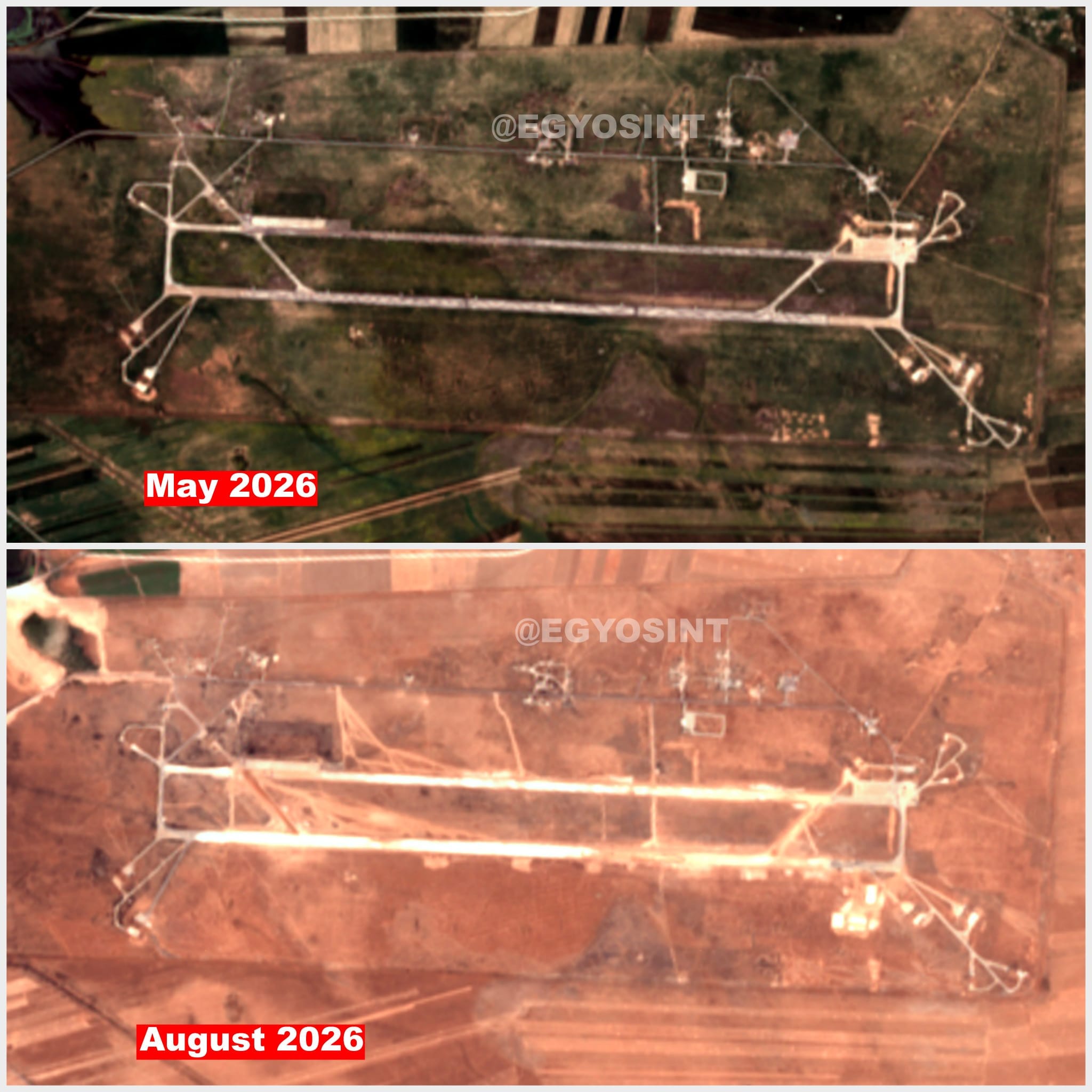
Satellite imagery shows significant activity at the Abu al-Duhur airbase in the months before it was struck overnight, August 18, 2026 (credit: SCREENSHOT/VIA SECTION 27A OF THE COPYRIGHT LAW)
Specifically, Israel made several attempts to reach an understanding with Syrian President Ahmed al-Sharaa via indirect dialogue, a source in Israel’s security establishment told KAN News. Israel only took action against the Syrian base once those talks fell through, the source added.
A diplomatic source in the Syrian Foreign Ministry later denied claims that Israel tried to reach an agreement with Syria, KAN reported, citing Al Jazeera.
A Turkish source told Axios that the country had no military presence on the base.
“Israel is inventing pretexts to bomb neighboring countries and destabilize the region,” they told the outlet.
“The Syrian Arab Republic condemns in the strongest terms the Israeli airstrikes targeting Abu al-Duhur Military Airbase in Idlib Governorate, and considers them an unjustified act of aggression, a flagrant violation of Syria’s sovereignty and territorial integrity, and a dangerous escalation that threatens security and stability in the region,” a statement from the Syrian Foreign Ministry read.
The strikes demonstrate Israel’s “attempts to undermine these efforts and drag the region toward further tension and instability,” it added.
Barrack echoed the Syrian statement, and noted that the US is “deeply concerned” about the airstrikes in a post to X/Twitter.
He added that the strikes “constitute an unnecessary escalation that does not advance regional stability,” and that Syrian President Ahmed al-Shaara’s government has “neither adopted a predatory posture nor maintained proxy forces. It has, in fact, repeatedly indicated a preference for de-escalation with Israel.”
“Enduring de-escalation agreements are built through sustained dialogues with all concerned nations and principals.”
“The United States continues to believe that restraint and engagement offer the more constructive course. We encourage all parties to prioritize logical discourse over further military incidents,” he wrote.
Some US officials believe the strike was carried out in part due to Israel’s upcoming elections, Axios reported on Tuesday.
Strikes reportedly target Syrian base’s runway
Earlier in the day, Arab media reported that four aircraft carried out the strikes, which took place about 70 km. from the Turkish border.
A correspondent for the Qatari Al Jazeera network reported that the four strikes targeted the runway of the military base, located in the eastern Idlib countryside.
The network’s correspondent in Damascus said that information about the incident remained scarce and that Syrian authorities had not issued an official response. Other Arab media outlets also reported that the strikes were carried out by “unidentified fighter jets.”
Hezbollah-affiliated Al Mayadeen network suggested that Israel was behind the attack, though the IDF has not addressed any recent strikes in Syria, and other reports in the region did not determine that the Israeli Air Force had carried out the strikes.
The Abu al-Duhur airfield is located east of the city of Idlib and dozens of kilometers from the Turkish border.
The military base changed hands several times during the Syrian civil war. In 2015, rebel forces captured it following a prolonged siege, and in early 2018 it returned to the control of forces loyal to Bashar al-Assad’s regime. In November 2024, rebel forces recaptured it during the offensive that ultimately led to the collapse of the Assad regime.
Since Assad’s fall, the area has been under the control of Syria’s new government, led by Sharaa.
As of Tuesday morning, there have been no reports of casualties from the strikes or of the extent of damage to the runway and facilities at the airfield.
A man rides a motorbike in the town of Abu al-Duhur, Syria, August 18, 2026 (credit: REUTERS/STRINGER)
Turkish FM claims Israeli strikes in Syria are a threat to stability
Turkey, on Tuesday, strongly condemned Israeli air strikes on the Abu al-Duhur air base in northwestern Syria, and called on the international community to ensure Israel is held accountable for actions which it said violated international laws.
In an August 6 joint news conference with Syrian Foreign Minister Asaad Hassan al-Shaibani, Turkey’s Foreign Minister Hakan Fidan claimed that Israel’s attacks against Syria are one of the greatest destabilizing factors for the country.
“Israel’s attacks targeting Syria’s sovereignty and territorial integrity are among the greatest threats to the country’s stability,” he said, adding that Syria’s stability was a shared responsibility for all the countries in the region.
“We call on the international community to take a more decisive stance to end Israel’s escalating aggression against Syria,” Turkey’s foreign ministry said in a statement.
At the time, Foreign Minister Gideon Sa’ar had pushed back against Fidan’s statements on Israeli action in Syria, accusing Turkey of spending decades “violating the sovereignty of Syria while cynically lecturing others on international law.”
According to Sa’ar, Turkey occupies 5% of Syria and intends to use the space to undermine Israeli security, while Israel only holds “one-tenth of one percent of Syrian territory” in the form of a buffer zone to protect itself from terror attacks.
Amichai Stein, Tzvi Jasper, and Eli Leon contributed to this report.
World’s top oil exporter still stymied by Yemen’s Houthis in Red Sea, but ships millions of barrels to Asian refineries via UAE port after pause forced by latest US-Iran flare-up
Illustrative: An oil tanker (R) sails past petroleum refineries on Bukom Island off Singapore on March 17, 2022. (Roslan RAHMAN/AFP)
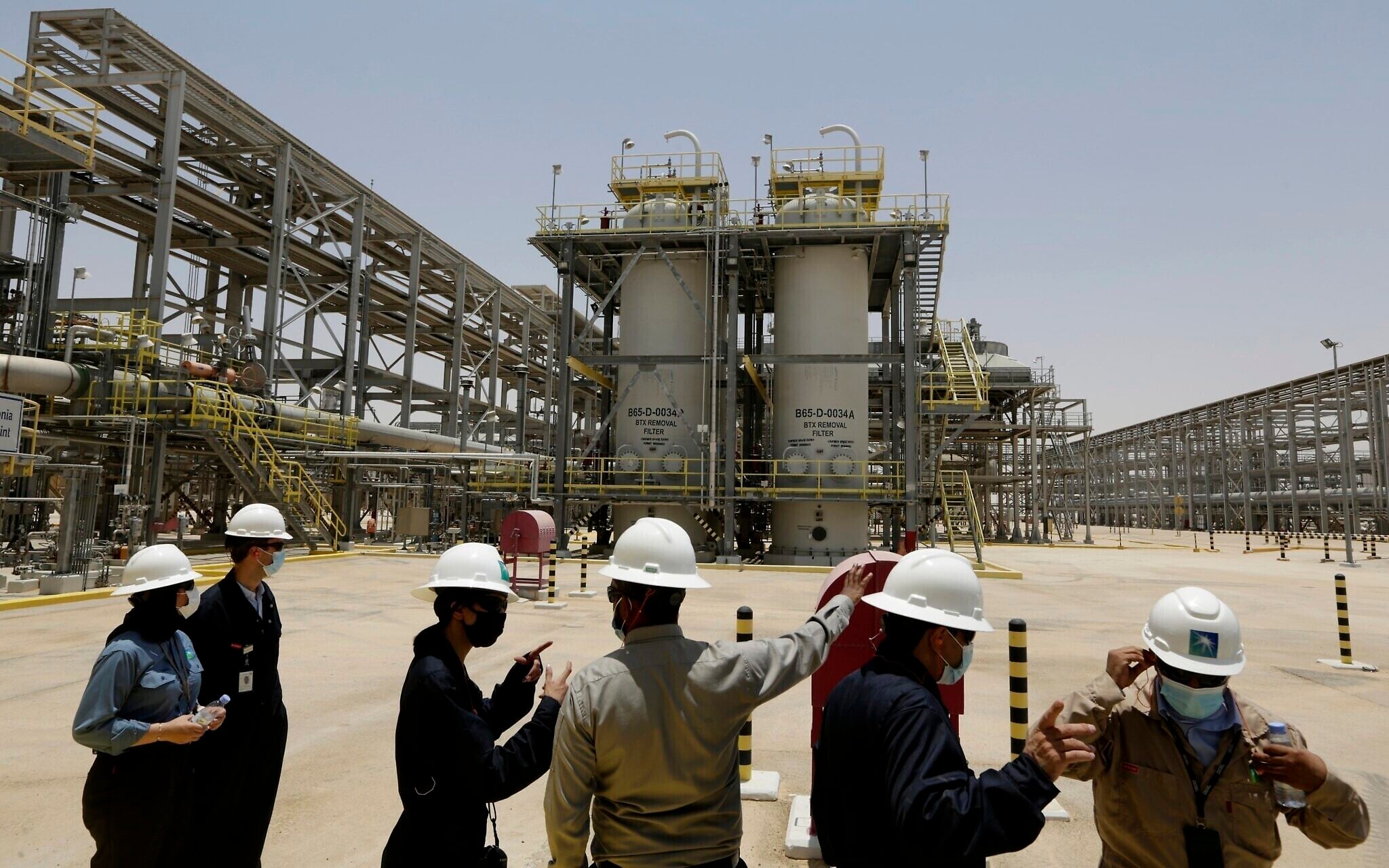
SINGAPORE (Reuters) — Saudi Aramco resumed oil loading from inside the Strait of Hormuz last week and has more tankers waiting to load as the state energy giant offers spot heavy crude cargoes, according to shipping data and trade sources.
On Monday, the world’s top oil exporter offered some Asian refiners Arab Medium and Arab Heavy crude cargoes for loading via ship-to-ship transfers off Fujairah in the United Arab Emirates this month.
It had halted sales for weeks following attacks on its tanker fleet in the Strait of Hormuz during an escalation of the US-Iran conflict last month.
The resumption of Saudi exports could help ease the tight supply of heavier grades that produce more residue fuel. The material can be used to refuel ships, or processed further at refineries to yield higher-quality fuels such as gasoline and diesel.
Three very large crude carriers (VLCCs) — Malaysia Prosperity, Algeria Prosperity and Singapore Prosperity — loaded 2 million barrels of crude each from the Juaymah and Ras Tanura terminals from August 12 to 16.
Data from shiptrackers Vortexa and Kpler showed a gap of three weeks since the last loading at the ports. It was not immediately clear which grades the tankers were carrying.
Saudi Aramco has declined to comment. Sinokor, which owns the tankers, did not respond to a request for comment.
Six more VLCCs could load Saudi oil from inside the strait later this month, provisional data from Kpler showed.
Traders said Saudi Aramco could deploy Saudi tankers for the Hormuz transit, in addition to Sinokor vessels.
Illustrative: Saudi Aramco engineers and journalists look at the Hawiyah Natural Gas Liquids Recovery Plant in Hawiyah, in the Eastern Province of Saudi Arabia on June 28, 2021. (AP Photo/Amr Nabil, File)
Seven VLCCs owned by Saudi-based operator Bahri were floating off the UAE and Oman while two more were heading to Fujairah, shipping data on LSEG showed on Tuesday.
However, Saudi oil exports remain curtailed as the producer faces a blockade by Yemen’s Iran-backed Houthi rebels in the Red Sea, where Aramco diverted its exports to the port of Yanbu earlier during the Iran war.
The producer has offered additional crude cargoes for loading from Egypt’s Mediterranean port of Sidi Kerir as an alternative, but the volume is a fraction of the pre-blockade level of 4 million barrels per day exported from Yanbu while additional shipping costs and longer voyages are deterring purchases.
About 670,000 barrels per day of Middle Eastern crude are expected to be loaded at the Sidi Kerir port for Asia this month, Kpler data showed, from zero in the previous three months.
“This shows that the Sidi Kerir offering to Asia is likely not working, as its Asian customers, at least the Chinese, are not happy with the long voyages and high freight cost,” said Emma Li, Vortexa’s China market analyst.