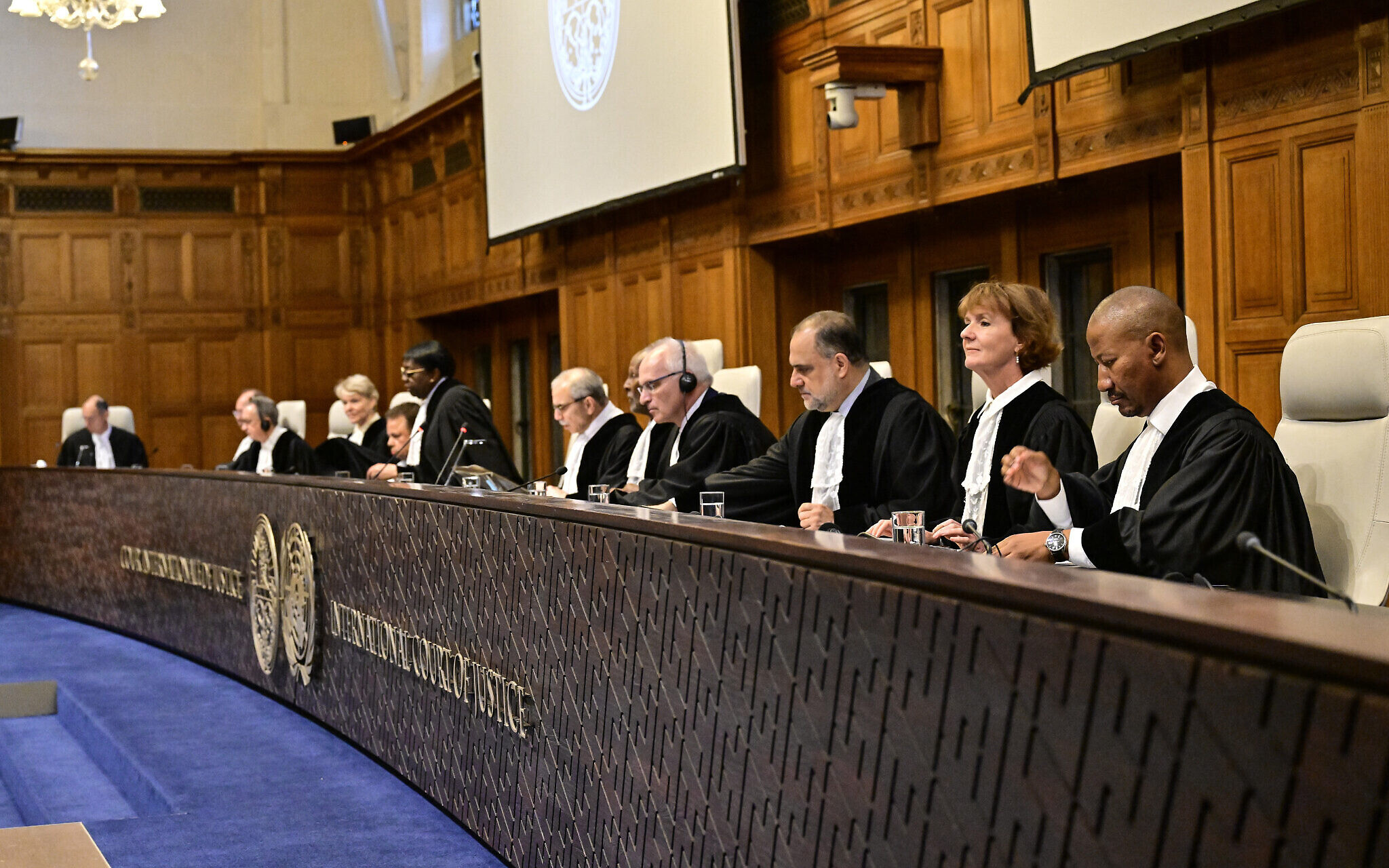
Four of the justices at the International Court of Justice argue that the key operative clause in the court’s ruling, handed out today, does not require that Israel immediately halt all military operations in Rafah, but, rather, that it specifically halt military operations that “could bring about physical destruction in whole or in part” of the Palestinians. Among the four is Israel’s Aharon Barak.

A fifth judge, South Africa’s Tire Tladi, takes the opposite view, arguing that the ruling, in “explicit terms, ordered the State of Israel to halt its offensive in Rafah.”

These are the only five of the 15 judges who pen an opinion to accompany the ruling.

The relevant clause in the ruling states that Israel must “Immediately halt its military offensive, and any other action in the Rafah Governorate, which may inflict on the Palestinian group in Gaza conditions of life that could bring about its physical destruction in whole or in part.”

Former Supreme Court president Barak, who serves as an ad-hoc judge on the ICJ bench in the case brought against Israel by South Africa, writes, in his dissenting opinion, that the majority decision “requires Israel to halt its military offensive in the Rafah Governorate only in so far as is necessary to comply with Israel’s obligations under the Genocide Convention.”

Therefore, according to Barak, “Israel is not prevented from carrying out its military operation in the Rafah Governorate as long as it fulfills its obligations under the Genocide Convention.”

“As a result,” Barak continues, “the measure is a qualified one, which preserves Israel’s right to prevent and repel threats and attacks by Hamas, defend itself and its citizens, and free the hostages.”

The German judge, Georg Nolte, and the Romanian judge, Bogdan Aurescu – who are both among the 13 judges who voted in favor of this measure – also support Barak’s interpretation of the decree.

It is expected that this interpretation – that Israel is not required to halt any and all operations in Rafah – will become the official position of the Justice Ministry and attorney general.

ICJ Vice President Julia Sebutinde (Uganda), who voted against all decisions today, warns against misunderstanding the court’s directive as requiring a unilateral Israeli ceasefire in Rafah. “This measure does not entirely prohibit the Israeli military from operating in Rafah. Instead, it only operates to partially restrict Israel’s offensive in Rafah to the extent it implicates rights under the Genocide Convention,” she writes.

She cautions: “… this directive may be misunderstood as mandating a unilateral ceasefire in Rafah and amounts to micromanaging the hostilities in Gaza by restricting Israel’s ability to pursue its legitimate military objectives, while leaving its enemies, including Hamas, free to attack without Israel being able to respond.”

South African judge Tladi, holds the opposite opinion: “Today, the Court has, in explicit terms, ordered the State of Israel to halt its offensive in Rafah. The Court has previously, albeit in implicit and indirect ways, ordered the State of Israel not to conduct military operations elsewhere in Gaza because such operations prevent the delivery of human assistance and cause harm to the Palestinian people. The Court has also reiterated its urgent call for Hamas to release the hostages.”

Adds Tladi: “The reference to ‘offensive’ operations illustrates that legitimate defensive actions, within the strict confines of international law, to repel specific attacks, would be consistent with the Order of the Court. What would not be consistent is the continuation of the offensive military operation in Rafah, and elsewhere, whose consequences for the rights protected under the Convention on the Prevention and
Punishment of Genocide has been devastating.”
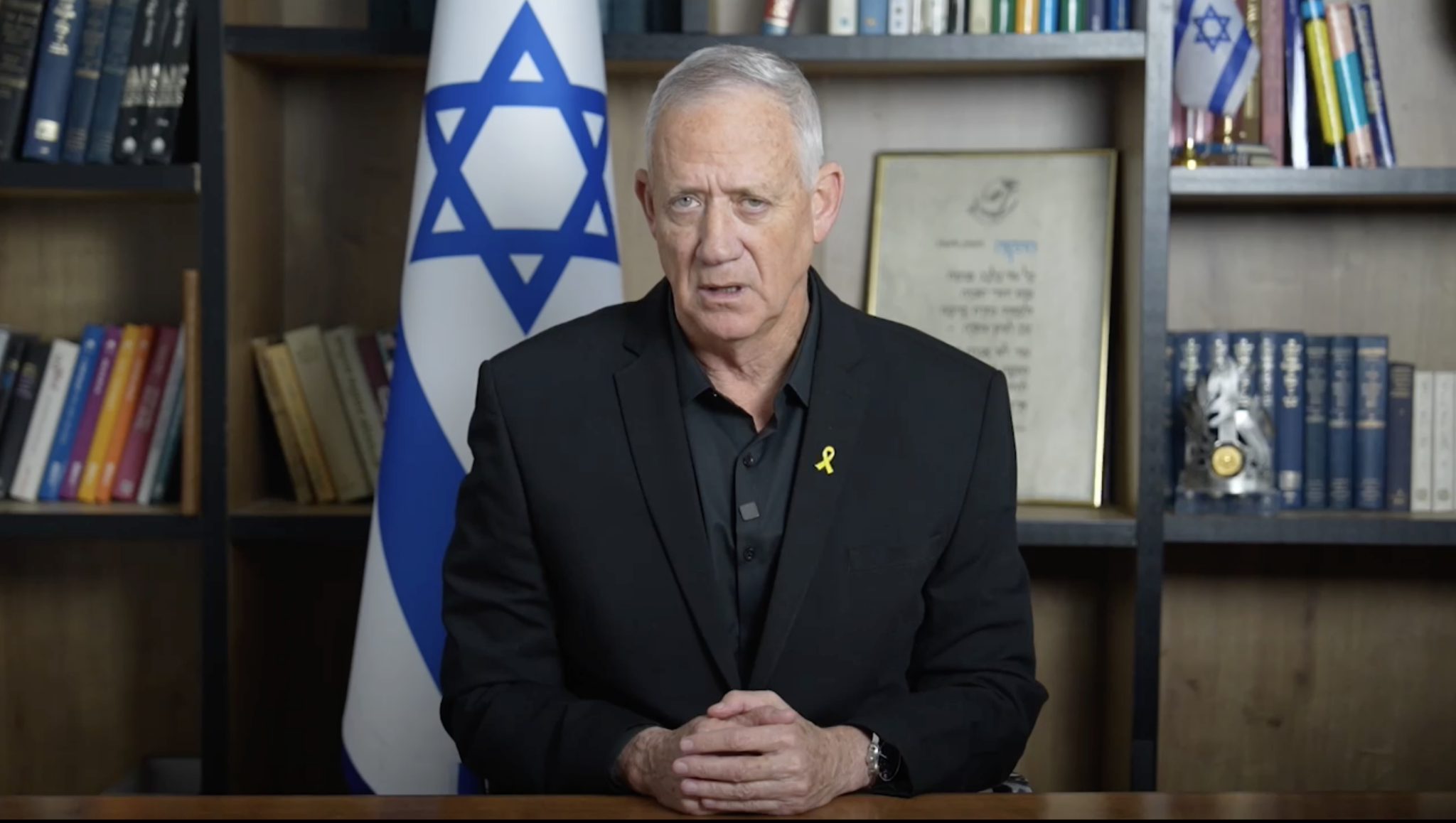
 

War cabinet minister Benny Gantz in a video message issued May 23, 2024, demanding the immediate establishment of a state commission of inquiry in the events leading up to October 7, 2023. (Screenshot)

War cabinet minister Benny Gantz in a video message issued May 23, 2024, demanding the immediate establishment of a state commission of inquiry in the events leading up to October 7, 2023. (Screenshot)

Following the the International Court of Justice’s order to halt military operations in Rafah, the war cabinet minister’s office announces that Minister Benny Gantz is speaking with US Secretary of State Anthony Blinken on the phone from IDF headquarters in Tel Aviv.

Israel must “continue fighting,” Gantz says in a subsequent statement.

“The State of Israel embarked on a just and necessary campaign after a brutal terrorist organization massacred our citizens, raped our women, kidnapped our children and fired missiles at our city centers,” he says, insisting that the Jewish state is “obligated to continue fighting to return its hostages and ensure the safety of its citizens, at any time and place — including in Rafah.”

“We will continue to act according to international law in Rafah and wherever we operate, and make an effort to avoid harming the civilian population. Not because of The Hague tribunal but first of all because of who we are,” he says.

In the call with Blinken, Gantz’s office says the pair also discussed “the efforts to ensure the return of the hostages and the prospects of advancing with a normalisation agreement with Saudi Arabia.”

Gantz insists that this is possible but has all but rejected Riyadh’s main condition of establishing a pathway to a future Palestinian state.

“Gantz conveyed his appreciation for US support for Israel and its mission of continuing to defend itself and noted that it has critical implications on the [ICJ’s] proceedings,” the Israeli readout says.

Blinken raised the importance of improving the humanitarian situation in Gaza, it adds, noting that Gantz “conveyed that Israel allows humanitarian aid to reach all parts of Gaza in parallel to the fighting.”


Israel says it is continuing efforts for aid to enter Gaza and is acting in compliance with international law; Hamas welcomes court’s ruling, but says it doesn’t go far enough


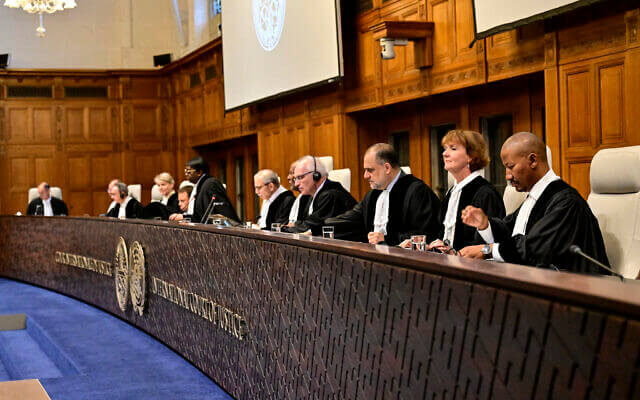
Magistrates are seen at the International Court of Justice (ICJ) as part of South Africa's request on a Gaza ceasefire in The Hague, on May 24, 2024. (Nick Gammon/AFP)

Magistrates are seen at the International Court of Justice (ICJ) as part of South Africa’s request on a Gaza ceasefire in The Hague, on May 24, 2024. (Nick Gammon/AFP)

Israel’s National Security Council and Foreign Ministry on Friday issued a joint statement responding to the International Court of Justice’s ruling on Rafah, saying Israel “has not and will not” carry out operations that risk the destruction of the civilian population in the southern Gaza city.

The Israeli statement said the charges of genocide brought by South Africa against Israel at the ICJ in The Hague were “false, outrageous and morally repugnant.”

It added: “Following the horrific attack against the citizens of Israel on October 7th, 2023, Israel embarked upon a defensive and just war to eliminate Hamas and to secure the release of our hostages. Israel is acting based on its right to defend its territory and its citizens, consistent with its moral values and in compliance with international law, including international humanitarian law.

“Israel has not and will not conduct military actions in the Rafah area which may inflict on the Palestinian civilian population in Gaza conditions of life that could bring about its physical destruction in whole or in part,” the statement said, echoing language used by the court in its operative clauses.

In a significant but somewhat ambiguous sharpening of its treatment of genocide claims against Israel, the court said earlier Friday that “Israel must immediately halt its military offensive, and any other action in the Rafah governorate, which may inflict on the Palestinian group in Gaza conditions of life that could bring about its physical destruction in whole or in part.”

A Palestinian man and his children sit in a destroyed room of a building heavily damaged, apparently by an Israeli airstrike, in Rafah in the southern Gaza Strip on May 22, 2024 (Eyad AL-BABA / AFP)

Along with its orders regarding Israel’s military operation in Rafah, the court also ordered Israel to “maintain open” the Rafah Border Crossing between Egypt and Gaza to allow the “unhindered provision at scale” of humanitarian aid to the region.

This, too, was addressed in the statement from the Foreign Ministry and NSC, which said that Israel “will continue its efforts to enable humanitarian assistance and will act, in full compliance with the law, to reduce as much as possible harm caused to the civilian population in Gaza.”

While the statement stressed Israel’s commitment to prevent terror organizations from retaking the Rafah Crossing, Jerusalem said it remained committed to allowing aid to be delivered through the gateway.

“Israel will continue to enable the Rafah crossing to remain open for the entry of humanitarian assistance from the Egyptian side of the border, and will prevent terror groups from controlling the passage,” the Israeli statement said.

Egypt has refused to reopen the crossing since Israel took over the Gaza side on May 7 — not wanting to be seen as complicit, Cairo has refused to re-open Rafah until Israeli troops have withdrawn from the other side.

Meanwhile, the Palestinian Authority on Friday welcomed the ICJ order.

“The presidency welcomes the decision issued by the International Court of Justice, which represents an international consensus on the demand to stop the all-out war on Gaza,” Nabil Abu Rudeineh said.

The Hamas terror group also welcomed the ICJ ruling while telling Reuters that it fell short of recognizing the ongoing fighting in other parts of the enclave.

“We believe it is not enough since the occupation’s aggression across the Gaza Strip, especially in northern Gaza, is just as brutal and dangerous,” senior Hamas official Basem Naim said.

The terror group called on the United Nations Security Council to implement the International Court of Justice decision, he said, adding that Hamas welcomed the court’s request to allow investigation committees to reach the Gaza Strip to probe allegations of genocide against the Palestinian people.

Israel has strongly denied it has carried out acts of genocide in its war against Hamas in Gaza, which is now in its eighth month.

“Hamas pledges to cooperate with the investigation committees,” Naim told Reuters.

Two women walk on an asphalt road in the middle of a deserted camp for displaced Palestinians on the border with Egypt in Rafah in the southern Gaza Strip on May 22, 2024. (Eyad Baba/AFP)

Israel believes Hamas leaders and many operatives are hiding in Rafah, and also that an unspecified number of the remaining 121 hostages kidnapped in the Hamas-led October 7 atrocities are being held in the city.

Israel says it has no choice but to carry out an operation in the city to root out the Hamas battalions there and prevent the smuggling of weapons and cash into Gaza.

War broke out between Israel and Hamas following Hamas’s October 7 onslaught, in which terrorists infiltrated Israel, killing some 1,200 people, mostly civilians, and kidnapping 252, while committing widespread atrocities and sexual assault.

The Hamas-run Gaza health ministry says more than 35,000 people in the Strip have been killed or are presumed dead in the fighting since the beginning of the Israeli offensive, though only some 24,000 fatalities have been identified at hospitals. The tolls, which cannot be verified, include some 15,000 terror operatives Israel says it has killed in battle. Israel also says it killed some 1,000 terrorists inside Israel on October 7.

Times of Israel staff and agencies contributed to this report.