
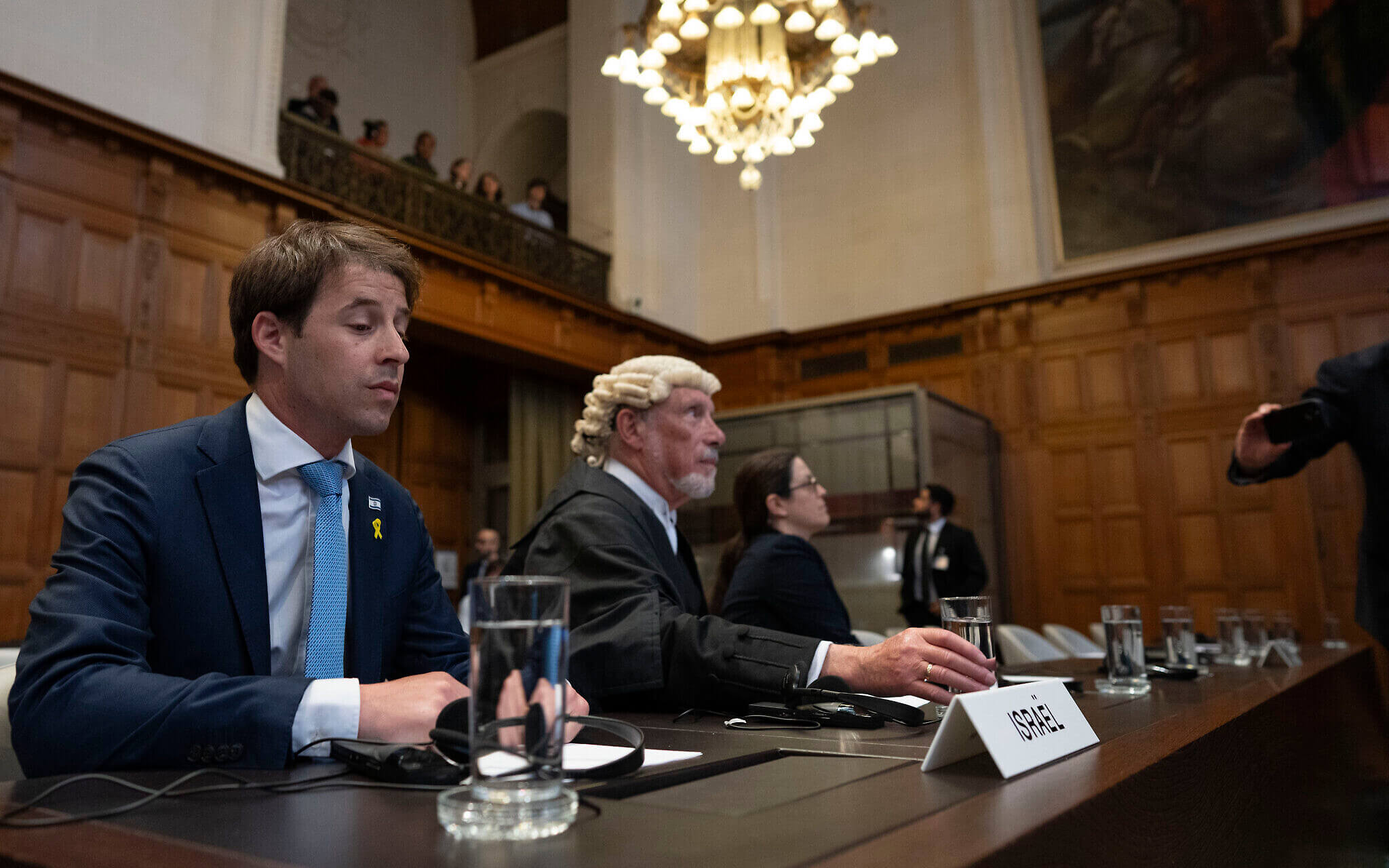
Four of the 15 judges argue ruling does not require that Israel halt all Rafah operations if it ensures it’s complying with the Genocide Convention; South African judge disagrees
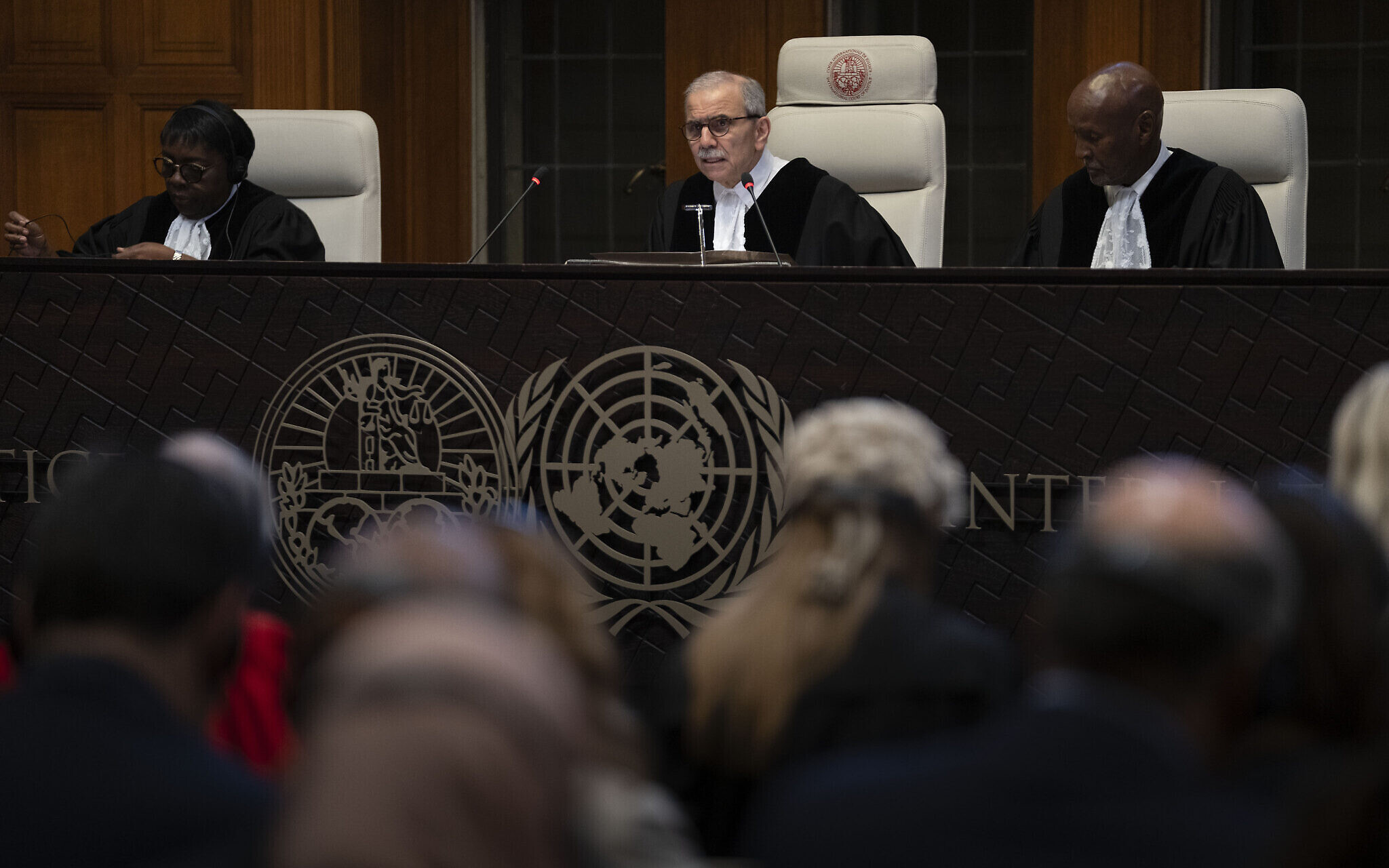
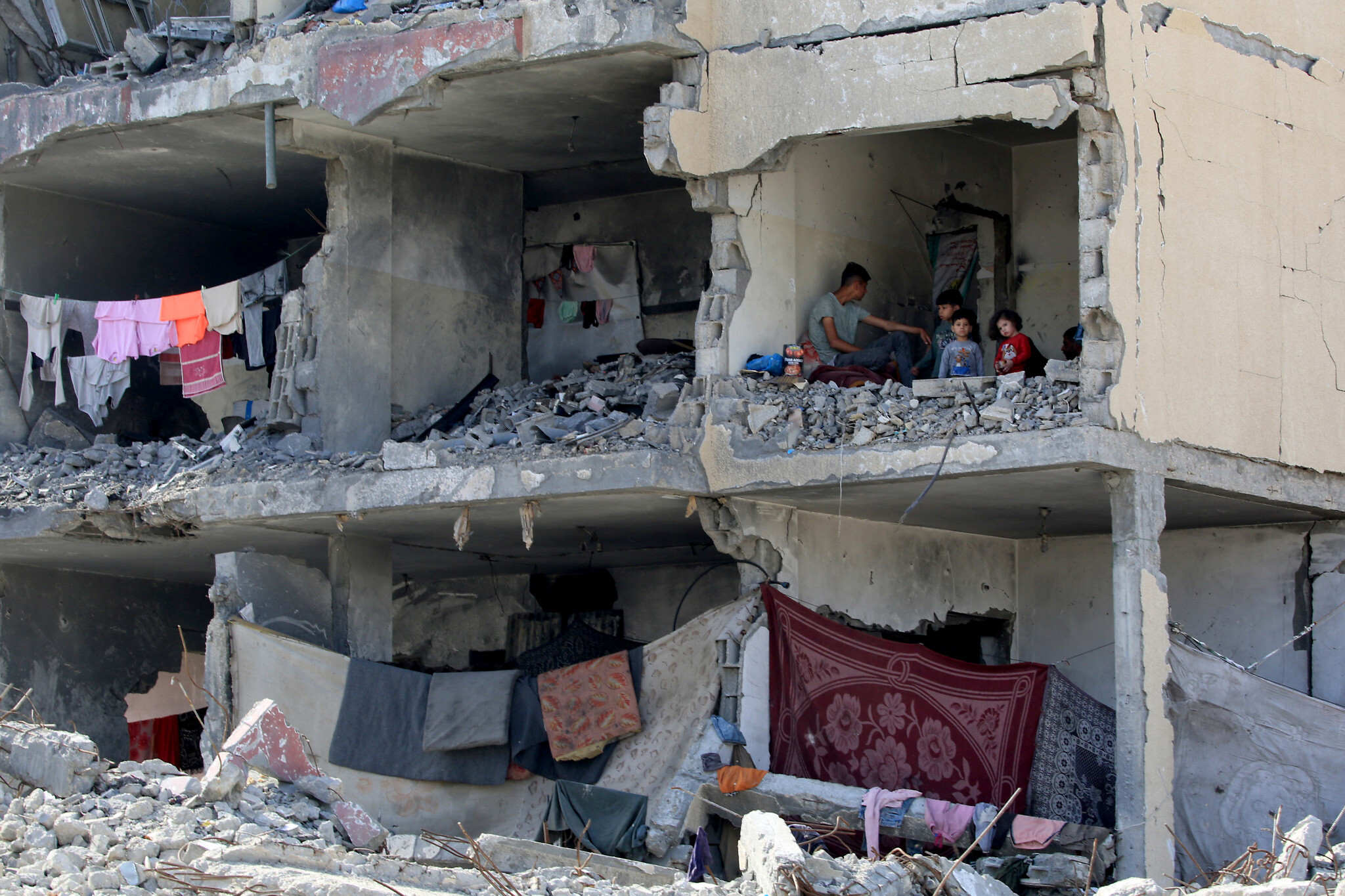
In a significant but somewhat ambiguous sharpening of its treatment of genocide claims against Israel, the International Court of Justice ordered Israel on Friday to halt military operations in the southern Gazan city of Rafah that would risk the destruction of the civilian population sheltering there.
“Israel must immediately halt its military offensive, and any other action in the Rafah governorate, which may inflict on the Palestinian group in Gaza conditions of life that could bring about its physical destruction in whole or in part,” the ruling stated.
According to the interpretation of four judges on the court, this order was not a direct and total order to stop the Rafah operation, but rather a limited order instructing Israel not to violate the Genocide Convention in that military campaign.
The order was approved 13 votes to 2 by the justices on the court, with Vice-President Julia Sebutinde of Uganda and Ad Hoc Judge Aharon Barak of Israel dissenting.
While some are reading the decision as a blanket order to halt the offensive, the wording appeared to include some conditionality that would allow Israel to continue operations in Rafah so long as it ensured that the conditions for Palestinians sheltering there do not deteriorate so as to risk their mass-destruction. Notably, nearly one million of the 1.4 million Palestinians sheltering in Rafah have already evacuated, amid IDF orders to do so.
Such an interpretation was made explicit by Judge Georg Nolte of Germany who wrote expressly in the court ruling that “The measure obliging Israel to halt the current military offensive in Rafah is conditioned by the need to prevent ‘conditions of life that could bring about [the] physical destruction in whole or in part’ of the Palestinian group in Gaza.”
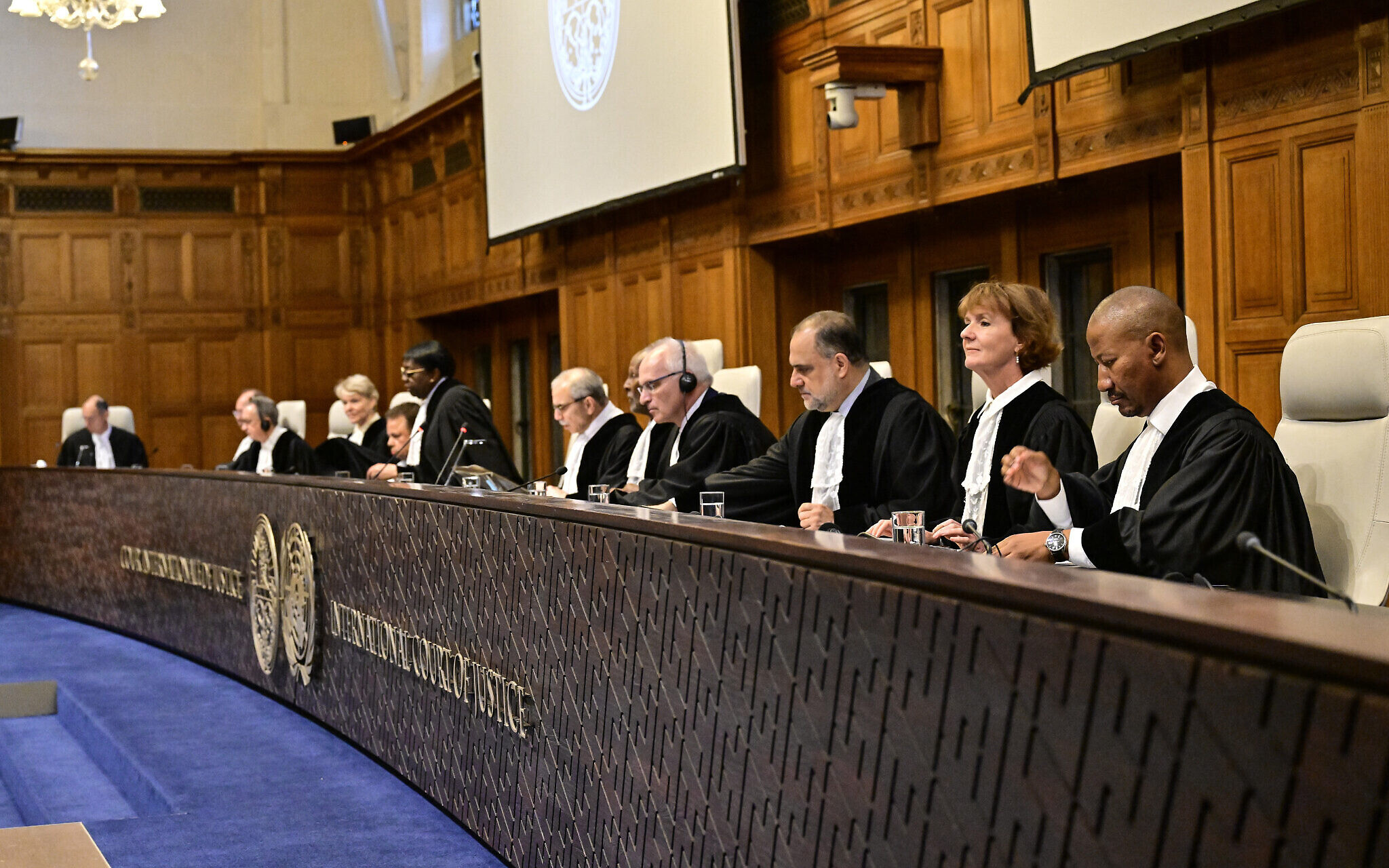
Ad Hoc Judge Aharon Barak, appointed by Israel, wrote in his dissenting opinion to the ruling that the court had once again rejected South Africa’s request to order Israel to “cease its military operations in the Gaza Strip” and that the court order “requires Israel to halt its military offensive in the Rafah Governorate only in so far as is necessary to comply with Israel’s obligations under the Genocide Convention (emphasis in the original).” The Romanian judge, Bogdan Aurescu, also supported this interpretation.
ICJ Vice President Julia Sebutinde (Uganda) warned against misunderstanding the court’s directive as requiring an Israeli ceasefire in Rafah. The measure “only operates to partially restrict Israel’s offensive in Rafah to the extent it implicates rights under the Genocide Convention,” she wrote.
She cautioned: “… this directive may be misunderstood as mandating a unilateral ceasefire in Rafah and amounts to micromanaging the hostilities in Gaza by restricting Israel’s ability to pursue its legitimate military objectives, while leaving its enemies, including Hamas, free to attack without Israel being able to respond.”
According to this interpretation, an Israeli military operation which would not lead to the mass destruction of Palestinian civilian life would be acceptable to the court.
Prof. Yuval Shany told The Times of Israel that if Israel could effectively demonstrate that the humanitarian situation in Rafah and for Rafah evacuees was improving, then Jerusalem could claim that the continued operation does not fall within the terms of the court’s order.
Judge Dire Tladi of South Africa — who voted in favor of the court orders –wrote in his declaration, however, that the court, “in explicit terms, ordered the State of Israel to halt its offensive in Rafah” and also that it “does not permit the continuation of the military operation… elsewhere in the Gaza Strip.”
In Friday’s decision, the ICJ justices expressed once again that their primary concern regarding Israel’s obligations under the Genocide Convention, under which South Africa has taken Israel to court, is that Israel not create the conditions of life designed to destroy the Palestinian population in Gaza.
In all four rulings the court has issued against Israel starting January 26, it has made clear that the primary exposure for Israel to claims of genocide under the Genocide Convention is the explicit clause in article two. This states that one form of genocide is “Deliberately inflicting on the [national, ethnical, racial or religious] group conditions of life calculated to bring about its physical destruction in whole or in part.”

The court ruling on Friday stated that the concerns it expressed in its February decision, when South Africa first asked that the court order Israel not to invade Rafah, “have materialized, and that the humanitarian situation is now to be characterized as disastrous.”
It said that the developments in Rafah, with the evacuation of hundreds of thousands of Palestinians from the city, were “exceptionally grave,” and that it is “not convinced” that Israel’s evacuation efforts and other measures to protect Gazan civilians “are sufficient to alleviate the immense risk to which the Palestinian population is exposed as a result of the military offensive in Rafah.”
Along with its orders regarding Israel’s military operation in Rafah, the court also ordered Israel to “maintain open” the Rafah Border Crossing between Egypt and Gaza to allow the “unhindered provision at scale” of humanitarian aid to the region.
The Rafah Crossing has been closed since the IDF launched an operation earlier this month to take over the Gaza side of the gateway.
Israel blames Egypt for refusing to reopen the crossing since Cairo does not want to reopen it as long as the IDF is effectively managing the other side, and Israel has struggled to recruit another body to run the crossing.
The court also ordered Israel to allow “the unimpeded access to the Gaza Strip” for commissions of inquiry, fact-finding missions, or other investigative bodies mandated by the UN to investigate allegations of genocide.
This order could prompt UN agencies to send delegations to start investigations on the genocide allegations being made by South Africa and other nations against Israel in the court.

The court ordered Israel to report back to it within one month as to how it has implemented the orders.
Should the court deem Israel to have violated the orders, it would be able to refer such violations to the UN Security Council, which could then decide whether or not to take punitive measures against Israel as a result.
Additionally, the court noted that it had previously called for the release of the hostages taken during the Hamas-led onslaught on October 7 and repeated that appeal.
“The Court finds it deeply troubling that many of these hostages remain in captivity and reiterates its call for their immediate and unconditional release,” the ruling said.
The IDF has asserted that Rafah is Hamas’s last major stronghold in Gaza, and where four of its battalions are located.
Israel believes Hamas leaders and many operatives are hiding in Rafah, and also that an unspecified number of the remaining 121 hostages kidnapped in the Hamas-led October 7 atrocities are being held in the city. Israel says it has no choice but to carry out an operation in the city to root out the Hamas battalions there and prevent the smuggling of weapons and cash into Gaza.
Prime Minister Benjamin Netanyahu’s office said that he would consult senior ministers in a phone call following the ICJ’s decision.
The statement said Netanyahu would speak with Strategic Affairs Minister Ron Dermer, Justice Minister Yariv Levin, Defense Minister Yoav Gallant, Attorney-General Gali Baharav-Miara, Foreign Minister Israel Katz, National Security Adviser Tzachi Hanegbi and other officials.
The announcement did not mention war cabinet ministers Benny Gantz or Gadi Eisenkot.
Gantz himself said he was speaking with US Secretary of State Antony Blinken on the phone from IDF headquarters in Tel Aviv, but insisted that Israel must “continue fighting,” in a subsequent statement.
“The State of Israel embarked on a just and necessary campaign after a brutal terrorist organization massacred our citizens, raped our women, kidnapped our children and fired missiles at our city centers,” he said, insisting that the Jewish state is “obligated to continue fighting to return its hostages and ensure the safety of its citizens, at any time and place — including in Rafah.”
He said Israel would “continue to act according to international law in Rafah and wherever we operate, and make an effort to avoid harming the civilian population. Not because of The Hague tribunal but first of all because of who we are.”
National Security Minister Itamar Ben Gvir took to X, describing the ICJ ruling as the “irrelevant order of the antisemitic court in The Hague” and said that Israel’s response to it should be “the occupation of Rafah, the increase of military pressure and the complete defeat of Hamas.”
The ultranationalist minister added. “Our future does not depend on what the gentiles will say, but on what the Jews will do,” he adds, quoting Israel’s first Prime Minister David Ben-Gurion.

“Those who demand that the State of Israel stop the war, demand that it decree the cessation of its existence — we will not agree to that,” argued Finance Minister Bezalel Smotrich. “We will continue to fight for ourselves and for the entire free world. History will judge who today stood by the Nazis of Hamas and ISIS.”
Some opposition politicians also blasted the court’s ruling while at the same time criticizing the Netanyahu government for mismanaging the war and the legal battle over it.
“Israel is the one that was brutally attacked from Gaza and had to defend itself against a horrible terrorist organization that murdered children, raped women and still fires rockets at innocent civilians,” said Opposition Leader Yair Lapid.
“There is no country in the world that would not react with force to such an attack. This verdict could and should have been prevented. A sane and professional government would have prevented [incendiary] statements from ministers and stopped criminals who burn aid trucks,” he declared.



Eleven trucks “were cleaned out by Palestinians” on the journey to the World Food Programme warehouse in Deir El Balah in the central Strip, with only five truckloads making it to the destination.
“They’ve not seen trucks for a while,” a U.N. official told Reuters. “They just basically mounted on the trucks and helped themselves to some of the food parcels.”
According to the United Nations, no aid was delivered to the warehouse from the U.S. military’s pier on Sunday and Monday.
The United Nations said that 10 truckloads of food aid from the pier arrived at the warehouse on Friday, its first day of operation. It was transported by U.N. contractors.
“We need to make sure that the necessary security and logistical arrangements are in place before we proceed,” said the U.N. official.
According to Israeli estimates, Hamas has been stealing up to 60% of the aid entering the Gaza Strip, and a Channel 12 report last week revealed that the terrorist organization has made at least $500 million in profit off humanitarian aid since the start of the war on Oct. 7.
The pier was pre-assembled at the Israeli port of Ashdod before being anchored to a beach in the coastal enclave on Thursday. No American troops went ashore during the installation of the pier, according to U.S. Central Command (CENTCOM). Some 1,000 U.S. soldiers and sailors helped build the floating pier.
The Israel Defense Ministry’s Coordinator of Government Activities in the Territories (COGAT) unit announced on Saturday that “hundreds of pallets of humanitarian aid” and more than 160,000 liters of fuel had entered via the pier.
Vice Admiral Brad Cooper, deputy commander of CENTCOM, said that the goal is for 500 tons of humanitarian aid, or 90 trucks, to pass into Gaza through the pier daily, eventually increasing to 150 trucks a day.
CENTCOM tweeted early Tuesday that over 569 metric tons of humanitarian assistance has been unloaded from the pier so far. The Pentagon recently admitted that none of it was delivered to the Gazans.
USAID and the U.S. Department of Defense are leading the effort, alongside Cyprus, the United Nations and international donors, including the United Arab Emirates, the United Kingdom, Romania and the European Union, CENTCOM said. The aid is transported via sea from Cyprus where it is screened, and the United Nations receives the aid in Gaza and coordinates its distribution.
Israel is also helping to facilitate the entry of aid via the pier.
Reuters also reported that “food and medicine for Palestinians in Gaza are piling up in Egypt because the Rafah crossing remains closed.”
Israel took operational control of the crossing weeks ago, but Cairo so far has refused to cooperate with Israeli authorities to facilitate the entry of aid through Rafah. The Israeli government wants to allow aid into Gaza through the crossing but is unable to do so without Egyptian cooperation.
Israeli Foreign Minister Israel Katz last week placed the responsibility for averting a humanitarian crisis in the Gaza Strip squarely on the shoulders of Egypt.
Katz said he had spoken with his British and German counterparts “about the need to persuade Egypt to reopen the Rafah Crossing to allow the continued delivery of international humanitarian aid to Gaza.”
While the world places the responsibility for Gaza’s humanitarian situation on Israel, he added, “the key to preventing a humanitarian crisis in Gaza is now in the hands of our Egyptian friends.”
Meanwhile, COGAT on Thursday approved the resumption of commercial trade between Israel the Strip, with truck deliveries starting the following morning, Israel’s Walla! News outlet reported on Sunday.
According to the report, 150 trucks loaded with produce from Israel—not aid—crossed into Gaza intended for merchants who purchased the produce, which is “intended for Hamas members and the civilian population.”