
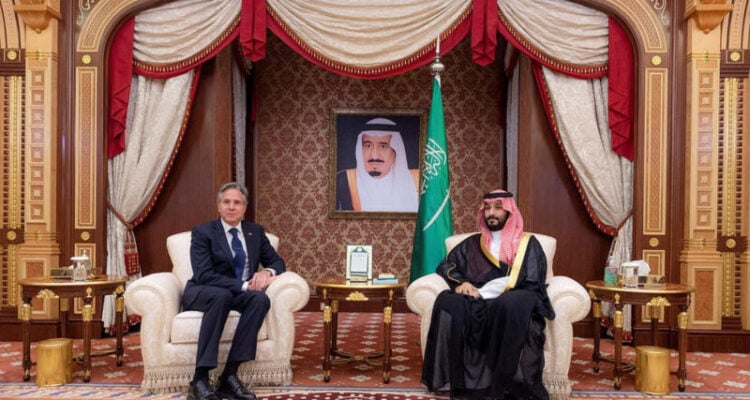
Riyadh is discussing whether to make the move in the coming weeks or after the U.S. presidential election this November.

By Joshua Marks, JNS

Saudi Arabia has decided to normalize relations with Israel and is debating the timing of the announcement, a foreign diplomat familiar with the details told Haaretz on Monday.

According to the source cited in the article by the daily’s diplomatic correspondent Jonathan Lis, Riyadh is discussing whether to make the move in the coming weeks or after the U.S. presidential election this November, in which either Democrat Joe Biden will continue to lead the country or his challenger Republican Donald Trump will return to the White House.

“The question is when, and the decision on the timing should be made within days,” the diplomat said.

While the Biden administration has been pushing to connect a pathway to Palestinian statehood as part of the Saudis joining the Abraham Accords, the source said that the kingdom would only demand guarantees on progress towards achieving that goal in return for establishing diplomatic ties with Jerusalem.

U.S. Secretary of State Antony Blinken spoke about progress toward a Jerusalem-Riyadh detente at the World Economic Forum special meeting in the Saudi capital on Monday, emphasizing the importance of a Palestinian state despite former Israeli foreign minister Eli Cohen saying last August that it was not a major obstacle for Crown Prince Mohammed bin Salman, who met with Blinken on the sidelines of the summit.

  US STATE DEPARTMENT STABS ISRAEL IN THE BACK, TWISTS THE KNIFE

The Israeli government is opposed to the establishment of a Palestinian state given Ramallah’s support for terrorism. Recent polling shows a majority of Israelis are also against Palestinian statehood.

More than half of the Israeli public opposes the creation of a Palestinian state as part of a deal that would end the war against Hamas and normalize relations between Jerusalem and Riyadh, according to a January survey from the Israel Democracy Institute.

“So first, I think the single biggest, most effective rebuke to both Iran and Hamas would be Israel having normal relations with every country in this region and the realization of a Palestinian state. Of course, both Hamas and Iran have opposed a two-state solution. So almost by definition, achieving it would be a profound rebuke to everything that they’ve stood for and destroyed for in—over many years,” Blinken said in response to a question from WEF President Borge Brende on stage at the King Abdul Aziz International Conference Center.

“Second, when it comes to normalization, look, I’m not going to speak for our hosts here, except to say that we have done intense work together over the last months. And in fact, well before Oct. 7, this is what we were focused on. And in fact, I was scheduled to be in the region, to be in Saudi Arabia and in Israel, on Oct. 10, a trip that didn’t happen because of Oct. 7, to focus specifically on the Palestinian piece of any normalization agreement, because that is, as you said, an essential component.

  BLINKEN: US EAGER TO WORK WITH ‘REVITALIZED’ PA GOVERNMENT

“I think—look, the work that Saudi Arabia and the United States have been doing together in terms of our own agreements, I think, is potentially very close to completion.

“But then in order to move forward with normalization, two things will be required: calm in Gaza and a credible pathway to a Palestinian state. So to the extent we finish our work between us, then I think what’s been a hypothetical or a theoretical question suddenly becomes real. And people will have to make decisions.”

Riyadh put U.S.-brokered Israeli normalization talks on ice after the Oct. 7 Hamas-led massacre in the northwestern Negev and amid the ensuing war in Gaza, but has maintained that a deal is still on the table.

In an interview with Israeli public broadcaster Kan News earlier in April, a source in the Saudi royal family accused Iran of instigating the conflict in Gaza to undermine progress in reaching a normalization agreement between Riyadh and Jerusalem.

“Iran is a nation that endorses terrorism, and the world should have curtailed it much earlier,” the Saudi royal said.


The Ynet news site reports that Israel Defense Forces Chief of Staff Lt. Gen. Herzi Halevi approved final plans on Monday for military action in southern Gaza’s Rafah, along with refugee camps in the center of the Strip.

According to the site, which does not cite a source, Israeli tanks are lined up on the Gaza border and ready for the green light to begin the contentious offensive, considered by Israel to be the final necessary push to uproot Hamas’s fighting forces from the Strip, despite warnings of a humanitarian disaster if civilians are not moved out of harm’s way.

The tactical plans getting into the nitty-gritty of the fighting were completed over the last few days, Ynet reports. They include a phased invasion that can be halted or delayed in case of progress in hostage talks.

The report claims that the next 48 to 72 hours will see either a hostage deal or the commencement of the invasion.


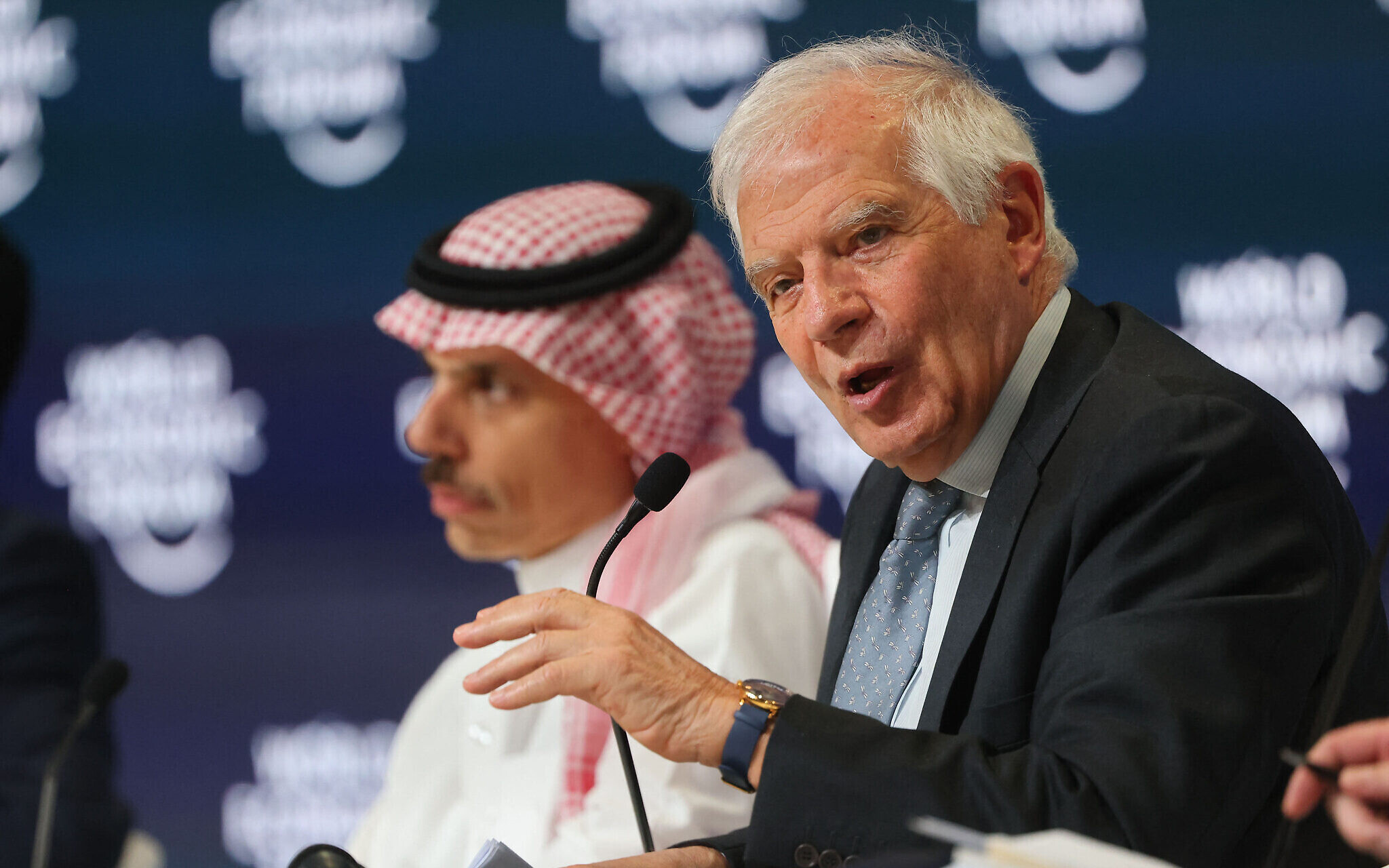
Bloc’s foreign policy chief Josep Borrell says countries include Spain, Ireland, Belgium, Slovenia and Malta, as Arab and European officials discuss end to Gaza conflict in Riyadh


Saudi Foreign Minister Prince Faisal bin Farhan (L) and EU foreign policy chief Josep Borrell  attend the World Economic Forum Special Meeting in Riyadh on April 28, 2024. (Photo by Fayez Nureldine / AFP)

Saudi Foreign Minister Prince Faisal bin Farhan (L) and EU foreign policy chief Josep Borrell attend the World Economic Forum Special Meeting in Riyadh on April 28, 2024. (Photo by Fayez Nureldine / AFP)

Several European member states are expected to recognize Palestinian statehood by the end of May, the European Union’s foreign policy chief Josep Borrell said on Monday at the sidelines of a World Economic Forum special meeting in Riyadh.

He said these included Spain, Ireland, Belgium, Slovenia and Malta.

The meeting between European and Arab officials took place on the sidelines of a two-day World Economic Forum special meeting in Riyadh, with the sides discussing shared partnership in advancing a two-state solution to the Israeli-Palestinian conflict.

“If we want to move this two-state solution forward it will not happen from the parties. I do not believe that Israel is ready to negotiate at this point, and I do not think that the US is ready to take the necessary leadership,” Norwegian Foreign Minister Espen Barth Eide, one of the organizers of the meeting, told reporters after it concluded.

“So I think an Arab-European leadership is the best we can hope for.”

Borrell’s comments come amid a series of moves from European countries seeking to recognize Palestinian statehood. Earlier in April, Spanish Prime Minister Pedro Sanchez said his country would recognize Palestinian statehood by July. Sanchez added that that he believed there would soon be a “critical mass” within the European Union to push several member states to adopt the same position, according to state news agency EFE.

Spain’s Prime Minister Pedro Sanchez speaks to the press before a European Council summit at the EU headquarters in Brussels on March 21, 2024. (John Thys/AFP)

Malta, along with Slovenia and Ireland, was said by Sanchez at a March 22 European Council meeting to have agreed to “take the first steps” toward recognizing statehood declared by Palestinians in the Israeli-controlled West Bank and Gaza Strip. At the time, Sanchez said he expected the recognition to happen during the current four-year legislature, which began in 2023.

Israel subsequently accused the four countries of offering a “prize for terrorism” that would reduce the chances of a negotiated resolution to the Gaza conflict.

In February, the Knesset voted to back Prime Minister Benjamin Netanyahu’s declaration opposing any “unilateral” recognition of a Palestinian state, as international calls grew for the revival of efforts to reach a two-state solution to the decades-long conflict.

Issued amid the ongoing war in Gaza, sparked by Hamas’s October 7 onslaught, the Israeli position states that any permanent accord with the Palestinians must be reached through direct negotiations between the sides and not by international dictates.

Arab states and the European Union agreed at a meeting in Spain in November that a two-state solution was the answer to the Israeli-Palestinian conflict.

Since 1988, 139 out of 193 United Nations member states have recognized Palestinian statehood.