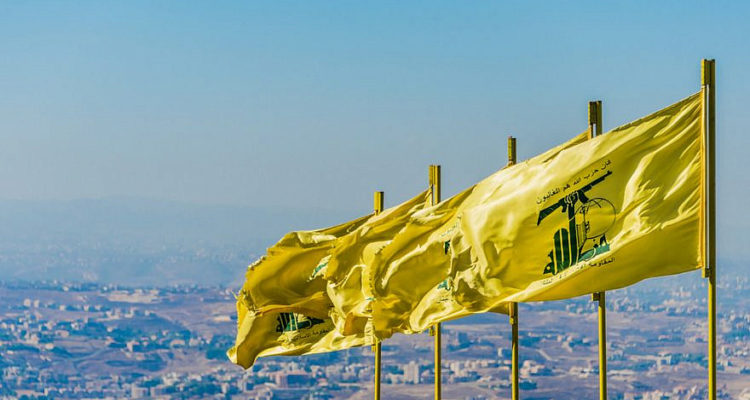
Hezbollah flags flying over southern Lebanon. (Shutterstock)
Foreign Minister Israel Katz threatens Israeli takeover of Lebanese territory if Hezbollah refuses to retreat north of the Litani River.
By World Israel News Staff
A senior Israeli official said on Tuesday that the IDF will re-occupy southern Lebanon to ensure security for residents of Israel’s north, should the Hezbollah terror group refuse to retreat north of the Litani River, in accordance with a UN resolution.
Foreign Minister Israel Katz told his French counterpart Stephane Sejourne, who traveled to Jerusalem and Beirut as part of a de-escalation effort, that the current security situation in northern Israel is untenable.
“We will not accept quiet for quiet,” Katz told Sejourne, according to Hebrew-language media reports. “We are not going back to October 6th.”
The minister warned that “if Hezbollah does not withdraw [from the border region], we are heading to an all-out war. If that happens, Israel will act against Hezbollah in all of Lebanon and occupy a large area in southern Lebanon to create a security buffer zone, which will be controlled by the IDF and allow the residents of the north to return home safely.”
Sejourne reportedly offered that Israel participate in an international conference that would involve France, Lebanon, and the UN to broker a solution.
For nearly seven months, Hezbollah terrorists have fired rockets, missiles, and explosive drones at Israeli communities near Lebanon, occasionally targeting cities as far as 20 miles south of the border. Eleven Israeli army soldiers and nine civilians have been killed in the fighting.
Tens of thousands of residents were evacuated from their homes and have been living in temporary accommodations for months.
Though Hezbollah and Israel have been engaged in fighting for months, the intensity and scale of the hostilities has so far been limited.
Hezbollah has claimed it will cease rocket fire against Israel should Jerusalem establish a truce with Hamas and end fighting in Gaza.
The deadlock in negotiations for the release of Israeli captives, coupled with American accusations against the group, has paved the way for the offensive. Opinion.
Meir Ben Shabbatis head of the Misgav Institute for Zionist Strategy & National Security, in Jerusalem. He served as Israel’s national security advisor and head of the National Security Council between 2017 and 2021. Prior to that, for 25 years he held senior positions in the Israel Security Agency (Shabak).
(JNS) As signs of an imminent IDF operation in Rafah intensify, there is growing concern that Israel will unnecessarily exercise self-imposed restraint by acting with insufficient force, so as not to upset the Biden administration, the Egyptians, or the ICC prosecutor at The Hague.
Meanwhile, Hamas is exploiting the prolonged waiting period and preparing well for the ground operation in this sector, which will undoubtedly pose complex operational challenges for the IDF. Despite the political pressures, Israel’s decision-makers must make it a top priority to attain the objectives with minimal risk to the lives of our forces.
The deadlock in negotiations for the release of Israeli captives held by Hamas, coupled with American accusations against the terrorist group, has paved the way for Israel to launch the Rafah offensive.
The recent de-escalation with Iran allows Israel to shift its focus, without forfeiting political gains made, while continuing the fight against Hezbollah and dismantling terrorist networks in Judea and Samaria.
In this operation, the security establishment will be required to achieve five objectives:
• Dismantle Hamas’s regional brigade, with its four battalions, killing or arresting its commanders and most of its personnel, and seizing or destroying its command centers, strategic assets, weapons and production facilities, both above or below ground;
• Kill or arrest senior members of Hamas and Palestinian Islamic Jihad who fled from other areas to Rafah;
• End Hamas’s civilian control in this area, striking Hamas’s governing mechanisms including police and internal security forces, prisons and courts, as well as “civilian” committees for managing emergency affairs;
• Take control of smuggling routes and shaping a new security reality along the border strip, preventing smuggling from Sinai to the Gaza Strip; and
• Advance the release of the captives—either by seizing opportunities during the fighting or through negotiations following increased pressure on Hamas.
The IDF’s starting position for this operation is better than at the beginning of the campaign in the northern Gaza Strip or the Khan Yunis area.
First, the enemy will now be entering combat with a command echelon that has been depleted, with many fighters dead, wounded or arrested.
Second, its stockpile of weapons and ammunition has dwindled.
Third, its ability to strike the Israeli home front with rocket fire is rather limited.
And fourth, the IDF will have replenished its forces, updated its intelligence and improved its fighters’ operational combatworthiness through lessons learned from previous stages of the fighting.
However, from the enemy’s perspective, the overall picture also has some bright spots. Its force deployment in the combat zone has not only remained intact but has been reinforced with operatives from other areas. Its logistical preparedness has improved thanks to humanitarian aid entering the Strip, and it is equipped with fuel and food that allow prolonged survival in tunnels.
Additionally, the terrorists draw encouragement from the pressures exerted on Israel to minimize casualties and benefit from the involvement of Iran and its proxies, as well as the political support of Turkey and other countries. Above all, they are emboldened by their demonstrated ability to survive the IDF onslaught so far and the fact that even after 200 days of fighting, Hamas continues to be the central power in the Gaza Strip.
A formidable task
Alongside its offensive capabilities, the IDF will also need to strengthen its defense against various forms of attacks on its forces and on the home front that exploit proximity to borders or the use of tunnels. The same applies to the possibility that Hamas may carry out provocations in the border fence area and towards Sinai, aiming to create tensions between Israel and Egypt. Hints of this could be found in a statement issued this week by the “Palestinian factions.”
The IDF’s well-oiled war machine has proven itself, and there is no doubt as to its ability to handle this challenge as well. On the political level, maximum support and freedom of action are required to allow the IDF to employ intense firepower that will reduce the risk to our soldiers and bring about the swiftest possible defeat of the enemy.
Meanwhile, the IDF will need to continuously examine how the combat situation can be leveraged to advance the release of the captives.
The Rafah operation will not complete the task of decisively defeating Hamas. Even after it is over, much more work, and a deeper impact, will be needed inside the territory before Hamas’s remaining capabilities are destroyed and a new reality emerges. This was also the case following “Operation Defensive Shield” 22 years ago.
It will not be quick and easy, but it is necessary and possible.
Amid concerted effort to prevent Hague move against Israeli leaders, Channel 12 reports PM has asked families of hostages to appeal to court on behalf of targeted officials
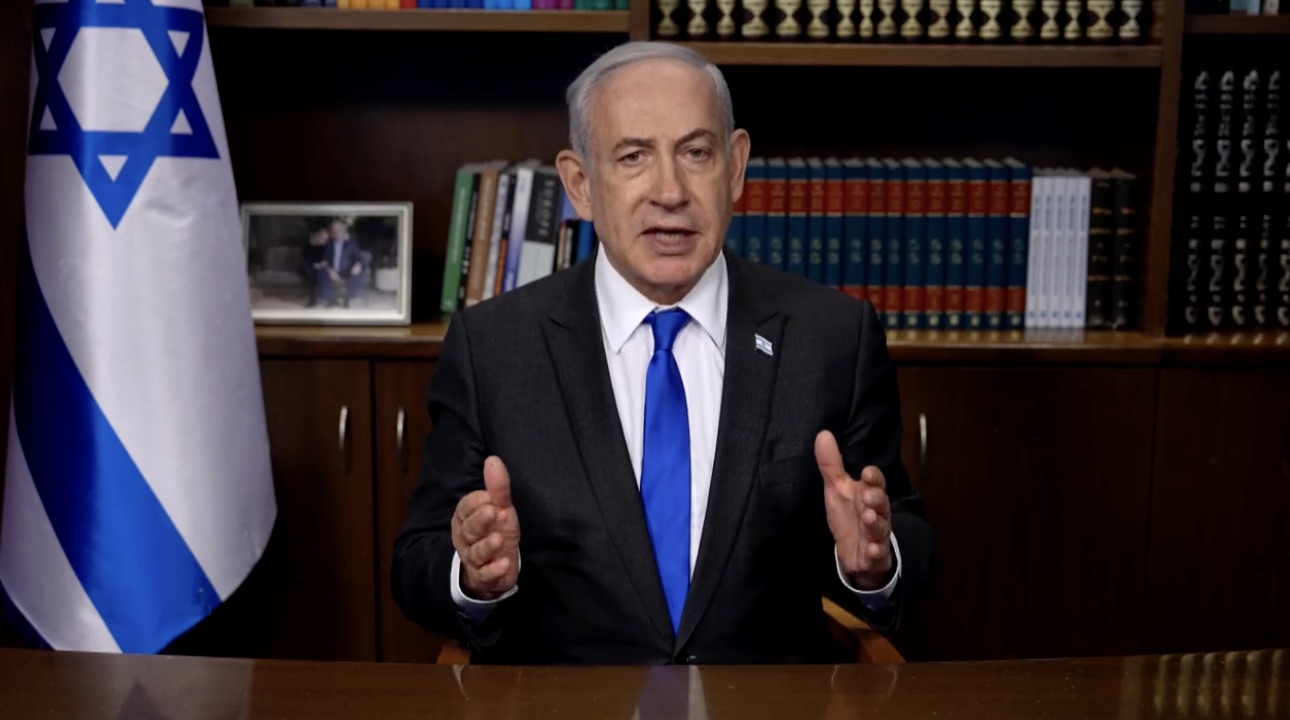
Prime Minister Benjamin Netanyahu delivers a video address regarding reports that the ICC may issue arrest warrants against Israeli officials, April 30, 2024. (Screenshot/GPO)
Prime Minister Benjamin Netanyahu accused the International Criminal Court in The Hague on Tuesday of trying to prevent Israel from defending itself against terrorism, amid reports that the UN court could issue arrest warrants for some of Israel’s top officials — including him.
“Eighty years after the Holocaust, the international bodies that were established to prevent another Holocaust are considering denying the Jewish state the right to defend itself against those who came to commit genocide against us, and are still actively working to do so,” the prime minister said in an English-language video statement. “What an absurdity, what a distortion of justice and history.”
Israel fears the arrest warrants will be sought due to the humanitarian crisis amid the fighting in the Gaza Strip, with countries that accuse Israel of breaching international law said to be leading the effort.
Should the court issue arrest warrants against top Israelis for war crimes, it would be “a scandal on a historical scale,” Netanyahu said, calling such a move “an indelible stain on all of humanity” and an “unprecedented antisemitic hate crime.”
Accusing the ICC of intentionally trying to paralyze Israel’s political and military leadership, Netanyahu vowed that “no decision, neither in The Hague nor anywhere else, will harm our determination to achieve all the goals of the war,” which include bringing Israeli hostages home, removing Hamas from power and ensuring no threat remains in Gaza, and stabilizing Israel’s northern borders.
Netanyahu also lambasted the ICC for targeting IDF officials, arguing that Israel has one of the most moral armies in the world.
“You know the truth. Hamas places its weapons, its terrorists in hospitals, schools, mosques, and throughout civilian areas,” he said. “They do this in order to win immunity and maximize civilian casualties.”
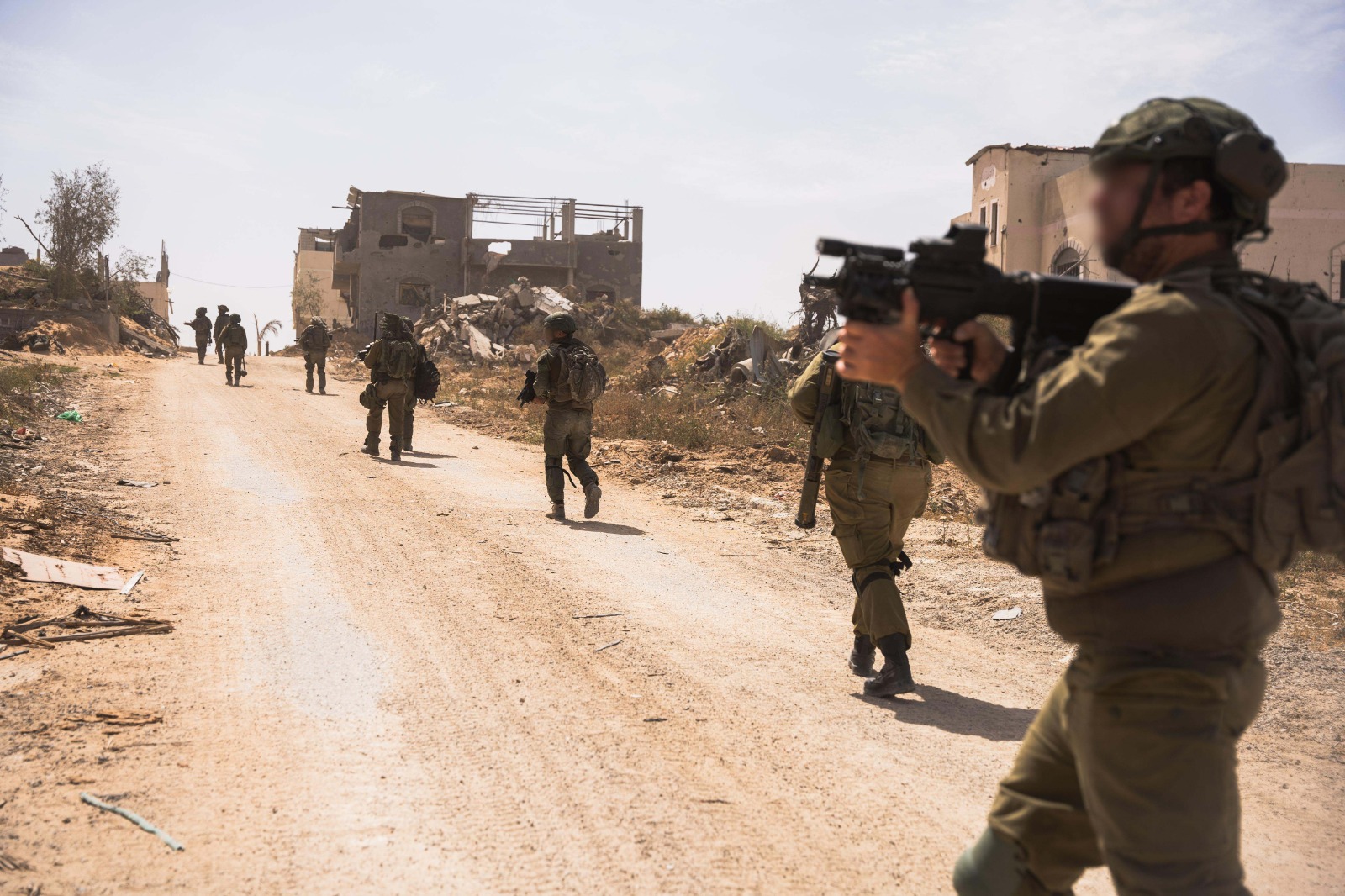
IDF troops operate in the central Gaza corridor, in a handout image published April 28, 2024. (Israel Defense Forces)
Israel, on the other hand, he continued, “is facilitating a surge of humanitarian assistance to Gaza.”
He ended his statement with a call for world leaders to come out against the reported plan to issue arrest warrants, warning that such a move would harm not only Israel’s right to self-defense but that of “all democracies in the world.”
Writing for the Walla news site Sunday, analyst Ben Caspit said Netanyahu was “under unusual stress” over the prospect of an arrest warrant against him and other Israelis by the United Nations tribunal, which would constitute a major deterioration in Israel’s international status.
Netanyahu was leading a “nonstop push over the telephone” to prevent an arrest warrant, focused especially on the administration of US President Joe Biden, Caspit reported.
US Congress members from both parties have reportedly warned the ICC that Washington will retaliate if any arrest warrants are issued, and other allied nations are reported to have also expressed their opposition to such a move.
White House Spokesman Jack Kirby told Axios on Tuesday that “the US is opposed to an ICC investigation against Israel but is also opposed to threats and intimidations against the court’s judges.”
According to a Channel 12 news report, Netanyahu asked families of hostages held in Gaza to appeal to the ICC on behalf of the potentially targeted officials, as the families have a good relationship with the court’s chief prosecutor Karim Khan.
Foreign Minister Israel Katz said Sunday that Israel “expects the court to refrain” from issuing arrest warrants.
Foreign Minister Israel Katz tours the Yad Vashem Holocaust Memorial museum in Jerusalem, February 19, 2024. (Chaim Goldberg/Flash90)
“There is nothing more twisted than trying to prevent Israel from defending itself against a murderous enemy that openly calls for the destruction of Israel,” said Katz in a statement. “If the orders are issued, they will harm the commanders and soldiers of the IDF and give a boost to the terrorist organization Hamas and the radical Islamic axis led by Iran against which we are fighting.”
Katz stressed that Israel adheres to “all the laws of war,” and instructed Israel’s diplomatic missions around the world to prepare for a severe wave of antisemitism if the ICC issues arrest warrants.
Protesters block Begin Road in front of the Kirya Military Headquarters in Tel Aviv as they call for the release of the hostages, April 30, 2024. (Dafi Cohen/Pro-Democracy Protest Movement)
Hamas’s unprecedented October 7 onslaught on southern Israeli communities and army bases saw terrorists murder some 1,200 people, mostly civilians, and take 253 hostages.
Israel believes 129 hostages remain in Hamas captivity, although not all of them are alive. The IDF has confirmed the deaths of 34 while last week, Hamas released videos showing signs of life from Hersh Goldberg-Polin, Keith Siegel, and Omri Miran.
The Hamas-run health ministry in Gaza claims that Israel has killed more than 34,000 Palestinians in the ensuing war. That number cannot be independently verified and is believed to include both Hamas terror operatives and civilians, some of whom were killed as a consequence of the terror group’s own rocket misfires.
The IDF says it has killed over 13,000 terrorists in Gaza, in addition to some 1,000 who were killed inside Israel on and immediately following October 7. The army also says that 263 soldiers have been killed since the ground invasion began at the end of October. Together with soldiers killed on or immediately after October 7, the military’s casualties number over 600.