Seasoned journalist and ‘Fauda’ co-creator spells out how nuclear Iran must be treated as Israel’s prime existential threat, even as the Jewish state fights on many fronts
Welcome to What Matters Now, a weekly podcast exploring one key issue currently shaping Israel and the Jewish World, hosted by deputy editor Amanda Borschel-Dan.
In a post-October 7 Israeli reality, is any new security threat outside the realm of imagination?
This week, when over 300 projectiles were fired by Iran at Israel, we pose this question to journalist and co-creator of the hit Israeli drama “Fauda” Avi Issacharoff.
Legions of fans around the world know of Issacharoff’s storytelling from the popular television series — loosely based on his experiences in the IDF’s elite Duvdevan unit — which he writes with “Fauda” star Lior Raz. (We’ll hear a story of their post-October 7 real-life bravery during our conversation.)
But Issacharoff is first and foremost a long-time, diehard journalist and analyst of the Arab world — one who has put his life on the line in the past to cover a story.
We pick Issacharoff’s brain as we unpick the knotty situation Israel is currently facing with enemies on our borders, and Iran as a puppetmaster who is coming increasingly closer to a nuclear bomb.
So this week, we ask journalist Avi Issacharoff, What Matters Now.
Russia has made clear to Jerusalem that Tehran “does not want escalation,” Moscow’s foreign minister Sergei Lavrov says after reports Israel had carried out retaliatory strikes against Iran.
“There have been telephone contacts between the leadership of Russia and Iran, our representatives and the Israelis. We made it very clear in these conversations, we told the Israelis that Iran does not want escalation,” Lavrov says in an interview with a Russian radio station.
A senior US official also confirmed the attack, stating that “We were not surprised.”
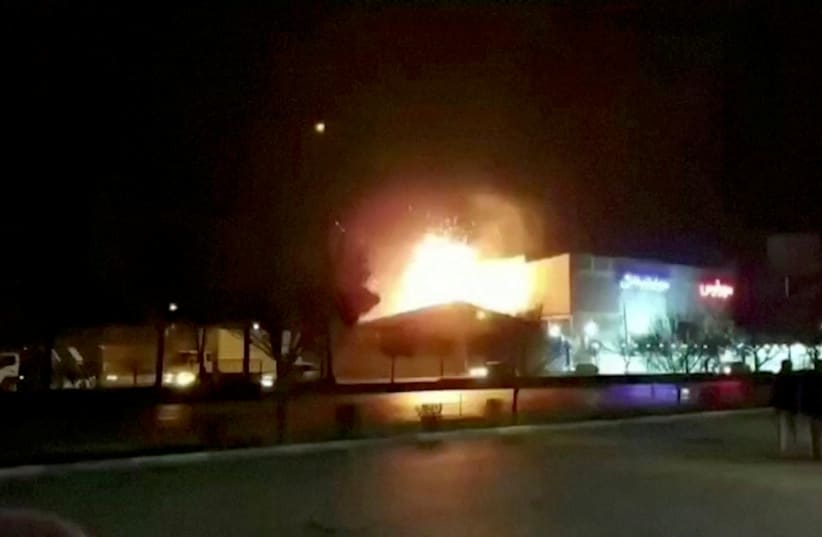
By YONAH JEREMY BOB, TZVI JOFFRE, ZVIKA KLEINUpdated: APRIL 19, 2024 14:39Eyewitness footage shows what is said to be the moment of an explosion at a military industry factory in Isfahan, Iran, January 29, 2023 (illustrative)(photo credit: WANA NEWS AGENCY/REUTERS)
Long-distance aircraft fired missiles that struck Iranian Air Force assets at Isfahan in central Iran early Friday morning, the Jerusalem Post has confirmed.
Meanwhile, two Israeli defense officials and three Iranian officials confirmed to The New York Times that Israel was involved.
The report came shortly after local sources reported explosions in Isfahan in central Iran, in the As-Suwayda Governorate of southern Syria, and in the Baghdad area and Babil Governorate of Iraq early Friday morning.
A US official then told CNN that the Iranian target was not nuclear. Videos from Isfahan appeared to show Iranian air defenses activated in the skies over the area.
A senior US official also confirmed this on Friday morning of the attack, stating, “We were not surprised, while also telling Walla that Israel informed the US in advance of the strike.
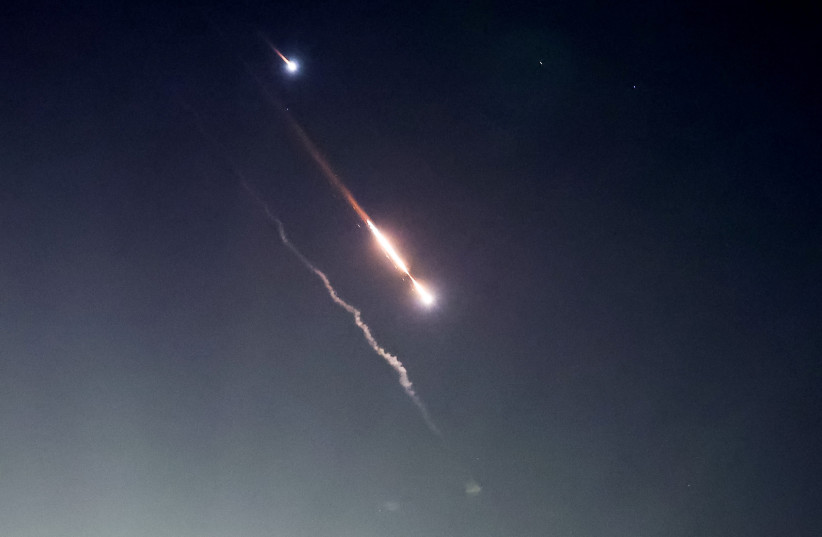
Objects are seen in the sky above Jerusalem after Iran launched drones and missiles towards Israel, in Jerusalem April 14, 2024. (credit: RONEN ZVULUN/REUTERS)
eports in Iran of the strike
The Iranian semi-official Fars News Agency reported on Friday that an explosion was heard in Qahjavarestan, east of Isfahan and near the Isfahan International Airport. Fars stressed that the cause of the explosion was unknown as of yet.
Fars and other Iranian news agencies reported that air defenses were seemingly activated near Isfahan in response to small drones.
Iranian air defenses were also activated in Tabriz in northwestern Iran on Friday morning after a suspicious object was spotted in the air, according to Fars.
According to Bloomberg News, Israeli officials notified the US on Thursday that they planned to launch a strike in the next 24-48 hours.
Reports of strikes on sites belonging to Syrian army
Syrian reports on Friday morning indicated airstrikes had also targeted sites belonging to the Syrian Army in the As-Suwayda and Daraa Governorates of southern Syria.
According to the local news site As-Suwayda24, the airstrikes targeted radar sites belonging to the Syrian military between Qarda and Izraa in Daraa in southern Syria.
Residents in Erbil and Mosul in Iraq reported hearing the sounds of fighter jets as well early Friday morning.
Flight trackers showed several flights headed for Iran had turned around and diverted from their planned routes, including several Emirati flights.
The Iranian Mehr News Agency reported that flights to Tehran, Isfahan, and Shiraz had been suspended as of Friday morning.
Shortly after the Israeli missile strikes were reported, Florida Senator Marco Rubio published a post on X reading, “Israel has the ability to conduct strikes against targets inside Iran without entering Iranian air space from aircraft over Syrian and Iraqi airspace.”
Israeli media reported that several senior Israeli officials were present in the Kirya military headquarters in Tel Aviv on Friday morning.
The explosions came as Israel promised to respond to a drone and missile attack conducted by Iran on Saturday night against Israel.
The Iranian attack came in response to an alleged Israeli airstrike that targeted a building next to the Iranian embassy in Damascus in which Mohammad Reza Zahedi – a senior IRGC commander in charge of Iran’s operations in Syria and Lebanon – was killed.
Iranian officials had warned in recent days that any Israeli strike on Iran would be met with a strong and quick response.
In January 2023, a mix of Western intelligence sources and foreign sources told the Jerusalem Post that despite Iranian claims to the contrary, a drone attack on Iran at Isfahan was a tremendous success.