A huge blast hit an Iraqi military base used by Popular Mobilization Forces near Baghdad.
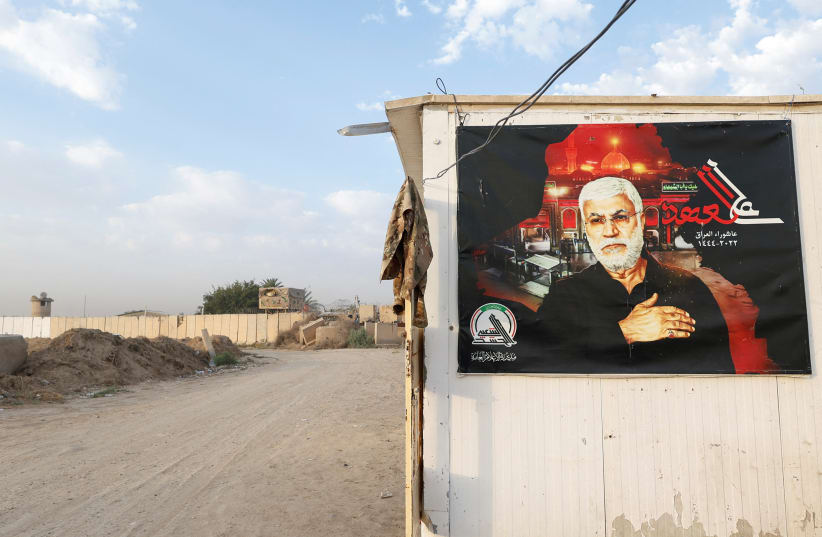
A general view shows the Kalso military base after it was hit by a huge explosion on late Friday, in Babil Province, Iraq April 20, 2024. (photo credit: ALAA AL-MARJANI/REUTERS)
A general view shows the Kalso military base after it was hit by a huge explosion on late Friday, in Babil Province, Iraq April 20, 2024.
(photo credit: ALAA AL-MARJANI/REUTERS)
One killed and six wounded in an airstrike on a military base used by Iraq’s Popular Mobilization Forces (PMF) to the south of Baghdad on Friday, according to Iraqi sources.

Significant strikes were carried out overnight between Friday and Saturday against targets of Iranian-backed militias in Iraq, south of Baghdad, as reported by Saudi-owned Al-Hadath network. Additionally, Iraqi media claimed that the attack was carried out by a number of drones targeting a military base belonging to the militias.  Iraq’s Popular Mobilisation Forces said on Saturday that the explosion which took place at its command post at Kalso military base was the result of an attack.

One member of Iraq’s Popular Mobilisation Forces was killed and eight wounded in an explosion at its command post on the Kalso military base 50 km (30 miles) south of Baghdad, a military statement said on Saturday.

There were no drones or fighter jets detected in the air space of the Babylon area before or during the blast, the military confirmed in a statement.

According to reports, during the attack, two separate waves of strikes were conducted. Two PMF sources claimed that the strikes did not lead to casualties but caused material damage.

“The blast has caused material damage and injuries,” PMF said in a statement, adding that a team was investigating. This is despite a report from two sources at a hospital in the nearby city of Hilla who said that one PMF fighter was killed and six were wounded.

PMF sources said the strikes targeted a headquarters of the PMF at the Kalso military base near the town of Iskandariya around 50 km south of Baghdad.

According to Al-Hadath, the attack was carried out by three F-35 jets. An American official claimed the attack was conducted outside Iran’s territory. However, another report by CNN stated that no significant damage was recorded at the site. The attack took place near Osfia, located in Iran.
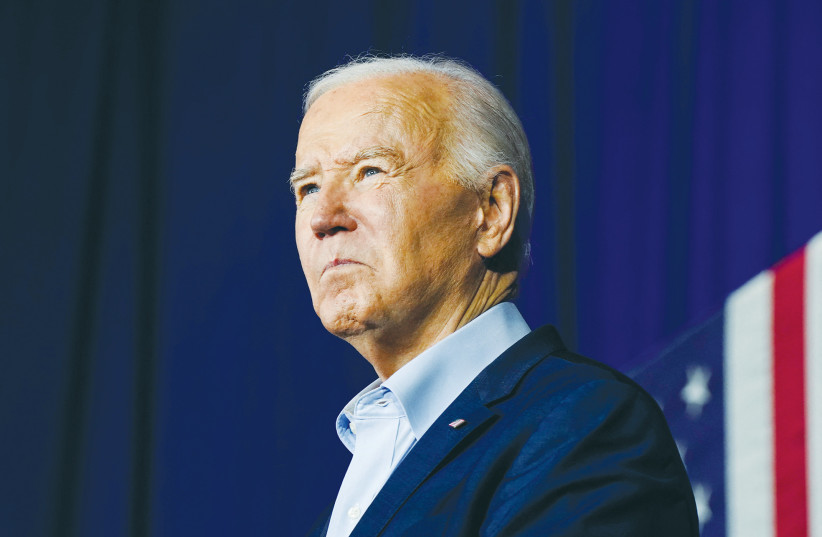
 US PRESIDENT Joe Biden looks on during a presidential campaign event in Scranton, Pennsylvania, this week. ‘Mr. president, I believe you carry within you a deep emotional and spiritual commitment to the Jewish people and the State of Israel,’ says the writer.  (credit: Elizabeth Frantz/Reuters)Enlrage image
US PRESIDENT Joe Biden looks on during a presidential campaign event in Scranton, Pennsylvania, this week. ‘Mr. president, I believe you carry within you a deep emotional and spiritual commitment to the Jewish people and the State of Israel,’ says the writer. (credit: Elizabeth Frantz/Reuters)

Dozens of American and Israeli aircraft were reportedly flying in the vicinity of Iraq, according to sources in the country. Additionally, the Iraqi sources claimed that among the waves of bombings to the south of the city Baghdad, an arsenal of weapons belonging to Iranian militias was attacked.

However, two security sources said it was not known who was responsible for the air strike and a US official said there had been no US military activity in Iraq. CNN reported that also Israel denied participation at bombing.

US mission in Syria and Iraq

On January 2024, a US airstrike foiled an attack on Ain al-Asad air base, which hosts US and other international forces in western Iraq. According to US military sources, a rocket launcher was fixed to a small truck that was parked east of the base with rockets ready to be fired.

With 900 troops in Syria and 2,500 more in Iraq, the US claimed their mission is to advise and assist local forces trying to prevent a resurgence of Islamic State.

The Iraqi militia PMF is an Iranian backed militia and is numbered more than 100,000 fighters. After ISIS’s defeat in Iraq, the militia became an official government-paid force linked to the Iraqi Interior Ministry. The newly official force began stockpiling missiles and drones and to operate more freely in Syria, threatening US and Israeli forces.

In 2020,  an American strike killed Suleimani on a trip to Baghdad. The Guards Intelligence Department suspected that an informant from the PMF provided details about Suleimani’s trip. This lead to his successor, Ismail Ghani, decision to create a force that was fiercely loyal to the regime.

Reuters contributed to this report.

This is a developing story.

Israel will not accept responsibility for this attack for strategic reasons.

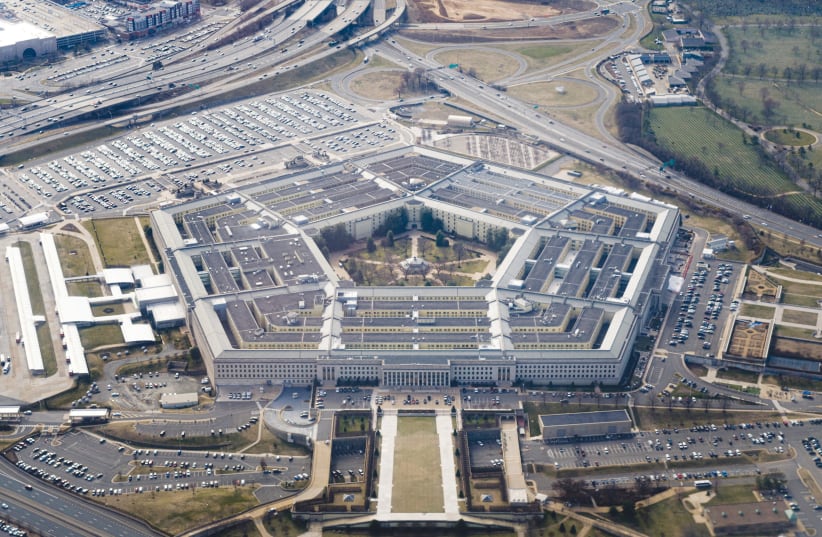
 AERIAL VIEW of the Pentagon complex: Is there a cyberwarfare campaign that US institutions are hesitant to acknowledge?  (photo credit: JOSHUA ROBERTS/REUTERS)
AERIAL VIEW of the Pentagon complex: Is there a cyberwarfare campaign that US institutions are hesitant to acknowledge?
(photo credit: JOSHUA ROBERTS/REUTERS)
Israeli official security and governmental sources told The Jerusalem Post on Friday: “An eye for an eye, a tooth for a tooth. Israel retaliated where they were attacked.”

That said, officially, Israel will not accept responsibility for this attack for strategic reasons. Sources explain that the Iranians claim it was an “explosion at a factory” because they wish to avoid escalation. Israeli sources told the Post that it’s unclear why the Pentagon disclosed to the American media that Israel was involved; they could have remained silent, they say. They could have preserved Iran’s dignity and avoided escalating the situation on their own.

At the Kirya base in Tel Aviv, Prime Minister Benjamin Netanyahu and the entire security and diplomatic leadership have been present for 24 hours, coordinating with regional partners in Jordan, Egypt, and Saudi Arabia.

That said, Israel does not yet accept responsibility.

In recent hours, countries in the region have conveyed messages to Israel that if Iran attacks, they are here to help.

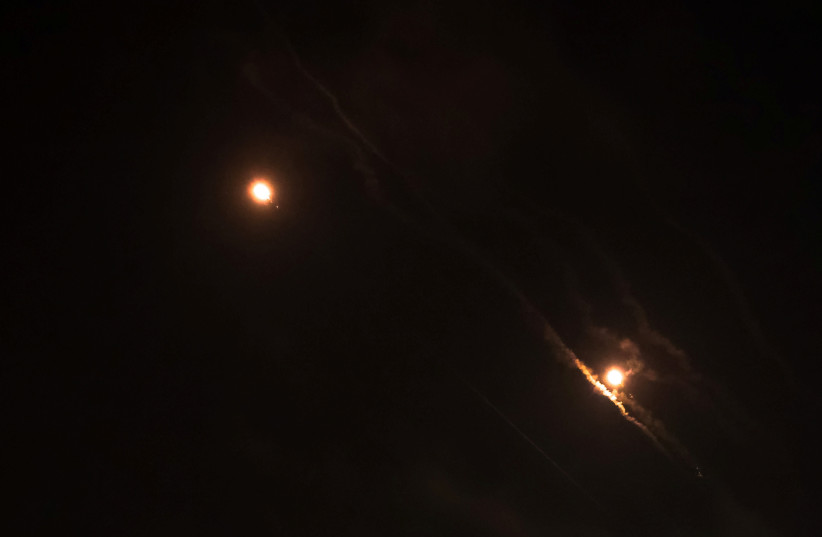
 Objects are seen in the sky above Jerusalem after Iran launched drones and missiles towards Israel, in Jerusalem April 14, 2024.  (credit: REUTERS/Ronen Zvulun)Enlrage image
Objects are seen in the sky above Jerusalem after Iran launched drones and missiles towards Israel, in Jerusalem April 14, 2024. (credit: REUTERS/Ronen Zvulun)

Israel reportedly informed the US of the strike

A senior US official also confirmed this on Friday morning of the attack, stating that “We were not surprised,” while also telling Walla that Israel informed the US in advance of the strike.

A Bloomberg report said that Israeli officials notified the US on Thursday that they planned to launch a strike in the next 24-48 hours.

Jerusalem Post Staff contributed to this report.


The message was unmistakable: ‘We chose not to hit your nuclear sites this time, but we could have done worse right here,’ sources told the Post.

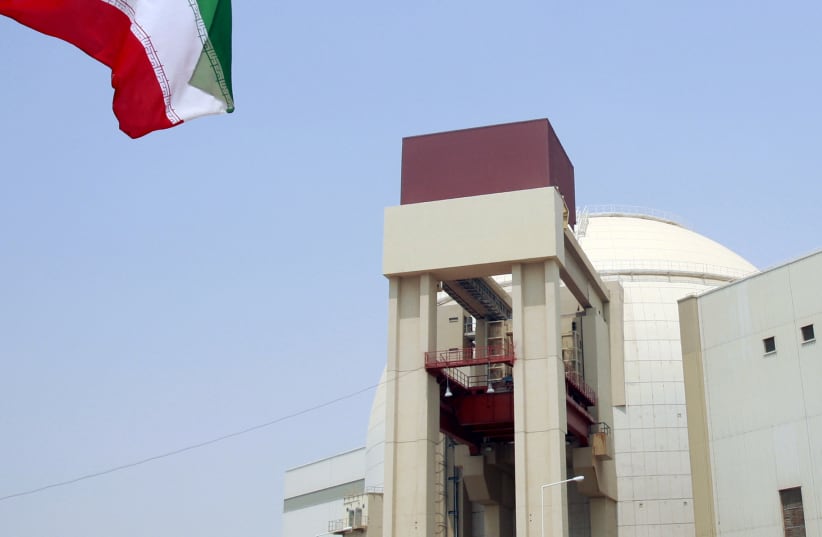
A general view of the Bushehr main nuclear reactor, Iran (photo credit: REUTERS/RAHEB HOMAVANDI)
A general view of the Bushehr main nuclear reactor, Iran
(photo credit: REUTERS/RAHEB HOMAVANDI)
Sources have confirmed to The Jerusalem Post that the attack on Iran at Isfahan, attributed by sources in the New York Times to Israel, hit Iranian air force assets at Isfahan, almost right next door to the Islamic Republic’s nuclear site in the same area.

The message was unmistakable, ‘we chose not to hit your nuclear sites this time, but we could have done worse right here,’ sources told the Post.

Israel sends a clear message to Iran

In other words, the attack at Isfahan was designed not only to hurt Iran but also to make it eminently clear how vulnerable to attack its nuclear sites are.

Long-range missiles from aircraft were used to avoid Tehran’s radar detection capabilities.

This could be done again at any time.

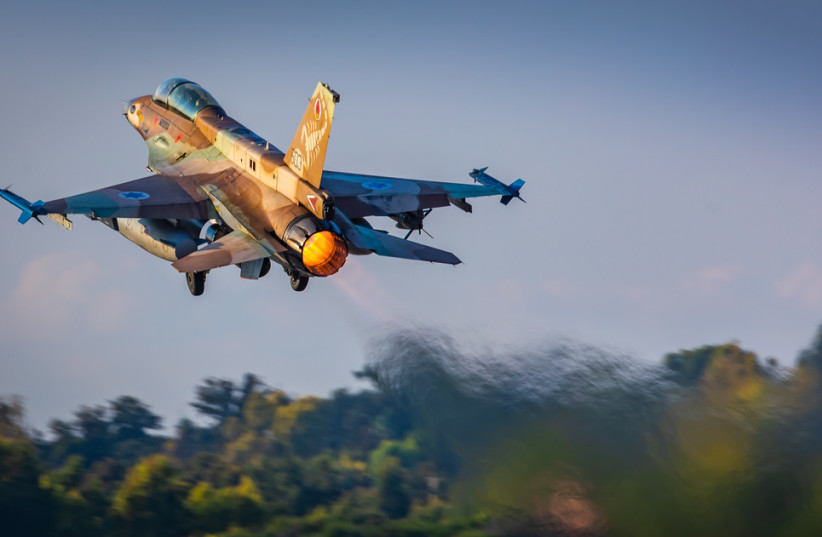
The Israeli Air Force works to fight new and developing threats across the region (credit: IDF SPOKESPERSON UNIT)Enlrage image
The Israeli Air Force works to fight new and developing threats across the region (credit: IDF SPOKESPERSON UNIT)


At the same time, by not attacking the actual nuclear site at Isfahan or other nuclear sites at Natanz and Fordow, the attacker signaled to Iran that it was not seeking a spiraling and escalating regional war.

A nuanced attack 

This was a very nuanced middle-of-the-road attack, designed to threaten optimally for the future but also reduce the likelihood of another Iranian counter-strike following the Islamic Republic’s launching around 350 aerial threats at the Jewish state last weekend.

Whether it will work, both stopping Iran from moving forward with its nuclear program and deterring it from copying its strike on Israel last weekend while also avoiding an escalation into a larger war, will remain to be seen in the coming days and weeks.