Two people were injured in the strike in the Sayyida Zeinab area near Damascus, according to Syrian state media.
TZVI JOFFRE

A site used by Iran’s Islamic Revolutionary Guards Corps (IRGC) in Sayyida Zeinab near Damascus was targeted in an alleged Israeli airstrike on Thursday afternoon, according to Syrian reports.

Just two hours before the strike, leaders from the IRGC, Hezbollah, the Syrian Army, and the Iran-backed Popular Mobilization Forces held a meeting at the targeted building, according to the Syrian Capital Voice news site.

At least two people were injured in the strike, according to Syrian state media. Photos reportedly from the scene showed a collapsed building and a heavily damaged vehicle.

The Sayyida Zeinab area serves as a stronghold for Iranian militias. It has been targeted repeatedly by alleged Israeli airstrikes since the war began, including several instances in which officers in the IRGC were eliminated.
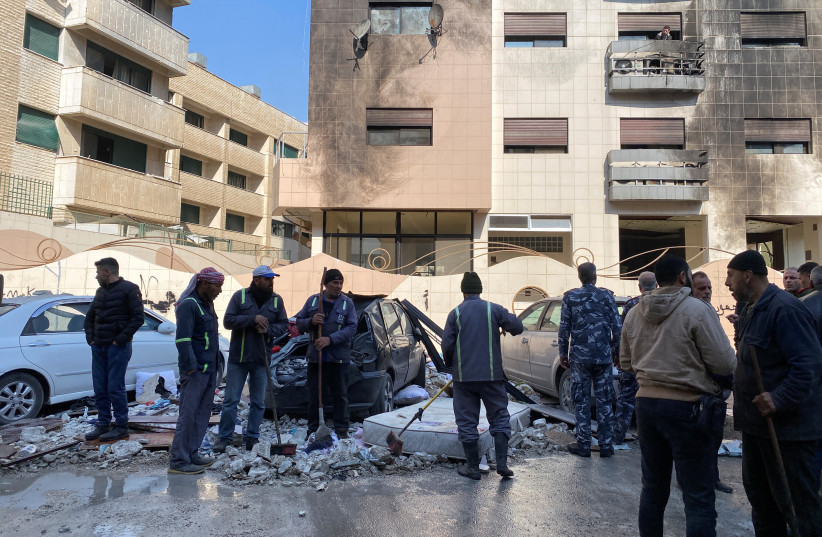
 Workers and people stand near a damaged building after, according to Syrian state media reports, several Israeli missiles hit a residential building in the Kafr Sousa district, Damascus, Syria February 21, 2024 (credit: REUTERS/FIRAS MAKDESI)

Workers and people stand near a damaged building after, according to Syrian state media reports, several Israeli missiles hit a residential building in the Kafr Sousa district, Damascus, Syria February 21, 2024 (credit: REUTERS/FIRAS MAKDESI)

Israel ramps up strikes in Syria

The strikes on Thursday came just a few days after at least one member of the IRGC was killed in a series of airstrikes that targeted sites in the Deir Ezzor region of eastern Syria.

The Syrian state news agency SANA reported on Tuesday afternoon that airstrikes targeted several sites in the Deir Ezzor region on Monday night, killing seven Syrian soldiers and one civilian and injuring another 19 soldiers and 13 civilians. SANA accused the US of carrying out the strikes.

Iranian media reported that a “military advisor” from the IRGC named Behrouz Vahedi was killed in the strikes. Additionally, the World Health Organization said on Tuesday that an engineer who worked for them was killed amid the strikes.

While some Syrian and Iranian media outlets blamed the US, Israeli defense sources said Tuesday that the strikes were carried out by the IDF and hit “significant targets” belonging to the IRGC that were used to smuggle weapons to terrorist groups in the West Bank. The targeted sites were located in bases belonging to the Syrian Army.

US Defense Department Spokesperson Sabrina Singh told reporters on Tuesday evening that the US did not launch any strikes in Syria.

The strikes in Deir Ezzor earlier this week were conducted in response to Iranian attempts to smuggle powerful weapons to terrorists in the West Bank which were uncovered by the Shin Bet and IDF on Monday, according to Israeli defense sources.

Jerusalem Post Staff contributed to this report.

Russian warships enter the Red Sea, navy says

The Houthis have vowed to continue their attacks in the Red Sea as long as Israel continues to commit “crimes against Palestinians.”

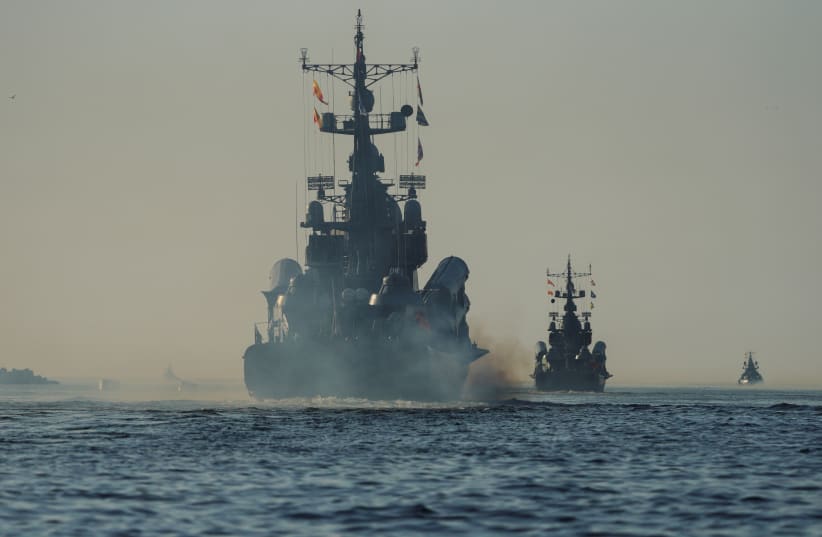
 Russian warships leave a port during naval drills, which are staged by the Baltic Fleet forces of the Russian Navy, part of the military exercises Zapad-2021 opened by Russia and Belarus, in the Baltic Sea town of Baltiysk in Kaliningrad Region, Russia September 9, 2021 (photo credit: REUTERS/VITALY NEVAR)
Russian warships leave a port during naval drills, which are staged by the Baltic Fleet forces of the Russian Navy, part of the military exercises Zapad-2021 opened by Russia and Belarus, in the Baltic Sea town of Baltiysk in Kaliningrad Region, Russia September 9, 2021
(photo credit: REUTERS/VITALY NEVAR)
Several Russian warships have passed the Bab al-Mandab Strait into the Red Sea, the Russian Navy’s Pacific Fleet said on Thursday, amid attacks by Yemen’s Houthis on merchant shipping.

The Zvezda TV channel, owned by the defense ministry, quoted the fleet as saying the Russian cruiser Varyag and the frigate Marshal Shaposhnikov were taking part in the voyage.

Houthi terrorists in Yemen have repeatedly attacked ships passing through the Bab al-Mandab Strait in the Red Sea since November in support of Palestinians, the terror organization claims.

Attacks by Houthi terrorists

The Houthis have vowed to continue their attacks as long as Israel continues to commit “crimes against Palestinians.”

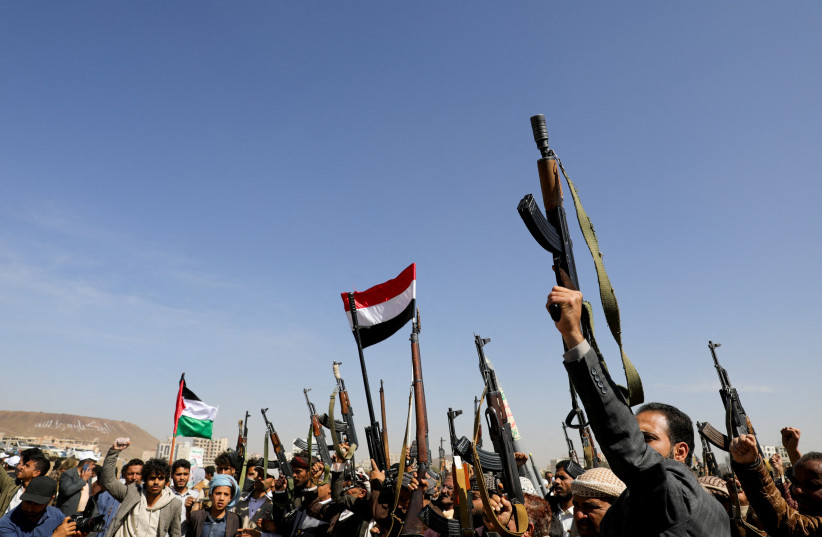
 Houthi followers raise firearms during a parade in solidarity with the Palestinians in the Gaza Strip and to show support to Houthi strikes on ships in the Red Sea and the Gulf of Aden, in Sanaa, Yemen January 29, 2024. (credit: KHALED ABDULLAH/REUTERS)Enlrage image
Houthi followers raise firearms during a parade in solidarity with the Palestinians in the Gaza Strip and to show support to Houthi strikes on ships in the Red Sea and the Gulf of Aden, in Sanaa, Yemen January 29, 2024. (credit: KHALED ABDULLAH/REUTERS)

In February, the Houthis attacked the Rubymar cargo ship on the Bab al-Mandab Strait, which sunk at the beginning of March. The ship, containing 21,000 metric tons of ammonium phosphate sulfate fertilizer, presents an environmental risk in the Red Sea.

Houthi terrorists in Yemen, who control the country’s most populous regions, have primarily targeted vessels with commercial ties to the United States, Britain, and Israel.


The Biden administration betrayed the hostages – opinion

The rift between the United States and Israel is deepening to levels we’ve never known before.

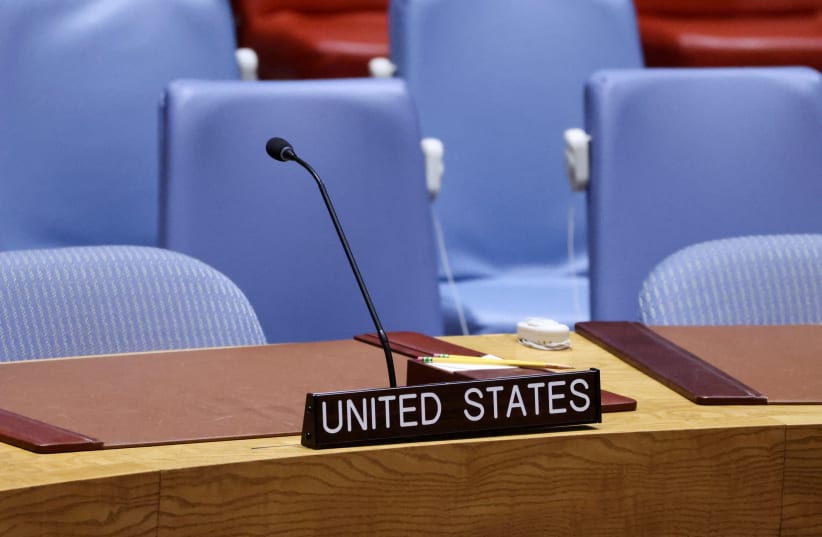
 A general view shows a plate with United States, inside of the U.N. headquarters, on the day members of the United Nations Security Council vote on a Gaza resolution that demands an immediate ceasefire. March 25, 2024 (photo credit: Andrew Kelly/Reuters)
A general view shows a plate with United States, inside of the U.N. headquarters, on the day members of the United Nations Security Council vote on a Gaza resolution that demands an immediate ceasefire. March 25, 2024
(photo credit: Andrew Kelly/Reuters)
Purim was different this year: something primal came out of us when we drowned out the name of Haman. In previous years, we revisited the narrative of Esther and Mordecai’s triumph over the attempted annihilation of our people with a sense of distance between us and the story. We contemplated the lack of God’s presence and marveled at the rather happenstance victory the Jews of the time seemed to luck into. However, unlike the Exodus story, we didn’t see ourselves in the text.

But this year, the recitation was different.

From the first moment Haman’s name was read, we all sensed a change. The bellow our community let out came from a more primitive place – a place that many of us didn’t know existed. It was louder and more passionate than it had ever been before. In years past, the cries were more about jubilation because we knew how the story ended – we won and the bad guys lost, just as is true in every good tale.

But today we no longer live in that reality.

Now, the Purim story hits way too close to home. In Israel, we know that those who seek our destruction have extracted major victories. So many have either been butchered or captured and taken to places unknown.

But even more disturbing, we know that Haman and his henchmen are still out there, just waiting for the right moment to strike again. Even worse, it’s as if we were watching King Ahashverosh’s decree enabling the Jews to defend themselves, which saved us from calamity, slowly disappearing.

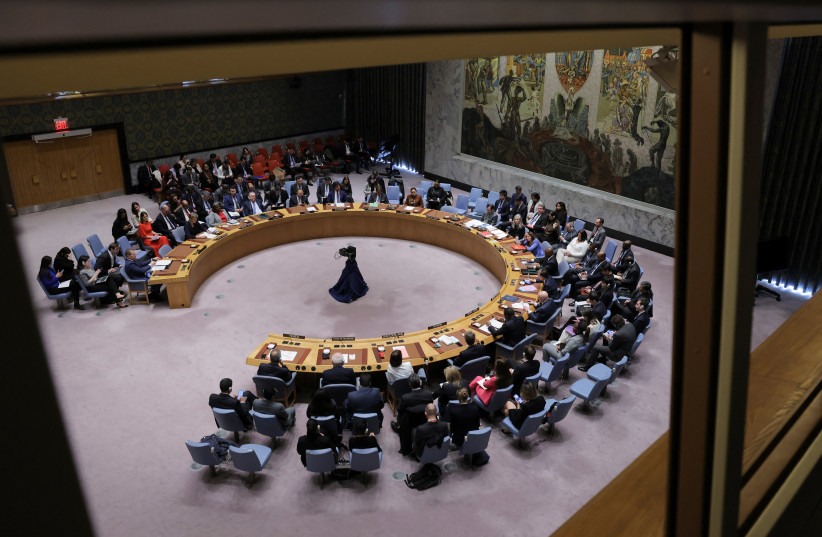
Members of the United Nations Security Council meet on the day of a vote on a Gaza resolution that demands an immediate ceasefire for the month of Ramadan. March 25, 2024 (credit: Andrew Kelly/Reuters)Enlrage image
Members of the United Nations Security Council meet on the day of a vote on a Gaza resolution that demands an immediate ceasefire for the month of Ramadan. March 25, 2024 (credit: Andrew Kelly/Reuters)

US abstaining was a slap in the face

THE RIFT between the United States and Israel is deepening to levels we’ve never known before. The UNSC vote demanding an immediate ceasefire is an attempt to leave our present-day Haman alive and well. This is clear because the bloodthirsty terrorist entity immediately celebrated its ratification. And America’s abstention, which enabled the resolution to pass, is not only a clear change in policy, but also a slap in the face to the only Democratic nation in the region.

This gesture is a slap in the face because it means that Israel should not defend itself. If we were to follow the instructions of the UN and leave Hamas in place, our neighbors would be emboldened and would most likely attack. We know this is true because even before Hamas’s celebration, rockets were shot at Ashdod, which is farther into Israel than we’ve seen in two months.

However, this slap in the face goes much deeper than just trying to stop Israel from fighting. The Security Council resolution disconnects the ceasefire from the release of the hostages. As the Prime Minister’s office statement points out, China and Russia previously vetoed a resolution which linked the conditions of a ceasefire and hostage release. The most recent vote that Beijing and Moscow affirmed indicates that they succeeded in breaking that bond.

In a sense, the Biden administration has forsaken 134 innocent people – and this is unforgivable. These hostages, whether alive or dead, are still captive in the dungeons of Rafah. To the best of our knowledge, they’ve been tortured, raped, and held against their will for almost 200 days. This war is as much about bringing them home as it is about ensuring we will never have a pogrom like this in our country again.

Unlike the Purim story, today we don’t need the king’s permission to fight. Israel, as much as we strive to work within the international community, is a sovereign nation and will do what it needs to protect its citizens. It’s obvious that what we need right now is to finish off the remaining Hamas battalions in Rafah and then move on to cripple Hezbollah in the North – and we will do that with or without the world’s imprimatur.

Even though the Democrats would like to paint a picture of division in Israel, it is not the case. The country stands behind the unity government in carrying the war to completion. It is a surprise that we might need to go it alone, but if that’s the way it must be, then so be it.

The writer is a rabbi, a wedding officiant, and a mohel who performs britot (ritual circumcisions) and conversions worldwide. Based in Efrat, he is the founder of Magen HaBrit, an organization protecting the practice of brit milah and the children who undergo it.