Vienna International Centre, where IAEA offices are locatediStock
Iran has further increased its total stockpile of uranium, a new report by the UN nuclear watchdog seen by The Associated Press on Monday said.
The report also noted thar Iran continues to bar the agency’s most seasoned inspectors from monitoring its nuclear program,
The International Atomic Energy Agency (IAEA) also said in a second confidential report, distributed to member states, that Tehran made no progress in explaining the presence of manmade uranium particles found at two locations, according to AP.
The IAEA estimated in its quarterly report that as of February 10, Iran’s total enriched uranium stockpile was at 5,525.5 kilograms, an increase of 1,038.7 kilograms since the last quarterly report in November 2023.
It also said that according to its assessment, Iran has an estimated 121.5 kilograms of uranium enriched up to 60% purity, which represents a decrease of 6.8 kilograms since the last report in November 2023.
According to the IAEA’s definition, around 42 kilograms of uranium enriched to 60% is the amount at which creating one atomic weapon is theoretically possible. The 60% purity is just a short, technical step away from weapons-grade levels of 90%.
Between June and November last year, Iran slowed down the enrichment to 3 kg per month, but jumped back up to a rate of 9 kg at the end of the year, the IAEA previously reported.
Under the original nuclear deal with world powers in 2015, Iran was allowed to enrich uranium only up to 3.67% purity, maintain a stockpile of uranium of 300 kilograms, and use only very basic IR-1 centrifuges, machines that spin uranium gas at high speed for enrichment purposes, in exchange for the lifting of economic sanctions.
However, Iran has scaled back its compliance with the 2015 deal in response to former President Donald Trump’s withdrawal from the agreement in 2018.
The Biden administration sought to return to the deal and held indirect talks with Iran on a return to compliance, but the negotiations reached a stalemate last September, after Iran submitted a response to a European Union proposal to revive the deal.
A US official later said that the efforts to revive the 2015 Iran nuclear deal have “hit a wall” because of Iran’s insistence on the closure of the UN nuclear watchdog’s investigations into undeclared uranium in several sites.
The latest IAEA reports come several days after the agency’s director-general, Rafael Grossi, said that Iran continues to enrich uranium well beyond the needs for commercial nuclear use despite UN pressure to stop it.
He also pointed out concerns over the fact that senior officials in Iran have recently said they have all the elements for a nuclear weapon.
The presence of both sides for so-called proximity talks suggested negotiations were further along than at any time since a big push at the start of February.
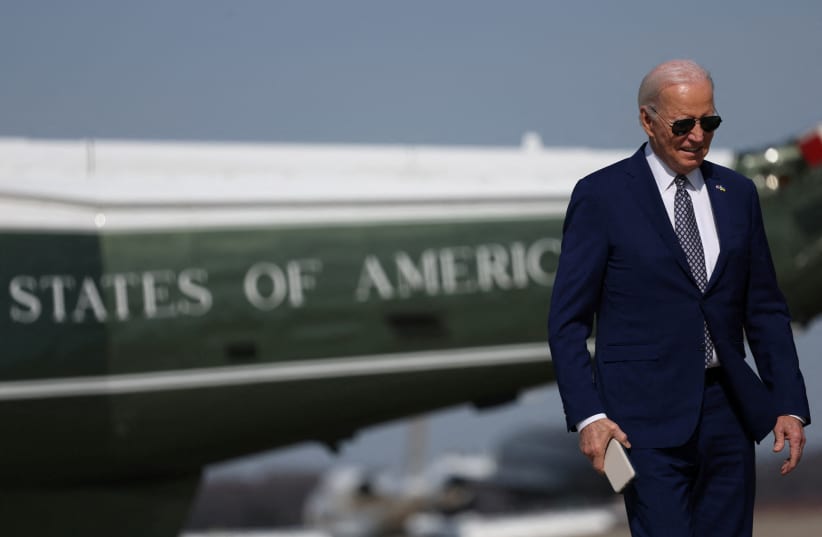
US President Joe Biden said he hoped to have a hostage deal in place by this coming Monday, March 4, as Qatar hosted delegations from Israel and Hamas.
The two sides looked to inch forward toward a deal for the release of the remaining 134 hostages in Gaza.
The presence of both sides for so-called proximity talks – meeting mediators separately while in the same city – suggested negotiations were further along than at any time since a big push at the start of February when Israel rejected a Hamas counter-offer for a four-and-a-half-month truce.
Biden hit an optimistic note as he spoke with reporters in New York about the possibility of a deal. The US president also noted that Israel promised not to act in the Gaza Strip during Ramadan, Maariv quoted him as saying.
Mediators taking part in the hostage deal talks have said that, as of now, Hamas is disinclined to agree to the US-proposed deal, Israeli media reported on Monday.
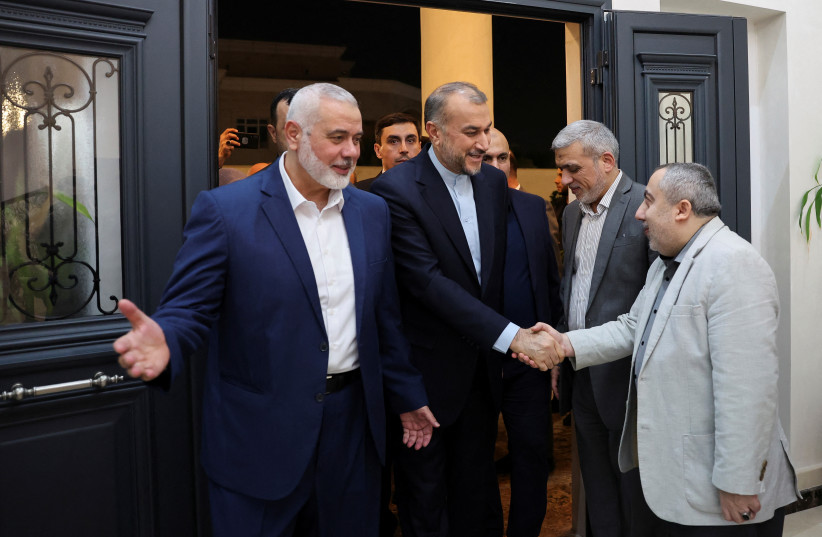
Iran’s Foreign Minister Hossein Amir Abdollahian meets with Palestinian group Hamas’ top leader, Ismail Haniyeh in Doha, Qatar December 20, 2023. (credit: IRAN’S FOREIGN MINISTRY/WANA (WEST ASIA NEWS AGENCY)/HANDOUT VIA REUTERS)
In public, both sides continued to take positions far apart on the ultimate aim of a truce while blaming each other for holding up the talks.
Israel says it will agree only to a temporary pause in fighting to secure the release of hostages. Hamas says it will not free them without an agreement that leads to a permanent end to the war.
After meeting Qatar’s Emir Sheikh Tamim bin Hamad Al Thani, the reclusive head of Hamas, Ismail Haniyeh, said his group had embraced mediators’ efforts to find an end to the war and accused Israel of stalling while Gazans die under siege.
“We will not allow the enemy to use negotiations as a cover for this crime,” he said.
Prime Minister Benjamin Netanyahu said Israel was ready for a deal, and it was now up to Hamas to drop demands he described as “outlandish” and “from another planet.”
“Obviously, we want this deal if we can have it. It depends on Hamas. It’s really now their decision,” he told US network Fox News in an interview. “They have to come down to reality.”
The office of Qatar’s emir said Al Thani and the Hamas chief had discussed Qatar’s efforts to broker an “immediate and permanent ceasefire agreement in the Gaza Strip.”
Earlier, a source told Reuters that an Israeli working delegation, made up of staff from the military and the Mossad spy agency, had flown to Qatar, tasked with creating an operational center to support negotiations there. Its mission would include vetting proposed Palestinian militants that Hamas wants freed as part of a hostage release deal, the source said.
On Monday night, Al-Jazeera reported that, during recent talks in Paris, Israel said it was prepared to release 400 Palestinian prisoners, including some convicted on severe charges, in return for the release of 40 Israeli women and elderly men being held in Gaza.
According to the report, Israel also would allow a gradual return of civilians to northern Gaza, except young men, and would allow a larger flow of humanitarian aid and the entry of temporary shelters and heavy machinery. Israel also offered to reposition Israeli forces outside of populated areas and stop aerial reconnaissance for eight hours a day as part of a potential hostage deal.
Gallant met with hostage relatives
Defense Minister Yoav Gallant met with relatives of the hostages on Monday, according to his office, and underscored Israeli efforts to ensure the return of the captives.
“We are working around the clock to achieve a framework that will allow the return of hostages. As part of the talks, we are working to maintain pressure on Hamas,” Gallant said.
He stressed that Palestinians would not be able to return to their homes in the northern part of Gaza until such time as the hostages were back in Israel.
“The defense establishment’s position will be clear: the full return of civilians to the northern area of the Gaza strip will only take place following the return of all the hostages,” Gallant said.
“As I have said repeatedly since day one, we have no moral right to stop the fighting as long as we have even a single hostage in Gaza. This position has not and will not change,” he stressed.
He appeared to indicate that not all the hostages were included in the deal.
“Even if we achieve a framework that requires a temporary ceasefire, we will then return to fighting in order to destroy the Hamas terrorist organization and to return all the hostages,” Gallant stated.
Israel has also used its pending military operation in Rafah as a pressure lever. The War Cabinet heard the IDF’s plan to both destroy the Hamas battalions in Rafah and to protest civilians in that city near the Egyptian border. The plan, however, has yet to be approved.
Netanyahu has said that a hostage deal would delay the operation.
Israel is under pressure from its main ally, the United States, to agree on a truce soon to head off a threatened Israeli assault on Rafah, the last city at the Gaza Strip’s southern edge where over half the enclave’s 2.3 million people are sheltering, which Washington fears could become a bloodbath.
Netanyahu insisted that the assault on Rafah was still planned, and Israel had a plan to evacuate civilians from harm’s way. Asked if Israel would attack the city even if Washington asked it not to, Netanyahu said: “Well, we’ll go in. We make our own decisions, obviously, but we’ll go in based on the idea of having also the evacuation of the civilians.”
Israel continues to maintain in public that it will not end the war until Hamas is eradicated, while Hamas says it will not free hostages without an agreement on an end to the war.
“We’re totally committed to wipe Hamas off the face of the Earth,” Israel’s economy and industry minister, Nir Barkat, told Reuters at a conference in the United Arab Emirates, where his presence signaled Israel’s continued acceptance by Arab states that has angered Palestinian militants.
Senior Hamas official Sami Abu Zuhri, speaking to Reuters on Monday, said any ceasefire agreement would require “securing an end to the aggression, the withdrawal of the occupation, the returning of the displaced, the entry of aid, shelter equipment, and rebuilding.”
The momentum behind talks appears to have grown since Friday, when Israeli officials discussed terms of a hostage release deal in Paris with delegations from the United States, Egypt, and Qatar, though not Hamas.
The White House said they had come to “an understanding” about the contours of a hostage deal, though negotiations were still underway. The Israeli delegation briefed Netanyahu’s war cabinet late on Saturday.
Since Hamas killed 1,200 people and captured 253 hostages in its Oct. 7 attack, Israel launched an all-out ground assault on Gaza, with nearly 30,000 people confirmed killed, according to the Hamas Gaza health authorities. Israel has said that some 11,000 of the fatalities are combatants.
“That gets us a real, real distance towards the completion of our victory, and tha t- we’re not going to give it up,” Netanyahu said.
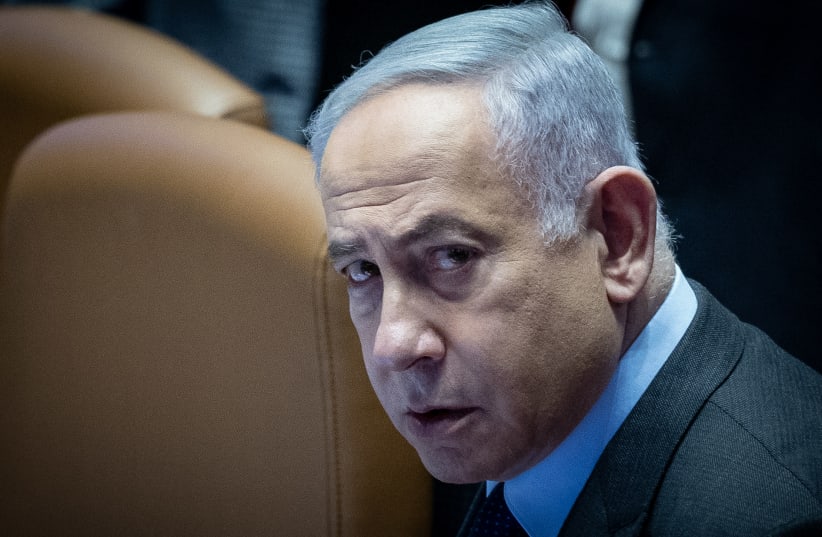
By TOVAH LAZAROFFUpdated: FEBRUARY 25, 2024 21:48Israeli prime minister Benjamin Netanyahu arrives to a discussion and a vote on the expulsion of MK Ofer Cassif at the assembly hall of the Knesset, the Israeli parliament in Jerusalem, February 19, 2024.(photo credit: YONATAN SINDEL/FLASH90)
Prime Minister Benjamin Netanyahu looked to the war cabinet Sunday to approve both a military operation into Rafah to destroy the final vestiges of Hamas and an evacuation plan for the over 1.3 million Palestinians crowded into that small area near Egypt’s southern border.
“I’ve asked the army to submit to me a double plan, first to evacuate to enable the evacuation of the Palestinian civilians in Gaza, and, obviously, second, to destroy the remaining Hamas battalions,” Netanyahu told CBS’s Face the Nations on Sunday.
“That gets us a real, real distance towards the completion of our victory, and that – we’re not going to give it up,” Netanyahu said.
“Once we begin the Rafah operation, the intense phase of the fighting is weeks away from completion, not months, weeks away from completion,” Netanyahu said, as he indicated that the Israel-Hamas war could be wrapped up this spring.
“We’ve already destroyed 18 of the 24 Hamas terrorist battalions. So we- we have– and four of them are concentrated in the Rafah. We can’t leave the last Hamas stronghold without taking care of it, obviously, we have to do it,” Netanyahu said as he defended the pending operation which has drawn worldwide condemnation even before it has begun.
Netanyahu spoke as Israel has expressed cautious optimism about the possibility of a deal for the release of the remaining 134 hostages out of the 253 Hamas seized during its attack on southern Israel on October 7, which sparked the Gaza war.
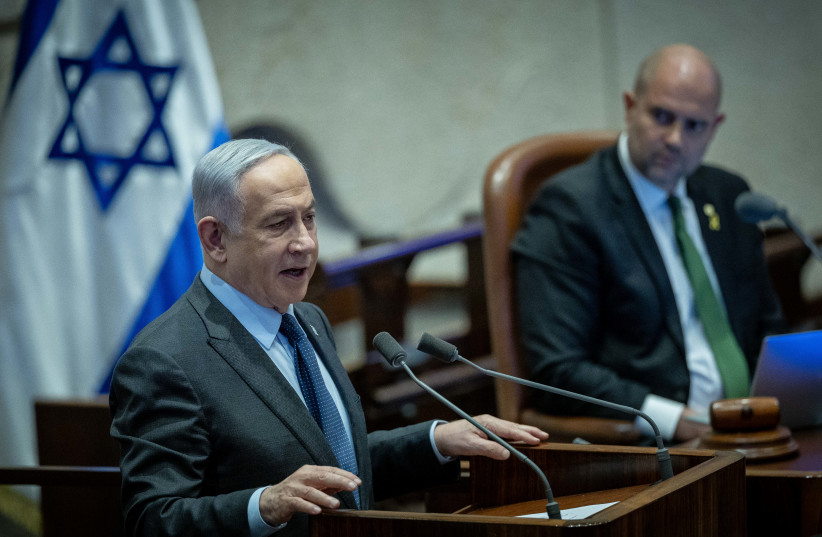
Israeli prime minister Benjamin Netanyahu speaks during a plenum session at the assembly hall of the Knesset, the Israeli parliament in Jerusalem, on February 19, 2024. (credit: YONATAN SINDEL/FLASH90)
Hostage deal will delay, not stop, Rafah operation
Those involved in the negotiations for a deal have used the pending military operation as a pressure lever to sway Hamas to make a deal before the Ramadan holiday, which begins on March 10.
“If we have a deal, it’ll be delayed somewhat. But it’ll happen,” Netanyahu said. He stressed, however, that “If we don’t have a deal, we’ll do it anyway. It has to be done. Because total victory is our goal, and total victory is within reach. Not months away, weeks away once we begin the operation.”
He spoke with the US network after CIA Director William Burns held a meeting in Paris on Friday night, that included high-level officials from Israel and the two countries mediating the deal: Egypt and Qatar.
Those participating in the meeting included Mossad Chief David Barnea, Shin bet Head Ronen Bar, Hostage Affairs Coordinator Nitzan Alon, the head of IDF Strategic Affairs Division Oren Sefer, Qatari Prime Minister Mohammed al-Thani and Egyptian intelligence chief Major General Abbas Kamel.
A lower-level Israeli delegation is expected to head to Qatar this week to continue the talks. Egyptian security sources said there would be more talks this week in Doha, with mediators shuttling between Hamas and Israeli delegates, and a follow-up round in Cairo. There was no immediate confirmation of that from Israel, Hamas or Qatar.
Hamas has in the past insisted that a deal could only occur if Israel agreed to a permanent ceasefire and to withdraw the IDF from Gaza. Israel has rejected both demands.
It’s widely understood that any deal would involve a pause to the war and the release of Palestinian security prisoners, including terrorists with “blood on their hands.”
Reports have circulated throughout about details of the deal, for which the two sides have yet to agree. According to Kan News, Israel has asked for a list of those hostages who are still alive as a trust-building measure to help the sides reach an agreement. Channel 12 reported that Netanyahu wants those terrorists responsible for killing Israel, who would be freed during the deal, to be exiled to Qatar, which is already home to the top Hamas leaders abroad. According to Channel 12, the Israeli delegation to the Doha talks has a limited mandate.
Finance Minister Bezalel Smotirch (Religious Zionist Party) told the 21st Jerusalem Conference that he was opposed to “making a deal with the devil.”
He had supported the previous deal in November that saw the exchange of a female hostage or a child for three Palestinian security prisoners that were either female or minors. Smotrich noted that Israel had been asked to pay a higher price for this second deal when, due to its military success in Gaza, it should be looked at lower terms.
“I am against a deal where the keys [demands] are larger, the truce is longer. It makes no sense,” Smotrich stated.
In his conversation with CBS, Netanyahu said that Israel wants to free the captives and has “already brought half of them back” and was working with the US for the release of the rest.
“I can’t tell you if we’ll have” a deal, Netanyahu stated, as he blamed Hamas for the protracted talks.
“If Hamas goes down from its delusional claims and … can bring them down to earth, then we’ll have the progress that we all want. “
US National Security Advisor Jake Sullivan confirmed that Israel, Egypt, and Qatar had come to an understanding in Paris about the “basic contours of a hostage deal for a temporary ceasefire.”
There will now “be indirect discussions by Qatar and Egypt with Hamas because ultimately they will have to agree to release the hostages. That work is underway. And we hope that in the coming days, we can drive to a point where there is a firm and final agreement.”
With respect to the Rafah operation, Sullivan stressed the importance of the war cabinet’s passage of a viable plan for the evacuation of Palestinian civilians, noting that this was the only way to secure US support.
“We’ve been clear that we do not believe that a major military operation should proceed in Rafah unless there is a clear and executable plan to protect those civilians, to get them to safety and to feed, clothe and house them. And we have not seen a plan like that,” Sullivan said.
Netanyahu told CBS that Israel had already done more than any other nation would to preserve civilian life during its military operation to destroy Hamas. He spoke as Israel has defended itself against charges of genocide at the International Court of Justice due to the high fatality count in Gaza.
Hamas has asserted that close to 30,000 Palestinians have been killed in Gaza of which it has stated some 6,000 were combatants. Israel has claimed that some 11,00 combatants have been killed.
The war itself was sparked by the Hamas-led October 7 attack in which over 1,200 people were killed.
Netanyahu said, “This war has been forced upon us by a cynical enemy that not only targets our civilians, has raped, beheaded, burnt babies alive, killed children in front of their parents and parents in front of their children. This enemy not only targets civilians but hides behind civilians.”
If America had suffered a similar attack, Netanyahu stated, “You’d be doing a hell of a lot more” by way of a military response.
“Israel has gone to extraordinary lengths, calling up people, civilians, Palestinians in Gaza, telling them leave your home, sending pamphlets, we have done that effort, Hamas tries to keep them at gunpoint, we’ll clear them out of harm’s way, we’ll complete the job and achieve total victory, which is necessary to give a secure future for Israel, a better future for Gaza, a better future for the Middle East, and a setback for the Iran terror axis.
“That’s in all our interests. It’s in America’s interest too,” Netanyahu stated.