In apparent jab at Ben Gvir, defense minister warns against ‘irresponsible statements,’ as police minister seeks unprecedented restrictions on Arab Israelis at Temple Mount


Defense Minister Yoav Gallant (center) speaks with commanders at the Central Command HQ near Jerusalem, February 27, 2024. (Ariel Hermoni/Defense Ministry)

Defense Minister Yoav Gallant (center) speaks with commanders at the Central Command HQ near Jerusalem, February 27, 2024. (Ariel Hermoni/Defense Ministry)

Defense Minister Yoav Gallant said Tuesday Israel has identified that Iran, Hezbollah and Hamas are aiming to take advantage of the Muslim holy month of Ramadan and turn it into “the second stage of October 7, and ignite the ground.”

Speaking during an assessment at the IDF Central Command, Gallant said, “Hamas’s main goal is to take Ramadan, with an emphasis on the Temple Mount and Jerusalem, and turn it into the second phase of their plan that began on October 7. This is the main goal of Hamas, it is being amplified by Iran and Hezbollah.”

“We must not give Hamas what it has not been able to achieve since the beginning of the war and converge the combat fronts,” Gallant warned.

Hamas called its mass-murdering October 7 onslaught on southern Israel “Operation Al-Aqsa Flood,” in an effort to claim religious legitimacy for its atrocities.

Announcing the brutal incursion, Mohammad Deif, the Hamas military commander, urged Arabs in Jerusalem and inside Israel, the Negev, the Galilee and northern Israel to “set the earth on fire under the feet of the occupiers” — a call that has so far remained unanswered by Arab Israelis.

In comments apparently aimed at far-right National Security Minister Itamar Ben Gvir, Gallant warned against “irresponsible statements from people who are supposed to be responsible” that could result in an escalation within a short time.

File: National Security Minister Itamar Ben Gvir tours the Temple Mount on Tisha B’Av, July 27, 2023. (Temple Mount Administration)

Ben Gvir has sought to impose restrictions on West Bank Palestinians and prevent them from praying at the Temple Mount during Ramadan, and is even reportedly pushing for banning Arab Israeli citizens below the age of 70 from visiting the site amid the month of fasting. Netanyahu was said to have sided with Ben Gvir on the issue last week.

The Temple Mount, known to Muslims as the Al-Aqsa Mosque compound, is considered the holiest place in Judaism, where two biblical Temples once stood, and the third-holiest site in Islam, making it a central flashpoint of the Israeli-Palestinian conflict.

Hundreds of thousands of Muslims crowd the site each Ramadan as religious fervor is heightened. While Israel has imposed restrictions on Palestinian access during times of heightened security tensions, it has refrained from imposing those rules on the country’s Muslim minority.

With Ramadan set to begin the second week of March, Israeli officials have expressed worries that the sensitive period could amplify tensions stemming from Israel’s war against Hamas in the Gaza Strip, which has sparked worldwide Muslim anger toward the Jewish state.

Last week, Shin Bet director Ronen Bar reportedly warned that the curbs could spark an angry backlash among Arab Israelis and play into the hands of Hamas, while Attorney General Gali Baharav-Miara was said to raise legal objections to the measure.

War cabinet minister Benny Gantz said Wednesday the war cabinet was united in only seeking restrictions on specific individuals who are deemed dangerous, and “not on those who come to pray.” He added that Arab Israelis “are an integral part of Israeli society” who must enjoy equal rights.

Earlier this month, a US official and an Israeli official told The Times of Israel that the Biden administration is highly concerned that Ben Gvir will try and spark tensions at the Temple Mount during Ramadan next month, in what Washington fears could drag the flashpoint issue of Jerusalem into the ongoing Middle East conflict that it’s seeking to contain.

Times of Israel staff contributed to this report.

Special envoy tells Senate that Iran is ‘equipping and facilitating’ the rebel group’s assaults on ships in Red Sea, acknowledges they haven’t been deterred by US-led response


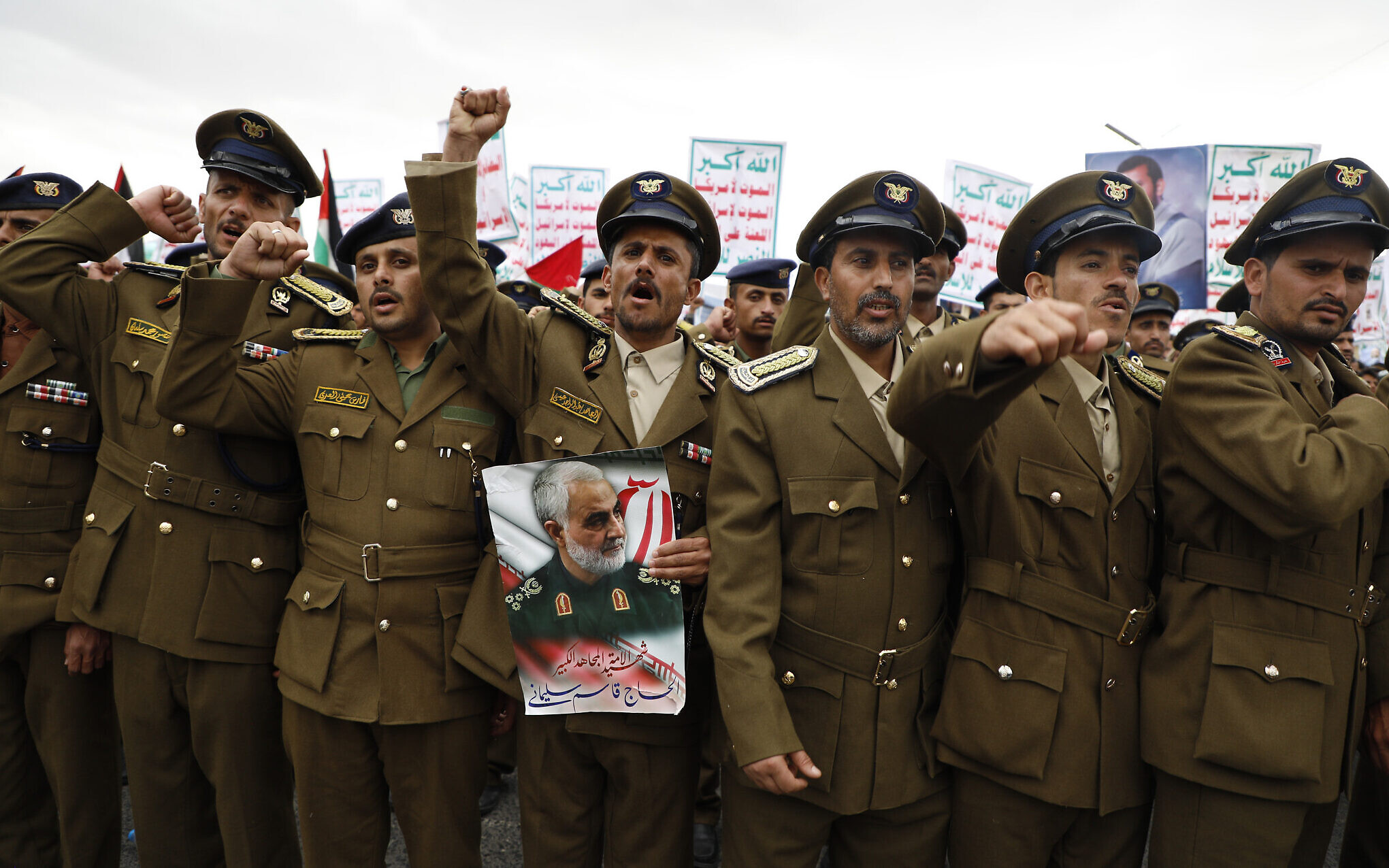
Houthi supporters attend a rally against the US-led strikes against Yemen and in the support of Palestinians in the Gaza Strip, in Sanaa, Yemen, February 16, 2024. Iranian general Qassem Soleimani, who was killed in an American airstrike, is in the photo. (AP Photo/Osamah Abdulrahman)

Houthi supporters attend a rally against the US-led strikes against Yemen and in the support of Palestinians in the Gaza Strip, in Sanaa, Yemen, February 16, 2024. Iranian general Qassem Soleimani, who was killed in an American airstrike, is in the photo. (AP Photo/Osamah Abdulrahman)

WASHINGTON — Operatives from Iran and its Lebanese ally Hezbollah are working inside Yemen to support Houthi insurgents’ attacks on international shipping, a US official said Tuesday.

Tim Lenderking, the US special envoy for Yemen, told a Senate subcommittee that Iran’s clerical state was “equipping and facilitating” the Houthi attacks, which have triggered retaliatory US and British strikes on Yemen.

“Credible public reports suggest a significant number of Iranian and Lebanese Hezbollah operatives are supporting Houthi attacks from inside Yemen,” Lenderking said.

“I can’t imagine the Yemeni people want these Iranians in their country. This must stop,” he said.

The White House said in December that Iran was “deeply involved” in planning the attacks, which the Houthis say are acts of solidarity with the Palestinians in the Israel-Hamas war.

Lenderking, who has dealt with the Houthis since the start of US President Joe Biden’s administration as he helped diplomacy to freeze a brutal civil war, acknowledged that the rebels have not been deterred.

“The fact that they continue this, and have said publicly that they will not stop until there’s a ceasefire in Gaza, is an indication that we’re not yet at the point, unfortunately, where they do intend to dial back,” Lenderking said.

US special envoy for Yemen, Tim Lenderking, takes part in a conference hosted by the Gulf Cooperation Council in the Saudi capital Riyadh on March 30, 2022. (Fayez Nureldine/AFP)

The bombing campaign drew skepticism from some senators from Biden’s Democratic Party.

Democratic Senator Chris Murphy of Connecticut, who heads the Senate Foreign Relations subcommittee on Middle East, agreed that the United States has “an obligation to respond” to attacks on shipping but added, “I do worry about the efficacy.”

He noted that US and UK strikes have hit a number of sites struck by a massive 2015-2022 Saudi-led air campaign against the Houthis.

“If 23,000 air strikes by the Saudis weren’t effective in moving the needle militarily and restoring deterrence, how can we be confident that our campaign of air strikes is going to have a different outcome?” Murphy asked.

The Houthis, who control war-torn Yemen’s most populated areas, have previously reported the death of 17 fighters in Western strikes targeting their military facilities.

The Houthi attacks have had a significant effect on traffic through the busy Red Sea shipping route, forcing some companies into a two-week detour around southern Africa.

Last week, Egypt said Suez Canal revenues were down by up to 50 percent this year.


Since Oct. 7, the IDF has upped the pace of attacks and hit senior Iranian officers, seeing little to lose in countering Tehran’s entrenchment. It seems to be working, experts say

Gianluca Pacchiani


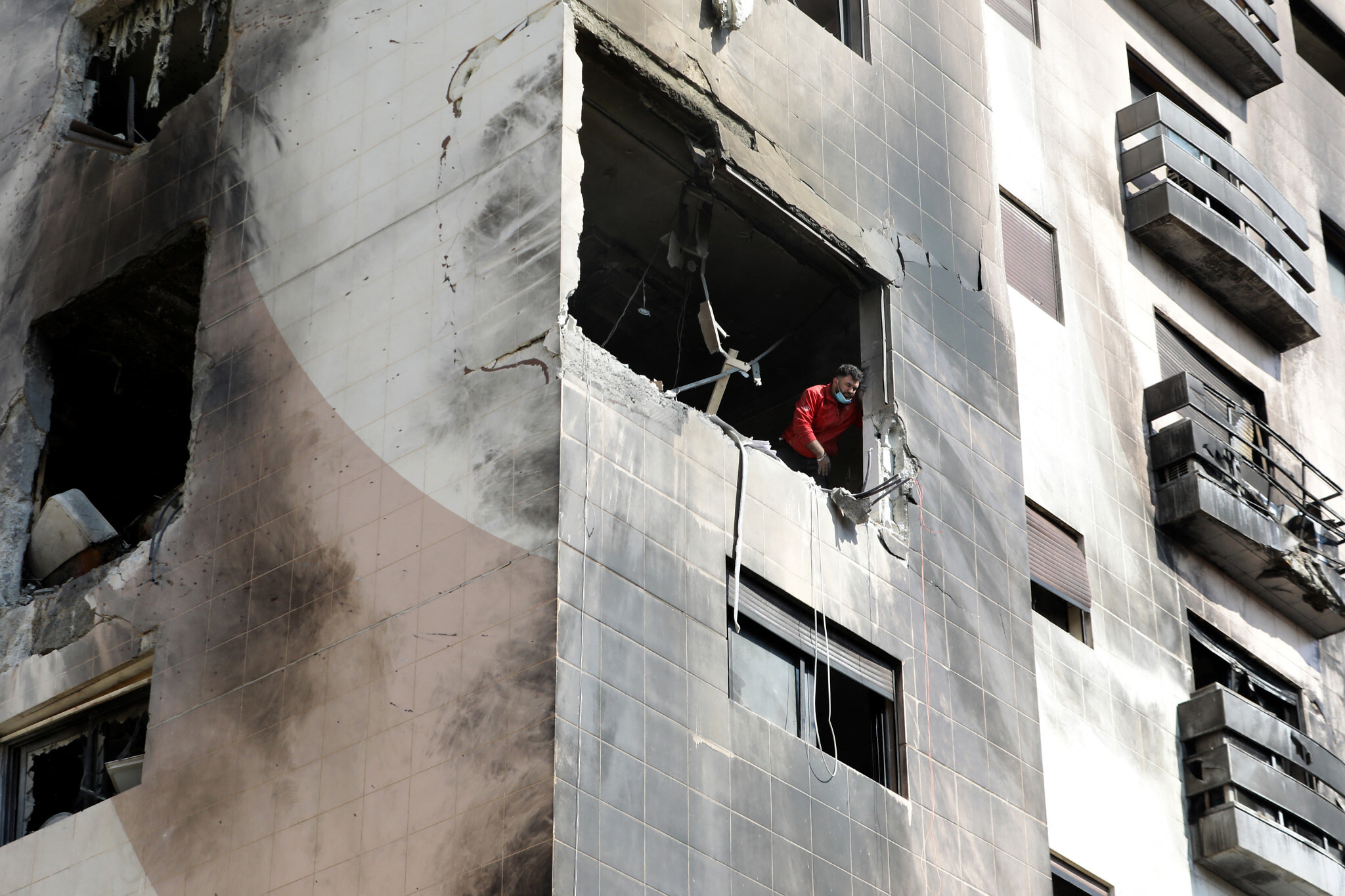
A man checks the damage in an apartment in a residential buildling that was reportedly targeted by Israeli air strikes in the Kafr Sousa district of the Syrian capital Damascus on February 21, 2024. (LOUAI BESHARA / AFP)

A man checks the damage in an apartment in a residential buildling that was reportedly targeted by Israeli air strikes in the Kafr Sousa district of the Syrian capital Damascus on February 21, 2024. (LOUAI BESHARA / AFP)

Israel’s years-long air campaign against Iran-linked groups and weapons in Syria appears to have shifted into high gear in recent months, with strikes on high-value targets at a pace that is “changing the rules of the game,” according to experts.

Although Israeli attacks on Iran-sponsored weapons transfers and Tehran-backed militias, including Hezbollah, go back to at least 2013, the air force is now unleashing more frequent operations that include assassinations of Iranian officials. Those on the ground have taken notice.

In just the last few days, Israeli jets hit two members of the Hezbollah terror group traveling in a truck near the Syrian-Lebanon border Sunday morning, and bombed a residential building in an upscale neighborhood of the Syrian capital Damascus frequented by leaders of the Islamic Revolutionary Guard Corps, killing two people, according to local news sources. Tehran’s media sources claimed that no citizens of the Islamic Republic were killed.

“[Israeli airstrikes in Syria] are no longer just about attacking weapons transfer or attacking Damascus international airport,” said Carmit Valensi, a senior researcher on Syria and head of the northern arena program at the Tel Aviv-based Institute for National Security Studies (INSS).

The uptick in attacks seemingly started sometime shortly after October 7, as Israel found itself fighting in Gaza and fending off attacks from Iran-backed groups from Lebanon, Syria and beyond.

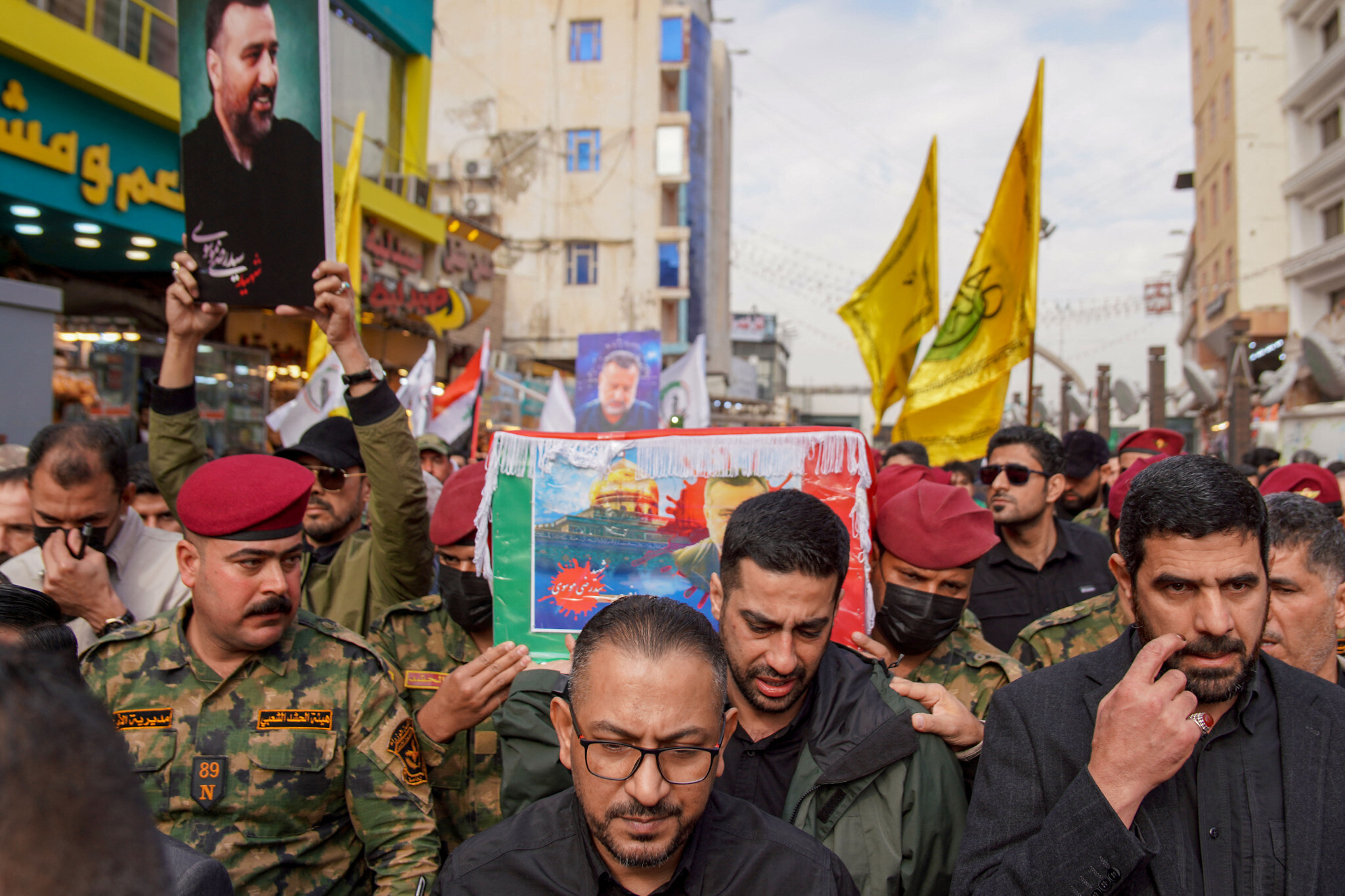
Since December, more than half a dozen IRGC officers have been killed in suspected Israeli strikes on Syria, including Iranian Brig. Gen. Seyed Razi Mousavi, a longtime Guards adviser in Syria slain in an Israeli airstrike on a suburb of Damascus.

People clean debris after an alleged Israeli strike on an apartment in Kfar Sousseh district, in Damascus, Syria, February 21, 2024. (AP Photo/Omar Sanadiki)

“It seems that Israel is taking advantage of the war momentum to increase its activity against Iran in Syria,” said Valensi.

Israel has not claimed responsibility for the assassinations, but it has admitted to conducting strikes against arms shipments believed to be bound for Iran-backed groups in Syria, chief among them Hezbollah.

Valensi noted that before fighting began in Gaza, killing members of the Quds Force — the IRGC’s expeditionary unit — or Hezbollah operatives, would have been considered a red line, liable to spark a war.

That all changed on October 7, when Hamas-led terrorists stormed into southern Israel, killing some 1,200 people and kidnapping 253 others.

In the days and weeks after the massive terror attack, other war fronts were opened by Iran-backed paramilitary groups against Israel, including from Lebanon and to a much smaller extent Syria to the north, and from Yemen to the south.

Dr. Carmit Valensi, head of the northern arena program at the Tel Aviv Institute for national security studies (INSS), 2023. (courtesy)

With the region already plunged into conflict, Israel no longer needs to pull punches to the same degree.

“In wartime, we have a different set of rules, by which Israel has more freedom of operation. Iran and Hezbollah have very limited ability to respond when it comes to the Syria theater,” Valensi said.

According to experts, Iranian military personnel on the ground in Syria number only in the dozens. The bulk of the forces controlled by the Islamic Republic in Syria, aside from Lebanese Hezbollah, are made up of foreign Shiite militias, imported mainly from Iraq, Afghanistan and Pakistan.

“Iran doesn’t like when Iranian Persian-speaking people are killed,” said former intelligence officer Col. (Res). Miri Eisin.

In recent years, according to Eisin, these foreign fighters had been deployed to the Syrian Golan, replacing the residents of towns emptied out by years of civil war. Many moved with their families.

Honor guards carry the coffin of Razi Moussavi, a senior commander in the Quds Force of Iran’s Islamic Revolutionary Guard Corps (IRGC), killed on December 25 in an alleged Israeli strike in Syria, during his funeral procession at the Imam Ali shrine in Iraq’s holy city of Najaf, on December 27, 2023.(Qassem al-Kaabi / AFP)

“The whole demographics of the Syrian Golan has been changed,” said Eisin.

While the Iranian military presence in Syria was initially justified to support the Assad regime against rebels groups, the Shiite fighters in the Golan were imported with the explicit goal to “free Jerusalem,” that is, attack Israel, Eisin explained. Their training was carried out by Hezbollah, considered the closest of Iran’s proxies.

The reinvigorated Israeli campaign, however, has put many of them on the defensive, with many of the forces being redeployed away from the Syrian Golan to other areas of the country. They can still theoretically launch missiles at Israel, but a ground attack on the border is no longer feasible.

Emergency services work at a building hit by an airstrike in Damascus, Syria, Saturday, Jan. 20, 2024. Syrian and Iranian state media outlets say an Israeli strike on t Damascus killed five Iranian advisers. (AP/Omar Sanadiki)

“The intense attacks that Israel has been conducting lately are a positive development for Israel because they do influence the Iran modus operandi in Syria,” Valensi said.

She said the Iranian pullback had begun in 2020, to minimize exposure to airstrikes. “That has gained momentum in the past four months,” she added.

“After the war broke against Hamas out, there were claims that Iran was increasing its presence in the south, preparing itself for opening another front with Israel,” Valensi said. “But after Israel launched a very intense aerial campaign in Syria, they were deterred.”

A truck in flames following an alleged Israeli airstrike near the Syrian town of Qusayr, February 25, 2024. (X screengrab: used in accordance with Clause 27a of the Copyright Law)

The real Israeli innovation, though, is the decision to systematically target IRGC officials, the experts say. Israel has liquidated a number of Iranian officials in Syria in the past, including at least one general in 2015, killed together with senior Hezbollah figure Jihad Mughniye, but strikes against IRGC figures had not been carried out in such a methodical and brazen way as they are now, the experts said.

“It’s like taking a list [of top IRGC leaders] and crossing off the names one by one, Eisin said. “And on top of that, in the heart of Damascus, a few miles away from where Bashar Assad is.”