Report: Iran restoring missile stockpiles

US officials say Iran using ceasefire lull to recover buried missiles and rebuild capabilities, as Trump weighs next steps in coming days.

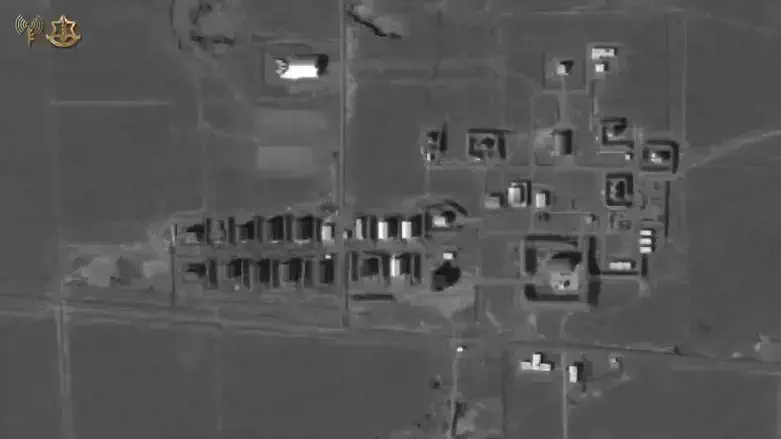
Ballistic missile production site following IDF attack

Ballistic missile production site following IDF attackIDF spokesperson

Iran is using the ceasefire to dig up the missiles and other munitions stored underground or buried in US and Israeli strikes, a US official and two others familiar with the matter told NBC News.

According to NBC, the US believes that Iran is aiming to “quickly reconstitute” its capabilities to enable it to attack targets across the Middle East if fighting resumes.

One of the US officials added that US President Donald Trump is likely to decide on his next steps within the coming days.

Last month, US Secretary of War Pete Hegseth said in a Pentagon briefing that Iran, “can dig out for now, but you can’t reconstitute, but we can.”

Asked by NBC for comment, a spokesperson for the Defense Department pointed to Hegseth’s remarks.


According to one source, the Lebanese government is hesitant to embrace the initiative, citing concerns over expanding Turkish influence in the country.

Turkey’s President Tayyip Erdogan speaks after a cabinet meeting in Ankara, Turkey, March 9, 2026.
(photo credit: Mustafa Kamaci/Presidential Press Office/Handout via REUTERS) 
Turkey has approached the United States and Lebanon with a proposal to help broker an arrangement involving Hezbollah, according to two sources familiar with the matter who spoke to The Jerusalem Post.

The initiative includes an offer by Ankara to act as a mediator and take an active role in addressing the Hezbollah issue. The proposal reflects Turkey’s broader effort to expand its diplomatic reach and position itself as a regional power broker. The US administration has not yet provided a clear response, with officials neither accepting nor rejecting the offer.

In recent years, Turkey has sought greater involvement across the Middle East, particularly in areas bordering Israel. In the Gaza Strip, Ankara aimed to participate in a planned CMCC peacekeeping force expected to be deployed following “Trump’s 20-point plan,” but Israel vetoed the inclusion of Turkish troops.

In Syria, Turkey has emerged as a significant actor since the rise of President Ahmed al-Sharaa. At the same time, Israel has worked to prevent the establishment of Turkish military bases in the country.

Lebanon ‘hesitant’ to accept Turkish influence

According to one source, the reaction in Beirut has been “not very enthusiastic.” The Lebanese government is hesitant to embrace the initiative, citing concerns over expanding Turkish influence in the country – an outcome that could further complicate Lebanon’s fragile political balance.

Israel Ambassador to the US Yechiel Leiter, US Ambassador to Lebanon Michel Issa, Lebanon Ambassador to the US Nada Hamadeh Moawad, US President Donald Trump, US Secretary of State Marco Rubio, and US Vice President JD Vance in the Oval Office, April 23, 2026.
Israel Ambassador to the US Yechiel Leiter, US Ambassador to Lebanon Michel Issa, Lebanon Ambassador to the US Nada Hamadeh Moawad, US President Donald Trump, US Secretary of State Marco Rubio, and US Vice President JD Vance in the Oval Office, April 23, 2026. (credit: Reuters/Kylie Cooper)

Before the current Iran-US ceasefire, Turkey said that any agreement with Iran should include Lebanon. More recently, Turkey delivered 360 tons of aid to displaced civilians through the port of Beirut.

More than one million people have been displaced from southern Lebanon and Beirut since the start of the war.

“Turkey will always stand by Lebanon, and its friendly people,” Turkish Ambassador Lütem said at the event. “Turkey has consistently supported Lebanon through its official institutions and non-governmental organizations.”


IAEA Director General Rafael Grossi says the majority of Iran’s highly enriched uranium is likely still stored at Isfahan, which was hit by airstrikes but sustained less damage than other sites.

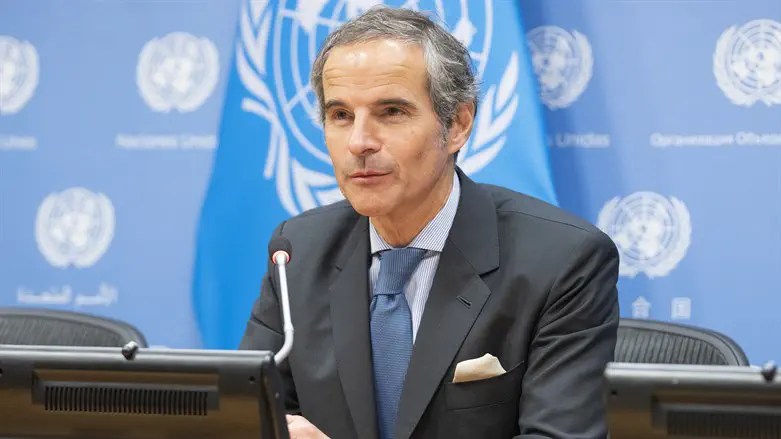
Rafael Grossi

Rafael GrossiLev Radin/Sipa USA via Reuters Connect 

The Director General of the International Atomic Energy Agency (IAEA) assessed that the bulk of Iran’s highly enriched uranium stockpile is probably still located at the Isfahan nuclear complex. The site was struck by airstrikes last year and experienced relatively lighter attacks during the recent US-Israeli military campaign.

Rafael Grossi shared the assessment in an interview with The Associated Press. He noted that the IAEA possesses satellite imagery documenting the impact of the latest strikes on Iranian nuclear facilities and continues to gather additional information.

Inspections by the IAEA at Isfahan ceased when Israel initiated a 12-day war in June of last year, during which the United States conducted strikes on three Iranian nuclear sites. Tehran at the time suspended cooperation with the IAEA and barred inspectors from visiting the damaged sites, accusing the agency of bias and failing to condemn the attacks.

An agreement announced in September between Iran and the IAEA, intended to resume inspections and uranium accounting, has since been declared void by Tehran after Britain, France, and Germany triggered the return of UN sanctions previously lifted under the 2015 nuclear deal.

The UN nuclear watchdog estimates that a large portion of Iran’s highly enriched uranium “was stored there in June 2025 when the 12-day war broke out, and it has been there ever since,” Grossi told AP.

“We haven’t been able to inspect or to reject that the material is there and that the seals – the IAEA seals – remain there,” he said. “I hope we’ll be able to do that, so what I tell you is our best estimate.”

Satellite images captured by Airbus on June 9, 2025, just prior to the outbreak of last year’s war, show a truck carrying 18 blue containers entering a tunnel at the Isfahan Nuclear Technology Center. Those containers are believed to hold highly enriched uranium and are likely still inside the facility.

Grossi added that the IAEA also seeks access to Iran’s nuclear sites at Natanz and Fordow, where additional nuclear material is present.

Iran currently possesses 440.9 kilograms of uranium enriched to 60 percent purity, a level only a short technical step away from weapons-grade 90 percent enrichment. Grossi previously indicated that the IAEA believes roughly 200 kilograms of this material is stored in tunnels at the Isfahan site.

Grossi emphasized that the critical objective remains ensuring “that material leaves Iran” or is down-blended to lower enrichment levels.