
US urges Israel to tone down Gaza war, Netanyahu vows victory

IDF spokesperson Daniel Hagari said that the army is “not going to withdraw from Khan Yunis or anywhere else” in Gaza, adding that “military action takes time.”
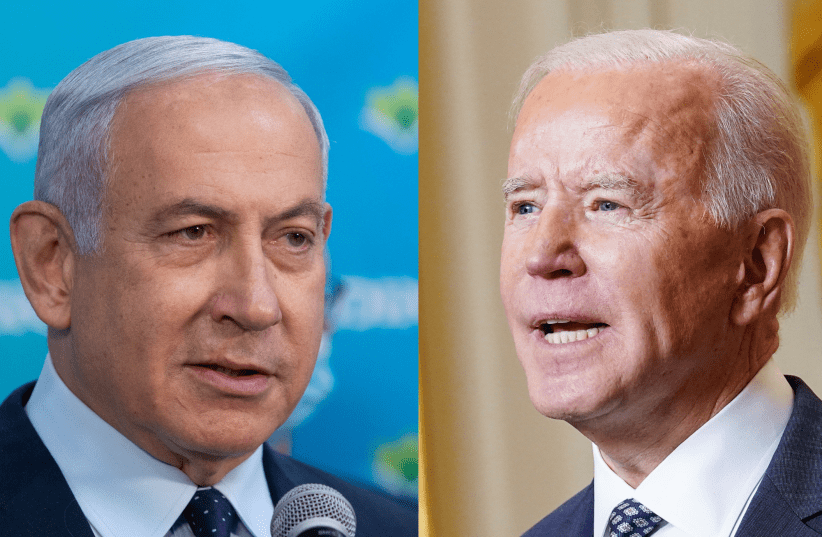
Prime Minister Benjamin Netanyahu and US President Joe Biden (photo credit: REUTERS/KEVIN LAMARQUE AND ALEX KOLOMOISKY/POOL)
Prime Minister Benjamin Netanyahu and US President Joe Biden
(photo credit: REUTERS/KEVIN LAMARQUE AND ALEX KOLOMOISKY/POOL)
The United States urged Israel to tone down its military campaign in Gaza as Prime Minister Benjamin Netanyahu pledged that the IDF would continue its war until Hamas was defeated.

“We are not saying let your foot up off the gas completely and don’t keep going after Hamas,” US National Security Council spokesperson John Kirby told CBS’s Face the Nation on Sunday when pressed on tensions between the two allies about Gaza.

Hamas “is still a viable threat,” and Israel has “every right and responsibility to go after that,” Kirby said, adding, “We believe the time is coming here very soon for a transition to a low-intensity phase.”

100 days 

He spoke as Israel marked its 100th day since the Hamas-led October 7 infiltration into southern Israel in which over 1,200 people were killed and some 250 were seized as hostages.

The Biden administration has strongly supported Israel’s military campaign to destroy Hamas sparked by the war, but it’s a backing that has been fraught with tensions over the high Palestinian casualty count, the delivery of humanitarian aid, and plans for Gaza once the war is completed.
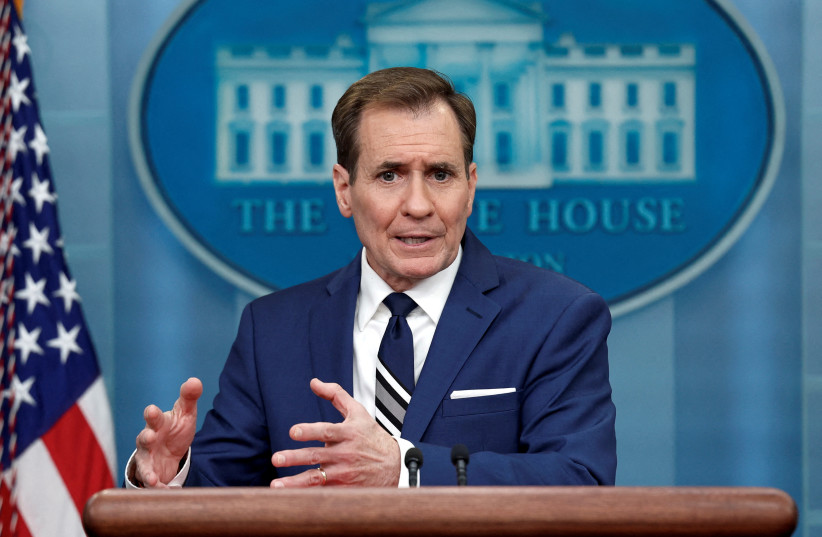
John Kirby, National Security Council Coordinator for Strategic Communications, answers questions during the daily press briefing at the White House in Washington, US, February 17, 2023. (credit: REUTERS/EVELYN HOCKSTEIN)Enlrage image
John Kirby, National Security Council Coordinator for Strategic Communications, answers questions during the daily press briefing at the White House in Washington, US, February 17, 2023. (credit: REUTERS/EVELYN HOCKSTEIN)

IDF spokesperson Daniel Hagari said that the army is “not going to withdraw from Khan Yunis or anywhere else” in Gaza, adding that “military action takes time.”

No clear timeline

Prime Minister Benjamin Netanyahu said on Sunday that “one of the things that has become clear beyond all doubt is that we must conduct this war and it will yet take many months.”

It’s a stance that has concerned the US, given the absence of an end date and concern that it might not be possible to totally defeat Hamas. The tensions with the US have been accompanied by public outrage over the absence of a second hostage deal for the release of some 136 captives. One hundred and five captives were freed in an initial deal in November. Another four were released separately and one was freed by the IDF.

Hamas has insisted that any deal must include an end to the war, while Israel has said that only military pressure will secure their release, a strategy that seemed to lead to the first release but which has failed to secure a second one.

The US has sworn to do everything in its power to return the captives but has preferred to seek their freedom through diplomacy, as it urges Israel to transition faster from a high to a low-intensity campaign.

The Biden administration has been particularly concerned by Hamas assertions that close to 24,000 Palestinians have been killed in Gaza war-related violence. Israel has claimed that over 8,000 of those fatalities are Hamas combatants.

“We are certainly not walking away from the need to reduce civilian casualties,” Kirby said.

He stressed that the Biden administration has been speaking with Israel “intensely about a transition to low-intensity operations. We believe it is the right time for that transition, and we are talking to them about doing that.”

Israel has taken “some precursory steps to try to get to that point. They are pulling some troops out, they are relying a little less on airstrike.”

What needs to happen next, Kirby said, is “more targeted more precise raids” and “less airstrikes.”

During a visit to the IDF’s Judea and Samaria Division, Defense Minister Yoav Gallant said the the army “will not stop until we dismantle the capabilities of this organization, all over Gaza.

“We have declared war on Hamas in Judea and Samaria, in Lebanon – wherever it may be necessary.” He stressed that when it comes to the West Bank, “I would like to emphasize: a strong Palestinian Authority is an Israeli security interest.”
Israel must remove Iran’s nuclear insurance policy – opinion

There is now an understanding that in the post-October 7 realities that Israel must face, there is an imperative to deprive Iran of using its insurance policy as a shield.

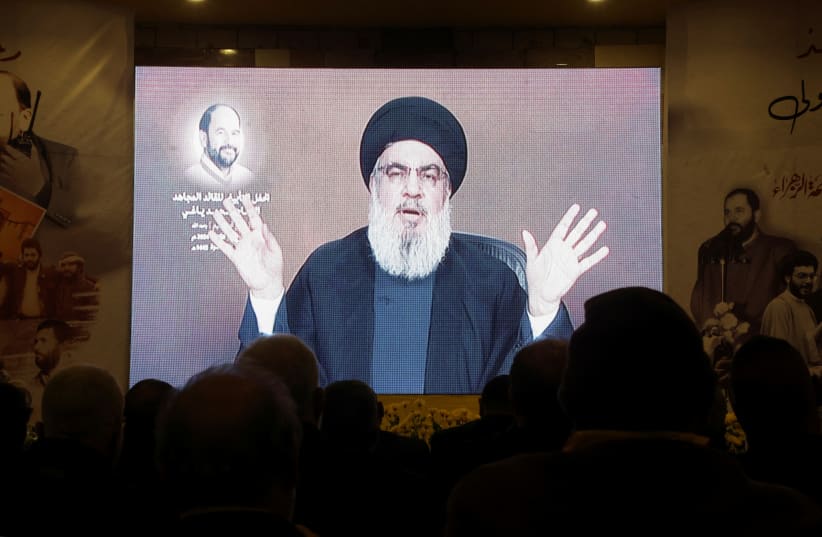
 Lebanon's Hezbollah leader Sayyed Hassan Nasrallah gives a televised address at a memorial ceremony to mark one week since the passing of Mohammad Yaghi, one of the powerful armed group's figures, in Baalbek, Lebanon January 5, 2024. (photo credit: REUTERS/MOHAMED AZAKIR)
Lebanon’s Hezbollah leader Sayyed Hassan Nasrallah gives a televised address at a memorial ceremony to mark one week since the passing of Mohammad Yaghi, one of the powerful armed group’s figures, in Baalbek, Lebanon January 5, 2024.
(photo credit: REUTERS/MOHAMED AZAKIR)
If the Islamic Republic of Iran decides to dash to a nuclear weapon, it will likely activate Tehran’s formidable insurance policy, the terrorist group Hezbollah, to open another front in Israel’s war and distract Jerusalem. This is the assessment of the Israeli government.

As the regime breaks out, Iran will almost certainly direct Hezbollah to assault Israel with some 150,000 to 200,000 rockets, missiles, drones, and projectiles it has stockpiled, many of them precision-guided-munitions (PGMs), all underwritten by Iran’s generous funding and technology transfers.

As of this writing, 50,000 to 100,000 Hezbollah terrorists are comfortably ensconced in southern Lebanon. Their forces have launched thousands of rockets, missiles, and drones at northern Israel since Hamas’ October 7th attack. Hezbollah’s goals: avert Israel’s focus on Gaza, drain precious military resources, and impose costs for Jerusalem’s decimation of Hamas, also a well-funded Iranian proxy. 

Israel has evacuated its northern communities due to Hezbollah’s fire, with some 80,000 people now internally displaced. Hezbollah’s attacks are only becoming more brazen. Last week’s assault on a strategic Israeli air force base near Zefat is a case in point. Jerusalem’s patience is wearing thin.

Of course, Israel is currently focused on eliminating Hamas and its leaders in Gaza and bringing home all kidnapped civilians and soldiers. However, there is an understanding in Israel that sooner or later, the Israeli Defense Forces (IDF) must confront Hezbollah’s threat in Lebanon. Only after that has been accomplished, even partially, will the evacuated citizens be able to come back to their homes.

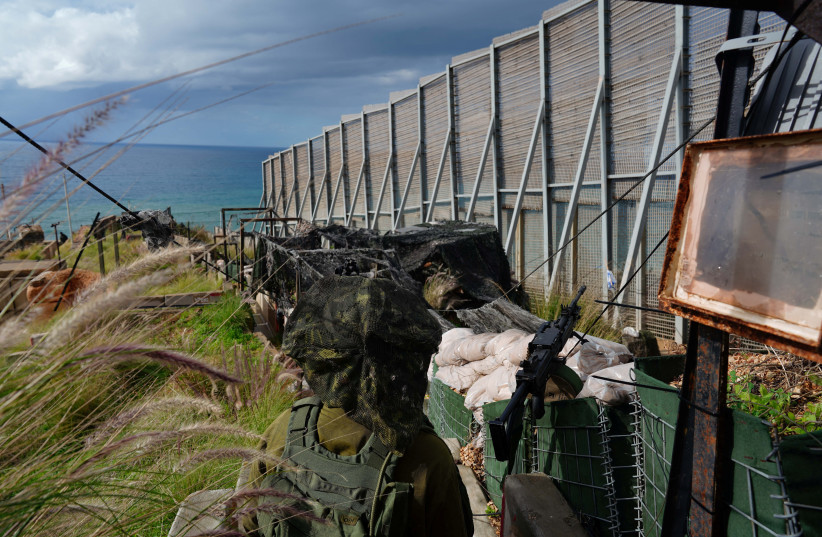
 An Israeli soldier stands guard at a fence separating Israel and Lebanon at a military outpost in Kibbutz Hanita, close to the border in northern Israel, January 11, 2024 (credit: ALEXANDRE MENEGHINI/REUTERS)Enlrage image
An Israeli soldier stands guard at a fence separating Israel and Lebanon at a military outpost in Kibbutz Hanita, close to the border in northern Israel, January 11, 2024 (credit: ALEXANDRE MENEGHINI/REUTERS)

But this is not just about the residents of the north. There is now an understanding that in the post-October 7 realities that Israel must face, there is an imperative to deprive Iran of using its insurance policy as a shield to acquire the ultimate deterrent weapon.

Iran’s nuclear clock is ticking

Iran’s nuclear clock is ticking, and Israelis are keenly aware. Thankfully, although Tehran’s incentive and capacity to sprint to nuclear weapons increases daily, it still lacks enough enriched uranium to create a formidable nuclear arsenal. But according to the latest data reported by the International Atomic Energy Agency (IAEA), Iran is very close (weeks) to producing the nuclear fuel needed for up to 12 nuclear weapons. The regime will likely require an additional 18-24 months to weaponize the material for operational nuclear devices and mount them on delivery vehicles. However, once Tehran moves enough weapons-grade enriched uranium to a secret underground site, Israel (and perhaps the United States) would find it very difficult to act militarily and stop the effort.

This could be part of Supreme Leader Ali Khamenei’s plan. Iran could be wielding its proxies, Hamas, Hezbollah, the Houthis, and Shiite militias in Iraq and Syria, to sow chaos in order to enable the regime to conduct a breakout. By the time the world notices and responds, Tehran might already have concealed enough enriched uranium and could be on the verge of an atomic bomb.

The moment Israel responds to this is the moment that Hezbollah is likely to launch an all-out war. That is why a widening group of Israeli officials believe that they must act soon. Israel must degrade the Hezbollah breakout shield before the regime acquires enough enriched uranium and secretly perfects its ability to weaponize.

The timing is not ideal now for an Israeli preemptive strike against Hezbollah in Lebanon. Both sides are on full alert. America and France are warning both sides to stand down while they attempt to broker a political agreement that would lead to Hezbollah abiding by UN Security Council Resolution 1701 and move away from Israel’s border.

If an agreement can be reached whereby Hezbollah and its elite Radwan forces move north, limiting their capability to attack the Israeli villages with anti-tank missiles and constraining their ability to strike Israeli bases and towns, Jerusalem could postpone its immediate attack plans.

But make no mistake: Israel would still hone its plans for the near future. That future battle would include targeting Radwan forces and remaining bases and intelligence posts, near the Israeli northern border and deeper inside Lebanon. It would also include an assault on Hezbollah’s long-range PGM’s and production facilities, the command and control centers in Beirut, and the terror organization’s leaders.

The attack of October 7th taught Israel that it has no other choice but to confront Iran-backed terror threats, sooner or later. Israel can no longer allow terrorists to encircle it in a ring of fire.

Israel knows that it must also prevent Iran from obtaining nuclear weapons that would threaten Israel’s very existence. Because Hezbollah is the regime’s most powerful proxy, it is now seen as Tehran’s insurance policy during a breakout. After a breakout, the regime’s nuclear weapons would serve as an insurance policy for Hezbollah.

The Gaza war continues, and it is still Israel’s main concern and center. But another war beckons. Jerusalem must fulfill its commitment to protect its citizens. The IDF will soon have to act against Hezbollah. After that, there is an inevitable clash with Iran.

Brig. Gen. (res.) Jacob Nagel is a senior fellow at the Foundation for Defense of Democracies (FDD) and a professor at the Technion. He served as National Security Advisor to Prime Minister Netanyahu and as head of the National Security Council (acting). Andrea Stricker is a research fellow and deputy director of FDD’s nonproliferation and biodefense program. Follow her on X @StrickerNonpro. FDD is a nonpartisan research institute focusing on national security and foreign policy.


Mohammed el-Kurd: ‘normalize the massacres as the status-quo’

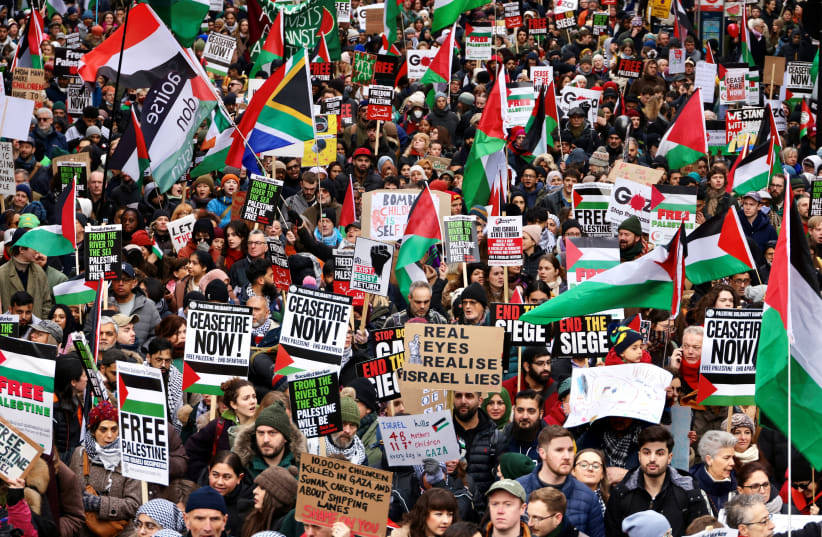
Thousands of people marched through London on Saturdy in a pro-Palestinian rally calling for a ceasefire in Gaza.

 People take part in a protest to mark 100 days since the start of the ongoing conflict between Israel and the Palestinian Islamist group Hamas in Gaza during a march in London, Britain, January 13, 2024. (photo credit: REUTERS/KEVIN COOMBS)
People take part in a protest to mark 100 days since the start of the ongoing conflict between Israel and the Palestinian Islamist group Hamas in Gaza during a march in London, Britain, January 13, 2024.
(photo credit: REUTERS/KEVIN COOMBS)
Speaking to the throngs that had gathered at Parliament Square in London on Saturday during a pro-Palestinian march, Palestinian activist Mohammed el-Kurd called to “normalize the massacres as the status quo.”

According to The Guardian, thousands of people marched through London at the pro-Palestinian rally calling for a ceasefire in Gaza.

El-Kurd spoke to the masses: “The atrocities that the Israeli regime is committing in Gaza are some of the horrific, brutal tragedies in all of our lifetimes.”

Blaming Zionism, he stated, “This genocide is not without a culprit. Zionism is the root cause of all that is happening in Palestine,” adding, “Zionism is apartheid, it’s genocide, it’s murder, it’s a racist ideology, rooted in settler expansion and racist domination and we must root it out of the world.”


“We must de-Zionise because Zionism is a death cult,” he continued to the sounds of cheering and applause.  He implored the crowd to continue marching until “Palestine is Free.” and quoting a statement by Gaza group, he called to “engage with tangible actions” for “language alone no longer suffices.”

El-Kurd later posted on X that his comment regarding the massacre were misunderstood.


Steeped with controversy

El-Kurd, originally from the neighborhood of Sheikh Jarrah in Jerusalem, became a prominent Palestinian activist following the 2021 clashes in the east Jerusalem neighborhood.

El-Kurd usually takes to X, where he has some 380 thousand followers, to voice his controversial statements. In the past, these have included praising the six terrorists who had escaped from the Gilboa prison in 2021, labeling them “political prisoners,” and calling the US military a “murderous, terrorist organization.”

Along with his sister Muna, he was named one of Time’s 100 most influential people for 2021 for “helping to prompt an international shift in rhetoric in regard to Israel and Palestine.”