Hakol Hayehudi on Sunday revealed a new document issued by the Home Front Command detailing the dangers facing the State of Israel on the eastern border and raises the concern that all of Hezbollah’s activity in the north is only intended to distract from the real attack that will come from the east.

Using only known sources, the document details the deployment of Iran’s forces in Syria and raises the concern that the Jordanian army is also preparing to attack from the east.

The authors of the document suggest that just as the pre-October 7 notion that Hamas was deterred in Gaza, so is the notion that Assad will prevent Iran from opening another front from his territory is unfounded. According to the authors, Syrian President Bashar al-Assad does not have control over most of the areas near Israel’s border; also, his reported objections may be intended to mislead Israel to gain the element of surprise.

The document also raises the fear of the cooperation of Arab residents of Israel with the enemy. The authors assume that the invasion, if there is one, would come from the other side of the Yarmuk River, the largest tributary of the Jordan River which runs in Jordan, Syria, and Israel. The invaders will advance on foot and will be picked up by Arab motorists from the Israeli side of the border.

The Yarmuk River / Tzvi Markus

Recently, the Jordanian army conducted military maneuvers near the Yarmuk Delta. Residents of Israeli settlements in the area fear that the maneuvers are in preparation for an invasion from Jordan. The authors of the document review the residents’ concerns and the possible reasons for such an invasion and do not rule out the possibility that the latter would materialize.

It should be noted that the document’s authors pin the possible attack on “the existence of Messianic right-wing elements within the Israeli government who see Jordan as part of the ‘Complete Land of Israel’ or as an alternative Palestinian state,” which “cause great unrest in Jordan.”


Analysis / Gaza War Raises Israel-Turkey Risks

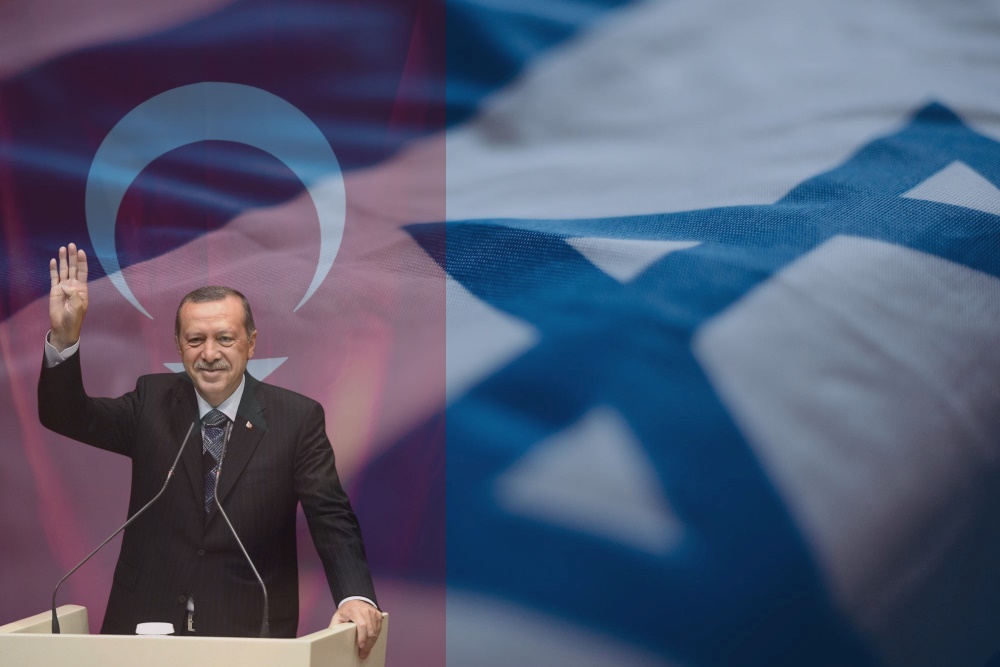
Israel-Turkey tensions rise (Archive)

The simmering tensions between Israel and Turkey are moving the two nations closer to a critical juncture. For now, a full rupture of ties remains unlikely. However, the Gaza war and Ankara’s unwavering support for Hamas are propelling the sides toward a dangerous confrontation.

Israel must not underestimate the intensity of President Erdogan’s animosity, warns Israeli expert Efrat Aviv. Turkey’s longtime ruler never acknowledged Israel’s right to exist and often resorts to virulent verbal attacks, she says.

Aviv notes that Erdogan held a major rally in support of Hamas on October 28, at the height of the Gaza war, further underscoring the strained ties with Israel. During the war, Erdogan denounced the Israeli campaign as one of the “greatest atrocities” of the century and compared Prime Minister Netanyahu to Hitler.

Ankara has also invested heavily in promoting radical views and anti-Israel sentiments in Jerusalem, another highly sensitive issue.

On a broader level, Aviv highlighted Turkey’s tendency to smear the West, America, and Israel while avoiding a similar tone against Russia. She predicted that Turkey is unlikely to remain neutral in a potential future world war.

Notably, this is not the first time experts raise concerns about a potential Turkish threat to Israel. An earlier study emphasized the need to closely monitor Turkey’s moves due to its evident hostility. The analysis also suggested that the Western world can no longer rely on Ankara as a trusted partner.

Israeli operations in Turkey?

Looking at the near term, tensions between Israel and Turkey could explode over the issue of Gaza and Hamas. Turkey maintains close ties with the terror group, offering political and economic support as well as other assistance.

Most recently, top Hamas leaders held a secret meeting in Turkey to coordinate their next steps in the Gaza war, Kan News reported.

Israel previously urged Turkey to expel Hamas members, without much success. However, Turkish support for Hamas before and after the October 7 massacre may lead Jerusalem to take stronger steps. Shin Bet chief Ronen Bar disclosed Israel’s plans to target the entire Hamas leadership abroad, even in Turkey.

Underscoring the explosive potential, the Turkish security services warned that targeting Hamas on Turkey’s home turf would have grave repercussions. Shortly thereafter, Erdogan said Israel would pay a “very heavy price” if it attempts to eliminate Hamas members on Turkish soil.

Regardless of its plans to hit Hamas chiefs abroad, Israel will have to make some hard decisions about its future relations with Turkey. While Ankara is an important regional power, it also positions itself as an increasingly hostile actor in Israel’s sphere of operations.

As the IDF continues to pound Hamas and demolish its Gaza terror base, the strain on Israel-Turkish ties is likely to intensify. Erdogan’s vocal and aggressive stance may escalate further, posing challenges and creating dangerous points of friction.


Top Iranian commanders killed in Damascus airport strike – report

Syrian media also claimed on Thursday evening that Israel had targeted sites in southern Syria and near Damascus with airstrikes in two separate waves.

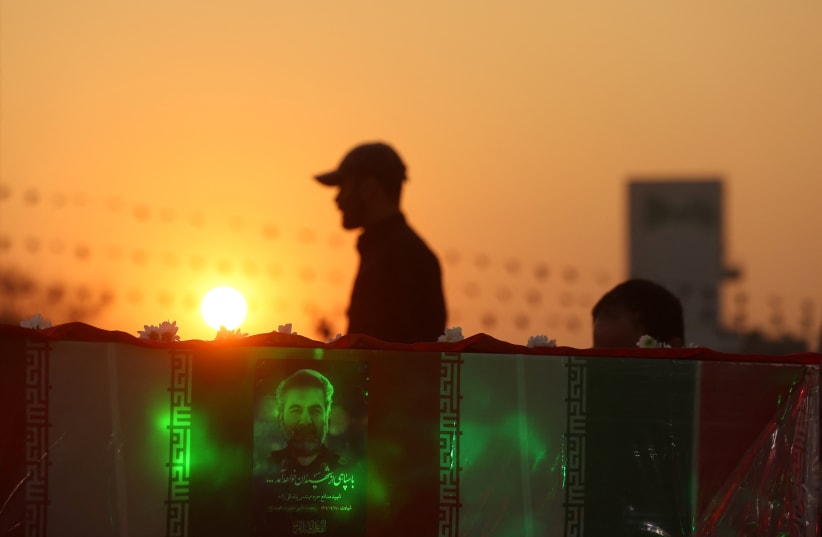
Funeral of members of Iran's IRGC who were killed in an Israeli airstrike on Syria, in Tehran (photo credit: MAJID ASGARIPOUR/WANA (WEST ASIA NEWS AGENCY) VIA REUTERS)
Funeral of members of Iran’s IRGC who were killed in an Israeli airstrike on Syria, in Tehran
(photo credit: MAJID ASGARIPOUR/WANA (WEST ASIA NEWS AGENCY) VIA REUTERS)
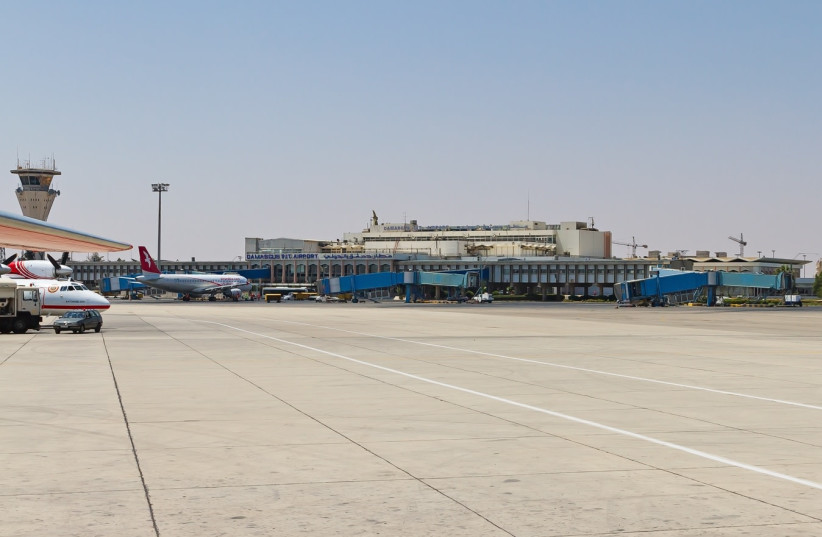
11 leaders of the Iranian Revolutionary Guard Corps (IRGC) were killed in an airstrike targeting Damascus International Airport on Thursday evening, Saudi media reported the following morning.

The commander of the Revolutionary Guards in eastern Syria, Nur Rashid, was injured in the airstrike, Saudi media channel Al-Hadath reported.

IRGC commanders were reportedly at the airport to meet with high-ranking delegates.

IRGC spokesman Sardar Ramzan Sharif denied on Friday reports that 11 of its leaders were killed in an airstrike in Damascus International Airport the night before, Iranian media quoted them as saying, as he said that such claims are “baseless.”

Other strikes on Syria this week, foreign media also claims were done by Israel

Syrian media also claimed on Thursday evening that Israel had targeted sites in southern Syria and near Damascus with airstrikes in two separate waves. Syrian air defenses were activated in the Damascus area during the strikes. The country’s media quoted one Syrian military source as saying that the alleged airstrike carried out by Israel came from the “occupied Syrian Golan Heights.”

Damascus International Airport (credit: IGOR BUBIN (GFDL 1.2 http://www.gnu.org/licenses/old-licenses/fdl-1.2.html)/VIA WIKIMEDIA COMMONS)Enlrage image
Damascus International Airport (credit: IGOR BUBIN (GFDL 1.2 http://www.gnu.org/licenses/old-licenses/fdl-1.2.html)/VIA WIKIMEDIA COMMONS)

Earlier this week, Iran vowed that Israel would “pay” for the killing of Sayyed Reza Mousavi, another IRGC commander who was killed by an alleged Israeli airstrike last Monday in the vicinity of Damascus.

Shortly after the strike that killed Mousavi occurred, footage on social media showed smoke near the Damascus airport, as Iranian proxies have often used the location.

Tzvi Joffre contributed to this report.