
As Iran seeks to inflame borders around Israel and manage the conflict in the region, are concerns of wider war relevant?
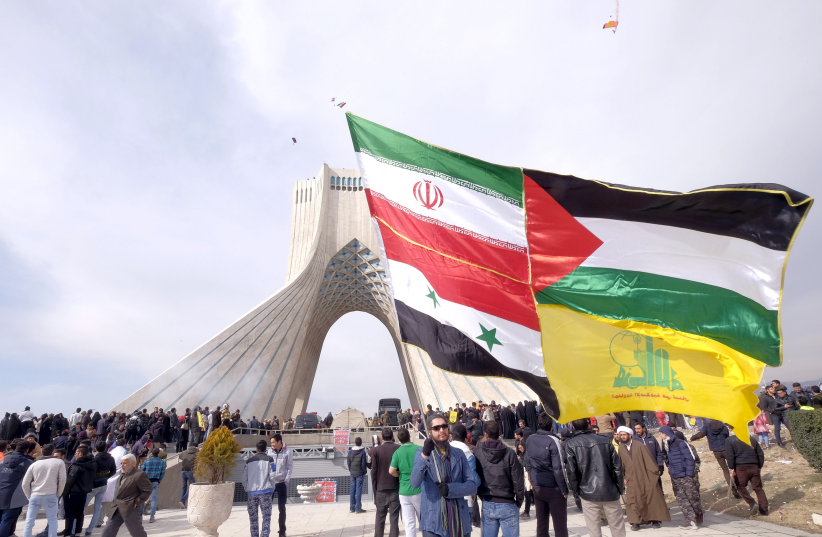
A man carries a giant flag made of flags of Iran, Palestine, Syria and Hezbollah, during a ceremony marking the 37th anniversary of the Islamic Revolution, in Tehran, Feburary 2016 (photo credit: RAHEB HOMAVANDI/REUTERS)
A man carries a giant flag made of flags of Iran, Palestine, Syria and Hezbollah, during a ceremony marking the 37th anniversary of the Islamic Revolution, in Tehran, Feburary 2016
(photo credit: RAHEB HOMAVANDI/REUTERS)
Iran is trying to manage the conflict against Israel in much the same way Israel sought to “manage” the conflict in Gaza over the last decade. What this means is that Iran seeks to bring the war to Israel’s borders but not escalate it into a massive conflict.

This can change depending on Iran’s calculations. For instance, the killing of Islamic Revolutionary Guard Corps officer Sayyed Razi Mousavi has led Iran’s regime into a state of fury and mourning.

Iran’s management of the conflict is designed to push its pawns and proxies closer to Israel’s borders. Hamas, Palestinian Islamic Jihad, Hezbollah, the Houthis, Hashd al-Shaabi in Iraq, and militias in Syria are all part of Iran’s movement of pawns to threaten Israel and the US in the region.

This includes dozens of attacks on ships in the Red Sea, more than 110 attacks on US forces in Iraq and Syria, and hundreds of attacks by Hezbollah since October 7.

Iran is trying to reverse the “campaign between the wars” in which Israel was seeking to end Iranian entrenchment in Syria. Iran is trying to do to Israel what Israel was doing in the West Bank and Gaza.
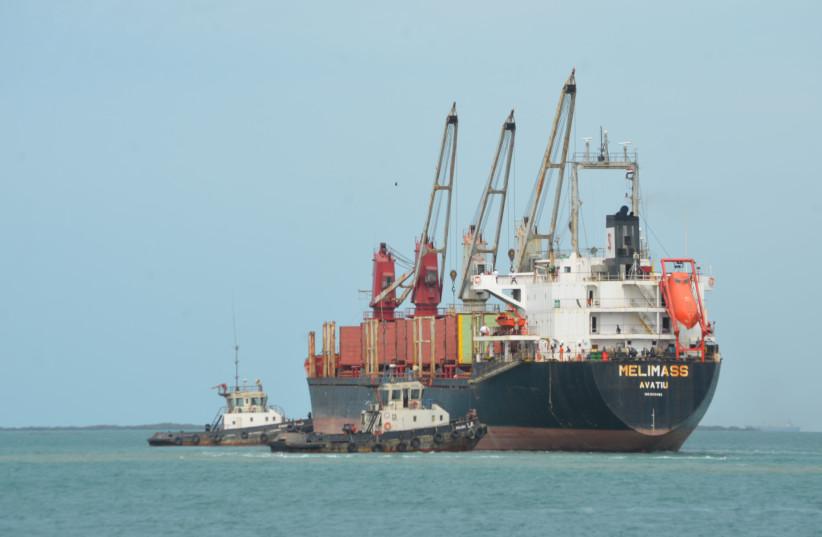
 Ship and tug boats are seen at the Red Sea port of Hodeidah, Yemen February 1, 2017. (credit: REUTERS/ABDULJABBAR ZEYAD)Enlrage image
Ship and tug boats are seen at the Red Sea port of Hodeidah, Yemen February 1, 2017. (credit: REUTERS/ABDULJABBAR ZEYAD)

This policy by Iran is not always clear and direct. Defense Minister Yoav Gallant this week said Israel was facing a multifront conflict, and he mentioned seven fronts. International media are now focused on what is perceived as an escalating and widening conflict.

“Biden struggles to contain Israel-Hamas war as conflict spreads on multiple fronts,” Voice of America news network reported.

CNN reported this week: “Fears are rising of a widened Middle East war, and US troops are in the firing line.”

 Is the war escalating?

It is unclear what prompted sudden concern about a widened war. These articles and also the comments by Gallant indicate an increased focus on these concerns. In addition, the new US-organized task force to help secure shipping in the Red Sea is part of the shifting threat matrix in the region.

US airstrikes on Kataib Hezbollah after an attack in Iraq are part of the same pattern.

Is this escalation, though? Iran has been escalating since October 7, and all of these attacks are linked to Iran.

Iran is managing these attacks, playing the region like one plays a piano, with each key being a different proxy group. Is this rising to a crescendo, or will the music continue?

These are key questions, and it remains to be seen if the music continues to play in the background or if there is widespread escalation on multiple fronts. Iran’s history of using proxies and managing conflicts shows it doesn’t prefer huge conflagrations.

It doesn’t want to sacrifice the proxies, and the proxies don’t have endless resources or armories.
IDF attacks Hezbollah deep in Lebanon after drone, rocket barrages

Earlier, Israel shot down an unmanned aerial vehicle that had crossed into its territory from Lebanon on Thursday, the military said.

IDF strikes Hezbollah terror infrastructure in Lebanon, December 28, 2023 (IDF SPOKESPERSON’S UNIT)
Israeli fighter jets, tanks, and artillery forces struck several Hezbollah terror compounds and infrastructure across southern Lebanon on Thursday in response to a day of heavy rocket barrages in the North, the IDF reported.

Air-raid sirens sounded from Haifa’s bayside suburbs to the Golan Heights on Thursday.

Earlier, the IDF shot down an unmanned aerial vehicle that had crossed into Israeli territory from Lebanon on Thursday, the IDF said.

A Hezbollah military complex was targeted during the strikes.

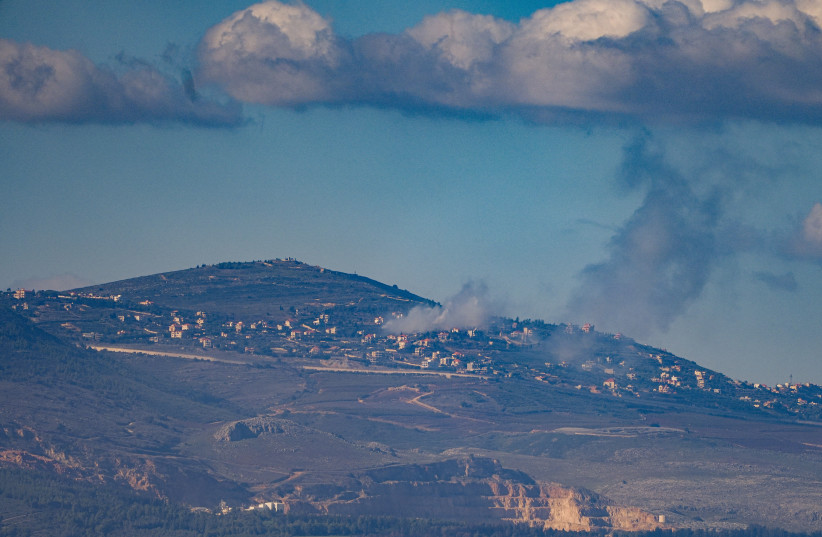
 Smoke rises during an exchange of fire between the IDF and terrorists from the Hezbollah organization on the border between Israel and Lebanon, December 25, 2023 (credit:  Ayal Margolin/Flash90)Enlrage image
Smoke rises during an exchange of fire between the IDF and terrorists from the Hezbollah organization on the border between Israel and Lebanon, December 25, 2023 (credit: Ayal Margolin/Flash90)

IDF strikes the source of Lebanese rocket fire

In addition, the IDF struck a terrorist cell that attempted to fire anti-tank missiles at Israeli territory.Israeli forces attacked another cell that fired rockets at northern Israel earlier on Thursday.

In southern Lebanon, a UN peacekeeper was hurt when a group of young men attacked a patrol and tried to stop it from moving through their village, the United Nations Interim Force in Lebanon (UNIFIL) said Thursday in a statement.

The incident took place on Wednesday night when residents of the village of Taybeh briefly blocked the peacekeepers’ patrol traveling through the area, UNIFIL said.

The wounded man was an Indonesian soldier, a security source said. A vehicle was damaged, UNIFIL said.

It called on Lebanese authorities to investigate the attack and bring the perpetrators to justice.

In a second incident on Thursday morning, a peacekeepers’ convoy traveling to UNIFIL’s eastern headquarters was briefly blocked by residents, who let them go ahead after a brief discussion, UNIFIL said.

A Lebanese security source said a group of men had hit the UNIFIL vehicles with sticks and rocks.

The reason for the actions was not clear, but in previous incidents, local people have objected to UNIFIL peacekeepers driving military vehicles through residential areas.

There was no comment from Hezbollah, which controls security in southern Lebanon.

No peacekeepers have been killed since the escalation of hostilities. But two peacekeepers have been wounded in two separate incidents, and UNIFIL compounds and bases have been hit and damaged by mortar fire several times.

One Irish peacekeeper was killed in December 2022 when the UN vehicle he was driving in was fired on as it traveled through southern Lebanon.

The UN mission currently has about 10,000 troops drawn from 47 countries and about 800 civilian staff, stationed in 45 positions throughout a 1,060-square-km. area between the Litani River and the Blue Line.

This is a developing story.


The Hamas terror organization stated that they appreciated Lavrov’s comments, saying his comments “confirms Washington’s criminal role in the continued suffering of our Palestinian people.”

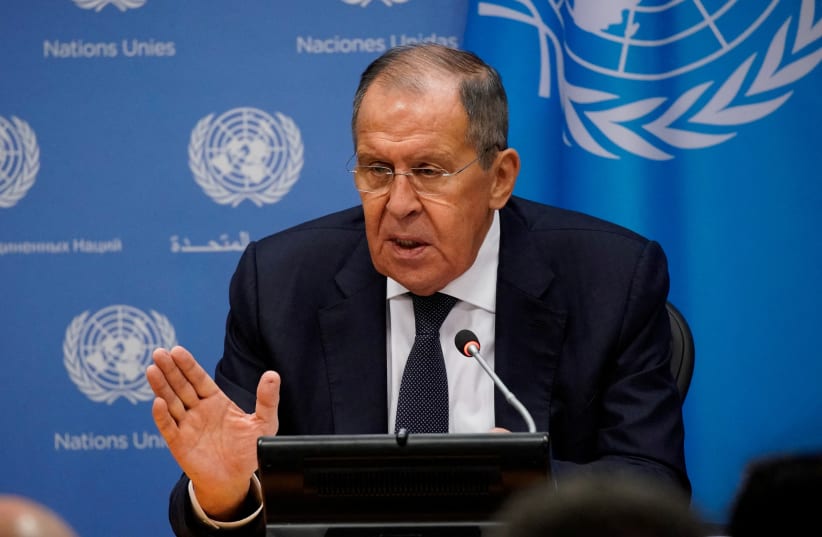
 Russia's Foreign Minister Sergei Lavrov attends a press conference after addressing the 78th Session of the U.N. General Assembly in New York City, U.S., September 23, 2023 (photo credit: REUTERS/EDUARDO MUNOZ)
Russia’s Foreign Minister Sergei Lavrov attends a press conference after addressing the 78th Session of the U.N. General Assembly in New York City, U.S., September 23, 2023
(photo credit: REUTERS/EDUARDO MUNOZ)
Russian Foreign Minister Sergei Lavrov said, in an interview with Russian media on Thursday, that he doubted the conspiracy theory that Israel knew in advance of plans that Hamas were planning on committing a massacre on October 7.

“A lot of conspiracy theories are now appearing. Just the other day, our television and social networks once again conveyed a message from Western media, Western journalists, and researchers that the Israeli leadership, a year before October 7 and intelligence, warned about the impending large-scale terrorist attack.

“I cannot admit that if this is true,” Lavrov continued. “Then, no precautions or preventive measures were taken. Moreover, we know how the Israeli army and Israeli security forces are always ready to carry out preventive strikes,” Lavrov said.

Lavrov also said, “It is time everyone drew a lesson from the consequences of the United States’s attempts to play at behind-the-curtain diplomacy in the Middle East. It was Washington’s policy of monopolizing mediation and undermining the international legal framework for a settlement that resulted in the current escalation in the conflict zone,” the Russian Foreign Ministry Ministry website quoted him as saying on Thursday.

“It is alarming that, according to the available information, the United States is again trying to solicit solutions that have nothing in common with international law, as it did in Afghanistan, Iraq, Libya, and many other countries and regions, which have been left in ruins because of Washington’s opportunistic actions,” he continued.

Hamas’s response to Lavrov

The Hamas terror organization stated that they appreciated Lavrov’s comments, stating that they “stressed the importance of lifting the injustice that the Palestinians have suffered for generations so that stability can be achieved in the region.

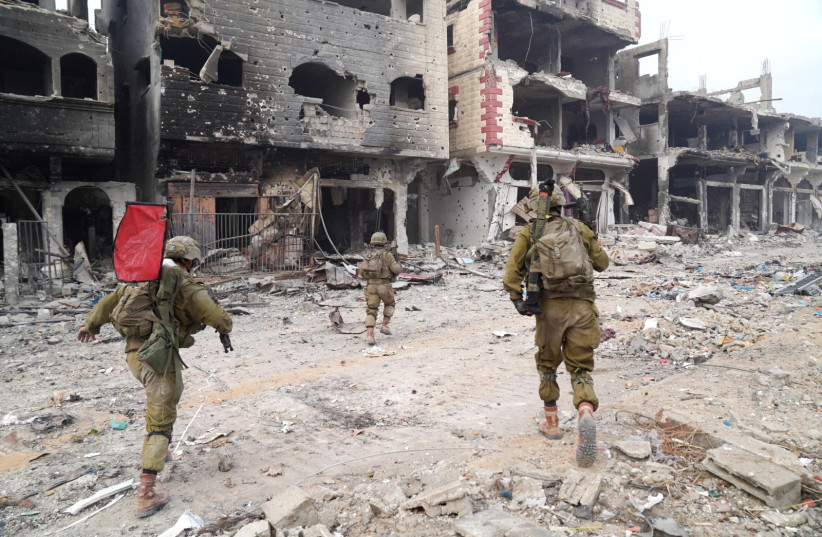
 Israeli troops operate in the Gaza Strip, amid the ongoing ground operation of the Israeli army against the Palestinian Islamist group Hamas, in this handout image released November 19, 2023. (credit: Israel Defense Forces/Handout via REUTERS)Enlrage image
Israeli troops operate in the Gaza Strip, amid the ongoing ground operation of the Israeli army against the Palestinian Islamist group Hamas, in this handout image released November 19, 2023. (credit: Israel Defense Forces/Handout via REUTERS)

“Lavrov’s reference to the United States’ responsibility for increasing tensions in the field of international security confirms Washington’s criminal role in the continued suffering of our Palestinian people, with its blatant bias towards the Zionist occupation. It also confirms the need for an international will, represented by the active states in the United Nations, to lift the injustice against our people.