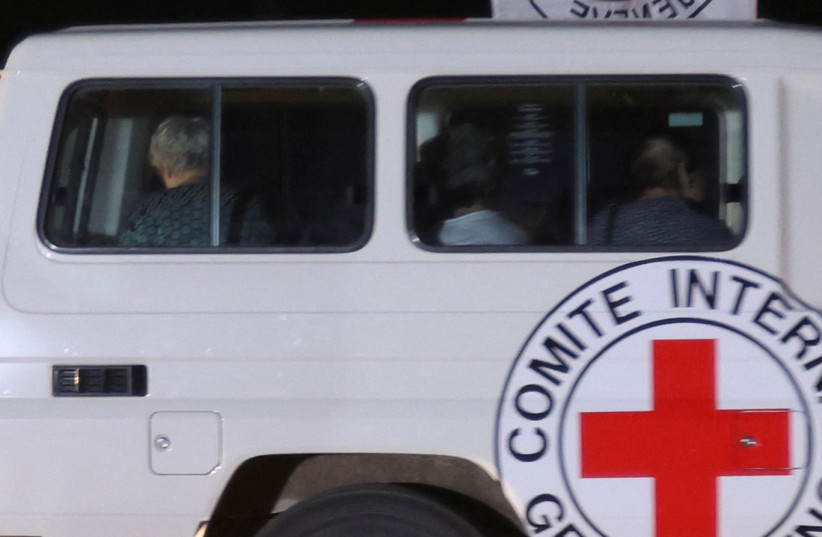
10 Israelis freed amid talk of long-term truce

Barnea, Burns in Qatar for talks • Blinken to visit in coming days
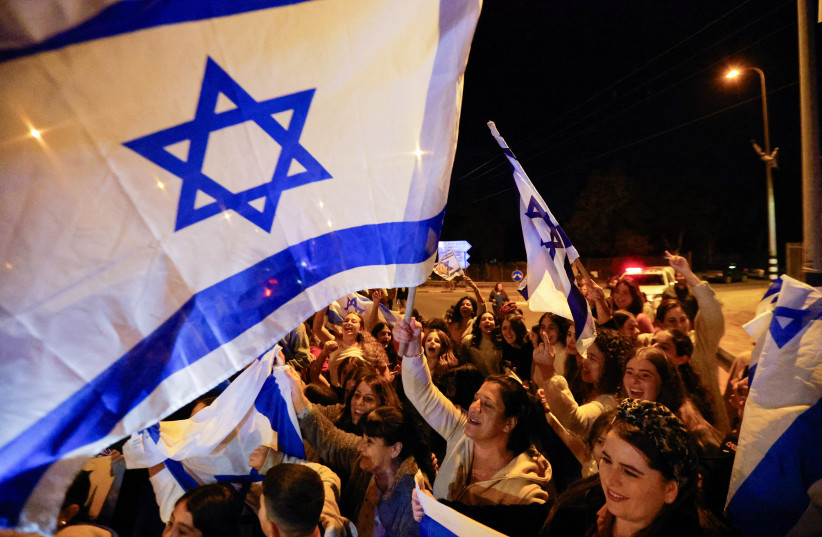
 People react after the release of hostages who were seized during the October 7 attack by Palestinian terrorist group Hamas and held in the Gaza Strip, in Merchavim, Israel, November 28, 2023.  (photo credit: Alexander Ermochenko/Reuters)
People react after the release of hostages who were seized during the October 7 attack by Palestinian terrorist group Hamas and held in the Gaza Strip, in Merchavim, Israel, November 28, 2023.
(photo credit: Alexander Ermochenko/Reuters)
Ten Israelis and two Thai captives were freed amid media reports that Qatar sought to mediate a ceasefire deal to end the Gaza war in which the remaining 150 hostages would be returned, in exchange for the release of a large number of Palestinian security prisoners.

Finance Minister Bezalel Smotrich (Religious Zionist Party) rejected such reports outright, explaining that it’s not on the table and “there has been no discussion about it at all.”

Such a deal, he said, “is a plan to destroy the State of Israel. We will continue [the war] until with God’s help, we achieve absolute victory over the Hamas Nazis.”

Talk about a possible deal for all the hostages, including soldiers, came as US Secretary of State Antony Blinken was due to visit the region in the coming days and the security cabinet held a late-night meeting in Tel Aviv.

Discussions are already underway in Qatar to extend the hostage deal beyond its Thursday expiration date based on the formula by which Hamas frees 10 Israeli hostages in Gaza for every 24 hours of quiet.
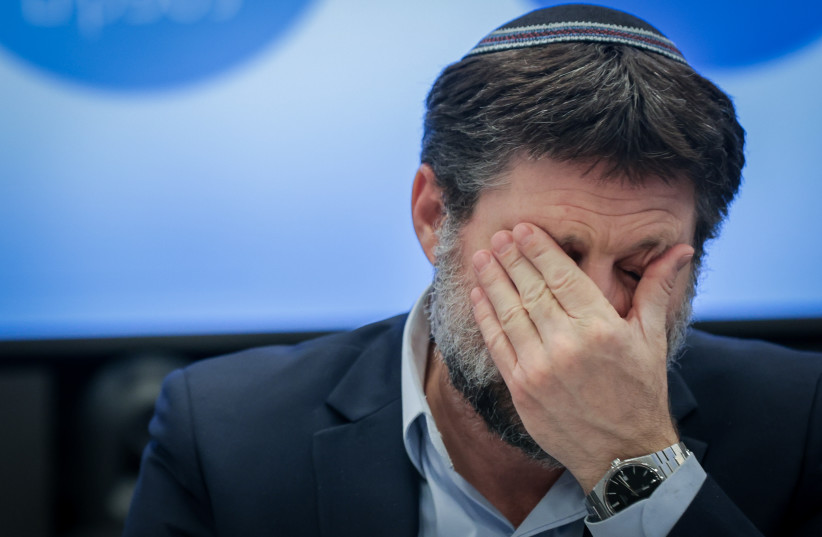
Finance Minister Bezalel Smotrich attends a press conference at the Finance Ministry in Jerusalem on October 19, 2023.  (credit: NOAM REVKIN/FLASH90)
Finance Minister Bezalel Smotrich attends a press conference at the Finance Ministry in Jerusalem on October 19, 2023. (credit: NOAM REVKIN/FLASH90)

Officials remained committed to the deal even though Palestinians in Gaza placed explosive devices near IDF troops in northern Gaza, in violation of the hostage deal, according to the army spokesperson’s unit.

The initial mechanism by which hostages are freed in exchange for a lull in the fighting began on Friday at 10 a.m. and was first due to end on Tuesday, but at the last minute, the war was put on hold for another 48 hours.

Advertisement

As part of the deal, Israel has halted aerial surveillance above the enclave for some six hours daily to allow Hamas to locate all the hostages, which are held in separate locations by several different groups. The Pentagon said it has also paused its surveillance of Gaza during that same time.

The deal and its extension have focused on the 98 women and children that were among some 240 hostages that Hamas seized on October 7 when it infiltrated southern Israel.

To date, 60 female and child hostages have been released. Under a separate agreement, one Filipino and 25 Thai citizens have been freed, as was one Israeli who also holds Russian citizenship. Last month four women were also freed, two of whom were Americans and another two Israelis.

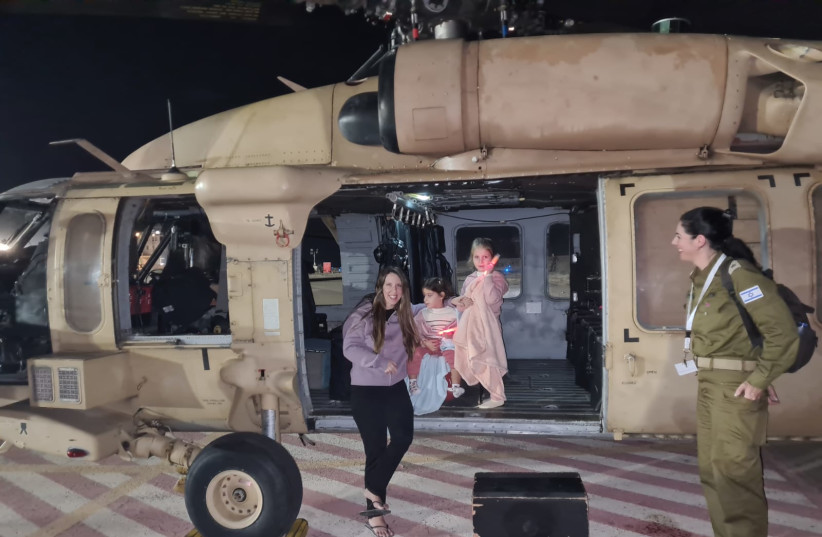
There are eight children still in captivity, including Ariel Bibas, who is four, and his 10-month-old brother Kfir.On Tuesday night, the only child to be freed was Mia Lemberg, 17, who returned clutching a small white dog. Another 10 Israelis are due to be freed on Wednesday night.

Mossad chief David Barnea was in Qatar on Tuesday as was CIA chief William Burns and Egyptian intelligence chief Maj.-Gen. Abbas Kamel to discuss an extension of the deal, possibly through Sunday.

A source told Reuters that the spy chiefs were there to “build on the progress of the extended humanitarian pause agreement and to initiate further discussions about the next phase of a potential deal.”

But it’s also presumed that they are talking about a larger and wider scope resolution to the hostage crisis and the war.

Discussions with Qatar

Prime Minister Benjamin Netanyahu called Barnea in Qatar to discuss Tuesday’s hostage release, his office said, as it published a photograph of the call.

The question of what happens next week is particularly acute, given that a new mechanism would need to be found to free the male hostages, particularly the soldiers.

Under the existing deal, Israel agreed that for every captive in Gaza that was released, it would free three jailed Palestinian women and minors held on security-related offenses. To date, 180 such Palestinian prisoners have been freed, including 30 women and minors on Tuesday.

It’s expected that a larger number of prisoners and those with much more serious security offenses, including the killing of Israelis would need to be freed in exchange for the male hostages.

The Biden administration is under pressure from positions of the Democratic Party and the American public to support a permanent ceasefire. Many in the international community and Arab countries have also called for a halt to the war, particularly in light of Hamas assertions that over 14,800 Palestinians have been killed in conflict-related violence in Gaza.

The damage to the enclave from IDF aerial bombing and Israel’s closure of its two crossings into the Strip has also created a humanitarian crisis.

Israel has insisted that plans to resume the war once the hostages are released, so that it can complete its military campaign to oust Hamas from Gaza. It has been considered that Hamas poses an existential threat to Israel since the terror group’s October 7 attack, in which it killed over 1,200 people, burning, dismembering and raping its victims.

Netanyahu said on Tuesday, that Israel was committed to the following missions: “Freeing all of the hostages, eliminating this terrorist organization above and below ground and – of course – that Gaza must not return to being what it was, that it will no longer constitute a threat to the State of Israel.”

Israel’s allies have pressed it to do more to allow for humanitarian aid to enter Gaza, even though under the terms of the deal some 200 humanitarian trucks a day have entered and are expected to continue to enter the enclave. They have also warned Israel that it must do more to protect civilians should hostilities resume.

The US is asking Israel to take greater care to protect civilians and limit damage to infrastructure in any offensive in southern Gaza, senior US officials said, in what amounts to a more forthright approach to protecting Palestinians.The message has been delivered from Biden on down, the officials told reporters on a conference call.

“We have reinforced this in very clear language with the government of Israel – very important that the conduct of the Israeli campaign when it moves to the south must be done in a way that is to a maximum extent not designed to produce significant further displacement of persons,” one official said.

At issue in particular has been the high number of Gazans, some 1.6 million in an enclave of 2.7 million, that have fled their homes due to IDF aerial bombings.

“You cannot have the sort of scale of displacement that took place in the north, replicated in the south. It will be beyond disruptive, it will be beyond the capacity of any humanitarian support network,” the official said, adding “It can’t happen.”

A US official said the first of three relief aid flights conducted by the US military would land in northern Sinai on Tuesday, with two more planned in the coming days.

The flights would bring medical items, food aid and winter items that would be delivered by the United Nations.The officials said aid deliveries to Gaza were running at about 240 truckloads a day but this was nowhere near enough.

They said the effort would need to turn to commercial contracts to get deliveries up to 400 trucks a day and the US side had been discussing this with Israel.Reuters contributed to this report.
Iran’s disavowal of Hamas’s October 7 attack – opinion

Iran has begun a journey of intensifying its efforts to evade direct responsibility for Hamas’s decisions, as they witness the fall of the terrorist organization and the destruction of Gaza.

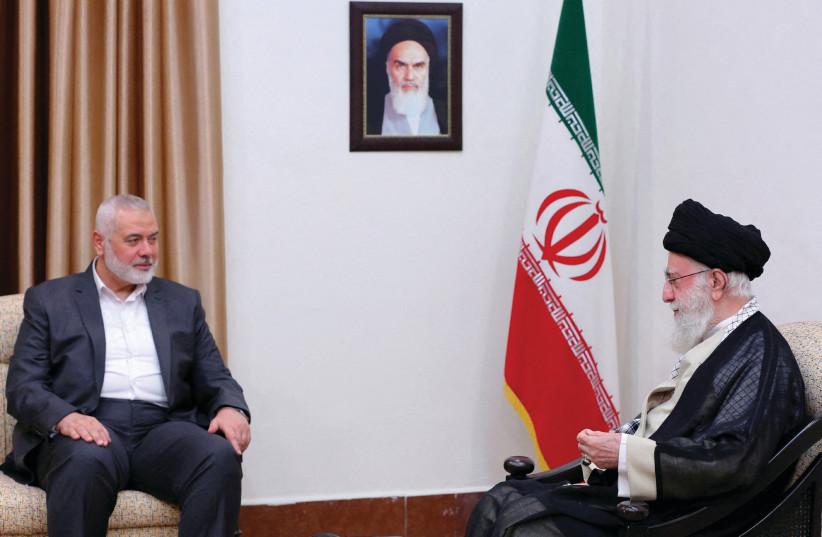
 IRAN'S SUPREME Leader Ayatollah Ali Khamenei meets with Hamas leader Ismail Haniyeh, in Tehran, in June. (photo credit: Office of the Iranian Supreme Leader/West Asia News Agency/Reuters)
IRAN’S SUPREME Leader Ayatollah Ali Khamenei meets with Hamas leader Ismail Haniyeh, in Tehran, in June.
(photo credit: Office of the Iranian Supreme Leader/West Asia News Agency/Reuters)
While Tehran is good at weaving the scenarios that it wants to export to the world, it is well aware that its turn is coming.

It is expected that in the post-Gaza era, Israel will move to hold Iran accountable (along with its terrorist militia arms in Lebanon, Yemen, and Iraq) for its responsibility in supporting and financing the terrorists’ weapons that have been attacking Israel and the United States since last October 7.

Holding Iran accountable

There are successive and remarkably intense media leaks circulating in several reports regarding the parameters of Iran’s responsibility for the decision by the Hamas terrorist movement to launch attacks against Israel, on October 7.

These leaks began with a report on the content of the meeting between Iranian Supreme Leader Ali Khamenei and Ismail Haniyeh, chairman of Hamas’s politburo – in Tehran in the first week of November.

The report stated that Khamenei informed Haniyeh that Iran would not interfere in the conflict since Hamas had not informed in advance of its decision to attack Israel – a report that Iran and Hamas denied completely.

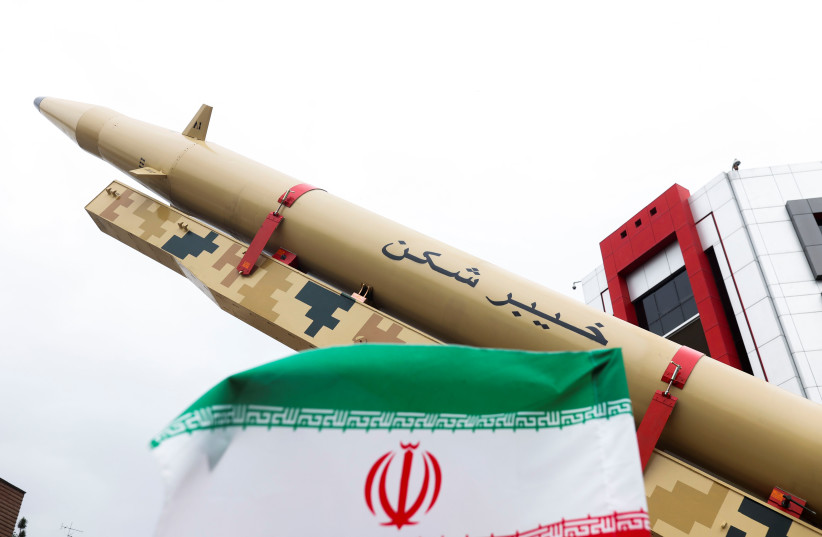
 An Iranian missile is displayed during a rally marking the annual Quds Day, or Jerusalem Day, on the last Friday of the holy month of Ramadan in Tehran, Iran April 29, 2022. (credit: MAJID ASGARIPOUR/WANA (WEST ASIA NEWS AGENCY) VIA REUTERS)
An Iranian missile is displayed during a rally marking the annual Quds Day, or Jerusalem Day, on the last Friday of the holy month of Ramadan in Tehran, Iran April 29, 2022. (credit: MAJID ASGARIPOUR/WANA (WEST ASIA NEWS AGENCY) VIA REUTERS)

The Hamas terrorist movement said, in a statement published on Telegram: “Commenting on what was reported by Reuters news agency about Ismail Haniyeh’s meeting with Ali Khamenei, the leader of the Islamic Revolution in Iran, we deny the validity of what was stated in this report, and we regret publishing the news. It has no basis, and we call on the agency to investigate accuracy,” he said, without mentioning any other details.

The agency had quoted what it called three “senior” officials from Iran and Hamas as saying that when they met, the Iranian leader transmitted a clear message to Haniyeh, to the effect that since Hamas had not informed Tehran in advance of the attack of October 7, Iran would not enter the war on behalf of Hamas.

Advertisement

Media reports also mentioned that the blame directed by Hamas leader Khaled Mashaal was aimed at Hezbollah and included Iran – when he said, in mid-October, that “Hezbollah thankfully took steps, but my assessment is that the battle requires more, and what is happening is okay, but it is not enough,” and that he believed what was required was more than a “flood,” and that history was not about “limited, timid, hesitant steps,” but rather about “thought-out adventures.”

This story is part of a series that questions Iran’s responsibility for the Hamas terrorist attack. There are several important American media sources that also quoted officials from Iran and Hezbollah saying that the Hamas attack was a surprise to them and that they had no prior knowledge of this attack, as the movement concealed the details of the timing, size, and target.

All of these simultaneous narratives are in the interest of several parties, the first of which, of course, is Iran and Hezbollah, which want to be content with media and propaganda appearances in the Gaza conflict scene without paying a strategic cost. That may lead to the destruction of the party’s capabilities, and expose the Iranian regime to a strong Israeli strike in light of American-European green.

The second of these parties is the United States, which does not want to hold Iran responsible for the Hamas decision because it is in its tactical interest to keep Iran away from responsibility for this decision. Linking Tehran to the attack on Israel would mean closing the curtain on reviving the Iranian nuclear agreement once and for all.

In addition, the current American administration is exposed to Republican pressure from within, as well as from Israel to retaliate against Iran or at least deal with it more strictly; or give Israel the green light to launch a retaliatory strike to deter its support for terrorism and organizations that threaten Israel’s security.

The conclusion is that the interests of Iran and the United States converge upon the idea of undermining Tehran’s responsibility for Hamas’s decision to attack Israel, and therefore it is likely that the leak reported by Reuters is true, and that it was intentional on the Iranian side. The reality is that it is very difficult for the decision to attack the terrorist movement Hamas to have been made in isolation from Iran and Hezbollah.

We remember the statement of Hamas spokesman Ghazi Hamad to the BBC, days after Hamas’s attack on Israel: “I am proud,” regarding the amount of support the terrorist movement had received from Iran to carry out this operation. “There are countries that help us. Iran helps us, whether with money, weapons, or political support, there is no harm in us doing that.”

At the very least, incitement and encouragement by Tehran and Hezbollah for the terrorist movement Hamas to carry out the attack is consistent with expectations. The attack was timed in Iran’s interest, at the height of talks for imminent normalization between the Kingdom of Saudi Arabia and Israel.

The conversation has now been postponed indefinitely. Riyadh, with all its spiritual, religious, political, and strategic weight, finds it difficult to adopt the step of normalizing relations with Israel under the current circumstances.

My conviction is that Iran has begun a journey of intensifying its efforts to evade direct responsibility for Hamas’s decision, in light of the destruction it is witnessing in the Gaza Strip and the collapse of the Palestinian cause and the terrorist Hamas movement.

Iran did not want to bear responsibility for the wrong decision and chose to sacrifice Hamas to preserve what remained of its terrorist militia arms, which could be exposed to subsequent intense military strikes if Iran was proven responsible for the attacks that Israel was subjected to over the past period.

The writer is a UAE political analyst and former Federal National Council candidate.


Women held hostage by Hamas in Gaza kept in cages – report

Hostages spoke out about the state of their captivity.

Aviv Asher, 2.5 years old, her sister Raz Asher, 4.5 years old, and mother Doron arrive back in Israel after being held hostage by Hamas terrorists, 24 November 2023. (photo credit: IDF SPOKESPERSON UNIT)
Aviv Asher, 2.5 years old, her sister Raz Asher, 4.5 years old, and mother Doron arrive back in Israel after being held hostage by Hamas terrorists, 24 November 2023.
(photo credit: IDF SPOKESPERSON UNIT)
Women who were abducted from Israeli territory and held hostage by Hamas in Gaza were kept in cages, according to a report by Israeli media, citing a statement from a member of the Hostages and Missing Families Forum.

This claim is not the first of its kind; in the days immediately following the October 7th attacks, videos from Hamas’s Telegram channel showed child hostages being kept in cages for the majority of their time in captivity.


Hamas distributed a letter on Monday allegedly written by Danielle Aloni, was was kidnapped alongside her 5-year-old daughter Emilia and held in captivity. In the letter, written in Hebrew and translated into Arabic, she reportedly thanked Hamas for the “extraordinary humanity” provided to her daughter, who “felt like a queen.”

The letter also read, “I will forever be a prisoner of love because [Emilia] did not leave here with psychological trauma forever.” The Aloni family has not confirmed this letter nor the statements made in it, though widely distributed on social media by the Hamas terror organization.

This letter is one of many that hostages were forced to write, according to Israeli media reports.


Survivors reported being provided limited food while being held hostage, without clear reports of physical abuse or torture, though they were given minimal food. Of the small rations they received – rice and pita at best – the hostages were often left to cook the food for themselves and the children left held with them. They also said how their final two weeks had seen supplies running low.

Supplies running low

Merav Mor Munder, the cousin of Keren Munder who was released on Friday, told N12 “There were days when there were no supplies, so they only ate pita bread. They were not tortured, but there were days when they barely had any food, in the last few days they only ate very little rice.

 Aviva Adrienne Siegel, 62, who was released after being taken hostage during the October 7 attack by Palestinian militant group Hamas, reacts while being transported, in Ofakim, Israel, November 26, 2023 (credit: REUTERS/AMIR COHEN)
Aviva Adrienne Siegel, 62, who was released after being taken hostage during the October 7 attack by Palestinian militant group Hamas, reacts while being transported, in Ofakim, Israel, November 26, 2023 (credit: REUTERS/AMIR COHEN)

She says how one of the hostages, Hannah Katzir, who was also released, learned of her son’s murder on one of the few occasions they would be permitted to listen to Israeli radio. It was upon her own release that she learned of how her husband had also been kidnapped and remained in Gaza.

Some of the hostages spoke of their worry about last-minute attempts by Hamas or Gazans, who had thrown stones at the vehicle taking them to Egypt, to attack them before they got home.  “Until the last moment we weren’t sure,” a hostage said: “We thought they would lynch us on the way to Israel.”

Sinwar visits hostages in tunnels

Hamas leader Yahya Sinwar, the man behind the planning of the October 7 massacre, spoke to Israeli hostages while they were held in Gaza, one Israeli who was released from captivity this week told her family, Israeli media reported on Monday evening.

Sinwar allegedly arrived in a tunnel where she and other hostages were being held, checked how they are, and told them in fluent Hebrew that they would not be harmed.

Israel’s Channel 12 claims that this report was verified by her investigators in Israel’s security systems.

Current concerns among Israel’s defense and military analysts relate to Sinwar’s plans for the rest of this war – namely, the exploitation of the humanitarian crisis among Palestinian civilians in order to advance Hamas’s terror goals.

Neglect at the hands of the Red Cross

After Elma Avraham, 84, was returned to Israeli custody, she was immediately airlifted for emergency medical care. Her family claimed that she was “medically neglected” by international medical organizations that failed to provide her with the immediate medical treatment she required at the time.

“My mother did not deserve to be treated like this” stated Elma’s daughter, Tal Amano.

According to Amano, her mother was the victim of a “double betrayal that began on October 7 when she was kidnapped by Hamas, and continued with the failure of international organizations that were supposed to help her in the condition that she was in at the time of her release.”

Prior to her kidnapping on October 7, Elma was in relatively good health. However, she did have some underlying health issues that required medication.

“No one from the international organizations bothered to create a list with the medications she required,” her daughter continued.

“Clalit [an Israeli medical health fund] was the one who fought for us. It delivered the medication that Elma required to my brother in person. Yet, when my brother attempted to pass on the medication to a Red Cross representative at a meeting they held together, he was told no, they cannot do that.”

Elma’s family returned to the Red Cross building a few days after and were once again rejected.

“My mother should not have come back like this. What is the Red Cross there for? What is the UN Women organization for?” Tal demanded to know.

Dr. Nadav Davidovitz, who is currently treating Elma, said “We were in meetings with the Red Cross and asked them to make every effort to bring the medications to her, because some hostages are just dying. From a medical and nursing standpoint, what we witnessed is unlawful neglect.”

Keshet Neev and Jerusalem Post Staff contributed to this report.