BEHIND THE LINES: Hezbollah fighters on Israel-Syria border • Joint command formed for anti-US insurgency
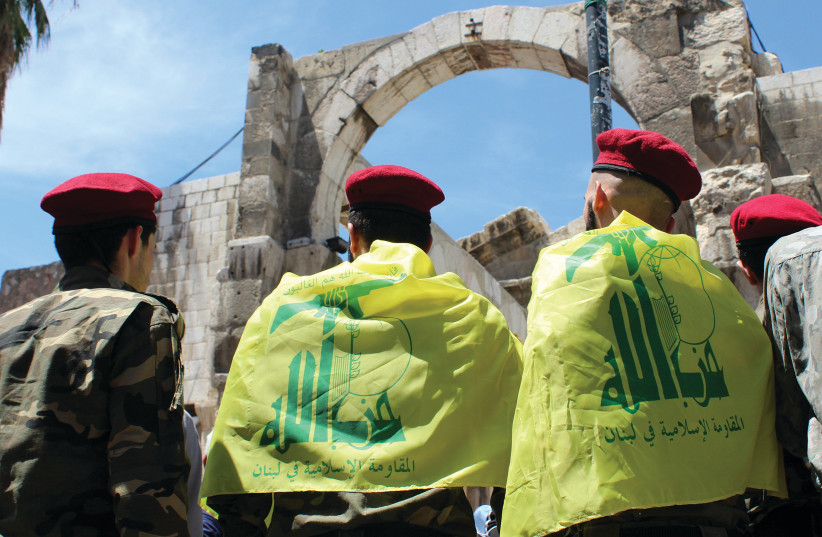
The arrival of these fighters is the latest indication that Syria is becoming an active front in the war currently taking place in the Middle East. The framework for understanding this conflict in the Israeli and Western media remains that Israel is fighting Hamas in Gaza, while all sorts of minor distractions are taking place elsewhere.
The distractions, however, when taken together, are not that minor, and this view of the conflict should probably be amended. Certainly, the various elements of the pro-Iran regional alliance have not yet launched an all-out multi-front assault on Israel and the US. But it is also the case that multiple elements of this alliance are now engaged against both countries on a near daily basis, across the region: from Yemen, Syria, Iraq, Lebanon, and the West Bank, as well as from Gaza.
Iran, Hezbollah troops stationed in Syria
Regarding the latest events in Syria, SOHR reported that the 700 fighters deployed have been trained by the Iranian Islamic Revolutionary Guards Corps (IRGC) and by Hezbollah. A report by Syrian journalist Samer al-Ahmad of the Middle East Institute noted that these so-called “elite forces” had undergone training at the Dimas Camp near Damascus, and at facilities in the area of Mayadin city, close to the Syria-Iraq border.
“Some groups,” al-Ahmed writes, “were trained on how to carry out drone and rocket attacks, while other groups were taught security operations and information-gathering techniques under the supervision of Hezbollah leaders in the Damascus countryside and the party’s centers in Lebanon.”
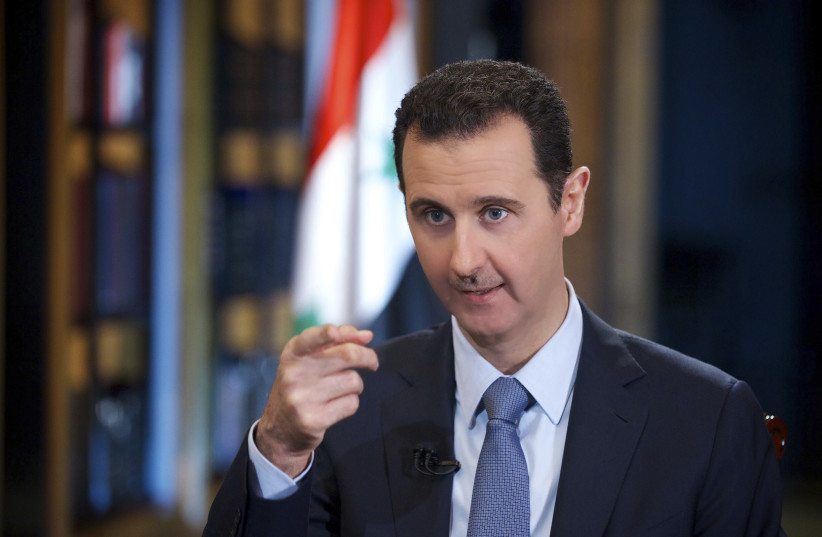

The SOHR’s report contained a further interesting item – namely, that the deployment had been carried out “without any coordination with the military leadership of the Syrian regime.” The Assad regime, indeed, according to several reports, has ordered its forces not to carry out any firing at the Golan – to the frustration, annoyance, and inevitable acquiescence of the regime’s commanders on the ground.
This latter item reflects a long-standing reality in Syria. The Assad regime, the self-proclaimed “victor” in the Syrian civil war of 2012-2019, is largely a hollow shell. Other, external powers exercise the real power in Syria.
THE REGIME, of course, does not control the entirety of Syria’s territory. US-supported Kurds and Turkish-backed Islamists each maintain their own areas of control in the east and northwest of the country, respectively. But even within its own area of control, the regime is no longer at the center of events. Rather, it appears able only to look on helplessly as Iran and its proxy militias make use of Syrian territory for their own purposes.
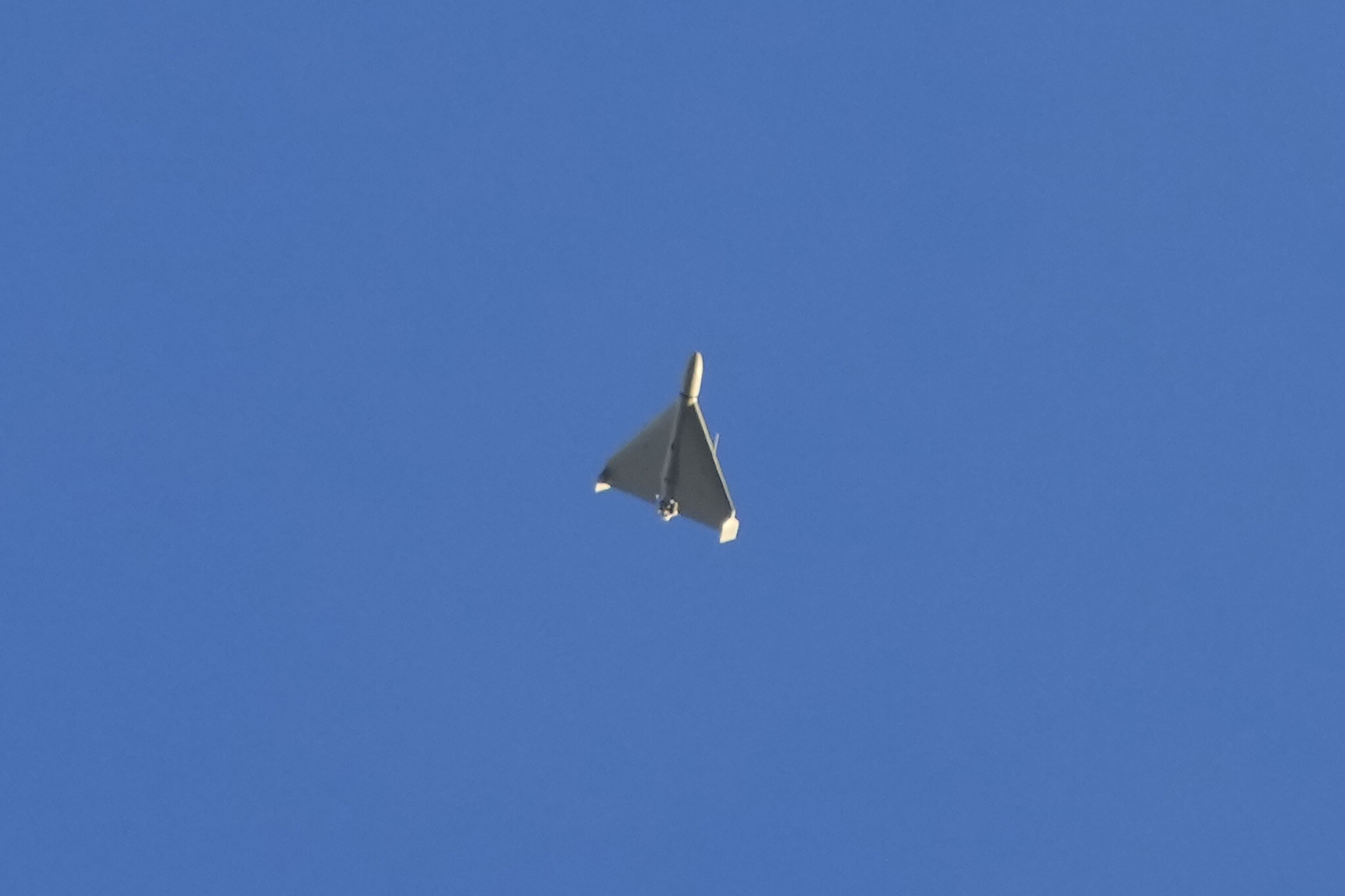
The militia deployment toward the border has so far resulted only in sporadic attacks on Israel, most notably the drone that landed on the Tze’elim School in Eilat on November 9, which was fired from Syria by the Hezbollah-linked Imam Hussein Brigade.
The main action in which the Iran-led militias are engaged at present is the ongoing campaign of harassment of US forces in the country. This campaign also appears to be directed from within the area of exclusive Iranian control in Syria, and to be taking place without the involvement of, and probably without prior consultation with, the Assad regime.
Sixty-one attacks have taken place on US forces in Syria and Iraq since October 7. So far, the main bases in Syria targeted are located at the Conoco gas field and al-Omar oil field in Deir el Zur province, and positions at al-Shaddadi, Tal Beydar, and Kharab al-Jir in Hasaka Province. The Tanf base on the Syria-Jordan border has also been struck.
So far, there has been only one fatality, a contractor who died of a heart attack during one of the incidents. More than 50 service people have been wounded, however, some of them with traumatic brain injuries.
Samer al-Ahmad and SOHR have reported on the formation of a joint operations center in Albukamal close to the Syrian-Iraqi border, the task of which is to coordinate the insurgency against the US. Albukamal lies deep within the area of de facto Iranian control, which extends from the Iraq-Syria border to the border with Israel.
Under IRGC leadership, the center includes representatives of a variety of Iran-linked militias. These include Lebanese Hezbollah, a number of Iraqi Shiite militias affiliated with the Popular Mobilization Units (PMU) in Iraq, and the Zeinabiyun and Fatemiyun militias. The latter comprise Pakistani and Afghan Shia recruits, respectively, and have long served as a reliable source of cannon fodder for the Iranians in the Syrian context. Regarding the Iraqis, the Kataib Hezbollah organization is emerging as the most significant and effective of the Iran-aligned forces.
According to al-Ahmad, the Albukamal operations center is set to coordinate militia activities against the US along three axes. These are, firstly, attacks using missiles and drones against US positions east of the Euphrates; secondly, similar operations directed against the Tanf base; thirdly, clandestine surveillance and other activities conducted on the ground east of the Euphrates, i.e. in the area of control of the US’s Kurdish allies in the Syrian Democratic Forces (SDF).
The third category will rely on the presence of pro-Iran militias in two of the cities in this area, namely Hasaka City and Qamishli. The forces carrying out these activities will be PMU elements and Lebanese Hezbollah-organized forces, under Haj Mahdi, the Hezbollah commander in Qamishli.
All indications suggest that these forces will be used to maintain a low but constant level of harassment of US forces in Syria (with a parallel effort underway in Iraq) rather than to launch an all-out uprising. Such activities will be intended to bring about an American rethink of the feasibility and worth of maintaining its presence in both countries.
A US withdrawal from Syria would enable the rapid re-absorption of the 30% of the country currently under SDF control. While the official ruler of any reabsorbed territory would be Assad in Damascus, it is clear from the situation currently prevailing elsewhere in Syria that Iran-led forces would have primacy there.
THE SITUATION in Syria, as in Iraq, Yemen, and its surrounding waterways, and indeed in Gaza, reflects the advantage enjoyed by an aggressor. If one side is pursuing a carefully thought out, long war strategy intended to conclude with the destruction or complete expulsion of its enemy, while the enemy simply wishes to maintain the status quo and to be left alone, then the initiative will by definition remain in the hands of the attacker.
This situation will be maintained at least until the attacked party concludes that reaction and defense are no longer adequate responses given the gravity of the threat. At that point, the attacked party will need to regain the initiative through bold and preemptive moves of its own.
The US has so far hit back four times at the Iran-led controlled insurgency in Syria and Iraq. The latest counterstrike was against Kataib Hezbollah in Iraq, in the Jurf el-Sakr area on November 21. The current level of response is unlikely to be sufficient to achieve a clear decision.