
Israel and Lebanon’s ambassadors meet in Washington to discuss disarming Hezbollah and achieving peace, with the US mediating talks to ensure Israel’s long-term security.

Israel's Ambassador to the US Yechiel Leiter the President residence in Jerusalem, February 16, 2025.
Israel’s Ambassador to the US Yechiel Leiter the President residence in Jerusalem, February 16, 2025. 
(photo credit: YONATAN SINDEL/FLASH90) 
Israel’s Ambassador to the United States, Yechiel Leiter, is scheduled to meet today with Lebanon’s Ambassador to the United States, Nada Hamadeh, in what is being described as a historic meeting.

The immediate focus will be on efforts to disarm the terrorist organization Hezbollah, while the broader goal is to open a path toward normalization between Israel and Lebanon.

Meeting to include top US officials

The meeting will take place at the US State Department and will include US Secretary of State Marco Rubio, his senior adviser Michael Needham, and US Ambassador to Lebanon Michel Issa.

A senior American official said ahead of the meeting, “The goal is to ensure Israel’s long-term security and to support the Lebanese government’s determination to fully restore its sovereignty over its territory and political life.”

The official added that Israel is not at war with Lebanon, but with Hezbollah, and therefore “there is no reason the two neighbors cannot engage in dialogue.”

The recent call raised hopes for progress

Last Friday, the two ambassadors held a phone call that Leiter described as “excellent.” In an interview with CBS, he said, “We agreed that if the Hezbollah issue is set aside, the two countries could reach a peace agreement within two to three months. Lebanon and Israel could live under a peace agreement as early as tomorrow.”

In a statement following the call, the Israeli ambassador said Israel agreed to Tuesday’s meeting to help advance a peace agreement with Lebanon. However, he stressed that Israel would not discuss a ceasefire with Hezbollah, which continues to attack Israel and remains a key obstacle to peace.

Disarmament remains a central issue

Israeli officials have said in recent weeks that the Lebanese government has not made a genuine effort to disarm Hezbollah. According to them, the US-mediated meeting is intended to push that process forward.

“Without Hezbollah’s disarmament, there will be no peace between the two countries,” one official said.

On the Lebanese side, however, the main priority is securing some form of ceasefire from Israel.

Tensions continue despite reduced activity

Over the past week, following the ceasefire with Iran, Israel has scaled back its military activity in Lebanon at the request of President Donald Trump.

Israeli officials have declined to comment on reports that Prime Minister Benjamin Netanyahu committed to avoiding operations in Beirut during the ceasefire period between Iran and the United States. Still, no such strikes have occurred since the ceasefire took effect.

An Israeli official told The Jerusalem Post, “If we identify a threat to soldiers or civilians, we will act. There is no ceasefire with Hezbollah.”

Lebanon’s President, Joseph Aoun, said Monday that he hopes the meeting will lead to a ceasefire in Lebanon and open the door to direct negotiations between the two countries.

“A solution can be reached – but not unilaterally. Israel must respond to Lebanon’s call and that of the international community and halt its attacks,” he said.

Sergey Lavrov, the foreign minister of Russia, spoke overnight with his Iranian counterpart Abbas Araghchi, amid concerns over a potential renewal of fighting between the United States and Israel and Iran.

Lavrov said that “the fighting must not resume” and added that Russia is ready to assist in any way necessary.


US rejects Iranian request for another meeting in Pakistan

According to information obtained by Israel Hayom, the US is not willing to set another date for talks with Iran at this stage. At the same time, grim economic data point to a sharp deterioration and an increasing pressure to renew contacts with the Americans.

by Danny Zaken Published on 04-13-2026 22:38 Last modified: 04-14-2026 00:05

US rejects Iranian request for another meeting in Pakistan
An Iranian civilian walks past a destroyed building in Tehran. Photo: EPA

Immediately after the breakdown of the Iran-US talks in Pakistan, the Pakistanis began trying to arrange another meeting in Islamabad. While those efforts by the Pakistani mediators were being reported, information obtained by Israel Hayom shows that at this stage the Americans are not prepared to set another date for talks.

The US intends to fully leverage the closure of the Strait of Hormuz. Washington’s precondition was the full reopening of the strait, as had previously been agreed, a condition the Iranians did not meet.

According to CNN, senior officials in President Donald Trump’s administration are discussing a possible additional meeting with the Iranians, in Geneva or in Islamabad.

טראמפ על רקע הורמוז , רויטרס, AFP

טראמפ על רקע הורמוז , רויטרס, AFP
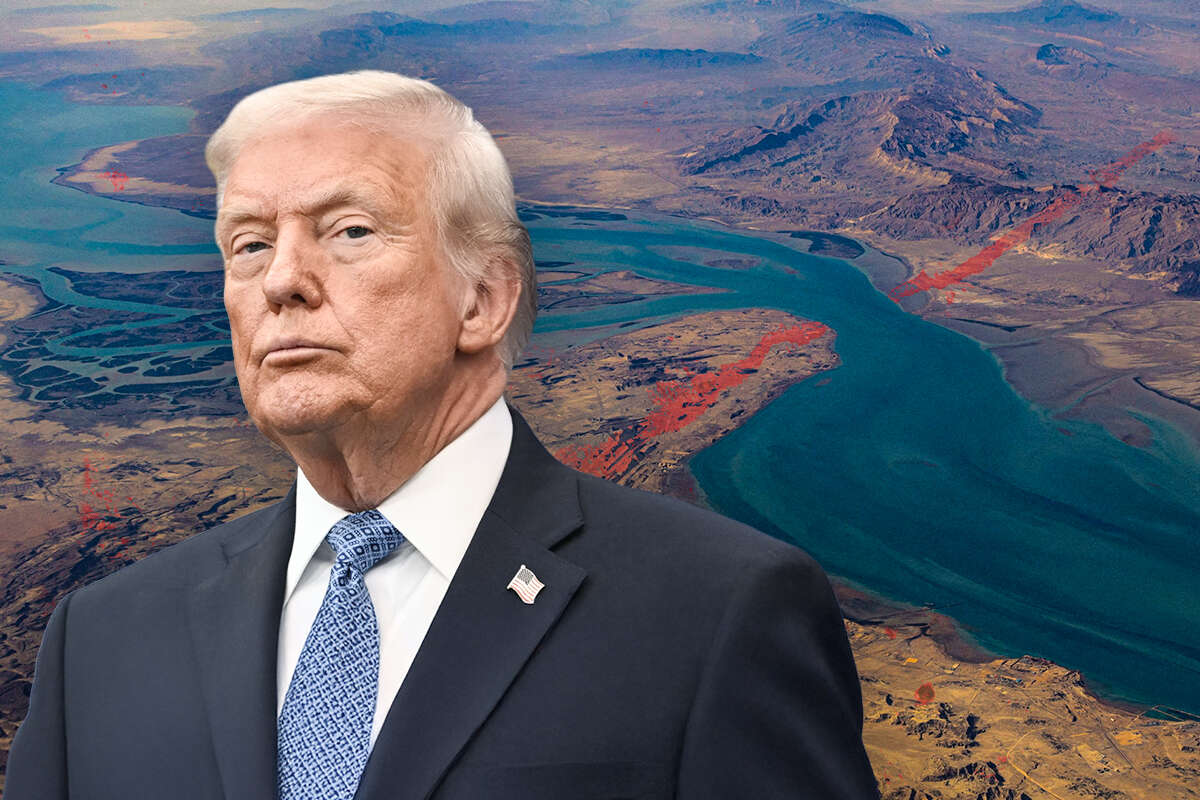
US President Donald Trump against the backdrop of the Strait of Hormuz | Photo: Reuters, AFP

Rift at top of regime deepens
Iran’s regime, led by the Islamic Revolutionary Guard Corps, has almost no reserves left to continue the fighting, according to assessments by diplomatic and security officials in the US and the Middle East. Those officials say the situation is expected to worsen further if the Strait of Hormuz is closed, and that Iran’s political leadership is therefore likely to press the Guard’s leadership to renew contacts with the US in order to secure relief.

Differences between senior Guard commanders Ahmad Vahidi and Ali Abdollahi and the civilian political leadership are deep, and growing. Their refusal to allow Foreign Minister Masoud Pezeshkian and parliament speaker Mohammad Bagher Ghalibaf to discuss the nuclear issue without an immediate return in the form of sanctions relief was what led to the collapse of the talks in Pakistan.

נשיא איראן, מסעוד פזשכיאן , אי.פי

נשיא איראן, מסעוד פזשכיאן , אי.פי
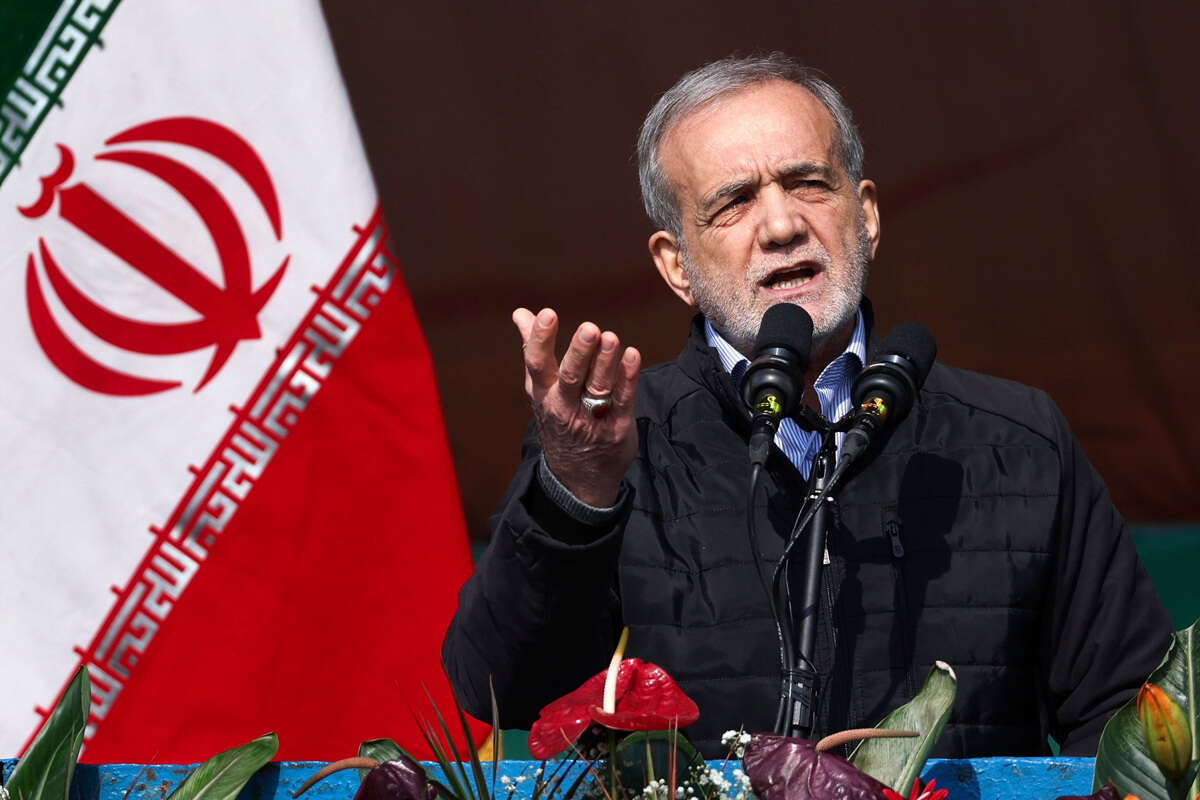
Iranian President Masoud Pezeshkian. Photo: AP

Intelligence reaching the US, Israel and Gulf states involved in the issue shows that Iran’s foreign currency reserves have been almost entirely depleted. The formal economy run by Pezeshkian’s government is showing exceptionally high unemployment, triple-digit inflation, a currency that continues to slide and the near-total blockage of almost every source of income.

Economic collapse?
Reports indicate that Iran’s Finance Ministry and central bank are sending Pezeshkian daily warnings about the state of the economy and that Iran will struggle to recover even if the war ends now, unless sweeping reforms are introduced and resources are redirected toward the economy.

According to a report by opposition-linked Iran International, officials at the central bank of the Islamic Republic warned the government that if the current situation continues, inflation will reach 180% and another 2 million people will join the ranks of the unemployed. The report said central bank governor Abdolnaser Hemmati stressed to Pezeshkian that Iran must reach an agreement with the US and lift internet restrictions in order to improve the economic situation.

Hemmati took part in the talks in Islamabad and presented Iran’s demand for sanctions to be lifted and frozen assets to be released. He made clear that without immediate income, large parts of Iran’s population would face the danger of hunger.

Iran, today. Photo: EPA

The Americans made clear that they would be prepared to release the frozen funds, provided the money was directed to civilian needs. The economic discussion made no progress because of disagreements over the nuclear issue and over Iran’s refusal to reopen Hormuz, as it had undertaken to do as a condition for a ceasefire.

The intelligence also points to the collapse of Iran’s second economy, the one run by the Islamic Revolutionary Guard Corps. The Guards control numerous companies that dominate Iran’s energy sector, including oil exports, as well as mining, aviation, pharmaceuticals, heavy industry and more. Almost all of those sectors, except oil, have nearly ceased operating. The meaning is a reduction in the regime’s offensive capabilities.

Another aspect, no less important, is the freezing of bank accounts and financial assets belonging to companies tied to the Guards and to their senior figures, meaning a direct blow to the personal wealth of the Guard’s top brass.