Middle East expert Yoni Ben Menachem warns that behind Turkish President Recep Tayyip Erdogan’s statements lies a structured plan to build a new Sunni axis that could replace Iran’s regional role.
Iranian President Masoud Pezeshkian meets with Turkish President Tayyip Erdogan on the sidelines of the Shanghai Cooperation Organisation (SCO) summit in Tianjin, China, September 1, 2025. (photo credit: IRAN’S PRESIDENTIAL WEBSITE/WANA (WEST ASIA NEWS AGENCY)/HANDOUT VIA REUTERS) ByMAARIV ONLINE, TOBIAS SIEGAL Updated:
Ben Menachem, a researcher at the Jerusalem Center for Security and Foreign Affairs, cautions that Turkey is emerging, in his view, as an increasing strategic threat to Israel. He argues that the policies led by Turkish President Recep Tayyip Erdogan go far beyond public rhetoric. According to him, “Turkey is the new Iran.”
He claims that Ankara is quietly working to establish a new Sunni bloc in the Middle East, based on the assumption that the Iranian regime will weaken or even collapse. Such a development, he says, would create a regional vacuum following the decline of the Shi’ite axis. Turkey, he adds, aims to fill this vacuum alongside Saudi Arabia, Egypt, and Pakistan, in a move intended to reshape the regional balance of power.
Ben Menachem’s assessment corresponds to steps taken by Ankara in recent years to position itself as a regional leader, partly by taking an active role in defending the Palestinian cause and opposing Israeli interests in the region.
On Sunday, Erdogan accused Israel of carrying out atrocities against Palestine and Lebanon and threatened potential military action against the Jewish state, similar to its past interventions in Karabakh and Libya.
People take part in a rally in support of Palestinians and to condemn Israeli forces’ interception of the Global Sumud Flotilla vessels aiming to reach Gaza and break Israel’s naval blockade, in Istanbul, Turkey, October 5, 2025. (credit: DILARA SENKAYA/REUTERS)
Ankara has so far been cautious about approaching southern Syria, due to concerns over a direct confrontation with Israel
These latest comments, along with the already strained relations between Ankara and Jerusalem, could lead the two regional powers to sever ties completely, as MK Amichai Eliyahu suggested in his response to Erdogan on Sunday.
Alongside the diplomatic front, Turkey is also strengthening its military presence in Syria, in coordination with Ahmed al-Sharaa. However, Ben Menachem notes that Ankara has so far been cautious about approaching southern Syria, due to concerns over a direct confrontation with Israel.
Ben Menachem believes these steps reflect far broader regional ambitions that extend beyond Syria or Iran alone. According to him, Turkey seeks to expand its influence across the Middle East, including around the issue of Jerusalem and in the international arena, developments that Israel must take into account already now.
Regarding Turkey’s leadership, Ben Menachem described Erdogan as the most dangerous figure from Israel’s perspective and also identified Foreign Minister Hakan Fidan as another key power player in Ankara. He noted reports of tensions between the two, linked to Fidan’s alleged ambitions to eventually succeed Erdogan, though he added it remains unclear whether such a scenario will materialize.
Vance says Iranians refused to disavow nuclear program that would let them build bomb, makes no mention of Strait of Hormuz, cited in Iran as other key point of disagreement
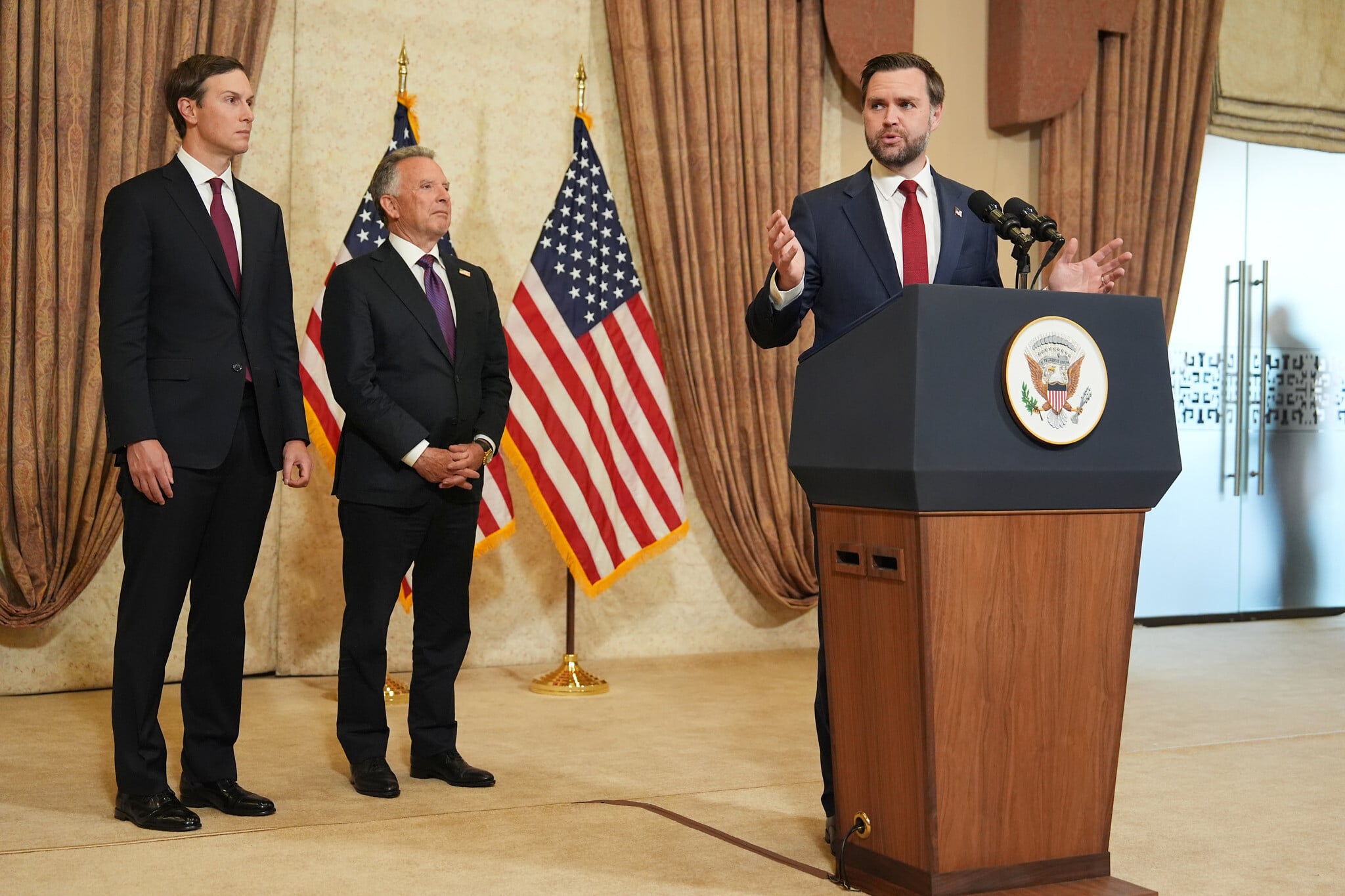
US Vice President JD Vance, right, speaks during a news conference after meeting with representatives from Pakistan and Iran as Jared Kushner, left, and Steve Witkoff, Special Envoy for Peace Missions listen, on April 12, 2026, in Islamabad, Pakistan. (AP Photo/Jacquelyn Martin, Pool)
The US and Iran failed to reach an agreement to end the war after historic, lengthy face-to-face talks that concluded early Sunday in the Pakistani capital Islamabad, leaving uncertainty over the fragile ceasefire.
Each side blamed the other for the failure of the 21-hour-long negotiations to end the deadly fighting that has swept the Middle East and sent global oil prices soaring since it began over six weeks ago.
“The bad news is that we have not reached an agreement, and I think that’s bad news for Iran much more than it’s bad news for the United States of America,” US Vice President JD Vance, the head of the American delegation, told reporters shortly before he left Islamabad.
“So we go back to the United States having not come to an agreement. We’ve made very clear what our red lines are.”
The US delegation then left Pakistan, while the Iranians were to depart later on Sunday, two Pakistani sources said.
Vance said Iran had chosen not to accept the American terms, including not to build nuclear weapons.
“We were negotiating in good faith,” Vance said, speaking at a podium in front of a pair of American flags with special envoys Steve Witkoff and Jared Kushner to his side.
“And we leave here, and we leave here with a very simple proposal, a method of understanding that is our final and best offer. We’ll see if the Iranians accept it,” he said.
“We need to see an affirmative commitment that they will not seek a nuclear weapon, and they will not seek the tools that would enable them to quickly achieve a nuclear weapon. That is the core goal of the president of the United States, and that’s what we’ve tried to achieve through these negotiations,” the US vice president said.
The talks in Islamabad, after a ceasefire earlier in the week, were the first direct US-Iranian meeting in more than a decade and the highest-level discussions since the 1979 Islamic Revolution.
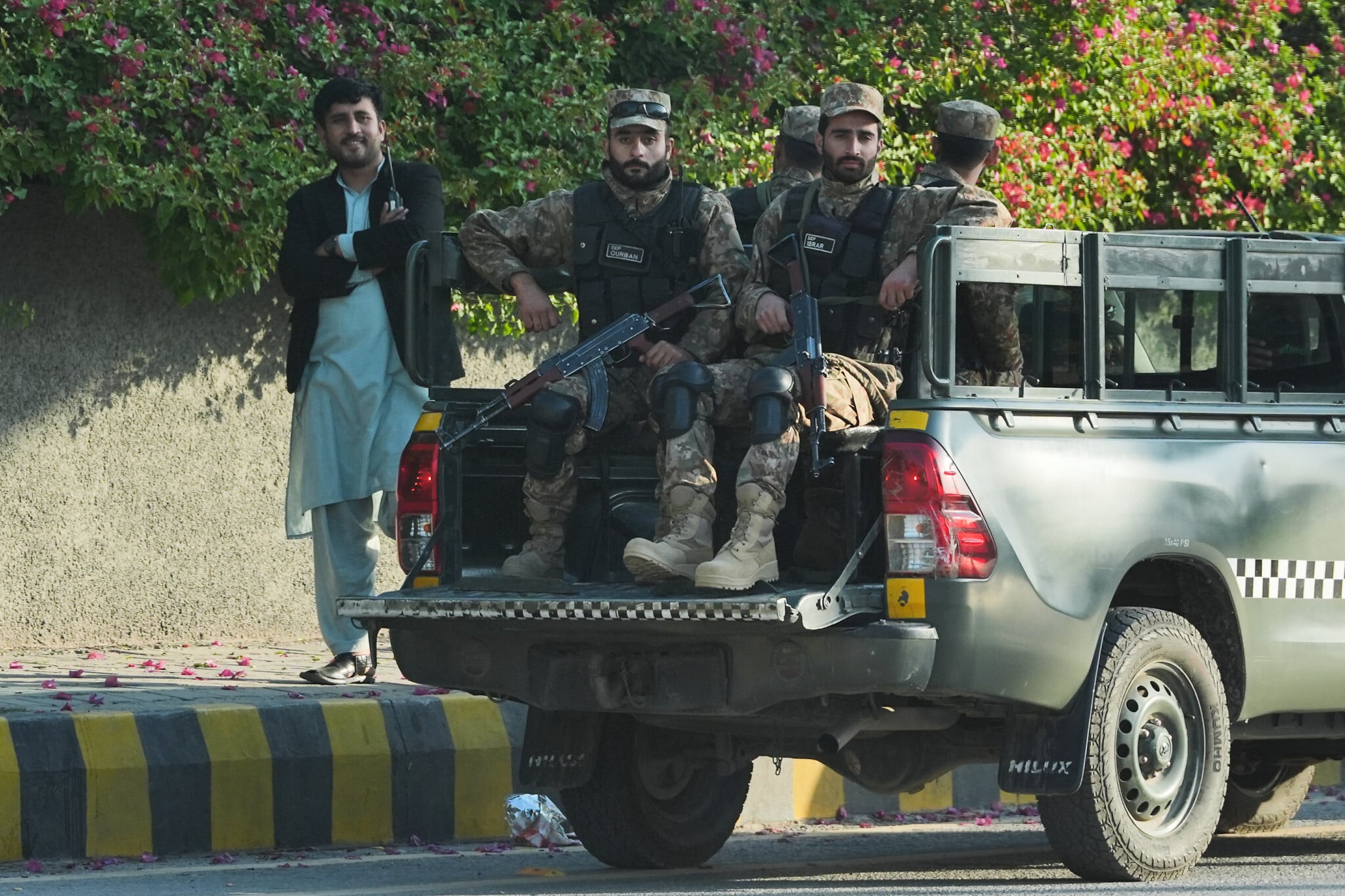
Pakistani military personnel sit at the back of a truck as the motorcade carrying Vice President JD Vance drives by them in Islamabad, Pakistan, Sunday, April 12, 2026. (AP Photo/Jacquelyn Martin, Pool)
Iran’s semi-official Tasnim news agency said that “excessive” US demands had hindered reaching an agreement.
Other Iranian media said there was agreement on a number of issues but that the Strait of Hormuz and Iran’s nuclear program were the main points of difference.
A spokesperson for Iran’s foreign ministry said the talks were conducted in an atmosphere of mistrust.
“It is natural that we shouldn’t have expected to reach agreement in just one session,” the spokesperson was quoted as saying by Iranian media.
“It is imperative that the parties continue to uphold their commitment to ceasefire,” Pakistan’s Foreign Minister Ishaq Dar said in a statement after the talks. The two sides agreed on Tuesday to a two-week ceasefire in an attempt to wind down a war that began on February 28 with airstrikes by the US and Israel on Iranian regime targets.
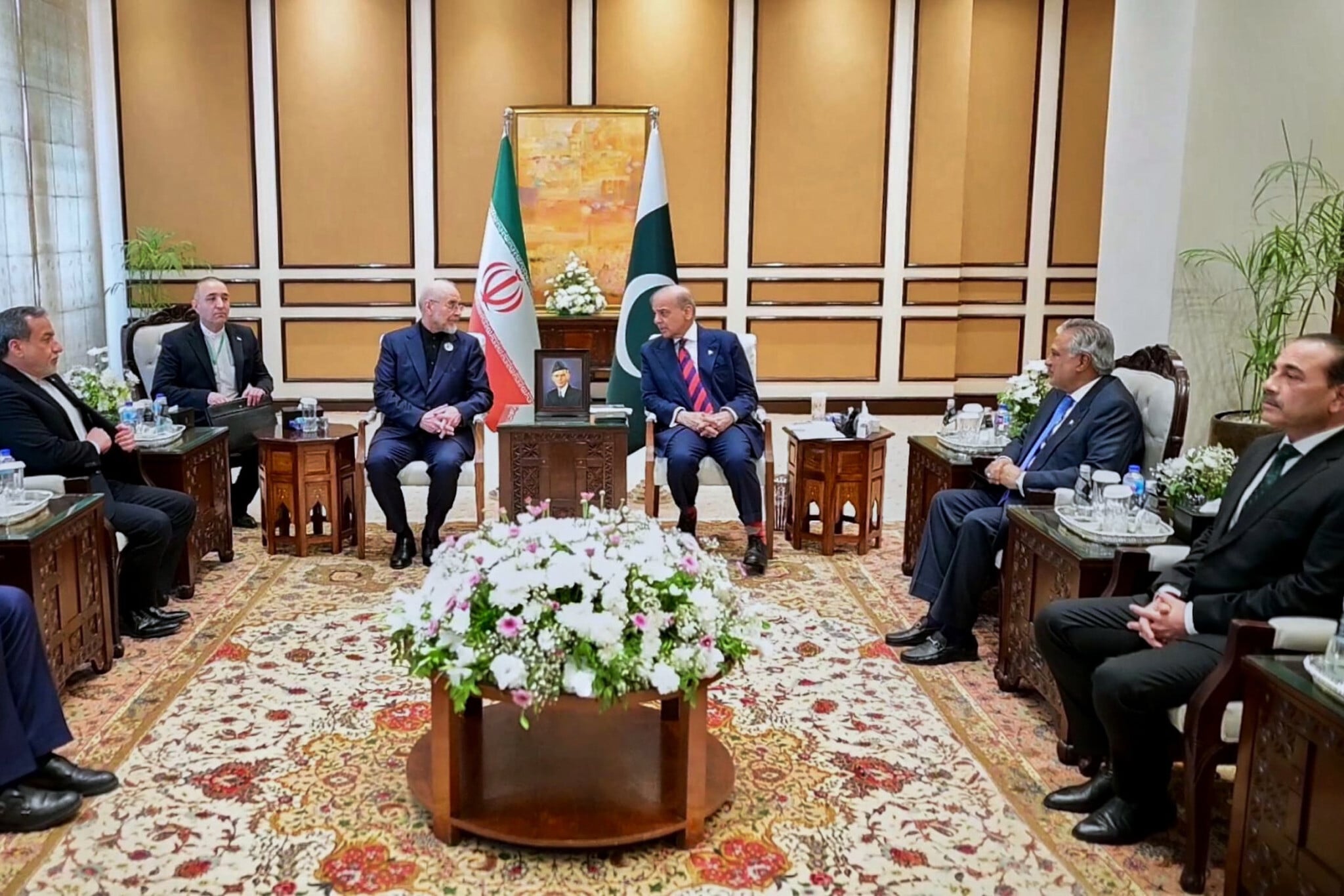
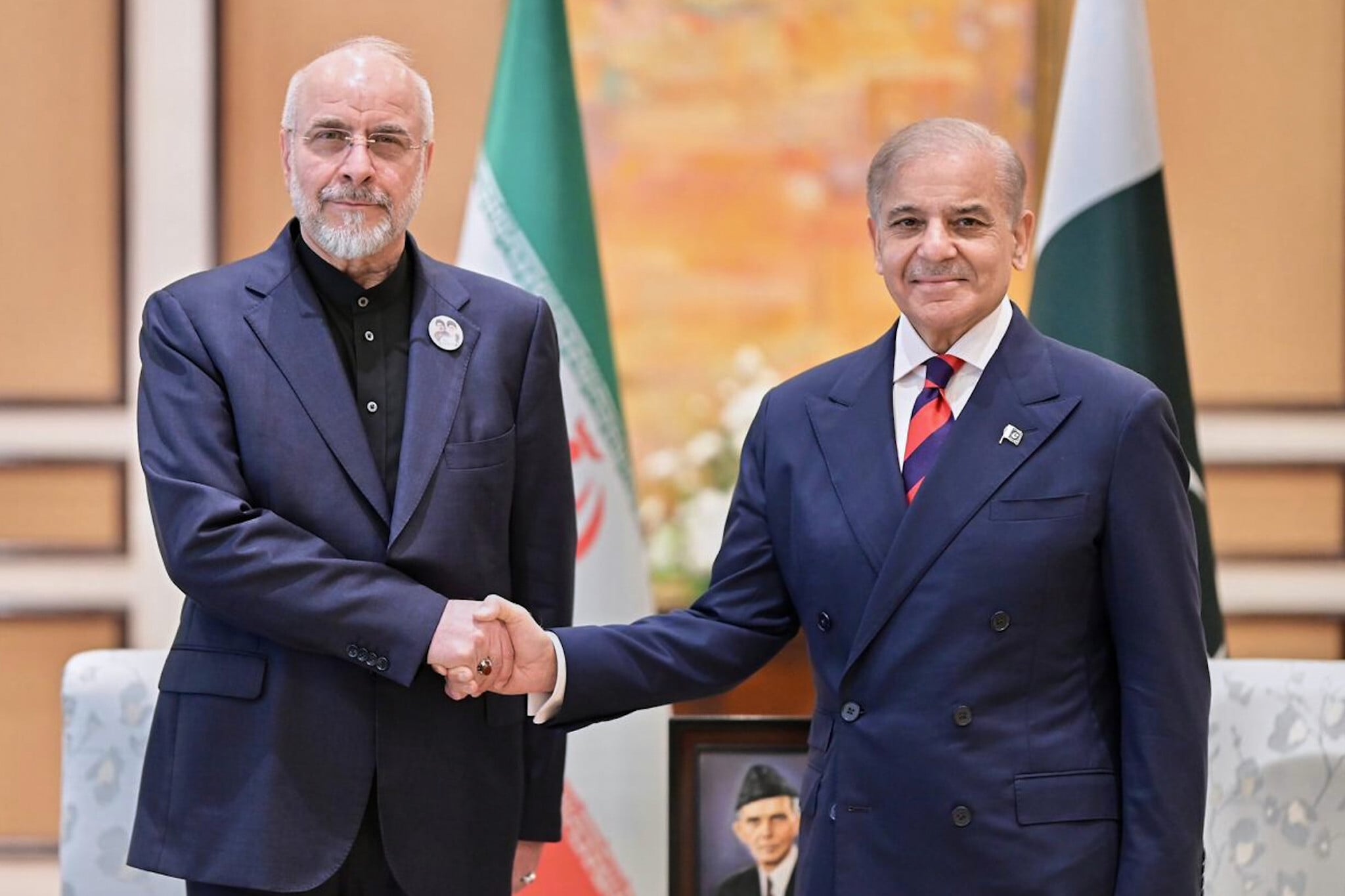
A visiting Iranian delegation headed by Iran’s Parliament Speaker Mohammad Bagher Ghalibaf, third left, meets with Pakistani Prime Minister Shehbaz Sharif, in Islamabad, Pakistan, Saturday, April 11, 2026 (Pakistan Prime Minister Office via AP)
In his brief press conference, Vance did not mention reopening the Strait of Hormuz, a chokepoint for about 20 percent of global energy supplies that Tehran has blocked since the war began.
Vance said he had spoken with US President Donald Trump as many as a dozen times during the talks, and also spoke with Secretary of State Marco Rubio, US Treasury Secretary Scott Bessent and Adm. Brad Cooper, head of the United States Central Command.
But even as the negotiations continued, Trump said on Saturday that a deal was not entirely necessary.
“We’re negotiating, whether we make a deal or not makes no difference to me, because we’ve won,” he told reporters.
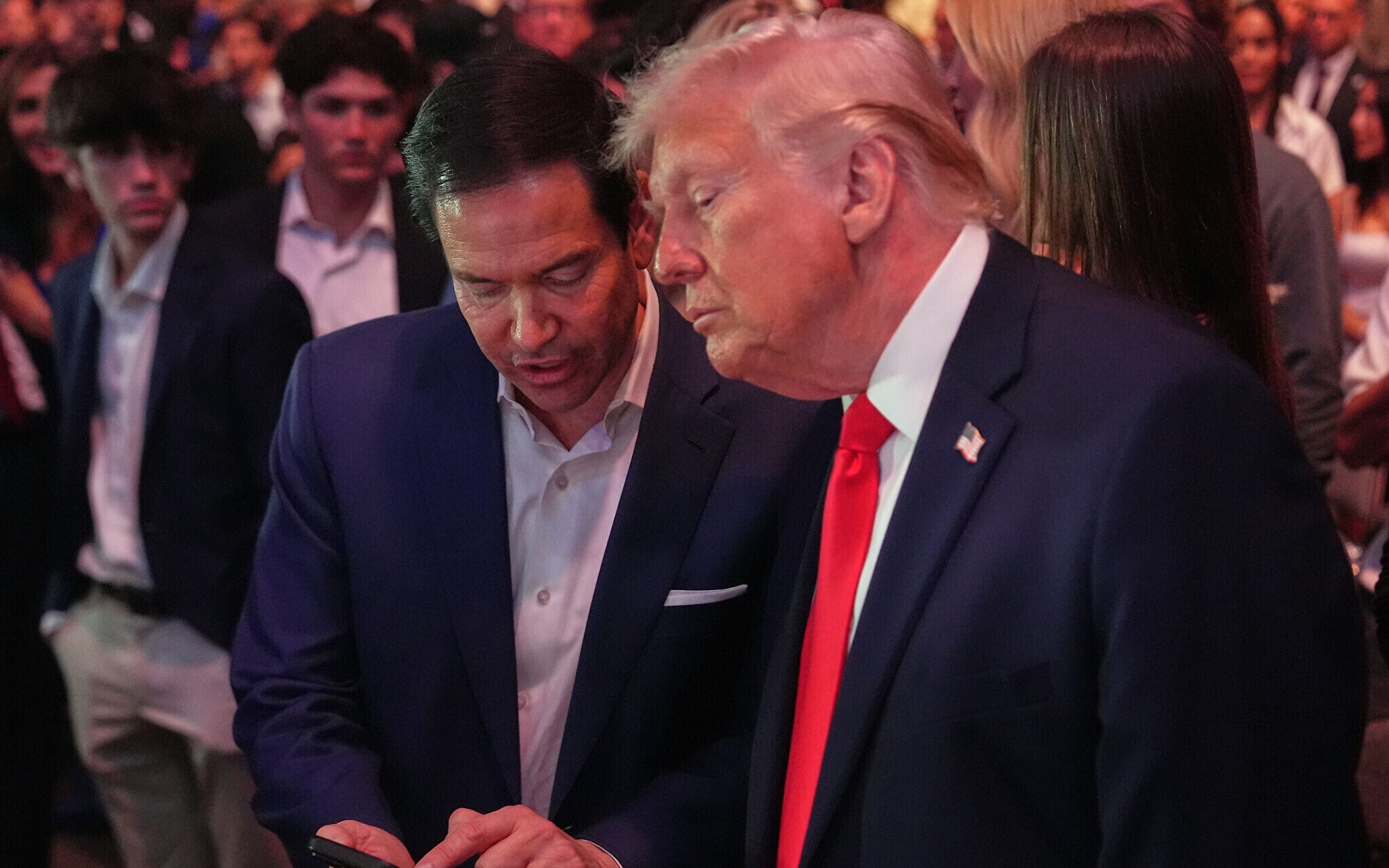
US President Donald Trump talks with Secretary of State Marco Rubio at UFC 327 at Kaseya Center, April 11, 2026, in Miami. (AP Photo/Julia Demaree Nikhinson, Pool)
The US delegation included special envoy Steve Witkoff and Trump’s son-in-law Jared Kushner. Iran’s team included Parliamentary Speaker Mohammad Bagher Ghalibaf and Foreign Minister Abbas Araghchi.
“There were mood swings from the two sides and the temperature went up and down during the meeting,” a Pakistani source said in reference to an early round of talks.
Islamabad, a city of more than 2 million people, was locked down during the talks, with thousands of paramilitary personnel and army troops on the streets.
Iran’s Parliament Speaker Mohammad Bagher Ghalibaf, left, shakes hand with Pakistani Prime Minister Shehbaz Sharif prior to their meeting, in Islamabad, Pakistan, Saturday, April 11, 2026 (Pakistan Prime Minister Office via AP)
Before the talks began, a senior Iranian source told Reuters the US had agreed to release frozen assets in Qatar and other foreign banks. A US official denied agreeing to release the money.
As well as the release of assets abroad, Tehran is demanding control of the Strait of Hormuz, payment of war reparations and a ceasefire across the region, including in Lebanon, according to Iranian state TV and officials.
Tehran also wants to collect transit fees in the Strait of Hormuz.
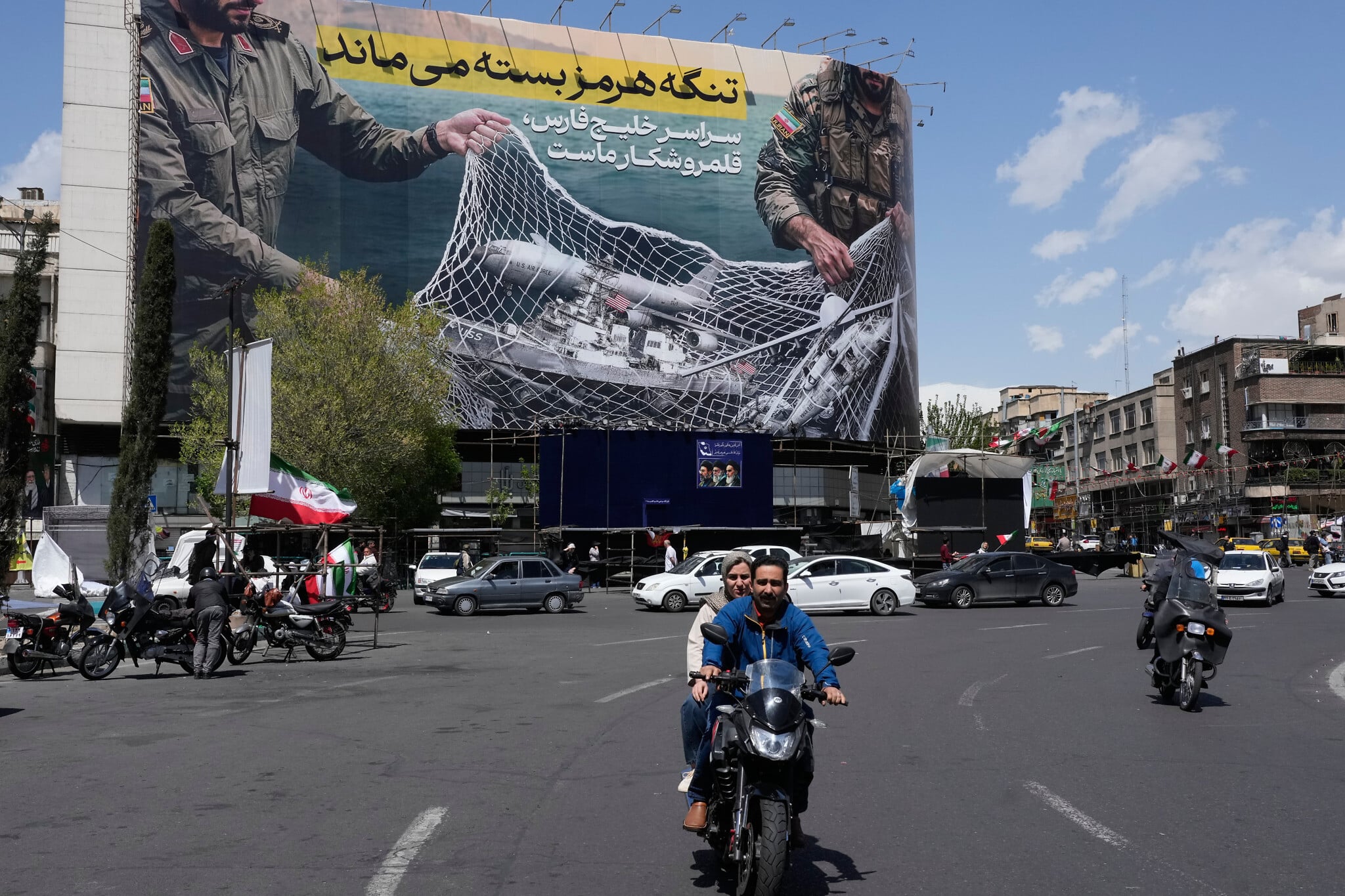
Vehicles and motorcycles move past an anti-US billboard depicting American aircraft entering an Iranian armed forces fishing net with signs that read in Persian: “The Strait of Hormuz will remain closed, the entire Persian Gulf is our hunting ground,” at the Islamic Revolution square in downtown Tehran, Iran, April 5, 2026. (AP Photo/Vahid Salemi)
Despite the differences in Islamabad, three supertankers fully laden with oil passed through the Strait of Hormuz on Saturday, shipping data showed, in what appeared to be the first vessels to exit the Gulf since the US-Iran ceasefire deal.
Hundreds of tankers are still stuck in the Gulf, waiting to exit during the two-week ceasefire period.
While the talks were being conducted in Islamabad, the US military said two destroyers transited the strait ahead of mine-clearing work, a first since the war began. Iran’s state media, however, said the joint military command denied that.
Trump’s stated goals have shifted, but as a minimum he appears to want free passage for global shipping through the waterway and the crippling of Iran’s nuclear enrichment program to ensure it cannot produce an atomic bomb.
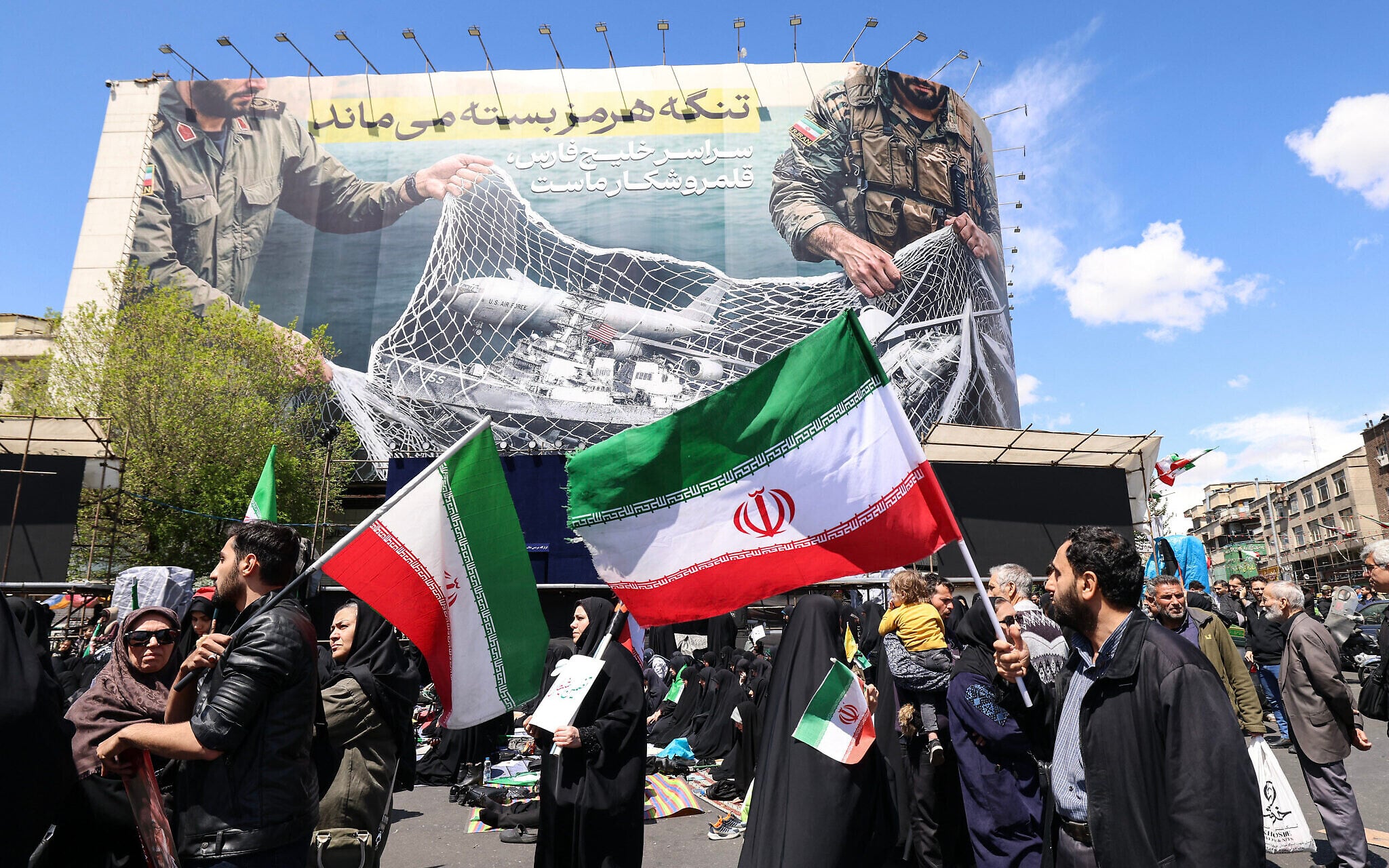
Iranians hold flags of the Islamic Republic of Iran beneath a large billboard reading ‘The Strait of Hormuz remains closed,’ as people gather in Tehran’s Revolution Square after the United States and Iran agreed to a two-week ceasefire, April 8, 2026. (Atta Kenare/AFP)
Tehran, which routinely calls for the destruction of Israel, maintains that its nuclear program is for purely civilian purposes. However, before the June 2025 war, Iran had been enriching uranium to levels far beyond what’s necessary for any peaceful application, and consistently obstructed international inspectors from checking its facilities. Israel has also said Iran was taking steps toward weaponization.
Israel launched its campaign against Iran, alongside the US, to degrade the Iranian regime’s military capabilities, distance threats posed by Iran — including its nuclear and ballistic missile programs — and “create the conditions” for the Iranian people to topple the regime, the military and other Israeli leaders have said.
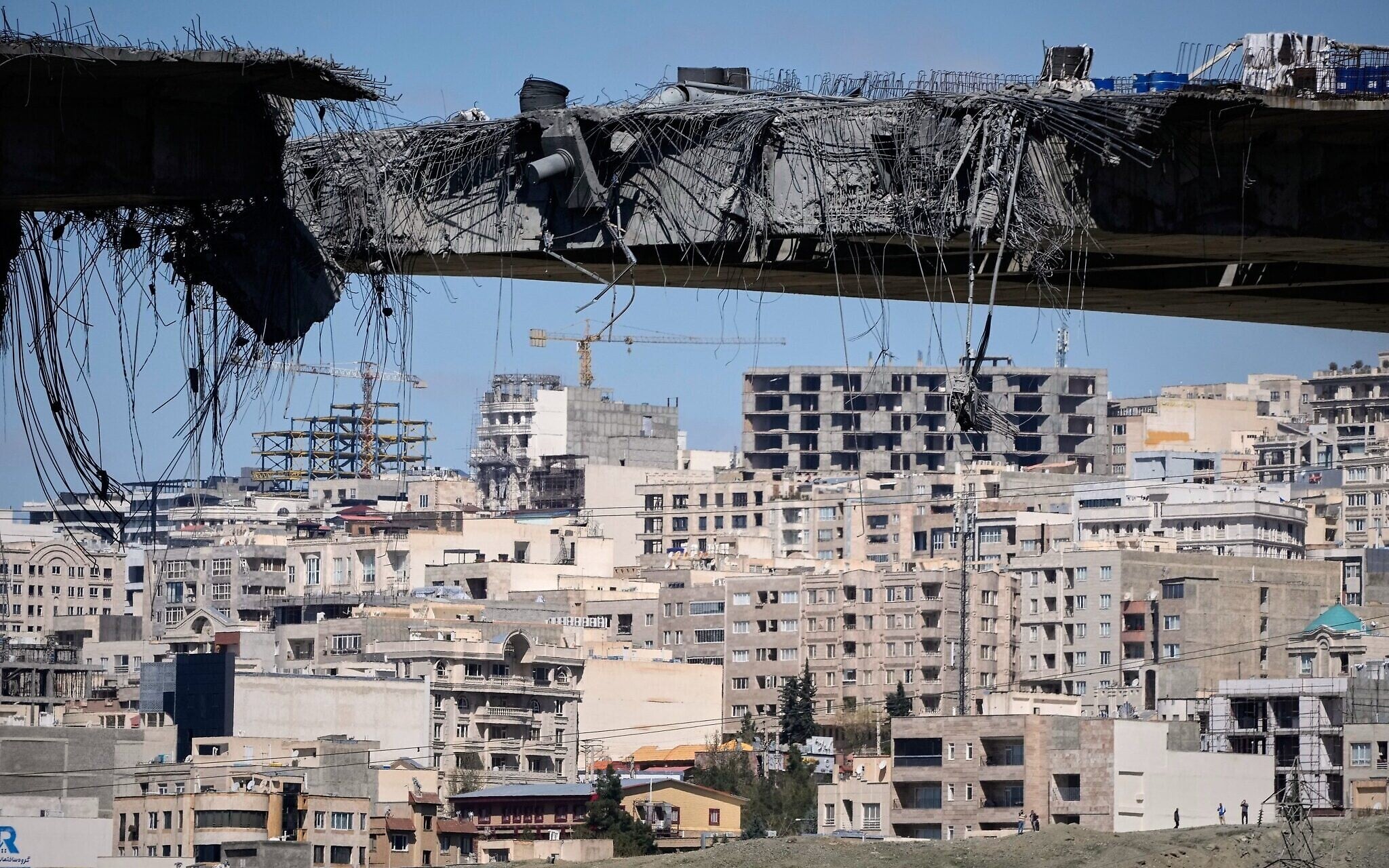
A bridge struck by US airstrikes is seen in the town of Karaj, west of Tehran, Iran, April 3, 2026. (AP Photo/Vahid Salemi)
Since the Islamic Revolution in Iran in 1979, the most direct US contact had been in 2013 when president Barack Obama called newly elected President Hassan Rouhani to discuss Iran’s nuclear program.
Obama’s secretary of state, John Kerry, and counterpart Mohammad Javad Zarif later met during negotiations toward the 2015 Iran nuclear deal — a process that lasted over a year.
Now the far broader talks featured Vance, a reluctant defender of the war who has little diplomatic experience and warned Iran not to “try and play us,” and Qalibaf, a former commander with Iran’s powerful Revolutionary Guard who has issued some of Iran’s most fiery statements since fighting began.
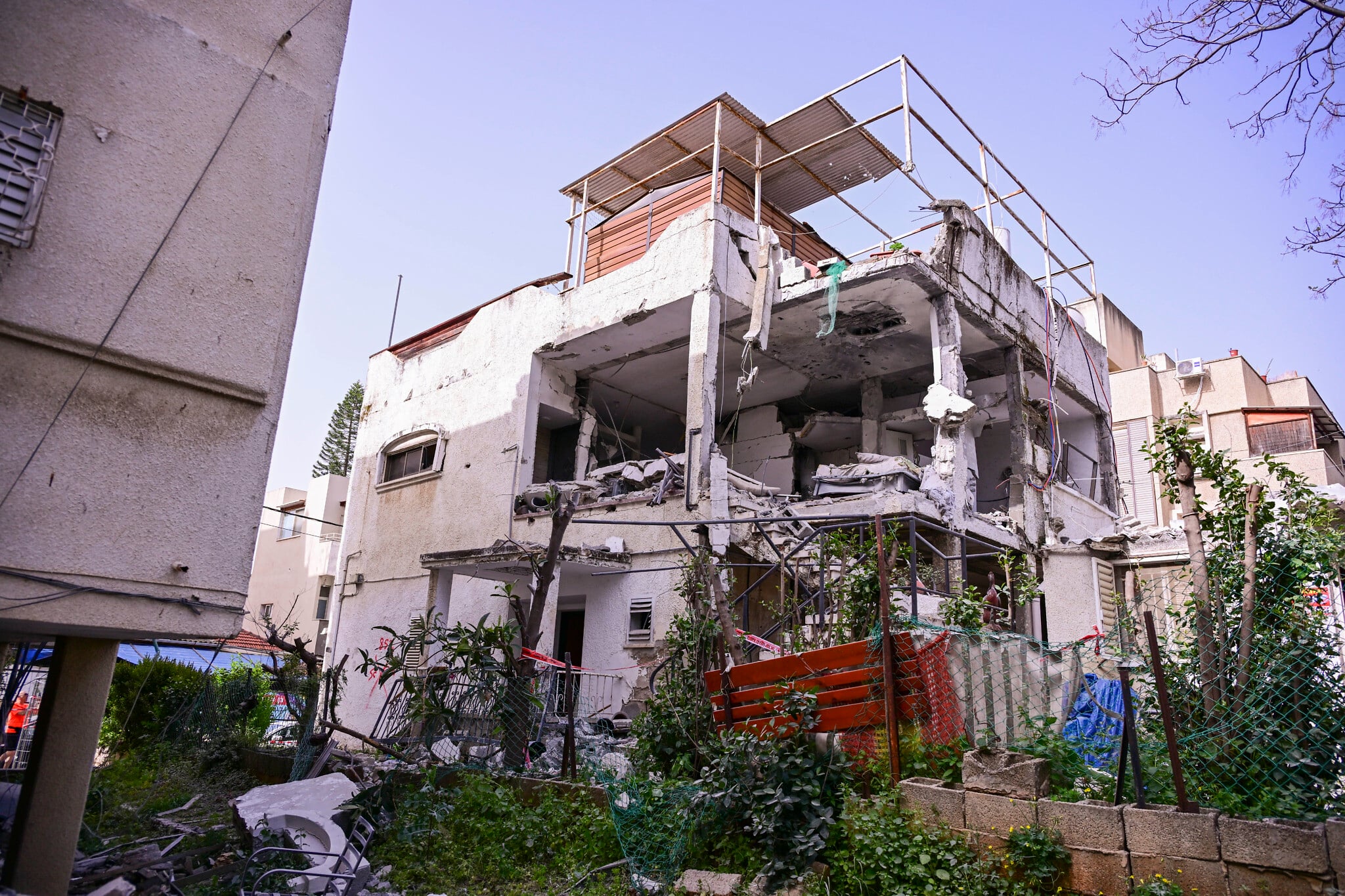
The scene where a missile fired from Iran at Israel caused damage in Ramat Gan, April 4, 2026 (Avshalom Sassoni/Flash90)
Since the war began on February 28, 20 Israeli civilians and foreign nationals have been killed in Israel in Iranian ballistic missile attacks, along with four Palestinians in the West Bank.
More than 3,000 people were killed throughout Iran during the war, Iran’s forensic chief told state media on Thursday.
US-based rights group HRANA said 3,636 Iranians have been killed since the war erupted. It said 1,701 of those were civilians, including at least 254 children.
The figures could not be independently verified. The IDF has estimated that some 5,000 Iranian soldiers have been killed in Israeli strikes, along with tens of thousands wounded, many of them members of the internal security forces and Basij paramilitary force.
Thirteen US military service members have been killed in the fighting, with more than 300 wounded.
Dozens more civilians and soldiers have been killed in Iranian attacks targeting the UAE, Kuwait, Bahrain, Saudi Arabia and Oman.
Hungary has repeatedly used its EU veto to block sanctions on Israel; if opposition leader Péter Magyar wins and aligns with Brussels to unlock billions in funding, Jerusalem could lose its last line of defense in the bloc
In Israel, officials are closely watching the race. Orbán is fighting a defensive campaign, and a victory for him would defy expectations. Magyar’s Tisza party has been deploying activists in an effort to disrupt Orbán’s campaign rallies, a tactic previously uncommon in Hungary.