Hezbollah said it had mounted 19 simultaneous strikes on IDF positions on Thursday using guided missiles, artillery and other weapons.
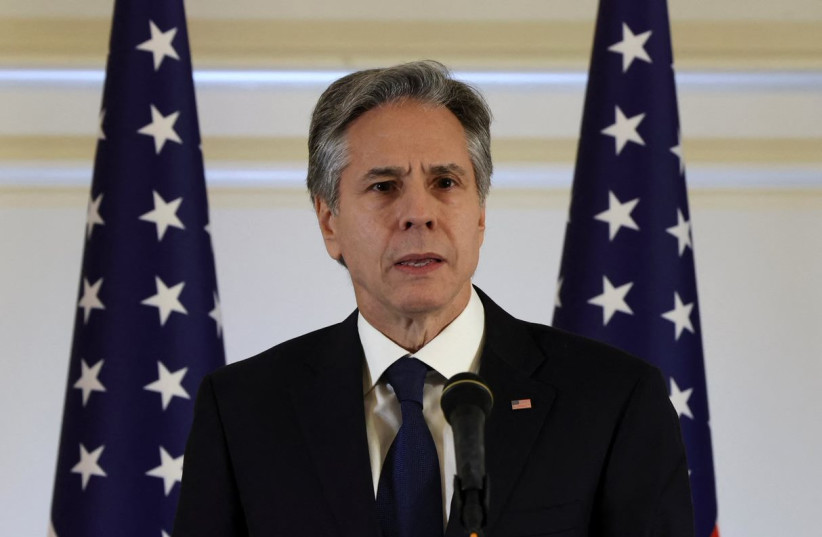
 US Secretary of State Antony Blinken speaks during a press conference at the Waldorf Astoria in Jerusalem on January 31, 2023. (photo credit: RONALDO SCHEMIDT/POOL VIA REUTERS)
US Secretary of State Antony Blinken speaks during a press conference at the Waldorf Astoria in Jerusalem on January 31, 2023.
(photo credit: RONALDO SCHEMIDT/POOL VIA REUTERS)
The US pushed to prevent regional spillover from the Gaza war and to secure an agreement for a humanitarian “pause,” as US Secretary of State Antony Blinken was scheduled on Friday to land in Israel for the second time since the fighting began on October 7.

“We are determined to prevent escalation on any of these fronts whether its in southern Lebanon, the West Bank, or anywhere else in the region,” he told reporters before leaving the US on Thursday, in a trip that would also include stops in Jordan and Turkey.

“We’re making sure that this message gets through. It’s not in anyone’s interest for this to escalate and some of the other parties involved recognized that, but we’re going to work on that every single day.”

He spoke as eyes were turned to Lebanon, where Hezbollah leader Sayyed Hassan Nasrallah is expected to deliver his first public address since the war, as violence on Israel’s northern border increased as the IDF kept its major focus on Gaza in the South.

Hezbollah said it had mounted 19 simultaneous strikes on IDF positions on Thursday using guided missiles, artillery, and other weapons, coinciding with what it called strikes using two explosive drones.
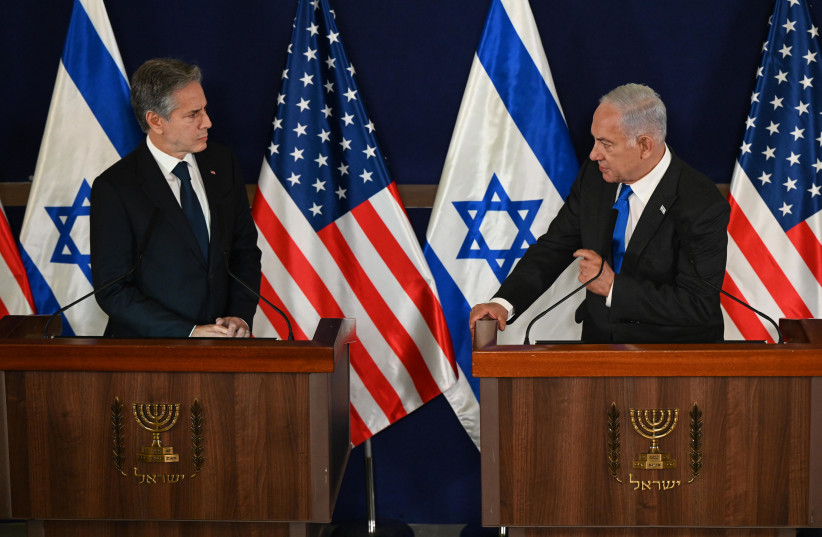
 Us Secretary of State Anthony Blinken and Prime Minister Benjamin Netanyahu, October 12, 2023. (credit: CHAIM TZACH/GPO)
Us Secretary of State Anthony Blinken and Prime Minister Benjamin Netanyahu, October 12, 2023. (credit: CHAIM TZACH/GPO)

Nasrallah’s speech is expected to indicate whether the group will expand the violence into an all-out war.

In Washington, US National Security Council spokesperson John Kirby said the White House was concerned by the strike but had not seen evidence Hezbollah was ready to launch an all-out war with Israel.

Advertisement

Blinken is set to arrive as the United States’ strategy to boost Israel’s existing regional allies and to expand its alliances, appeared to be buckling under the pressure of the war.

Bahrain said on Thursday the Gulf state’s ambassador to Israel had returned home and the Israeli ambassador in Manama had left “a while ago,” confirming an earlier statement by its parliament.

The government statement did not however confirm that economic ties had been severed, as the parliament had earlier stated, citing a protest over the war in Gaza.

On Wednesday, Jordan recalled its ambassador as did Colombia and Chile. Bolivia cut its ties with Israel all together.

Biden heckled by pro-ceasefire Jewish person

Top US officials, including Blinken and President Joe Biden have been beset by protesters calling for a ceasefire.

Biden was speaking to about 200 people in Minnesota late Wednesday when the heckler shouted: “As a rabbi, I need you to call for a ceasefire right now.”

Biden responded: “I think we need a pause. A pause means give time to get the prisoners out.”

The White House later clarified that Biden was referring to the hostages – not prisoners –held by Hamas.

Kirby told reporters that the US would like to see pauses in the fighting to allow for the safe passage of foreign nationals to exit Gaza, a move that began on Wednesday. It’s estimated that there are some 7,500 foreign passport holders, including Americans, who would like to leave. In addition, Hamas is holding 242 hostages.

“We’re not talking about one pause, what we are trying to do is to explore the idea of as many pauses as might be necessary to continue to get aid out and to continue to work to get people out safely, including hostages,” Kirby said.

He noted that Biden had already secured one such pause last month when Hamas released two American hostages.“That is what we are looking at,” Kirby said, as he explained that these pauses would be to meet certain goals. Each pause will require negotiation and diplomacy, Kirby stated.

He noted that 55 humanitarian aid trucks had gone into Gaza through the Egyptian crossing at Rafah and that more would continue to be sent into the Strip.

But human rights experts have warned that food and medicine are not enough to prevent a humanitarian crisis as the number of Palestinian casualties rose to over 9,000, according to Hamas data.

A number of UN human rights experts accused Israel of genocide with its bombing. The IDF has said it’s going after Hamas terror targets that are hidden within civilian areas, including under hospitals.

Blinken told reporters that “Israel has not only the right, but the obligation to defend itself and to take steps to make sure that this [the October 7 attack] never happens again.”

He cautioned, however, “How Israel does this, matters.”

Reuters contributed to this report.• 

Hezbollah operates as an illegal terrorist army in Lebanon. The fact that it works with other groups like Wagner potentially presents a threat to the region.

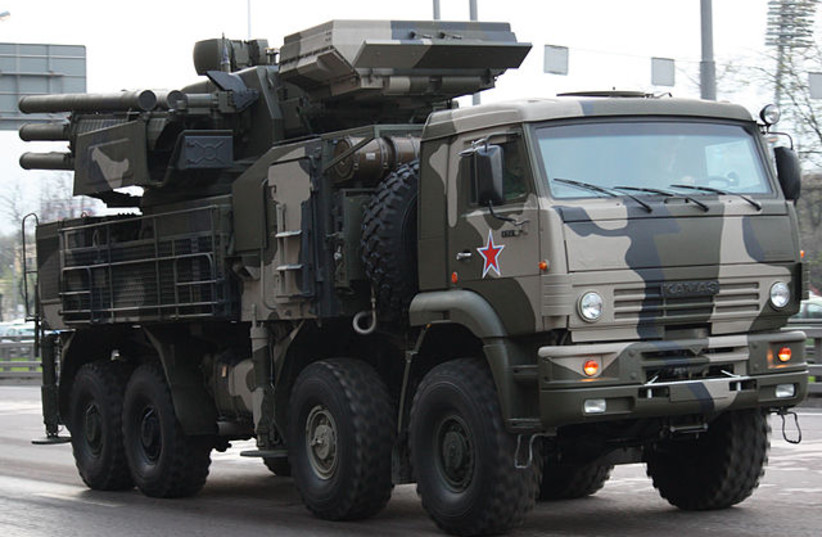
SA-22 is a combined short to medium range surface-to-air missile and anti-aircraft artillery weapon system produced by KBP of Tula, Russia (photo credit: WIKIMEDIA)
SA-22 is a combined short to medium range surface-to-air missile and anti-aircraft artillery weapon system produced by KBP of Tula, Russia
(photo credit: WIKIMEDIA)
The Wall Street Journal reported on Thursday that “the US has intelligence that the Wagner Group, the Russian paramilitary group, may provide an air defense system to Hezbollah.”

Hezbollah already has an impressive arsenal. The addition of air defenses beyond its existing surface-to-air missiles would increase the threat that the group poses.

The report says that “the system in question is the SA-22, which uses antiaircraft missiles and air defense guns, to intercept aircraft,” and that a US official could not confirm if the system had been sent: “Wagner has personnel in Syria, where Hezbollah fighters have also been present.”

This is not the first time Iran sought to supply Hezbollah with air defenses. A report at London-based Asharq al-Awsat in July claimed that Hezbollah has already improved its air defenses. The report included a reference to SA-8 and SA-22 systems. And, back in 2018, a report at Ynet said that Iran tried to move its 3rd Khordad system to T-4 base in Syria.

This was the same base Iran used for drones. Iran backs Hezbollah, which operates in Syria.

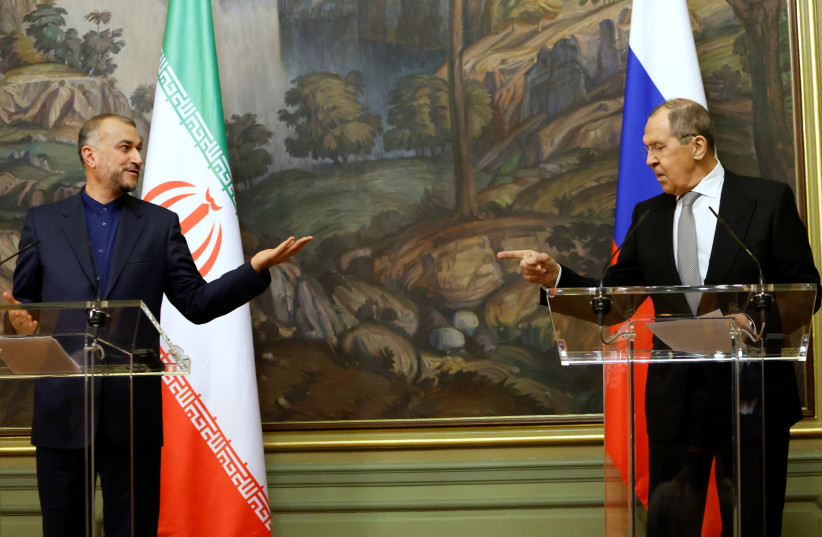
 Russian Foreign Minister Sergei Lavrov and Iranian Foreign Minister Hossein Amir-Abdollahian attend a joint news conference in Moscow, Russia March 15, 2022 (credit: REUTERS/MAXIM SHEMETOV/POOL)
Russian Foreign Minister Sergei Lavrov and Iranian Foreign Minister Hossein Amir-Abdollahian attend a joint news conference in Moscow, Russia March 15, 2022 (credit: REUTERS/MAXIM SHEMETOV/POOL)

Hezbollah had sought more advanced air defenses

Therefore, it was already known that Hezbollah was seeking more advanced air defenses; the SA-22 had already been mentioned in the past. However, the system is one that may not actually be very helpful to Hezbollah. For starters, it is mounted on a truck.

Also known as the Pantsir, the SA-22 has been improved over the years, since its development decades ago. It combines both guns and missiles and uses a radar system to track targets, several at a time.

Advertisement

Its difficulties lie in facing multiple targets coming from various directions. In Libya and Syria, it did not perform well against Turkish Bayraktar drones, for instance.

The system sits on a large 8×8 wheeled chassis, pulled by a truck. According to sources, it combines two 30mm. cannons that can fire up to 2,500 rounds per minute, with missiles; it can fire 12 interceptors and track targets up to 24km. away. The system has not performed well in Syria or Libya, and it is not clear why it would be a game changer for Hezbollah, but it could pose a threat to aircraft and drones, and therefore is certainly a threat to the region. Any armaments for Hezbollah are a threat.

The problem is less with the system and more with Hezbollah, which operates as an illegal terrorist army in Lebanon, one that can import any air defense. If the report is true, that it is working with other groups like Wagner, this could present a new type of threat to the region.

Hezbollah seeking air defense systems is part of a much broader problem, one that has as its chief players Iran and Russia, the latter of which is destabilizing Syria and has slammed Israel in the wake of the Hamas attack and the ensuing war.

Any chance that Russian groups might be in touch with Hezbollah, topping off Iran’s existing smuggling routes to the terror group, presents yet another strategic threat to the region.

Hezbollah has recently increased its attacks on Israel, firing a surface-to-air missile at a drone this week, showing off its capabilities and how it is willing to use weapons with impunity. Israel has responded, but Hezbollah keeps up its threats.


Wall Street Journal says US is monitoring conversations between groups concerning SA-22 Pantsir system, as Lebanese terror organization continues firing at Israel

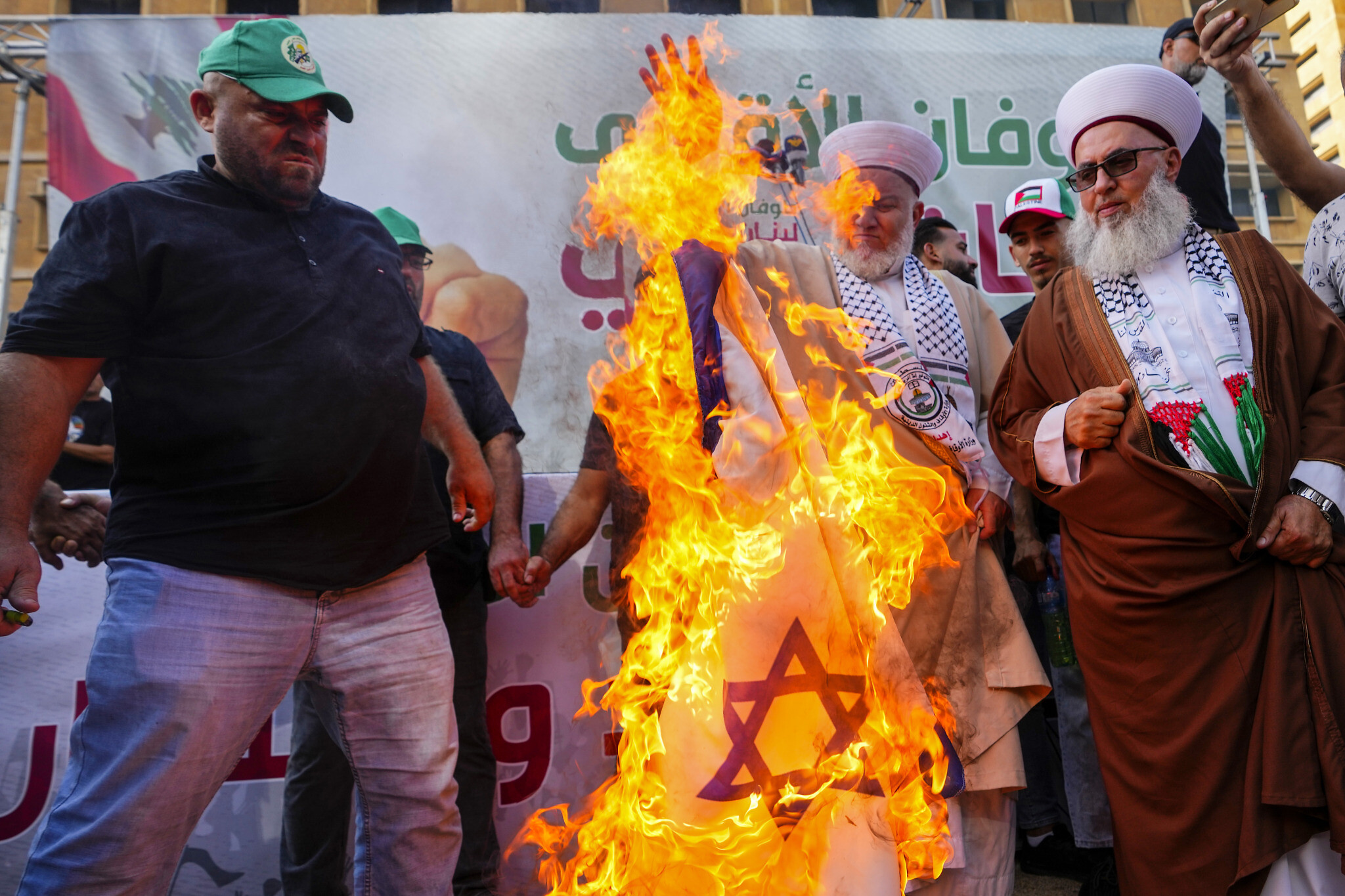
Members of Hezbollah and Hamas supporters burn an Israeli flag during a rally in Beirut, Lebanon, October 29, 2023. (AP Photo/Hassan Ammar)

Members of Hezbollah and Hamas supporters burn an Israeli flag during a rally in Beirut, Lebanon, October 29, 2023. (AP Photo/Hassan Ammar)

US intelligence officials are reportedly concerned that the Russian paramilitary Wagner Group could provide Hezbollah with an advanced air defense system, as the Lebanon-based terror group continues to fire missiles and mortars at Israel, threatening to open a second front in its war against Hamas.

The Wall Street Journal reported Thursday that American intelligence is monitoring conversations between Wagner and Hezbollah, and believes the Russian outfit could send the SA-22 to Lebanon — though it does not believe any such transfer has already occurred.

The SA-22, also known as the Pantsir, is a short-range truck-mounted air defense battery capable of taking down aircraft, helicopters, UAVs ballistic missiles and cruise missiles.

A number of SA-22s are thought to have been deployed in Syria and some were reportedly destroyed in Israeli strikes in years past.

Israel has long carried out strikes in Syria aimed at preventing advanced weapons from being transferred to Hezbollah, and is believed to have stepped up efforts recently as Iranian proxy groups ramp up attacks from Lebanon and elsewhere.


Israel has also carried out a string of airstrikes on military targets inside Syria in response to multiple incidents of rockets and shells fired at Golan Heights communities in recent weeks.

Wagner and Hezbollah fighters both have a presence in Syria, where they were deployed to bolster Syrian dictator Bashar al-Assad during the country’s long civil war.

On Tuesday, Russia condemned Israeli airstrikes on Syria as “unacceptable,” warning that they risk triggering a spillover of the Israel-Hamas war into a wider regional conflict.

Moscow, however, ignored the Syrian fire toward Israel that preceded them.

A moment before an Israeli missile destroys a Syrian SA-22 air defense system on May 10, 2018. (Israel Defense Forces)

Speaking to his Syrian counterpart on Tuesday, Russian Foreign Minister Sergei Lavrov stressed Russia’s opposition to Israel’s strikes on Syria, and warned against any actions that could provoke an escalation in the “current explosive situation,” Russia’s Foreign Ministry said.

Lavrov said “the spread of the armed escalation to Syria and other countries of the region is impermissible,” Russia’s Foreign Ministry said in a readout of his call with Syrian Foreign Minister Faisal Mekdad.

“In that regard, [Lavrov] noted the unacceptability of Israeli air strikes on Syrian territory, which have become more frequent against the backdrop of events in the Gaza Strip,” Moscow said.

Russian President Vladimir Putin, once a close Israeli ally, has been sharply critical of Israel since the war launched, as ties between Moscow and Jerusalem have soured following Israel’s support for Ukraine after Russia’s invasion.

Putin has repeatedly criticized the Jewish state’s offensive, called for aid to Gaza, and urged a ceasefire. In one remark that was viewed by some as particularly stinging, Putin compared the “unacceptable” Israeli siege of Gaza to the Nazi blockade of Leningrad, which was seen by some as implicitly likening Israel to Nazi Germany.

On Wednesday, Russia’s UN ambassador Vasily Nebenzya told the world body that Israel does not have the right to self-defense.

Last month, Russia put forth a UN Security Council proposal that failed to include an explicit condemnation of Hamas and was voted down by the United States, Britain, France and others.

The Putin-allied Wagner private military company has taken part in conflicts well beyond its home country’s borders but also created domestic political havoc.

During its decade-long existence, Wagner’s operations in Africa, Syria and eastern Ukraine have served Putin’s political interests, with the president appearing to relish, rather than fear, the internal rivalries created by its success.

Yevgeny Prigozhin, the founder of the Wagner mercenary group, led a short-lived rebellion against Putin in June, and was killed in a plane crash in August widely believed to have been orchestrated by Moscow.