Iran unwilling to reach a new nuclear deal with the United States, President Donald Trump laments, hinting at new strikes if the Islamic Republic doesn’t compromise soon.
By David Rosenberg, World Israel News
April 29, 2026
President Donald Trump issued a warning to Iran on Wednesday morning, hinting at new strikes on the Islamic Republic if Tehran refuses to compromise in nuclear talks.
Trump posted an AI-generated image of himself holding an assault rifle against a backdrop of explosions in the Middle East, under the text “No More Mr. Nice Guy.”
The image was accompanied by a brief message, assailing Iran’s insistence on maintaining the right to enrich uranium.
“Iran can’t get their act together,” Trump wrote. “They don’t know how to sign a nonnuclear deal. They better get smart soon!”
The comment was posted hours after the president met with King Charles III in Washington, DC.
During the meeting, Trump said that the monarch agreed with the administration that Iran must be barred from acquiring nuclear weapons.
“Charles agrees with me even more than I do; we’re never going to let that opponent have a nuclear weapon,” Trump said during a state dinner event with the king.
Gulf Arab states lobbying Trump to invade Iran – report
Earlier on Tuesday, Trump claimed that Iran had reached out to the United States, requesting that the naval blockade on the Islamic Republic be lifted, adding that the country is in a “state of collapse.”
Trump recently rejected an offer by Tehran to fully reopen the Strait of Hormuz to international trade, in exchange for an end to the war, while leaving the issue of Iran’s nuclear program unresolved.
This is not the first time Trump has threatened to end the ceasefire and resume hostilities with Iran.
On April 19, the president made similar comments after Iranian boats fired at several commercial vessels in the Strait of Hormuz.
“We’re offering a very fair and reasonable DEAL, and I hope they take it because, if they don’t, the United States is going to knock out every single Power Plant, and every single Bridge, in Iran,” Trump said.
“NO MORE MR. NICE GUY! They’ll come down fast, they’ll come down easy and, if they don’t take the DEAL, it will be my Honor to do what has to be done, which should have been done to Iran, by other Presidents, for the last 47 years. IT’S TIME FOR THE IRAN KILLING MACHINE TO END!”
Just days later, however, the president agreed to extend the ceasefire with Iran, without setting a deadline for reaching an agreement.
Iran’s plan is ‘We’ll blow you up and you pay us,’ says top US diplomat; tanker traffic muted in strait, which Iran says it controls; Germany’s Merz: Iran ‘humiliating’ US in talks
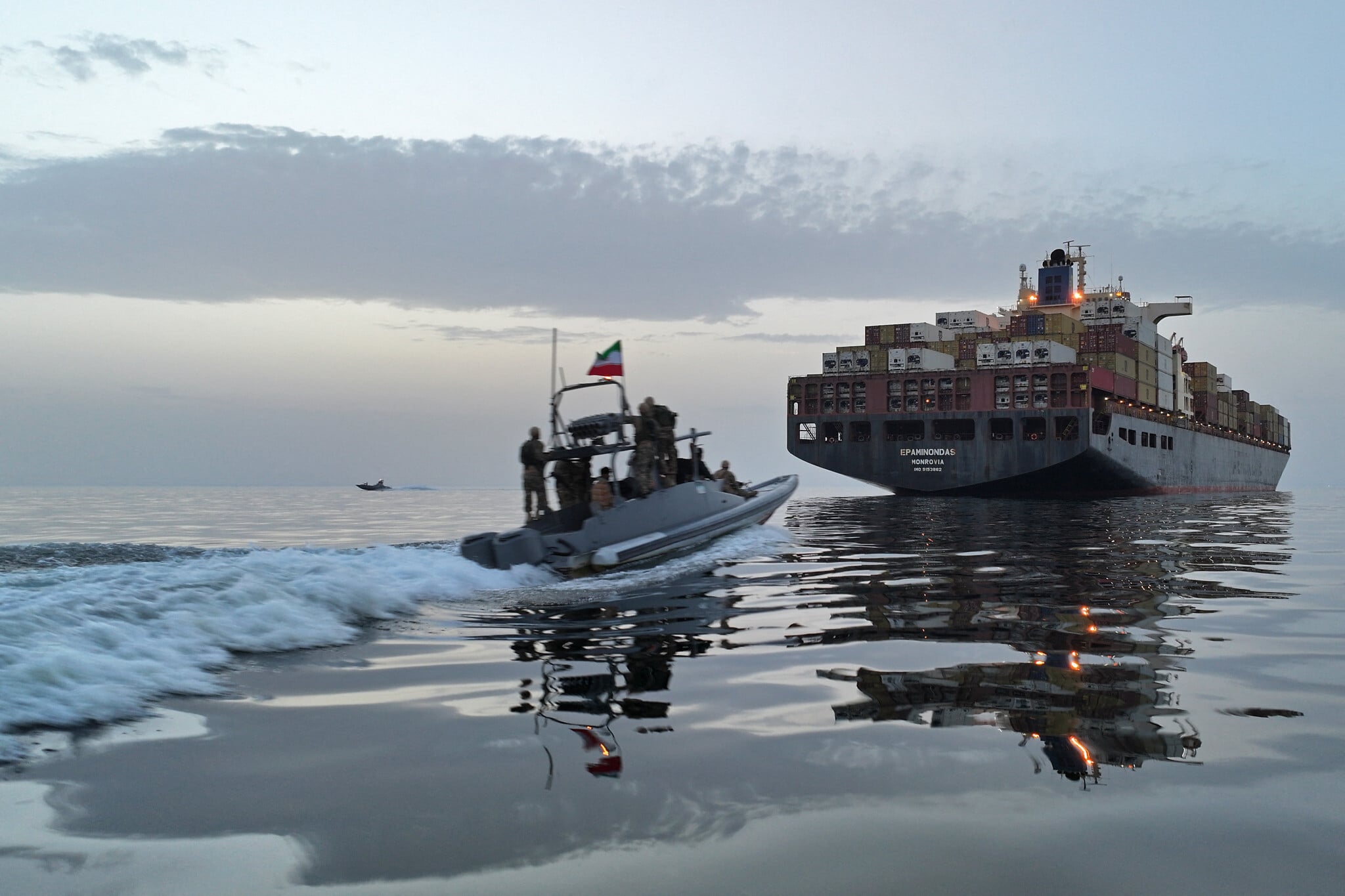
An Islamic Revolutionary Guard Corps (IRGC) boat allegedly takes part in an operation to seize ships attempting to cross the Strait of Hormuz, on April 21, 2026. (MIRZADEH via the Iranian news agency TASNIM NEWS, via AFP)
US Secretary of State Marco Rubio said Monday that a reported recent offer from Iran to reopen the Strait of Hormuz under strict conditions is not acceptable to the United States or other countries.
Speaking in an interview with Fox News, Rubio said Iran has a different view of the strategic waterway than most of the rest of the world does: “What they mean by opening the straits is, yes, the straits are open, as long as you coordinate with Iran, get our permission, or we’ll blow you up, and you pay us.”
“That’s not opening the straits,” the top US diplomat said. “Those are international waterways. They cannot normalize, nor can we tolerate them trying to normalize, a system in which the Iranians decide who gets to use them.”
Rubio’s statement came after Axios reported that Iran had proposed an agreement on reopening the strait and ending the war, while delaying negotiations on Tehran’s nuclear program for a later stage.
Later Monday, White House press secretary Karoline Leavitt told reporters that Trump had discussed a new proposal from Iran with top national security aides, while also indicating that Washington was not fully satisfied with what Tehran was offering.
“I wouldn’t say they were considering it,” Leavitt adds, regarding an Iranian suggestion to reopen the Strait of Hormuz in exchange for ending the US blockade. “I would say there’s a discussion.”
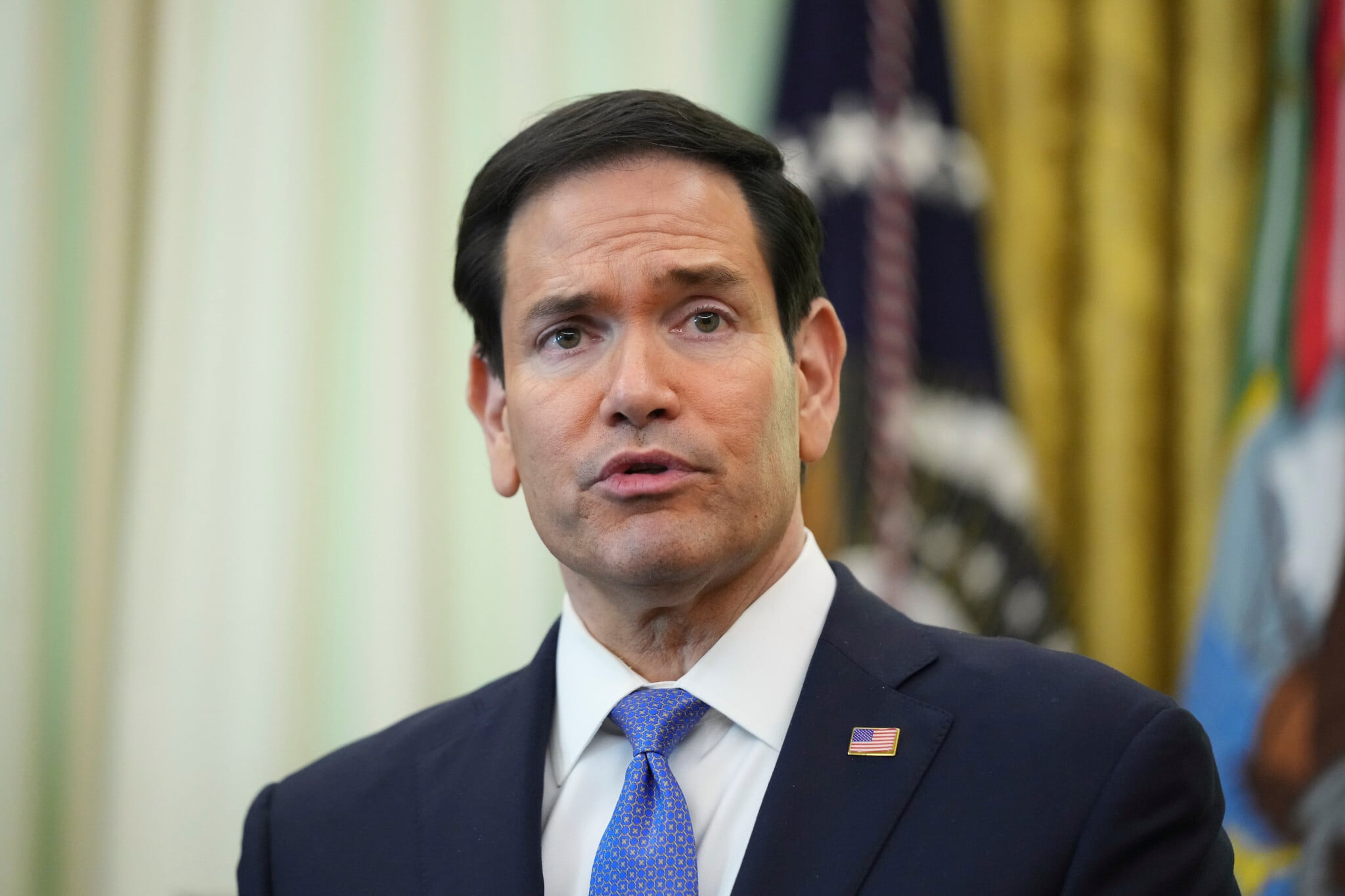
Secretary of State Marco Rubio speaks during a meeting between the ambassadors of Israel and Lebanon in the Oval Office at the White House, Thursday, April 23, 2026, in Washington. (AP Photo/Mark Schiefelbein)
Separately, Iran insisted it was still in control of the strait, a key pathway for the global oil supply.
Negotiations between the sides were meant to take place in Pakistan last week, during an ongoing ceasefire in the US-Israeli war with Iran, but the talks did not come together. According to Axios, Iran’s attempt to kickstart negotiations again by solving the issues centered on the Strait of Hormuz was conveyed to the US by Pakistani mediators.
US President Donald Trump was expected to discuss the Iranian proposal and other issues held up in the stalled negotiations during a Situation Room meeting with national security and foreign policy teams on Monday, the report added.
The path forward for negotiations remains unclear. Iranian Foreign Minister Abbas Araghchi signaled on Monday that Iran was not desperate for talks. German Chancellor Friedrich Merz said Monday that Iran was “humiliating” the US in the drama surrounding the talks.
Araghchi says Trump pushing for talks, Iran ‘stable’
Hopes of reviving peace efforts have receded since Saturday, when Trump scrapped a visit by his envoys Steve Witkoff and Jared Kushner to Islamabad, the Pakistani capital.
Araghchi traveled to Russia on Monday. In Saint Petersburg, he said that Tehran is looking into Trump’s request for negotiations, according to a post on his Telegram account.
He told reporters that Trump requested negotiations because the US has not achieved any of its objectives in the war, and said that the Islamic Republic is “stable, solid” during a meeting with Russian President Vladimir Putin, according to Russian state TV.
Due to the war with the United States and Israel, “the world has now realized Iran’s true power,” he claimed, and “it has become clear that the Islamic Republic of Iran is a stable, solid, and powerful system.”
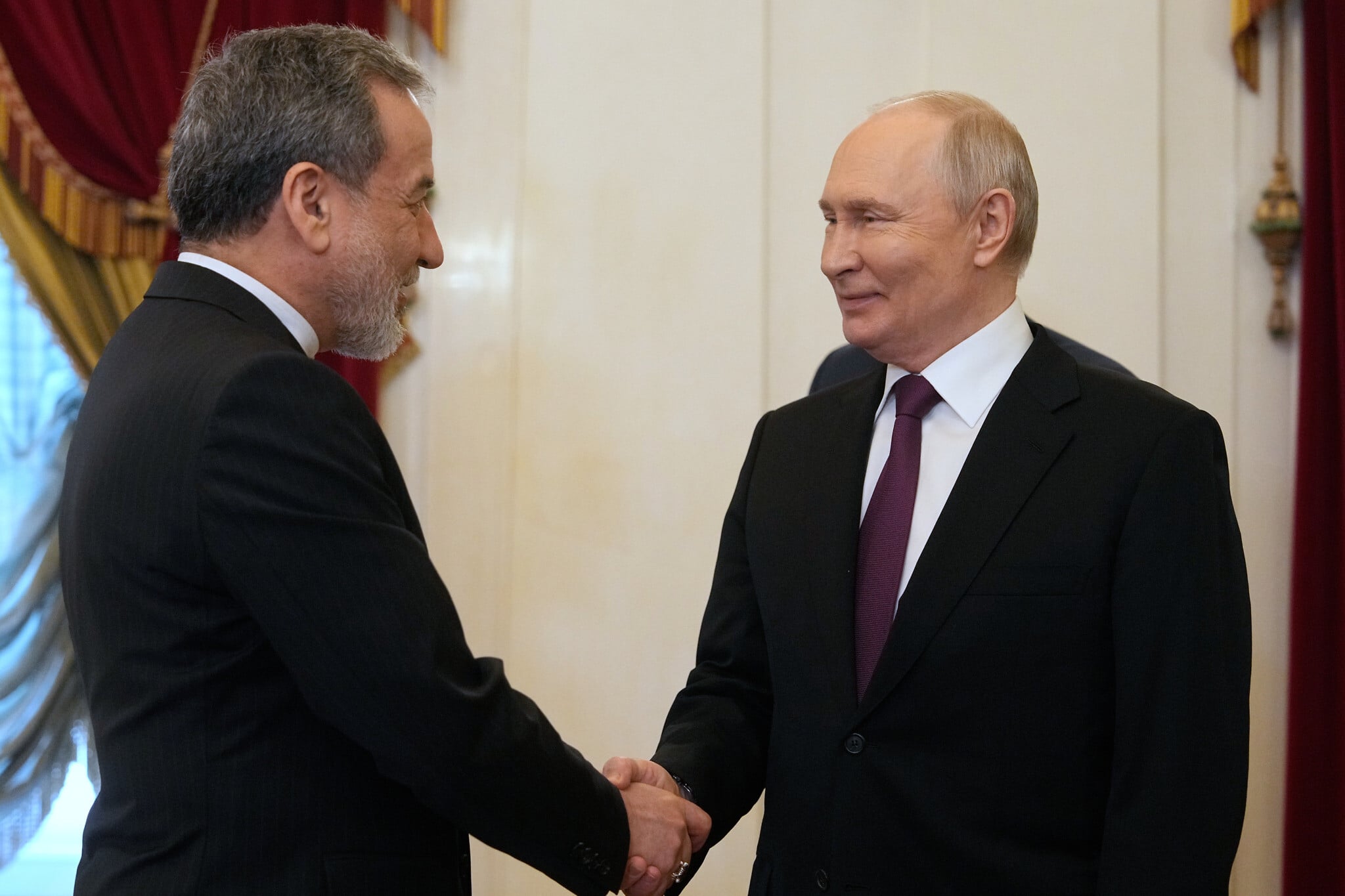
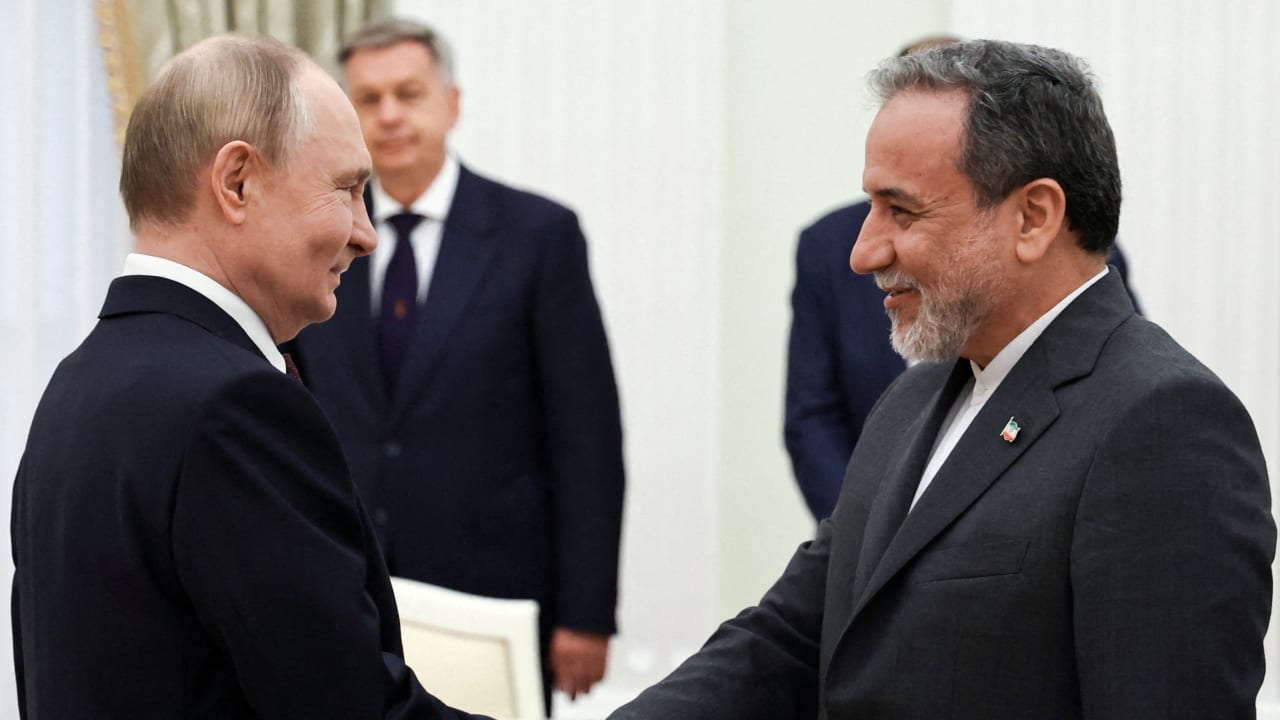
Russian President Vladimir Putin, right, shakes hands with Iranian Foreign Minister Abbas Araghchi, during their meeting at the Boris Yeltsin Presidential Library, in St. Petersburg, Russia, April 27, 2026. (AP/Dmitri Lovetsky, Pool)
“For our part, we will do everything that serves your interests and the interests of all the peoples of the region to ensure that peace is achieved as quickly as possible,” Putin told Araghchi, according to Russian state media.
“Last week, I received a message from Iran’s supreme leader. I would like to ask you to convey my most sincere thanks for this and to confirm that Russia, like Iran, intends to continue our strategic relationship,” Putin added in a reference to Iran’s new leader, Mojtaba Khamenei, who has not been seen or heard publicly since being appointed last month.
Germany’s Merz says Iran ‘humiliating’ US in talks
Meanwhile, German Chancellor Friedrich Merz said on Monday that Iran’s leadership was humiliating the US during the negotiations by getting American officials to travel to Pakistan and then leave without results, in an unusually abrupt rebuke over the conflict.
Merz also said he did not see what exit strategy the US was pursuing in the Iran war, comments that underlined deep divisions between Washington and its European NATO allies, which had already been festering over the Ukraine war and other issues.
“The Iranians are obviously very skilled at negotiating, or rather, very skillful at not negotiating, letting the Americans travel to Islamabad and then leave again without any result,” he said during a talk to students in the town of Marsberg.
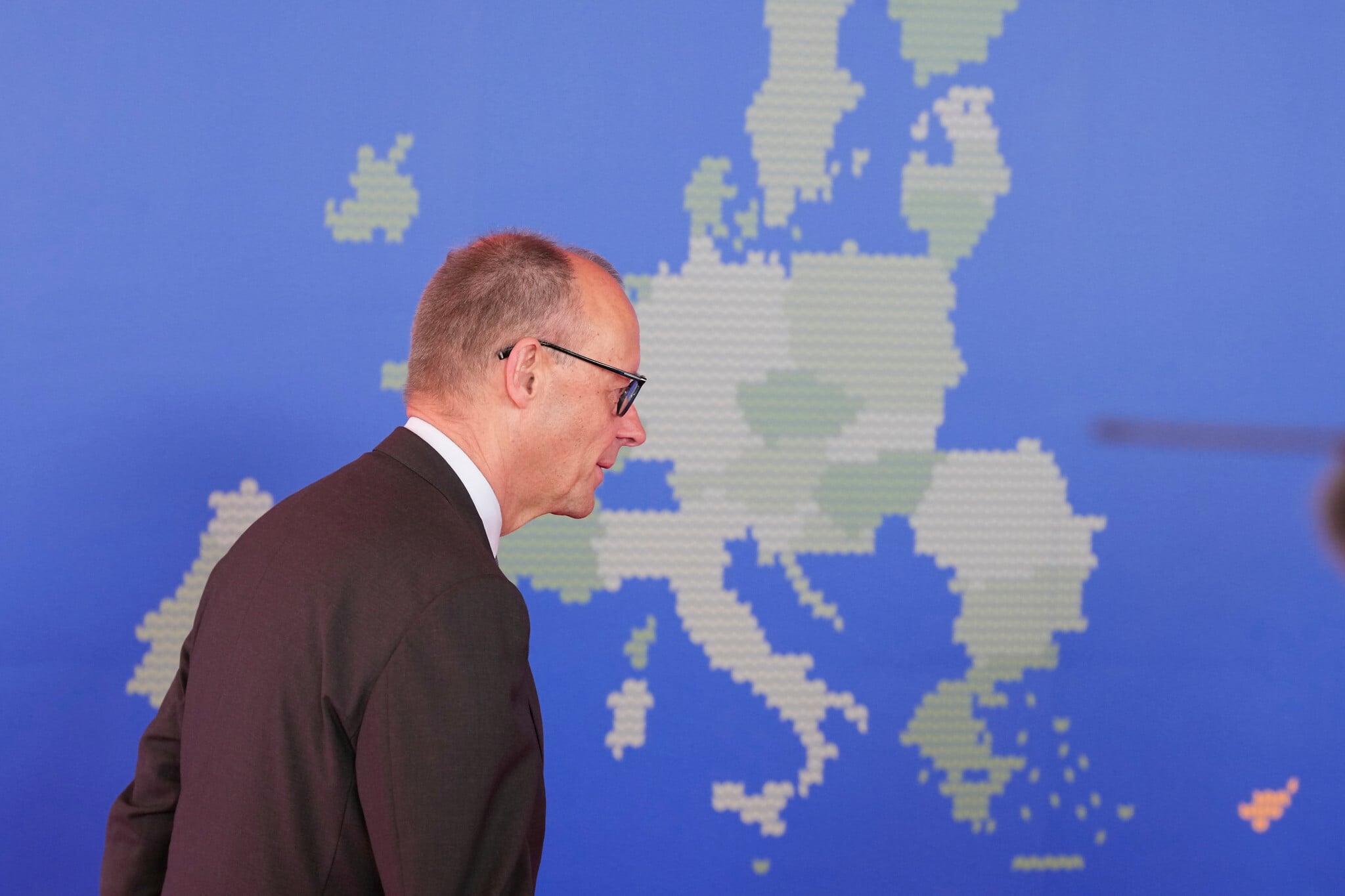
German Chancellor Friedrich Merz arrives for the EU Summit in Nicosia, Cyprus, April 24, 2026. (AP Photo/ Petros Karadjias)
“An entire nation is being humiliated by the Iranian leadership, especially by these so-called Revolutionary Guards. And so I hope that this ends as quickly as possible,” he added at the venue in the state of North Rhine-Westphalia.
Trump has harshly criticized NATO allies for not sending their navies to help open the Strait of Hormuz during the conflict.
Merz said it was evident the Strait of Hormuz had been at least partially mined. “We have offered, also as Europeans, to send German minesweepers to clear the strait, which has obviously been mined in part,” he said.
He said the conflict was costing Germany “a lot of money, a lot of taxpayers’ money and a lot of economic strength.”
Merz reiterated that Germans and Europeans were not consulted before the US and Israel started attacking Iran in late February, and that he had conveyed his skepticism directly to Trump afterwards.
“If I had known that it would continue like this for five or six weeks and get progressively worse, I would have told him even more emphatically,” Merz said, comparing the conflict to previous US wars in Iraq and Afghanistan.
Iran’s military insists it is still in control of Hormuz
Maritime traffic in the strait remained muted Monday, as Iran’s military asserted that it still controls the waterway, and would remain in control under a new law proposed in Tehran’s parliament.
Despite the ongoing US blockade, top Iranian security official Ebrahim Azizi asserted Monday that the country’s armed forces are in control of the strait and are seeking to prohibit the passage of “hostile vessels.”
Azizi, the head of the national security commission in Iran’s parliament, said that a new law awaiting approval in parliament would ensure that the military remains the authority responsible for the key waterway after the war ends.
He also said that the proposed law states that financial gains from the strait would be paid in the local rial currency. Azizi did not offer more details on the proposed law or when it is expected to be voted on in parliament.
Meanwhile, shipping data on Monday showed that only some seven ships crossed the strait over the previous day.
The ships, mainly dry bulk vessels, included several leaving from Iraqi ports and one from an Iranian port, according to ship tracking data from Kpler and separate satellite analysis from data analytics specialists SynMax.
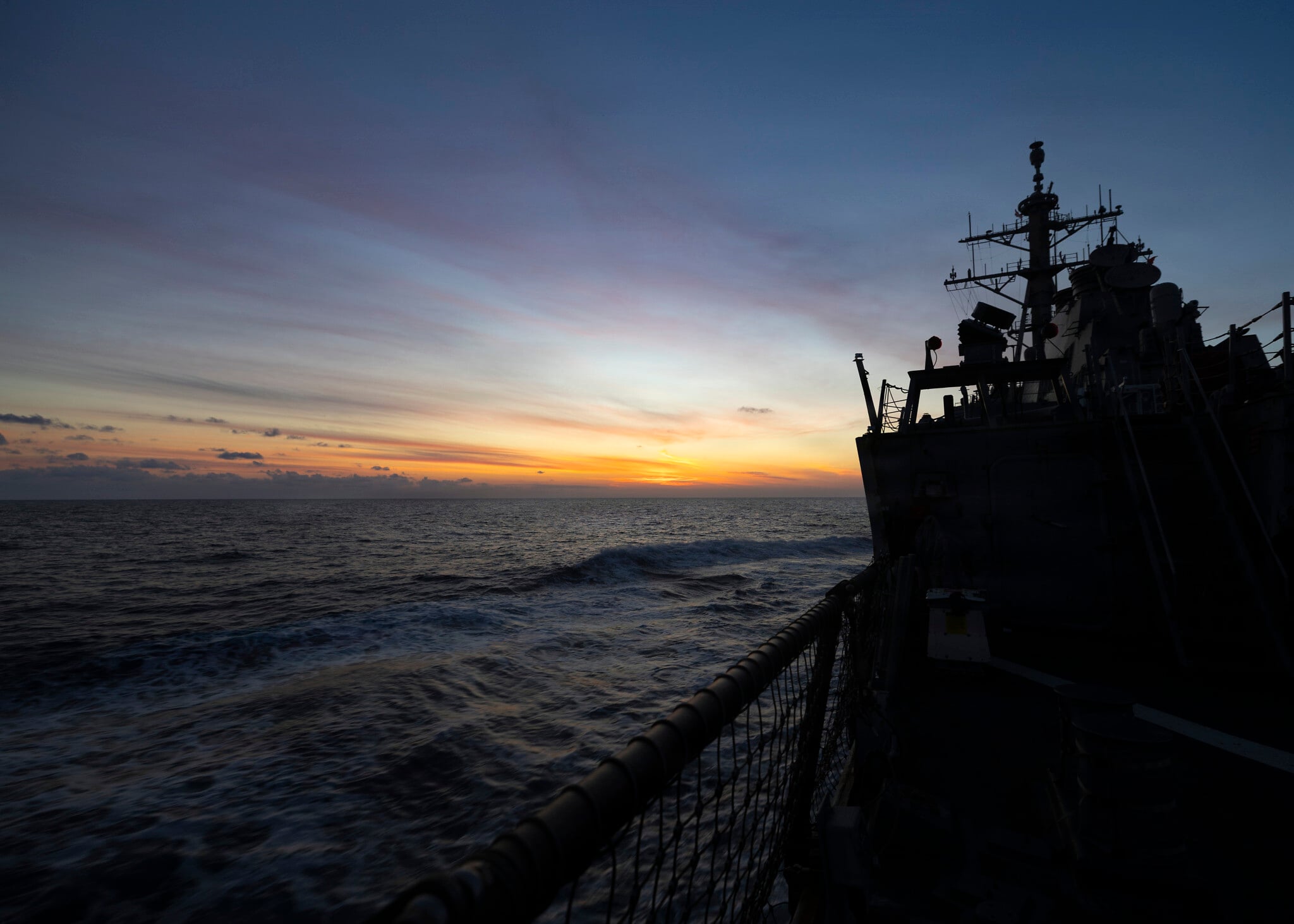
In this handout photo released on April 27, 2026, the Arleigh Burke-class guided-missile destroyer USS Mahan (DDG 72) steams in the Mediterranean Sea, April 11, 2026. (US Navy photo)
Shipping traffic passing through the crucial waterway represents a fraction of the average 140 daily passages before the Iran war began on February 28. US Central Command has redirected 37 vessels since a US blockade of Iranian ports was imposed, the military said on Saturday.
Six Iranian tankers returned to Iranian ports and sailed back through Hormuz in recent days with some 10.5 million barrels of oil, according to satellite analysis from TankerTrackers.com. Around four million barrels of Iranian oil onboard tankers sailed through the US blockade on Friday, according to separate satellite analysis from the tracking site.
Oil prices stay high
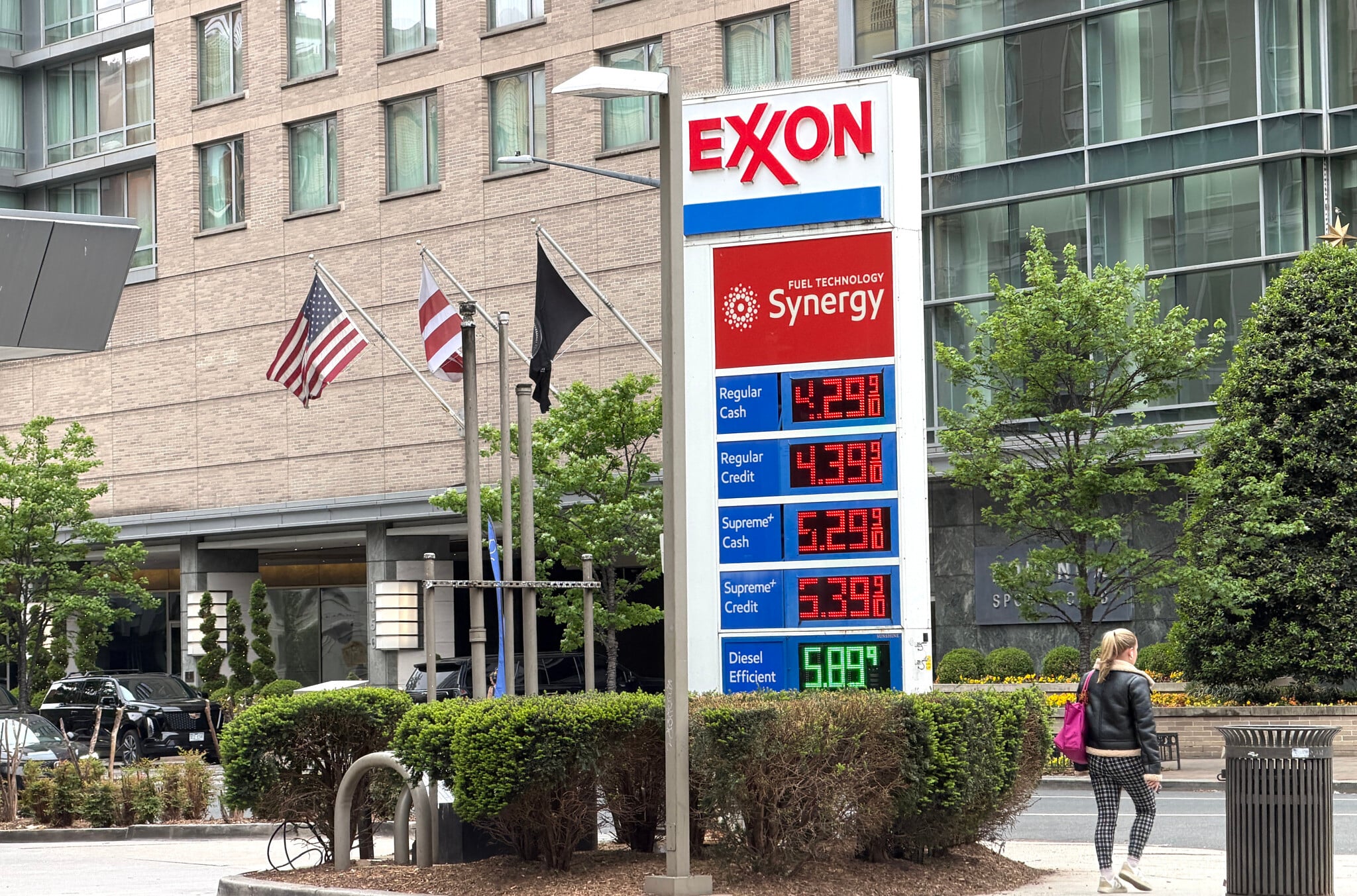
Amid the stalled talks, oil prices again rose on Monday, with international oil benchmarks up around two percent, to a two-week high, and staying above $100 a barrel, though European stock markets advanced.
A woman passes by an Exxon sign displaying fuel prices in Washington, DC, on April 26, 2026. (DANIEL SLIM / AFP)
“It may be that hopes of a diplomatic breakthrough were pretty faint to start with, and markets are now in wait-and-see territory ahead of a heavy week of earnings and economic touchpoints,” said Derren Nathan, head of equity research at Hargreaves Lansdown.
As European governments and financial markets look to get a handle on the energy crisis, British Prime Minister Keir Starmer said Monday that he will host representatives from the Bank of England on Tuesday at a meeting of the government’s emergency response committee focused on the impact of the war in Iran.
“Tomorrow, I’m chairing a meeting of Cobra on the impact [of the war], bringing in people from the Bank of England, so that you can be sure we will stand by working people in this crisis,” Starmer said in a speech to trade union members.
“I have to level with you about Iran, because the truth is, the economic consequences could still be with us for some time,” he added, citing fuel as one example of where prices have risen already.
Hopes of reviving peace efforts receded on Saturday when Trump scrapped a visit to Islamabad by his envoys Steve Witkoff and Jared Kushner.
RUSSIAN PRESIDENT Vladimir Putin shakes hands with Iranian Foreign Minister Abbas Araghchi during a meeting at the Kremlin last month. Azerbaijan has been redefining its traditional relationships with Russia and Iran, says the writer.(photo credit: SPUTNIK/REUTERS)ByREUTERSUpdated: US President Donald Trump said Iran could telephone if it wants to negotiate an end to their two-month war, as Tehran’s foreign minister landed in Russia on Monday to seek support from President Vladimir Putin.
Hopes of reviving peace efforts receded on Saturday when Trump scrapped a visit to Islamabad by his envoys Steve Witkoff and Jared Kushner. Iranian Foreign Minister Abbas Araghchi shuttled to and from mediators Pakistan and Oman on Sunday before flying to Russia, with the two sides still seemingly far apart on issues including Iran’s nuclear ambitions and access through the crucial Strait of Hormuz.
Oil prices rose, and US stock futures wobbled lower in early Asian trade on Monday after US-Iran peace talks stalled over the weekend, leaving Gulf shipping blocked.
“If they want to talk, they can come to us, or they can call us. You know, there is a telephone. We have nice, secure lines,” Trump told “The Sunday Briefing” on Fox News.
“They know what has to be in the agreement. It’s very simple: They cannot have a nuclear weapon; otherwise, there’s no reason to meet,” Trump said.
US President Donald Trump against the backdrop of the NATO flag, April 24, 2026; illustrative. (credit: CHIP SOMODEVILLA/GETTY IMAGES)
Iran has long demanded Washington acknowledge its right to enrich uranium, which Tehran says it only seeks for peaceful purposes, but which Western powers say is aimed at building nuclear weapons.
Although a ceasefire has paused full‑scale fighting in the conflict, which began with US-Israeli strikes on Iran on February 28, no agreement has been reached on terms to end a war that has killed thousands, driven up oil prices, fueled inflation and darkened the outlook for global growth.
Trump faces domestic pressure to end war
Axios reported on Sunday that Iran gave the US a new proposal through Pakistani mediators on reopening the economically vital Strait of Hormuz, and the ending of the war, with nuclear negotiations postponed for a later stage.
The US State Department and White House did not immediately respond to requests for comment on the report, which cited an unnamed US official and two sources with knowledge of the matter.
With his approval ratings falling, Trump faces domestic pressure to end the unpopular war. Iran’s leaders, though weakened militarily, have found leverage in negotiations with their ability to stop shipping in the strait, which normally carries a fifth of global oil shipments.
Tehran has largely closed the strait while Washington has imposed a blockade of Iranian ports.
Araghchi returned to Islamabad after holding talks on Sunday in Oman, another mediator in the war, and then headed to Russia.
Iran’s envoy in Russia, Kazem Jalali, said in a post on X that Araghchi would meet Putin “in continuation of the diplomatic jihad to advance the country’s interests and amid external threats.”
“Iran and Russia are present in a united front in the campaign of the world’s totalitarian forces against independent and justice-seeking countries, as well as countries that seek a world free from unilateralism and Western domination,” Jalali said.
While Araghchi met Pakistani officials, Trump, speaking in Florida on Saturday, said he canceled his envoys’ visit due to too much travel and expense for what he considered an inadequate Iranian offer. Iran “offered a lot, but not enough,” he said.
Iranian President Masoud Pezeshkian told Pakistani Prime Minister Shehbaz Sharif by phone on Saturday that Tehran would not enter “imposed negotiations” under threats or blockade, an Iranian statement said.
He said the United States should first remove obstacles, including its maritime blockade, before negotiators could begin laying the groundwork for a settlement.
US and Iran have extensive disagreements
Disagreements between the US and Iran extend beyond Tehran’s nuclear program and control of the strait.
Trump wants to limit Iran’s support for its regional proxies, including Hezbollah in Lebanon and Hamas in Gaza, and curb its ability to strike US allies with ballistic missiles. Iran wants a lifting of sanctions and an end to Israeli attacks on Hezbollah.
In Lebanon, Israeli strikes killed 14 people and wounded 37 on Sunday, the health ministry said. The Israeli military warned residents to leave seven towns beyond the “buffer zone” it occupied before a ceasefire that has failed to fully halt hostilities.