
According to IRNA, Iran is demanding a complete end to the fighting in the region, along with a protocol to ensure safe passage through the Strait of Hormuz.
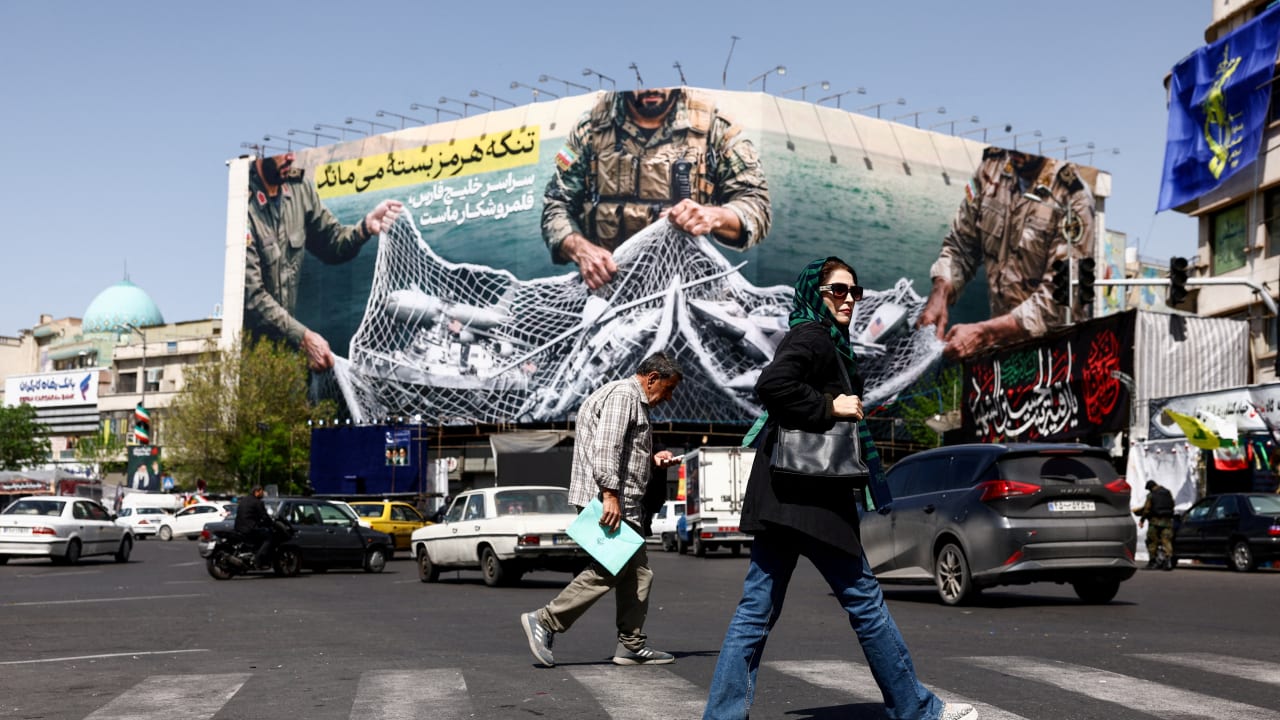
PEOPLE WALK on a street, near an anti-US billboard, amid the U.S.-Israeli conflict with Iran, in Tehran, Iran, April 5, 2026.
(photo credit: MAJID ASGARIPOUR/WANA (WEST ASIA NEWS AGENCY) VIA REUTERS) 

Iran has rejected the proposal for a temporary ceasefire with the United States, Iranian state news agency IRNA reported on Monday.

According to IRNA, Iran is demanding a complete end to the fighting in the region, along with a protocol to ensure safe passage through the Strait of Hormuz.

Iran’s response conveyed to mediators consists of 10 clauses, the report noted. “The gaps are very significant,” a source familiar with the details told The Jerusalem Post.

US President Donald Trump has threatened to rain “hell” on Tehran if it did not make a deal by the end of Tuesday that would allow traffic to start moving again through the vital route for global energy supplies.

While answering reporter questions outside the White House on Monday, Trump said that the war could end “very quickly” if Iran went along with the deal, adding that the people the US is currently negotiating with were “reasonable and not as radicalized.” He stressed that the Tuesday deadline he has set for Iran to make a deal is final, adding that Iran’s proposal was significant but not good enough.

A framework to end hostilities has been put together by Pakistan and exchanged with Iran and the US overnight, a source aware of the proposals said, outlining a two-tier approach with an immediate ceasefire followed by a comprehensive agreement.

“All elements need to be agreed today,” the source said, adding that the initial understanding would be structured as a memorandum of understanding finalized electronically through Pakistan, the sole communication channel in the talks.

Phase one would involve a 45-day ceasefire, during which a permanent end to the war would be negotiated. Phase one could be extended if more time was needed for talks, Axios reported, citing several US and Israeli sources.
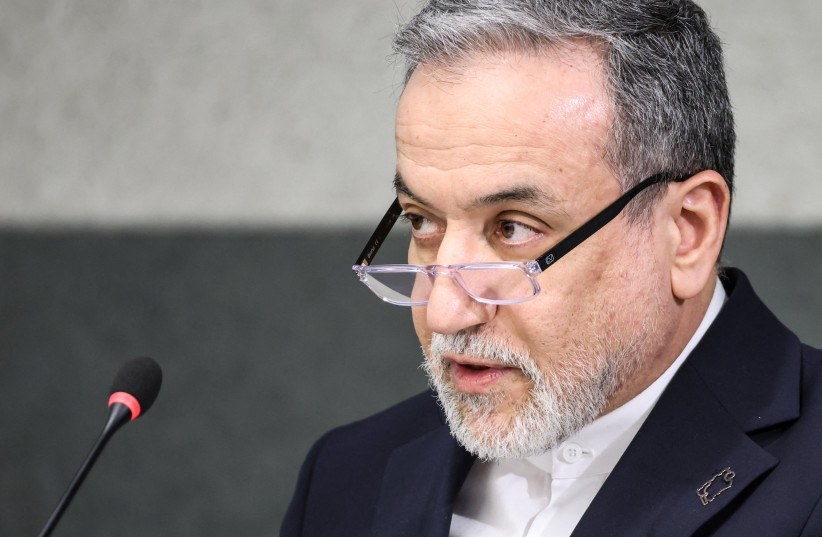
Iran's Foreign Minister Abbas Araghchi addresses a special session of the Conference on Disarmament at the United Nations, aside of U.S.-Iran talks in Geneva, Switzerland, February 17, 2026.
Iran’s Foreign Minister Abbas Araghchi addresses a special session of the Conference on Disarmament at the United Nations, aside of U.S.-Iran talks in Geneva, Switzerland, February 17, 2026. (credit: Pierre Albouy/Reuters)
According to the sources, mediators think that only a final deal will lead to fully reopening the Strait of Hormuz and to a solution to the problem of Iran’s highly enriched uranium.

Iran’s foreign ministry said on Monday Tehran had formulated positions and demands based on its interests and communicated them through intermediaries, in response to ceasefire proposals.

Ministry spokesperson Esmaeil Baghaei said details of the response would be announced in due time, but added negotiations were “incompatible with ultimatums and threats to commit war crimes.”

“Iran does not hesitate to clearly express what it considers its legitimate demands and doing so should not be interpreted as a sign of compromise, but rather as a reflection of its confidence in defending its positions,” Baghaei told a press conference. He said earlier US demands, such as a 15-point plan, were rejected for being excessive.

Mediators work on partial measures from Iran, US

Mediators are currently working on partial measures Iran can take to build confidence regarding the reopening of the Strait of Hormuz and its uranium stockpile, sources told Axios.

According to two of the sources, these two issues are not ones Iran will fully give up on in exchange for a 45-day ceasefire.

Mediators are also working on measures the US could take to address some of Iran’s demands.

Iranian mediators have made clear that they do not want a Gaza or Lebanon situation “where there is a ceasefire on paper but where the US and Israel can attack again whenever they want to,” Axios wrote.

Mediators have urged Iranian officials not to delay any further, stressing that the next 48 hours are the last opportunity for them to reach a deal.

Sources told Axios that the chances of reaching a deal are slim, but this is the only chance to avoid a dramatic escalation in the war.

A framework to end hostilities has been put together by Pakistan and exchanged with Iran and the US overnight, the source said, outlining a two-tier approach with an immediate ceasefire.

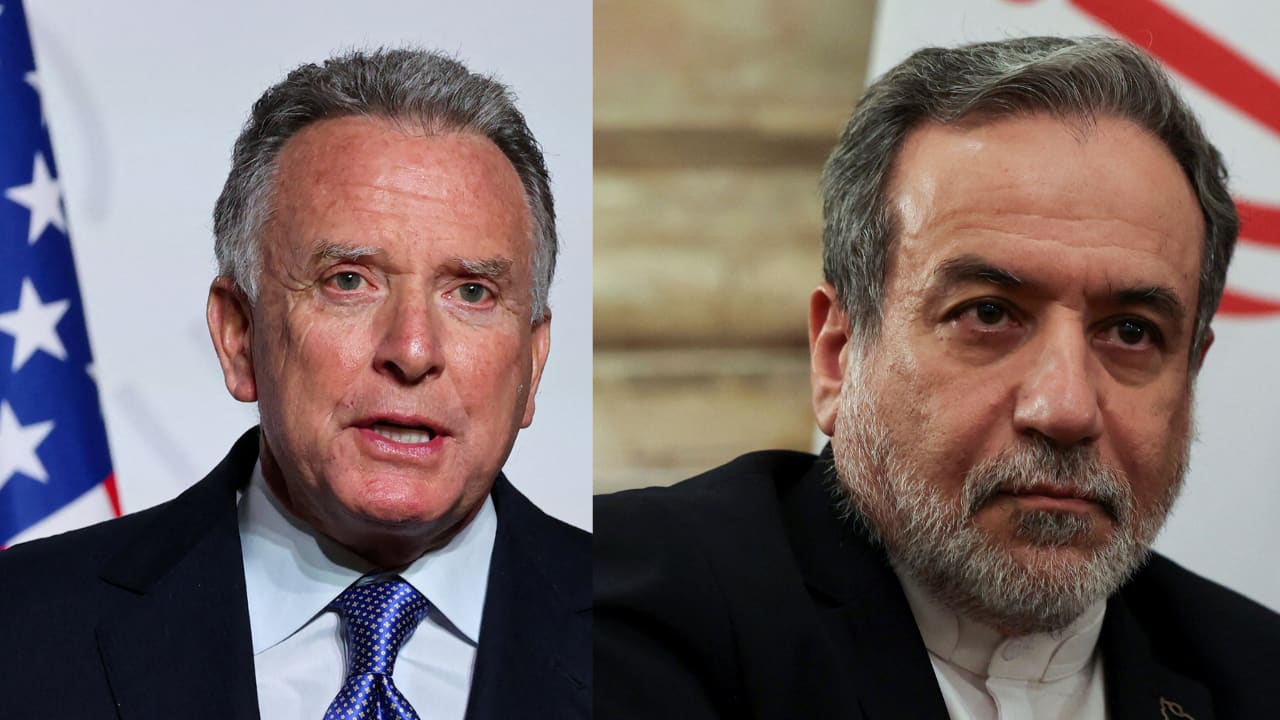
Iranian Foreign Minister Abbas Araghchi (R) and US Middle East special envoy Steve Witkoff (L); illustrative.
(photo credit: LUDOVIC MARIN/POOL VIA REUTERS, REUTERS/MOHAMED ABD EL GHANY)
Iran and the United States have received a plan to end hostilities that could come into effect on Monday and reopen the Strait of Hormuz, a source aware of the proposals said.

A framework to end hostilities has been put together by Pakistan and exchanged with Iran and the US overnight, the source said, outlining a two-tier approach with an immediate ceasefire followed by a comprehensive agreement.

“All elements need to be agreed today,” the source said, adding that the initial understanding would be structured as a memorandum of understanding finalized electronically through Pakistan, the sole communication channel in the talks.

Phase one would involve a 45-day ceasefire, during which a permanent end to the war would be negotiated. Phase one could be extended if more time was needed for talks, Axios reported, citing several US and Israeli sources.

According to the sources, mediators think that only a final deal will lead to fully reopening the Strait of Hormuz and to a solution to the problem of Iran’s highly enriched uranium.

Iran's Foreign Minister Abbas Araghchi addresses a special session of the Conference on Disarmament at the United Nations, aside of U.S.-Iran talks in Geneva, Switzerland, February 17, 2026.
Iran’s Foreign Minister Abbas Araghchi addresses a special session of the Conference on Disarmament at the United Nations, aside of U.S.-Iran talks in Geneva, Switzerland, February 17, 2026. (credit: Pierre Albouy/Reuters)

Mediators work on partial measures from Iran, US

Mediators are currently working on partial measures Iran can take to build confidence regarding the reopening of the Strait of Hormuz and its uranium stockpile, sources told Axios.

According to two of the sources, these two issues are not ones Iran will fully give up on in exchange for a 45-day ceasefire.

Mediators are also working on measures the US could take to address some of Iran’s demands.

Iranian mediators have made clear that they do not want a Gaza or Lebanon situation “where there is a ceasefire on paper but where the US and Israel can attack again whenever they want to,” Axios wrote.

Mediators have urged Iranian officials not to delay any further, stressing that the next 48 hours are the last opportunity for them to reach a deal.

Sources told Axios that the chances of reaching a deal are slim, but this is the only chance to avoid a dramatic escalation in the war.


Iranian officials say that Israel’s strikes on Bandar Imam Petrochemical Complex in Mahshahr disabled utility plants and shut down production at the vital site.

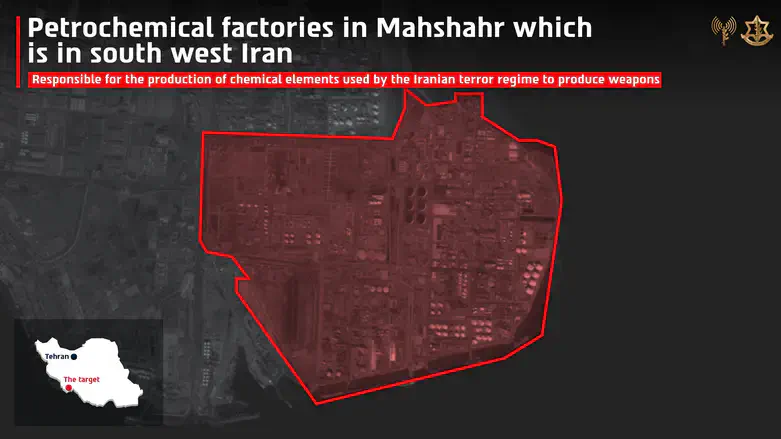
Petrochemical facilties struck in MahshahrIDF Spokesperson’s Unit

Israeli forces carried out airstrikes on Saturday against the Bandar Imam Petrochemical Complex, Iran’s major petrochemical hub located near Mahshahr and Bandar Imam Khomeini in Khuzestan Province.

The attacks focused on two utility plants, Fajr 1 and Fajr 2, which supply gas, power, and industrial water to over 50 petrochemical plants in the sprawling facility, according to a report in The New York Times. Two senior oil ministry officials confirmed to the newspaper that the strikes effectively halted all production across the complex.

Hamed Shams, head of marketing and communications for the oil ministry’s petrochemical industries, stated on social media that the targeted infrastructure provides electricity to the petrochemical plants and, during summer months, “plays a key role in providing electricity to 500,000″ people in Khuzestan Province.

Iranian officials described the Bandar Imam complex as one of the country’s primary petrochemical centers, producing 72 million tons of products annually. The site employs many of the area’s estimated 300,000 residents and generates basic chemicals, polymers, and materials used in plastics, textiles, fertilizers, and medical equipment.

Two senior Iranian oil ministry officials called the total shutdown an immeasurable blow to Iran’s already frail economy. They estimated that rebuilding the utility plants and restoring full production could take about two years.

Khuzestan Province Governor Seyed Mohammadreza Mavalizadeh visited the site and told Iranian media that rescue teams and firefighters responded rapidly. His office reported five people killed and 170 injured in the attacks. Social media videos showed large plumes of smoke and fire rising from within the complex.

Mavalizadeh noted that Israeli airstrikes also hit other facilities in the zone, including the Razi, Karoun, and Bandar Imam petrochemical plants. Iranian state television reported the complex was evacuated following the strikes.

“Attacking Mahshahr’s petrochemical plants means attacking the heart of Iran, the vital arteries of Iran’s economy,” Mehdi Bostanchi, head of a private industrial complex and representative for a group of Iranian industrial leaders, said in a social media post.

Petrochemical exports account for about 25 percent of Iran’s total exports to around 60 countries and generate $10 billion to $15 billion in annual revenue, serving as a key alternative income source amid efforts to reduce oil dependency.

The strikes form part of intensified Israeli and American operations against Iranian infrastructure in recent days, which have also included the country’s main steel plants, pharmaceutical and research centers, airports, and seaports.