Saudi crown prince says getting ‘closer’ to Israel normalization

“Every day we get closer,” said Saudi Arabian Crown Prince Mohammed bin Salman of his country’s relationship with Israel.
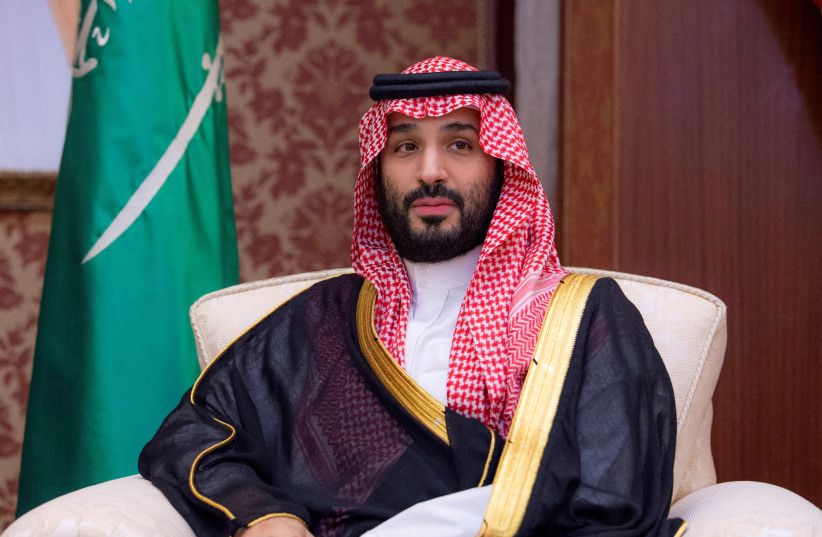
 U.S. Secretary of State Antony Blinken (not pictured) meets with Saudi Crown Prince Mohammed bin Salman, in Jeddah, Saudi Arabia, June 7, 2023. (photo credit: BANDAR ALGALOUD/COURTESY OF SAUDI ROYAL COURT/REUTERS)
U.S. Secretary of State Antony Blinken (not pictured) meets with Saudi Crown Prince Mohammed bin Salman, in Jeddah, Saudi Arabia, June 7, 2023.
(photo credit: BANDAR ALGALOUD/COURTESY OF SAUDI ROYAL COURT/REUTERS)
Saudi Arabian Crown Prince Mohammed bin Salman said in a US television interview that his country was moving steadily closer to normalizing relations with Israel and also warned that if Iran gets a nuclear weapon, “we have to get one.”

“Every day we get closer,” the crown prince told Fox News in wide-ranging remarks broadcast on Wednesday, when asked to characterize talks aimed at long-time foes Israel and Saudi Arabia reaching a landmark agreement to open diplomatic relations.


The conservative US network’s interview with the crown prince, widely known as MbS, comes as President Joe Biden’s administration presses ahead with an effort to broker historic ties between the two regional powerhouses, Washington’s top Middle East allies.

Israel-Saudi normalization possible by early 2024

On Thursday, Reuters reported that Israeli Foreign Minister Eli Cohen said on Army Radio that a deal could be in place early next year.
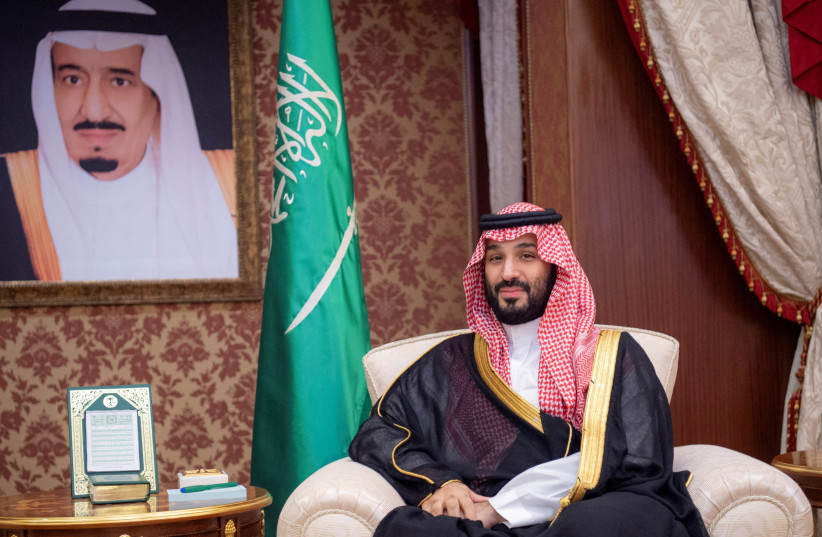
 U.S. Secretary of State Antony Blinken (not pictured) meets with Saudi Crown Prince Mohammed bin Salman, in Jeddah, Saudi Arabia, June 6, 2023. (credit: BANDAR ALGALOUD/COURTESY OF SAUDI ROYAL COURT/REUTERS)
U.S. Secretary of State Antony Blinken (not pictured) meets with Saudi Crown Prince Mohammed bin Salman, in Jeddah, Saudi Arabia, June 6, 2023. (credit: BANDAR ALGALOUD/COURTESY OF SAUDI ROYAL COURT/REUTERS)

“The gaps can be bridged. It will take time. But there is progress,” Cohen said.  “I think there is certainly a likelihood that, in the first quarter of 2024, four or five months hence, we will be able to be at a point where the details (of a deal) are finalized.”

The normalization talks are the centerpiece of complex negotiations that also include discussions of US security guarantees and civilian nuclear help that Riyadh has sought, as well as possible Israeli concessions to the Palestinians.

“For us, the Palestinian issue is very important. We need to solve that part,” MbS, Saudi Arabia’s de facto ruler, said when asked what it would take to get a normalization agreement. “And we have a good negotiations strategy til now.”

“We got to see where we go. We hope that will reach a place that will ease the life of the Palestinians and get Israel as a player in the Middle East,” he said, speaking in English.

MbS also voiced concern about the possibility that Iran, a mutual adversary of Saudi Arabia and Israel that the US wants to contain, could obtain a nuclear weapon. Tehran has denied seeking a nuclear bomb.

“That’s a bad move,” he said. “If you use it, you got to have a big fight with the rest of the world.”


Asked what would happen if Iran did get a nuclear bomb, MbS said: “If they get one, we have to get one, for security reasons and the balance of power in the Middle East. But we don’t want to see that.”

Potential benefits of mega-deal

While US officials insist any breakthrough is far away and steep obstacles remain, they privately tout the potential benefits of a regional mega-deal.

These include removing a possible flashpoint in the Arab-Israeli conflict, strengthening the bulwark against Iran and countering China’s inroads in the Gulf. Biden would also score a foreign policy win as he seeks re-election in November 2024.

The broadcast of the crown prince’s pre-taped comments came on the same day as a long-waited meeting between Biden and Israeli Prime Minister Benjamin Netanyahu in which they pledged to work together toward Israeli-Saudi normalization, which could reshape the geopolitics of the Middle East.

Both leaders also said Iran could not be allowed to acquire a nuclear weapon.

MbS issued the stark warning to Tehran despite the two countries having agreed in Chinese-brokered talks in March to restore relations after years of hostility.

But he offered an olive branch to Iran, saying the two countries had made a “good start” and he hoped it would continue.

Facing criticism from the US, MbS, whose country is the world’s top oil exporter, also defended OPEC+’s decision to cut oil output, saying it was based on market stability and not intended to help energy-dependent Russia in its war in Ukraine.

MbS, asked about Russia’s military campaign, said the invasion of another country was “really bad” but he appeared to stick to his position of not taking sides in the war.

Among the challenges the US faces in brokering a wide-ranging deal would be satisfying MbS’s demands. He is reported to be seeking a treaty committing the US to defend the kingdom if attacked, and also wants advanced weapons and assistance for a civilian nuclear program.

From the Israelis, MbS is pushing for significant concessions to the Palestinians to keep alive prospects for statehood in the occupied territories, something Biden is also pushing for but which Netanyahu’s far-right government has shown little willingness to grant.

There is a growing a sense of urgency in Washington over China’s effort to gain a strategic foothold in Saudi Arabia. The administration also seeks to further heal ties with Riyadh, which Biden once vowed to make a “pariah.”

But an upgraded US-Saudi security relationship would face resistance in the US Congress, where many are critical of MbS over the 2018 killing of journalist Jamal Khashoggi, Riyadh’s intervention in Yemen and its role in high oil prices.

Asked about Khashoggi’s killing, MbS said he was reforming the kingdom’s security system to make sure this kind of “mistake” does not happen again.

Iran stands against the normalization of ties

Iranian President Ibrahim Raisi condemned the possibility of Saudi-Israeli normalization in a press conference in New York on September 21, according to Israeli media reports.

“Normalization between Israel and Saudi Arabia would be a stab in the back of the Palestinians,” Raisi said.

Jerusalem Post Staff contributed to this report.
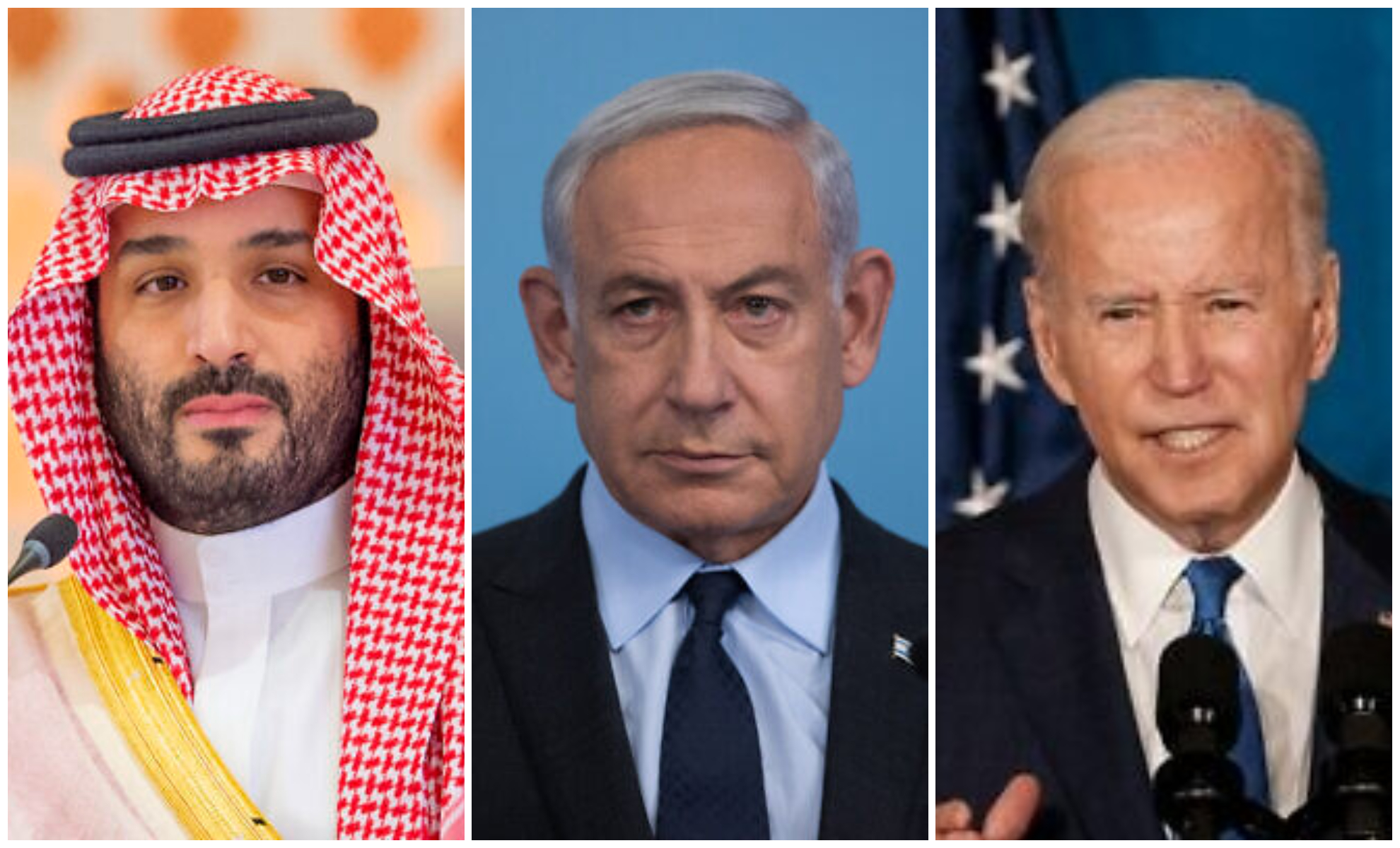

WSJ says officials from US and Israel working together on plan that could see a US-run facility on Saudi soil; unnamed Israeli officials says there would be ‘a lot’ of safeguards

(L) Saudi Crown Prince Mohammed bin Salman in Jeddah, Saudi Arabia, May 19, 2023. (Saudi Press Agency via AP); (C) Prime Minister Benjamin Netanyahu in Jerusalem (Alex Kolomoisky/Pool/Flash90); (L) US President Joe Biden on November 2, 2022 in Washington, DC (Michael A. McCoy / GETTY IMAGES NORTH AMERICA / Getty Images via AFP)

(L) Saudi Crown Prince Mohammed bin Salman in Jeddah, Saudi Arabia, May 19, 2023. (Saudi Press Agency via AP); (C) Prime Minister Benjamin Netanyahu in Jerusalem (Alex Kolomoisky/Pool/Flash90); (L) US President Joe Biden on November 2, 2022 in Washington, DC (Michael A. McCoy / GETTY IMAGES NORTH AMERICA / Getty Images via AFP)

Prime Minister Benjamin Netanyahu has told top nuclear and security experts in Israel to cooperate with US negotiators on a proposal for a “US-run uranium enrichment operation” in Saudi Arabia, as part of a potential normalization deal between Jerusalem and Riyadh, unnamed Israeli and US officials told the Wall Street Journal.

In exchange for normalizing ties with Israel, Saudi Arabia is asking the US for a major mutual defense pact, significant arms deals, and cooperation in establishing a civilian nuclear program on Saudi soil, as well as Israeli concessions to the Palestinians.

According to the Thursday report, officials from Israel and the United States are working together on a plan that would potentially see the Gulf kingdom openly enrich uranium.

“On the nuclear issue, we’ve seen completely eye to eye right from the start. On what we cannot do and what it is we might be able to do,” an unnamed senior Israel official told the newspaper on the view from Washington and Jerusalem on the negotiations with Riyadh.

The official added that there would be “a lot” of safeguards on any potential program for uranium enrichment in Saudi Arabia.

US President Joe Biden meets with Prime Minister Benjamin Netanyahu in New York, Wednesday, Sept. 20, 2023. (AP Photo/Susan Walsh)

The report said that US President Joe Biden has not yet agreed to a proposal that would see uranium enriched in Saudi Arabia, and noted that Washington officials are still looking at other alternatives.

A senior US administration official, who briefed reporters after Wednesday’s meeting between Biden and Netanyahu on the sidelines of the United Nations General Assembly in New York, said of the Saudi demand for US assistance in the establishment of a civilian nuclear program: “Whatever is done regarding civil nuclear cooperation with Saudi Arabia, or anybody else, will meet stringent US non-proliferation standards.”

There is some opposition in Washington to allowing Riyadh to enrich uranium — as well as in Israel, where in August, Opposition Leader Yair Lapid said “the deal at the moment endangers Israel’s security and the region. We must not give Saudi Arabia any level of uranium enrichment.”

Saudi Crown Prince Mohammed bin Salman said Wednesday that “every day we get closer” to his country normalizing ties with Israel, while clarifying that the Palestinian issue is still a “very important” component of the process and declaring that Saudi Arabia will have to obtain a nuclear weapon if Iran does.

“If they get one, we have to get one,” he told Fox News.

Bin Salman said Saudi Arabia is “concerned” when any country acquires a nuclear weapon.

However, he suggested that no one would use a nuclear weapon because this would mean starting a “war with the rest of the world.”

“The world cannot see another Hiroshima,” he added, referring to the Japanese city largely destroyed by a US nuclear bomb during World War II.

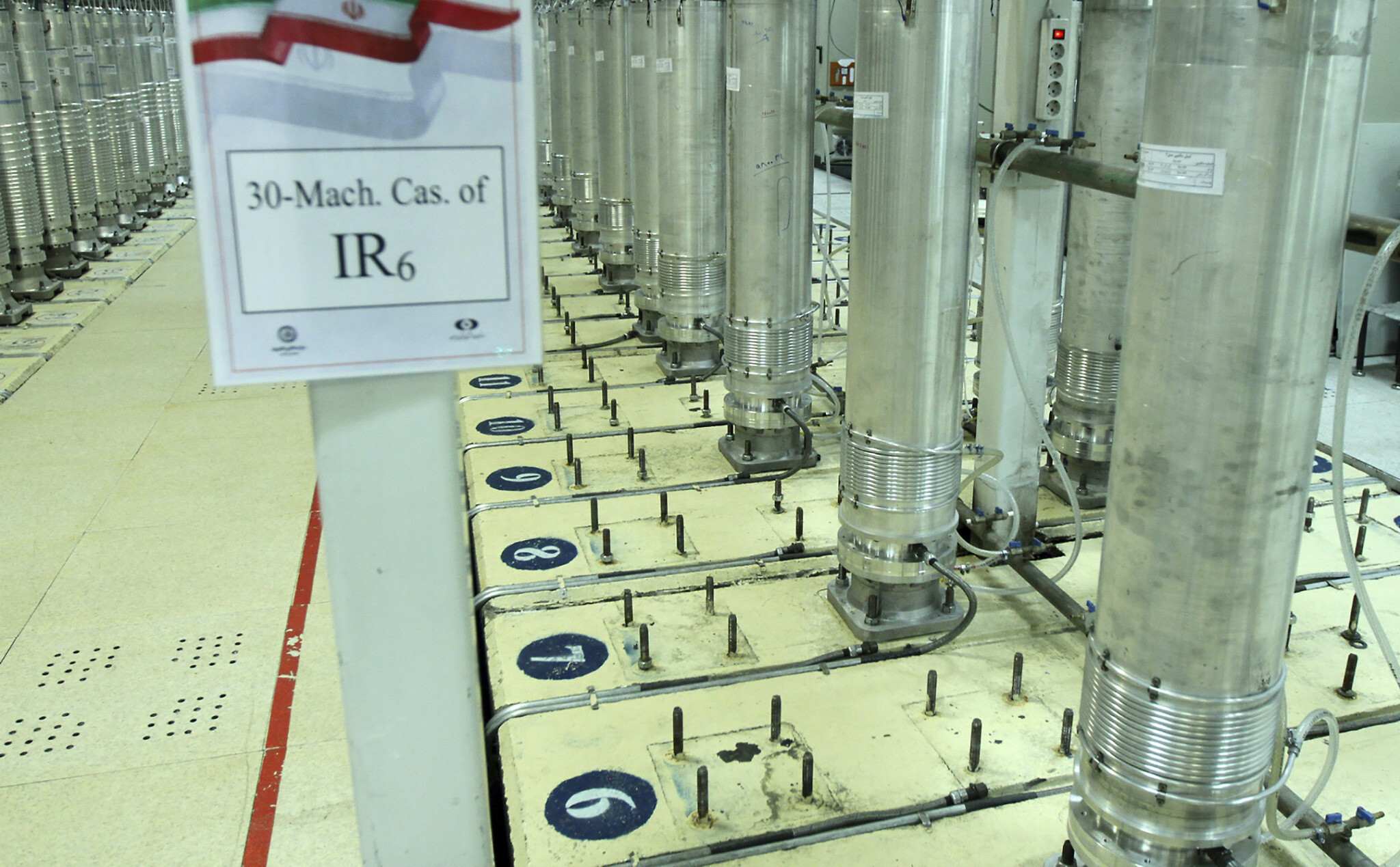
This photo released November 5, 2019, by the Atomic Energy Organization of Iran shows centrifuge machines in Natanz uranium enrichment facility near Natanz, Iran (Atomic Energy Organization of Iran via AP, File)

“For us, the Palestinian issue is very important. We need to solve that part… And we have a good negotiations strategy till now,” bin Salman said.

The comments represented rare public remarks in English by bin Salman on the normalization effort, offering an additional degree of optimism about its chances hours after Biden and Netanyahu discussed the issue.

A senior Biden administration official who briefed reporters after Wednesday’s Biden-Netanyahu meeting said the Israeli prime minister also understands the importance of the Palestinian issue in the normalization talks.

This would mark a shift in Netanyahu’s thinking, since he has in the past sought to publicly downplay the centrality of the Palestinian component in Saudi normalization talks. Netanyahu has long chafed at making concessions to the Palestinians and is anyway now limited by a hardline coalition that overwhelmingly opposes a two-state solution.

But the Biden administration has long maintained that moves to significantly advance a two-state solution are essential for the deal to succeed, since the concessions will be needed to placate criticism of Saudi Arabia in the Muslim and Arab world, and in order to convince enough progressive Democrats in the Senate to forgo their reservations about Riyadh’s human rights record in order to back the agreement.

Palestinian Authority President Mahmoud Abbas (R) and US Secretary of State Antony Blinken shake hands following their meeting in the West Bank city of Ramallah on January 31, 2023. (Ronaldo Schemidt/Pool/AFP)

In the closest Netanyahu has come yet to agreeing with the US and Saudi stance, a senior Israeli official briefing reporters on condition of anonymity after the meeting with Biden said that the prime minister had told the president that “Palestinians should be part of the process but should not have a veto over the process.”

Constrained by far-right coalition partners who oppose steps toward Palestinian statehood, Netanyahu is seeking to limit talk of concessions to economic projects to boost Palestinian livelihood and aid for the cash-strapped Palestinian Authority, an official familiar with the matter told The Times of Israel on Tuesday.

The PA, in talks with Saudi and American officials, has brought up its desire for US backing for recognition of Palestinian statehood at the UN, the US reopening its consulate in Jerusalem that historically served Palestinians, the scrapping of congressional legislation characterizing the PLO as a terror organization, the Israeli transfer of West Bank territory to Palestinian control, and the razing of illegal Israeli outposts in the West Bank, according to officials familiar with the matter.

Jacob Magid and Lazar Berman contributed to this report.


Iran’s Raisi sees no obstacle to restoring ties with Egypt

“Today’s meeting of the foreign ministers of the two countries can also be a chapter to start and revive relations between the two countries,” Iranian President Ebrahim Raisi said.

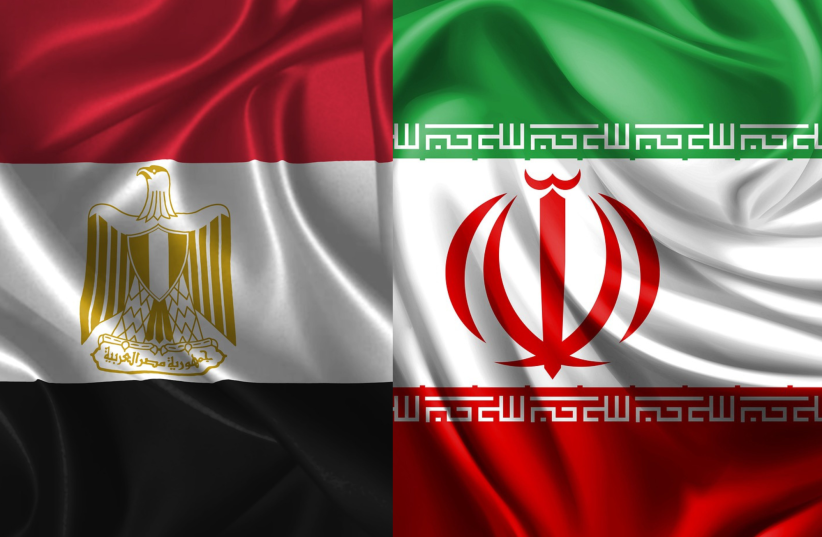
 The Egyptian (left) and Iranian (right) flags. (photo credit: PIXABAY)
The Egyptian (left) and Iranian (right) flags.
(photo credit: PIXABAY)
Iran’s President Ebrahim Raisi said a meeting of the Iranian and Egyptian foreign ministers in New York could pave the way for a restoration of ties.

“The Islamic Republic of Iran does not see any obstacle in establishing relations with Egypt, and this issue has been announced to the Egyptian side as well,” Raisi told a press conference at the end of his trip to New York for the United Nations leaders meeting, according to the website of the Iranian presidency.

“Today’s meeting of the foreign ministers of the two countries can also be a chapter to start and revive relations between the two countries.”

Earlier on Wednesday, Egyptian Foreign Minister Sameh Shoukry received his Iranian counterpart Hossein Amirabdollahian at the headquarters of Egypt’s Permanent Mission to the United Nations in New York.

Amirabdollahian said strengthening relations “will serve common interests” while Shoukry underlined the importance of cooperating with all countries in the region in the face of ongoing instability.

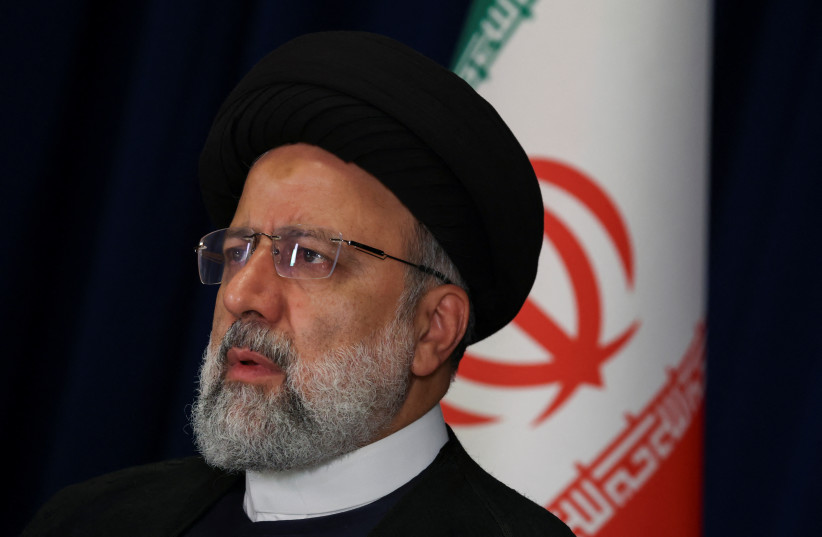
 Iranian President Ebrahim Raisi speaks during a press conference concluding his appearance at the United Nations General Assembly, in New York City, U.S., September 20, 2023. (credit: REUTERS/SHANNON STAPLETON)
Iranian President Ebrahim Raisi speaks during a press conference concluding his appearance at the United Nations General Assembly, in New York City, U.S., September 20, 2023. (credit: REUTERS/SHANNON STAPLETON)

Improving regional cooperation of Muslim nations 

“In order to strengthen relations with neighboring, Muslim, and aligned countries, the Islamic Republic of Iran will extend its hand to any country that want to cooperate with us,” Raisi added.

Relations between Egypt and Iran have generally been fraught in recent decades although the two countries have maintained diplomatic contacts.

Some Middle Eastern countries, including Egypt, have taken steps to ease regional tensions in recent months.

Egypt’s Sunni Muslim Arab ally Saudi Arabia and Shi’ite Muslim Iran restored diplomatic relations earlier this year while Cairo has mended a rift with Qatar and re-established ties with Turkey.