Iran’s IRGC boasts successes with Palestinians, Hezbollah

Two senior officials in the IRGC boasted that the US is declining while Iran-supported Palestinian and Hezbollah attacks against Israel are succeeding.
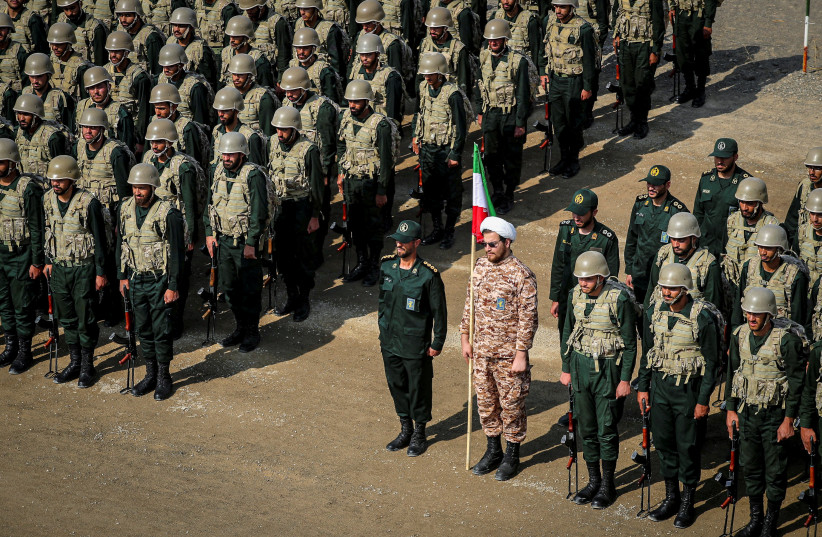
 Members of the Islamic Revolutionary Guard Corps (IRGC) attend an IRGC ground forces military drill in the Aras area, East Azerbaijan province, Iran, October 17, 2022. (photo credit: IRGC/WANA/HANDOUT VIA REUTERS)
Members of the Islamic Revolutionary Guard Corps (IRGC) attend an IRGC ground forces military drill in the Aras area, East Azerbaijan province, Iran, October 17, 2022.
(photo credit: IRGC/WANA/HANDOUT VIA REUTERS)

Iranian IRGC leaders bragged over the weekend about the increased strength of their proxies and the successes they believe they are having against the US and Israel.

Hossein Salami, the commander of the IRGC, and Ismail Qaani, the IRGC’s Quds Force commander, both made comments on Saturday that were reported in Iranian pro-regime media. The comments illustrate how Iran is positioning itself today in the region by seeking to support Palestinian attacks on Israel and also strengthening Hezbollah.

Qaani said that Iran is witnessing to a “decline of the Zionist regime in the region” and that the Iranian-backed proxies’ “axis of resistance has the upper hand over the Zionist regime.”

He then noted that Hezbollah had succeeded last year in threatening Israel and forcing a maritime agreement on Israel so that “Hezbollah was able to get its right to gas from the occupying regime of Jerusalem, and this would not have been possible without the resistance of Lebanon’s Hezbollah.”

This is important because reports last year claimed that the gas deal between Israel and Lebanon was going to benefit Lebanon. Iran is now admitting that the gas deal was primarily executed to benefit Hezbollah and that Iran’s hand was likely behind Hezbollah escalating tensions before the deal was made. The deal was made before Israel’s elections last year and since then Hezbollah threats have increased.
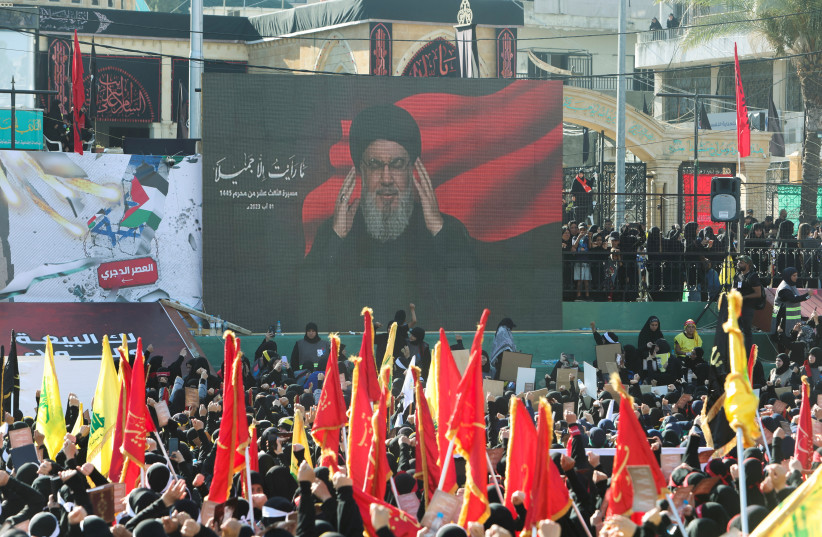
 Supporters of Lebanon's Hezbollah leader Sayyed Hassan Nasrallah listen to him as he addresses them through a screen during a rally marking Muharram, a period of mourning for Shi'ite Muslims around the world, in Nabatiyeh, southern Lebanon August 1, 2023. (credit: AZIZ TAHER/REUTERS)Supporters of Lebanon’s Hezbollah leader Sayyed Hassan Nasrallah listen to him as he addresses them through a screen during a rally marking Muharram, a period of mourning for Shi’ite Muslims around the world, in Nabatiyeh, southern Lebanon August 1, 2023. (credit: AZIZ TAHER/REUTERS)

The IRGC Quds Force head also pointed to increased attacks on Israel. He didn’t say whether these were carried out by Iran’s proxy, Palestinian Islamic Jihad, however.

“Recently, 15 to 30 attacks are carried out daily in the West Bank by the resistance forces against the Zionist regime,” Qaani said, according to Tasnim news. Qaani also highlighted how the US had wasted investments in Iraq. This matters because Iran is closely watching recent developments in the West Bank, including the attack in Hawara on Saturday in which two people were murdered.

IRGC claims the US is declining in the region

Salami also discussed Iran’s success and the apparent decline of the US in the region. Salami characterized sanctions against Iran as a “Nile river of sanctions, threats, economic pressure, great editions, and psychological wars,” comparing the sanctions to the large river in Egypt.

He contrasted the “US decline” with the IRGC’s “bright, hopeful, inspiring, moving forward” position in the region.

“Today America is declining more than ever and the enemy is at the peak of weakness. If we take a look at the recent 45-year history, we will see that as we move forward, our enemies are getting weaker and we and the axis of resistance are getting stronger.”

Salami also claimed that Israel has become weaker in recent years, comparing Israel’s position today to 1967, asserting Israel was weaker than in 1967.

“Hezbollah has become stronger and its equipment and tools have become better and more up-to-date.” He also said that Iran’s current diplomatic offensive in the region, such as Iran’s foreign minister visiting Saudi Arabia, only works when combined with “power.”

The overall theme of the two statements by key IRGC leaders is a vision for Iran’s next moves. Iran wants to increase its support for Hezbollah and Palestinian terror groups. It believes that it can combine this with its diplomatic outreach to the Gulf.
Archaeologists discover ancient city gate in southern Israel

The fortifications date to the early Bronze Age, about 3,300 BCE, reflecting the beginning of urbanization in the Land of Israel.

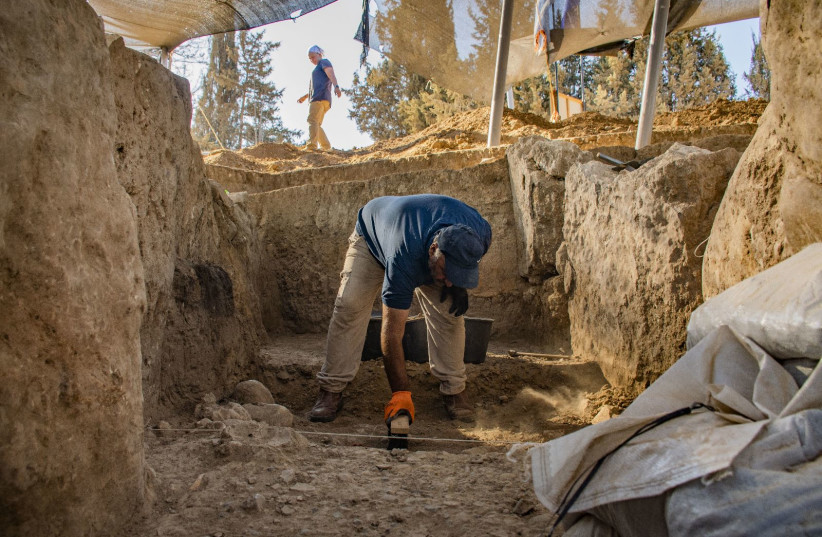
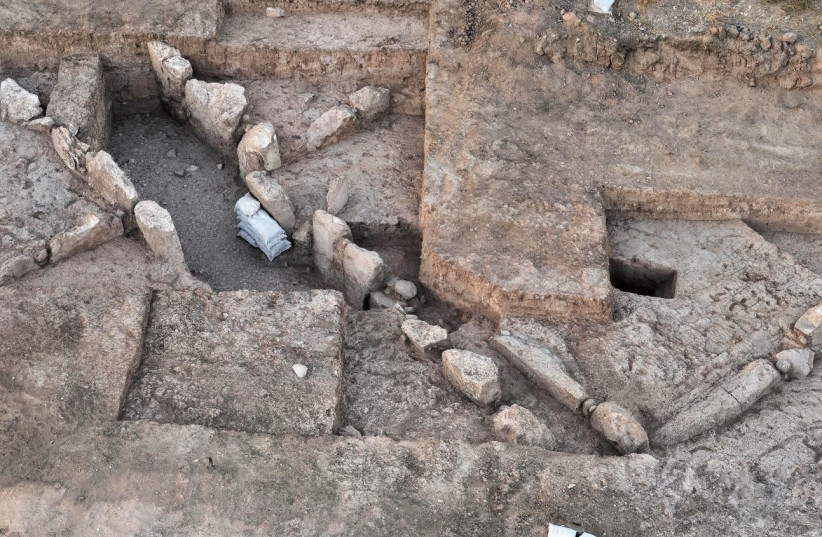
The ancient gate at Tel Erani. (photo credit: YOLI SCHWARTZ/ISRAEL ANTIQUITIES AUTHORITY)
The ancient gate at Tel Erani.
(photo credit: YOLI SCHWARTZ/ISRAEL ANTIQUITIES AUTHORITY)

A 5,500-year-old city gate was uncovered during excavations carried out near Kiryat Gat in southern Israel, with archaeologists saying this is the most ancient gate ever discovered in Israel.

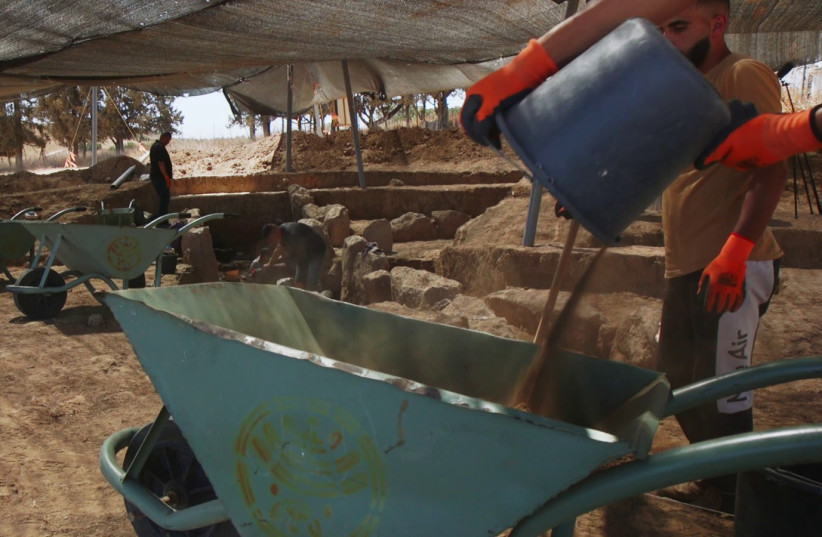
The gate and part of a fortification system were discovered at Tel Erani ahead of the laying of a water pipe by the Mekorot Water Company which is set to supply water to the Intel factory.

The fortifications date to the early Bronze Age, about 3,300 BCE, reflecting the beginning of urbanization in the Land of Israel and the Southern Levant.

Until the discovery of the gate at Tel Erani, the oldest known gate in Israel was at Tel Arad, which dates to about 300 years later than the newly found gate.

About 1.5 meters of the gate remain intact. The remains include a passageway built of large stones, leading into the ancient city. The gate is flanked by two stone towers, with rows of mudbricks in between. The gate is attached to city walls found in earlier excavations.

The ancient gate at Tel Erani. (credit: YOLI SCHWARTZ/ISRAEL ANTIQUITIES AUTHORITY)The ancient gate at Tel Erani. (credit: YOLI SCHWARTZ/ISRAEL ANTIQUITIES AUTHORITY)

After the excavation, the gate was covered up to protect it from erosion. The planned water pipe was moved in order to preserve the gate.

Newly discovered gate serves as evidence of early urbanization

Emily Bischoff, director of the excavation on behalf of the Israel Antiquities Authority explained that “This is the first time that such a large gate dating to the Early Bronze Age has been uncovered. In order to construct the gate and the fortification walls, stones had to be brought from a distance, mudbricks had to be manufactured, and the fortification walls had to be constructed. This was not achieved by one or a few individuals. The fortification system is evidence of social organization that represents the beginning of urbanization.”

Martin-David Pasternak, the Israel Antiquities Authority’s researcher for this period, added that “It is probable that all passers-by, traders, or enemies who wanted to enter the city had to pass through this impressive gate. The gate not only defended the settlement, but also conveyed the message that one was entering an important strong settlement that was well-organized politically, socially, and economically. This was the message to outsiders, possibly also to Egypt, where the process that would lead to the unification of the Lower and Upper Egypt under King Narmer was already beginning.”

 The excavation of the ancient gate at Tel Erani. (credit: EMIL ALADJEM/ISRAEL ANTIQUITIES AUTHORITY)The excavation of the ancient gate at Tel Erani. (credit: EMIL ALADJEM/ISRAEL ANTIQUITIES AUTHORITY)

Pasternak added that, “At the end of the Early Bronze Age, the Egyptians themselves arrived here and settled the tel, and they reused the gate.”

Dr. Yitzhak Paz, an Israel Antiquities Authority archaeologist specializing in the Early Bronze Age period, explained that Tel Erani was an important early urban center in the area during the Early Bronze Age.

“The tel site was part of a large and important settlement system in the southwestern area of the country in this period,” added Paz. “Within this system we can identify the first signs of the urbanization process, including settlement planning, social stratification, and public building. The newly uncovered gate is an important discovery that affects the dating of the beginning of the urbanization process in the country.”

“The extensive excavations carried out by the Israel Antiquities Authority over recent years have led to dating the beginning of urbanization to the end of the fourth millennium BCE, but the excavations carried out at Tel Erani have now shown that this process began even earlier, in the last third of the fourth millennium BCE.”

Eli Escusido, director of the Israel Antiquities Authority, stated that “The discovery of the most ancient city gate known in the country adds another important piece of knowledge to our archaeological knowledge.”

Excavations at Tel Erani began in the mid-1950s under the Department of Antiquities, the Israel Antiquities Authority, Ben-Gurion University of the Negev, and the University of Krakow, Poland.


Jordan and Egypt offer ‘full support’ to PA, blast Israel

Jordan and Egypt offer ‘full support’ to PA, blast Israel

Egyptian and Jordanian leaders call for an end to IDF anti-terror raids in PA-controlled cities, blame Israel for tensions with Palestinians.

By World Israel News Staff

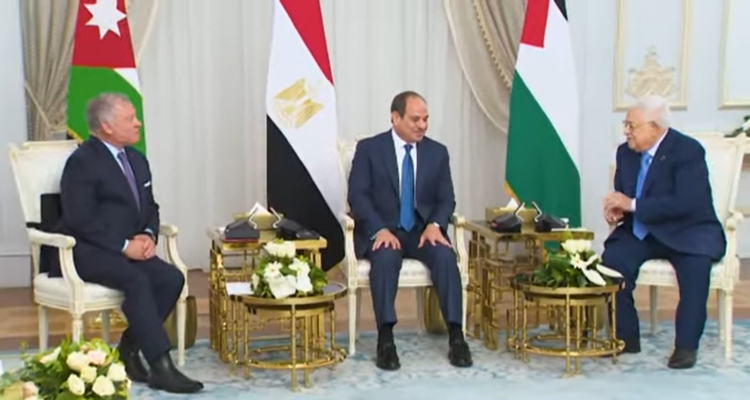
The Jordanian and Egyptian heads of state met with Palestinian Authority President Mahmoud Abbas during a trilateral summit on Monday, slamming Israel and discussing the establishment of a Palestinian state.

Egyptian President Abdel Fattah el-Sisi, King Abdullah II of Jordan, and Abbas met in New Alamein, on Egypt’s North Coast, on Monday.

According to a spokesman for el-Sisi, the men spoke about Egyptian and Jordanian backing for “the brothers in Palestine” and promised to resume “work to revive the peace process.”

The leaders released a statement after the meeting condemning Israel and expressing “full support” for the embattled PA, which analysts fear is teetering on the brink of losing control of its enclaves in Judea and Samaria.

Referring to counterterrorism raids, the statement said that “Israel must stop its incursions into occupied [PA-controlled] cities, which undermine the ability of the Palestinian government and security to carry out their duties.”

The statement also called for Israel “to lift the blockade of the Gaza Strip and other practices that fuel tension and violence and threaten to inflame the situation.”

According to Arab News, “el-Sisi and Abbas stressed the importance of the historical Hashemite [Jordanian] custodianship of Islamic and Christian holy sites in Jerusalem and its role in preserving their Arab identity.”

It’s unclear which Christian sites were being referenced in the statement. The most important Christian churches in the city – including the Church of the Holy Sepulchre – are under the administration of various Christian orders, such as the Greek Orthodox Church and Armenian Church, and are not under the custodianship of the Jordanian government.

Though both Egypt and Jordan maintain formal peace treaties with Israel, Jewish and Israeli travelers to the countries are regularly harassed and humiliated by customs agents and locals. Lawmakers from the Arab countries often trash Israel in incendiary public statements that border on blood libel.

The trilateral summit comes as rumors swirl in the region regarding a potential normalization agreement between Israel and Saudi Arabia.

The Gulf Kingdom, which is considered one of the most dominant powers in the region, is reportedly weighing a U.S.-brokered peace deal with Israel.