The Biden administration has been sharply critical of the accelerated settlement activity that has occurred under Netanyahu, including policy changes that have fast-tracked the approval process.
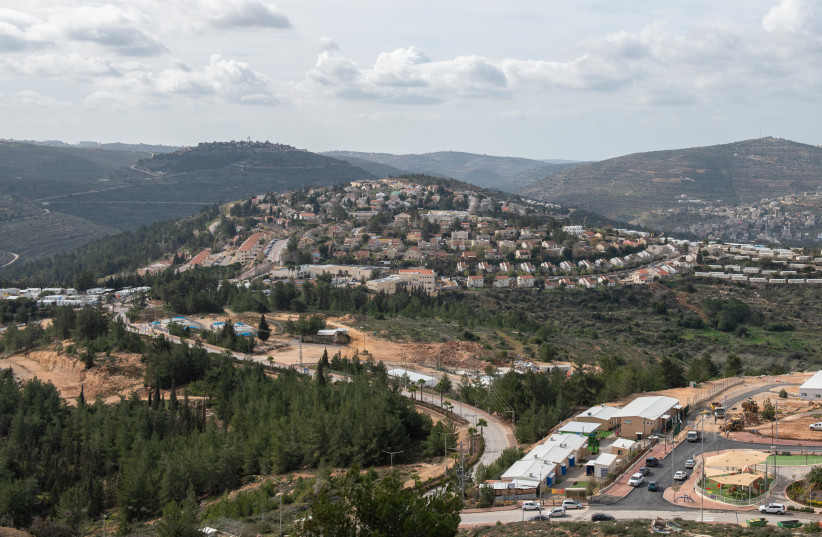
 View of the Jewish settlement of Eli, in the West Bank on January 17, 2021.  (photo credit: SRAYA DIAMANT/FLASH90)
View of the Jewish settlement of Eli, in the West Bank on January 17, 2021.
(photo credit: SRAYA DIAMANT/FLASH90)

Israel doesn’t plan to advance any more plans for West Bank settler homes this year, Prime Minister Benjamin Netanyahu told US President Joe Biden when the two men spoke on Monday evening.

He also clarified that Israel won’t be authorizing any more outposts this year.

Right-wing politicians immediately accused Netanyahu of “freezing” settlement activity.

“A nationalist government doesn’t freeze settlements in the land of Israel. Period,” said National Mission Minster Orit Struck (Religious Zionist Party) tweeted.

No freezing of settlements

The Prime Minister’s Office immediately clarified that “there isn’t and there won’t be any building freeze in the settlements.
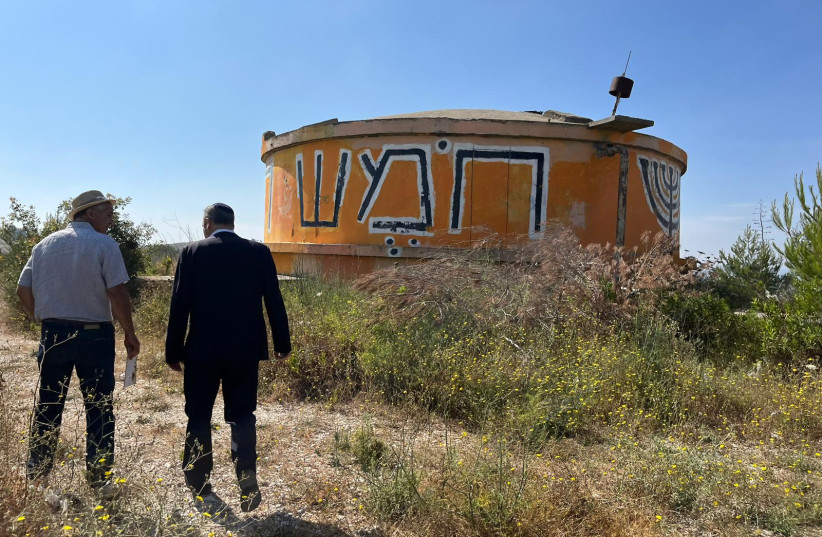
Labor MK Gilad Kariv is seen visiting the Homesh settlement in the West Bank, June 7, 2023 (credit: GILAD KARIV'S SPOKESPERSON)Labor MK Gilad Kariv is seen visiting the Homesh settlement in the West Bank, June 7, 2023 (credit: GILAD KARIV’S SPOKESPERSON)

National Security Advisor Tzahi Hanegbi echoed that statement, underscoring that Netanyahu “did not commit to freezing construction in Judea and Samaria in any way.”

He explained that “since the beginning of the year, 14,500 housing units” had been advanced by the Civil Administration’s Higher Planning Council “in two meetings, the last of which was just a few weeks ago.”

“As part of the transparency practiced between the Israeli government and the American administration on the subject of settlements – the Prime Minister made it clear to President Biden that in the coming months, there is no expected meeting of the Higher Planning Council

or a decision on the regulation of outposts.”

When Netanyahu was formerly in office he had created a system by which the Higher Planning Council met four times a year, a practice that was abandoned by former Prime Minster Naftali Bennett.

Right-wing politicians and settler leaders had expected that this practice would be resumed, but a source explained that the focus should be on the number of homes that were advanced and not the number of times the Higher Planning Council has met.

The left-wing group Peace Now has calculated that the Higher Planning Council in February and June of this year had advanced plans for 12,855 settler homes of which only 3,500 received final approval. It noted that this was the largest number of settler homes that have been advanced since it began tracking the issue in 2012.

The Biden administration has been sharply critical of the accelerated settlement activity that has occurred under Netanyahu, including policy changes that have fast-tracked the approval process.

The White House said that Biden told Netanyahu during their call that “he expressed concern about continued settlement growth and called on all parties to refrain from further unilateral measure.”

Biden spoke with Netanyahu just one day before he met with President Isaac Herzog, in which it was expected he would discuss the importance of preserving the option for a two-state resolution to the conflict.
There is no shortage of US Air Force assets and other weapons within the CENTCOM area. However, the decision to keep releasing details on these deployments is clear messaging to Iran and Russia.

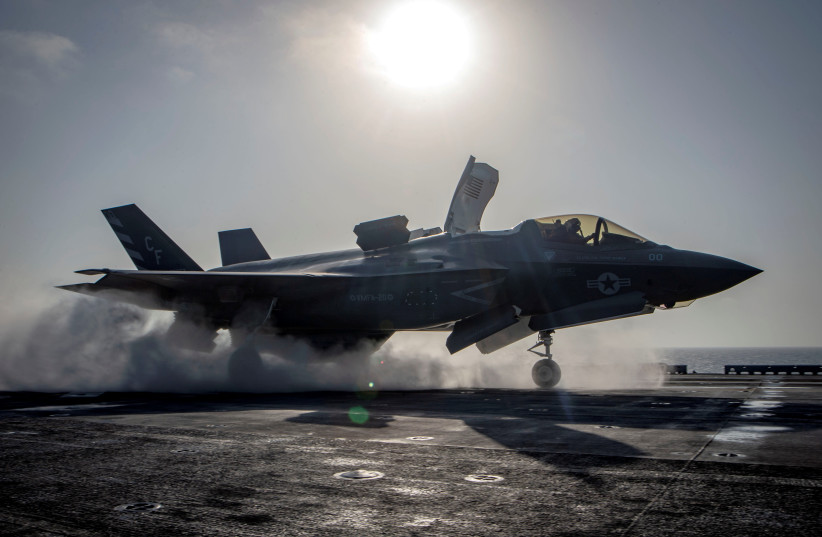
 A F-35B Lightning II aircraft from the Marine Fighter Attack Squadron 211 launches from the deck aboard the amphibious assault ship USS Essex as part of the F-35B's first combat strike, against a Taliban target in Afghanistan, September 27, 2018. (photo credit: Mass Communication Specialist 3rd Class Matthew Freeman/US Navy/Handout via REUTERS)
A F-35B Lightning II aircraft from the Marine Fighter Attack Squadron 211 launches from the deck aboard the amphibious assault ship USS Essex as part of the F-35B’s first combat strike, against a Taliban target in Afghanistan, September 27, 2018.
(photo credit: Mass Communication Specialist 3rd Class Matthew Freeman/US Navy/Handout via REUTERS)

Days after US officials said that the US would send F-16s to the region, and the guided-missile destroyer USS Thomas Hudner, more reports emerged on Tuesday of the US sending warplanes to the region. This appears to be an increasing crescendo of messaging designed to deter Iran and Russia.

It’s worth recalling that the US has already sent F-22s to the region and A-10s and has done flights with B-52s. There is no shortage of US Air Force assets and other weapons within the CENTCOM area of responsibility. However, the decision to keep releasing details on these deployments is clear messaging to Iran and Russia.

How Russia and Iran are harassing, threatening US forces in the Middle East

Russia has been harassing US forces in Syria. Russia is focused on Ukraine but Moscow also recently torpedoed a UN deal that enables aid from Turkey into Syria. This could destabilize northwest Syria where Turkey operates. On the other side of the coin, Russia wants the US to feel less secure in eastern Syria. Iran is also threatening US forces in Iraq and Syria. Iran has also been harassing ships in the Persian Gulf.

Therefore, there are a lot of areas for the US to try to protect. A recent image released by the Department of Defense showed a US soldier in Kuwait practicing counter-drone operations.

What are the latest reports?

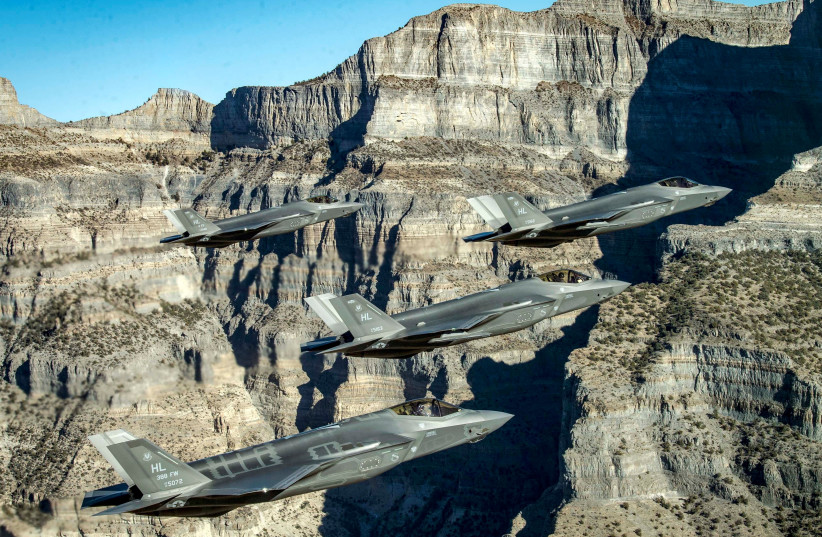
 A formation of US Air Force F-35 Lightning II fighter jets perform aerial maneuvers during as part of a combat power exercise over Utah Test and Training Range, Utah, US, November 19, 2018. (credit: US AIR FORCE/STAFF SGT. CORY D. PAYNE/HANDOUT VIA REUTERS)A formation of US Air Force F-35 Lightning II fighter jets perform aerial maneuvers during as part of a combat power exercise over Utah Test and Training Range, Utah, US, November 19, 2018. (credit: US AIR FORCE/STAFF SGT. CORY D. PAYNE/HANDOUT VIA REUTERS)

On Friday, there were reports that the US would send more F-16s. Over the weekend, another report said that the US was sending a guided-missile destroyer through the Suez Canal. The USS Thomas Hudner was deploying to the region and had arrived in the Middle East on July 14 and is supporting US 5th fleet operations. The goal here is regional maritime security and stability, the US says.

Pro-Iran media has taken note, with Al-Mayadeen reporting on the US sending more naval and air assets to the region.

The recent news says that the US is sending F-35s to the region and that this will help defend US interests and ensure freedom of navigation. Obviously, this is a reference to securing the Persian Gulf and the Gulf of Oman. Iran has in the past targeted ships in this area with mines and also hijacked tankers. Iran has also used drones to target ships.

“Some [of the fighter jets] are en route,” the Pentagon’s deputy press secretary, Sabrina Singh, told reporters. “In light of this continued threat [from Iran] and in coordination with our partners and allies, the [Pentagon] is increasing our presence and ability to monitor the Strait [of Hormuz] and surrounding waters,” Singh said.

The overall question this deployment raises is whether Iran and Russia are deterred. The increase in planes, or at least the public claims that there are more F-16s, and F-35s in the region now, should send a message to Moscow and Tehran. However, it’s not clear if they are getting the message.

The US also has been experimenting with using more unmanned surface vessels in the Gulf. These types of vessels can help provide sensors and surveillance but they can’t usually counter enemy activity with any kind of kinetic or “hard-kill” type of force. This is because they are usually unarmed. Iran likely knows this and Iran knows that it’s impossible for a few fighter planes and ships to patrol everything and protect every ship.

It’s also unclear what the rules of engagement are for the new warplanes the US is sending. Iran has spent decades harassing ships and harassing the US and others, and it has gotten used to the fact that while warning shots may be fired, no one wants a real conflict in the region.


The findings have revealed fortified cities and common urban pattern characterized by casemate walls, houses abutting the walls and peripheral roads.

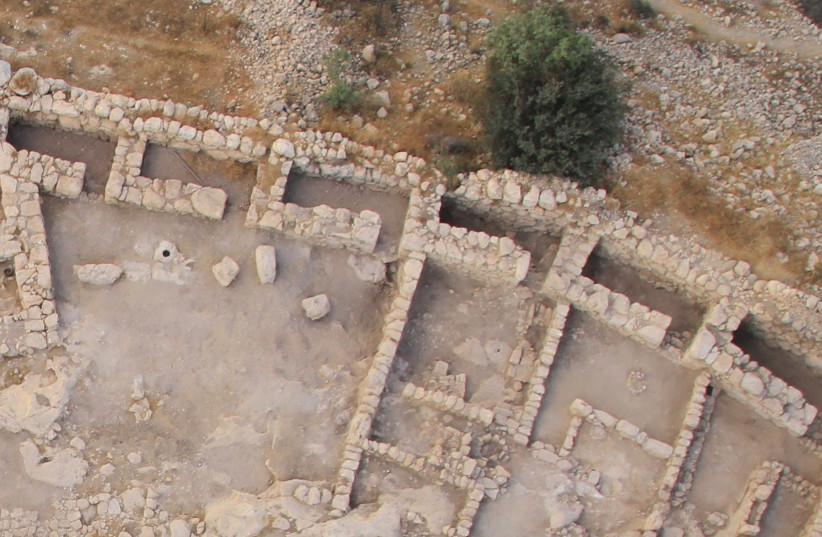
 Aerial view of the casemate city wall of Khirbet Qeiyafa (photo credit: SKYVIEW LTD)
Aerial view of the casemate city wall of Khirbet Qeiyafa
(photo credit: SKYVIEW LTD)

In recent archaeological excavations in the Judea region, significant discoveries have been made that provide new insights into the early urbanization process and urban planning of the kingdom during the 10th century BCE.

The findings, spanning multiple sites including Khirbet Qeiyafa, Bet Shemesh 4, Tell en-Naṣbeh, Khirbet ed-Dawwara and Lachish V, have revealed fortified cities and common urban pattern characterized by casemate walls (double city walls with space between the walls separated into chambers), houses abutting the walls, and peripheral roads.

The peer-reviewed study was published by The Hebrew University of Jerusalem.

The Kingdom of Judah’s expansion into the Shefela (lowlands), the favorable ecological zone southwest of Jerusalem, has long been a topic of debate among scholars.

However, these recent excavations challenge the prevailing notion that this expansion occurred in the middle or late 9th century BCE.

Instead, the findings suggest that the process was already underway in the early 10th century BCE, significantly earlier than previously believed.

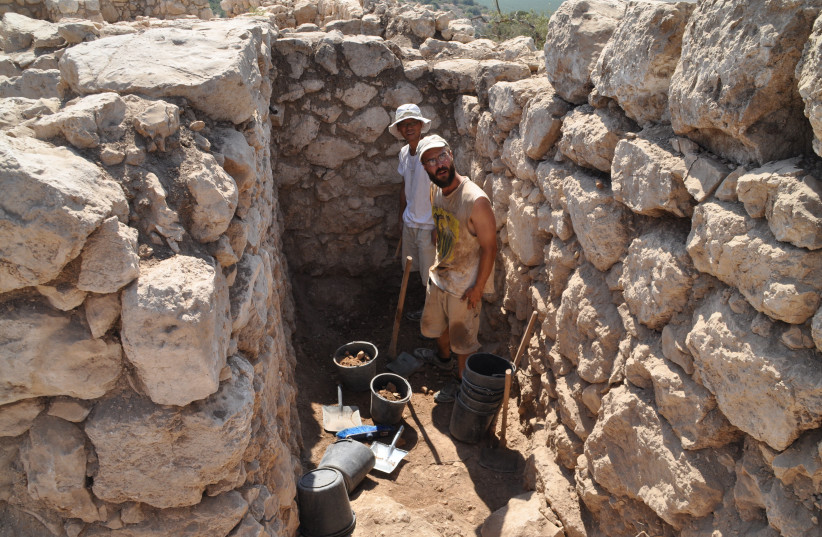
 A close-up of one of the casements in the city wall of Khirbet Qeiyafa (credit: PROF. YOSEF GARFINKEL)A close-up of one of the casements in the city wall of Khirbet Qeiyafa (credit: PROF. YOSEF GARFINKEL)

At Khirbet Qeiyafa, located on a prominent hill overlooking the Valley of Elah, archaeologists uncovered a 2.3-hectare fortified city.

What did the excavation show?

The excavation revealed a casemate city wall, houses that incorporated the casemates as rear rooms and a peripheral belt of buildings abutting the city wall.  The presence of Canaanite inscriptions at the site indicates an increasing demand for communications and suggests centralized authority.

Bet Shemesh 4, situated in the northern Shefela, yielded similar findings. The excavations at Bet Shemesh 4 revealed an early Iron Age II city enclosed by a casemate wall.

The houses in this city were built in a rounded arrangement, distinct from later structures. Excavators also discovered a casemate city wall at Tell en-Naṣbeh, emphasizing the common urban pattern found across multiple sites in the region.

Khirbet ed-Dawwara, a small fortified site on the desert fringe of the Benjaminite hill country, provided valuable insights despite its size. The excavations revealed a short-lived settlement with four-room houses and a casemate fortification.

The pottery assemblage suggests a dating to the early 10th century BCE, aligning it with the urbanization process of the larger cities in the region.

Tel Lachish V played a crucial role as a regional center during the early Iron Age. Excavations at Lachish V uncovered an early Iron Age fortification, featuring a brick construction encircling the entire site.

The recent findings of a newly discovered city wall constructed with medium-sized stones further support the city’s importance in the second half of the 10th century BCE.

These discoveries challenge previous assumptions about the timing and extent of the kingdom of Judah’s early urbanization. The presence of fortified cities and the common urban pattern found across multiple sites highlight the strategic importance of these locations and the organized expansion of the kingdom.