Even if facilities and equipment are damaged, Grossi emphasized that reconstruction would be “very possible,” since Iran has the knowledge of how to build them.
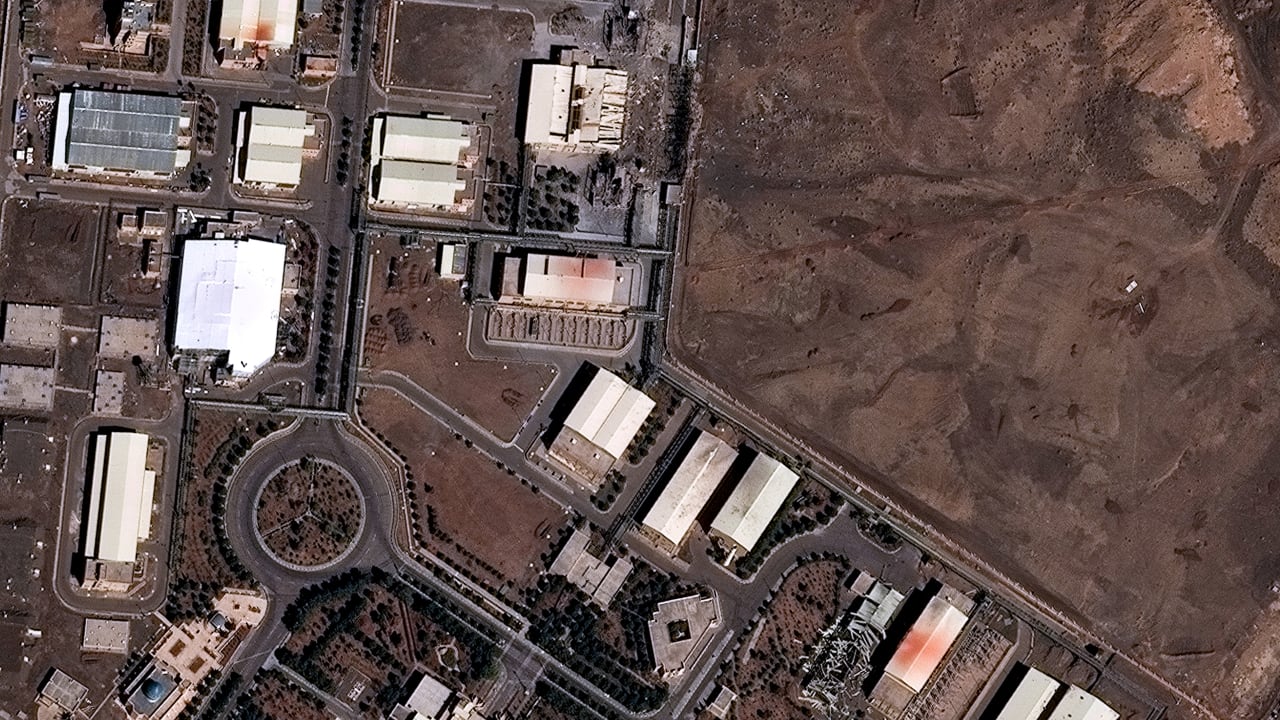
A SATELLITE image shows a closer view of the Natanz Nuclear Facility with new building damage, amid the US-Israeli conflict with Iran, near Natanz, Iran, March 2, 2026.(photo credit: VANTOR/HANDOUT VIA REUTERS)ByJERUSALEM POST STAFF While Iran’s nuclear capabilities can be severely damaged, this war on its own cannot completely destroy Iran’s nuclear ambitions or capability, IAEA Director-General Grossi said in an interview with CBS News, the transcript of which was published Thursday.
Grossi said that the war has “really rolled back the [Iranian Nuclear] program considerably,” even though the focus on nuclear sites has been marginal when compared to the 12 Day War last June.
However, Grossi specified that war could not result in a long-term solution to the problem of Iran’s nuclear capabilities.
The most notable of these is Iran’s current inventory of enriched uranium at 60%, which is “very close” to the degree necessary for a nuclear bomb, which will still remain.
IDF graphic of a Iranian nuclear development compound in Tehran that was truck by Israel on March 12, 2026. (credit: IDF SPOKESPERSON’S UNIT)
‘You cannot unlearn what you’ve learned’
Additionally, it will be impossible to ascertain just how many facilities, infrastructure, and equipment may have survived the attacks, either damaged or even unscathed, until IAEA inspectors are allowed back.
Even if facilities and equipment are damaged, Grossi emphasized that reconstruction would be “very possible,” since Iran has the knowledge of how to build them. With no research required, Grossi compared the process of rebuilding the facilities needed to that of building “a sophisticated washing machine.”
“It’s nothing, I mean, and you cannot unlearn what you’ve learned.”
Both Israel and the US have raised the possibility of special forces going in to retrieve the enriched uranium.
Grossi expressed doubts as to the feasibility of such an operation. “We’re talking about cylinders containing gas of highly contaminated uranium hexafluoride at 60%, so it’s very difficult to handle.”
Even during negotiations, Grossi said that the difficulty of handling and transferring the uranium was discussed.
Additionally, Grossi estimated that there would be decoy cylinders as well as other materials that would provide more difficulty.
“I’m not saying it’s impossible. I know that here there are incredible military capacities to do that, but it would be a very challenging operation for sure,” Grossi said.
When asked if the IAEA had been in contact with the White House about their own inspectors moving the nuclear material after combat ended, Grossi said that he had “been having important conversations here at the White House, and also with Iran.”
Grossi wouldn’t share any more information about his Iranian contacts, saying “it would be unfair” to the Iranian Foreign Minister, Abbas Araghchi, to say that Araghchi has said he’s interested in negotiations.
Centrifuges in a nuclear reactor. Separation of uranium. (credit: SHUTTERSTOCK)
Former security adviser says Iran operation would not be successful without securing nuclear material
Former national security adviser to President Donald Trump, John Bolton, also emphasized the importance of securing Iran’s nuclear material, telling NBC News that the US operation in Iran “would not be a success under any circumstances” without it.
Bolton also expressed fears that the nuclear material could be given to “terrorist groups, to other rogue states, or other malicious actors.”
While Bolton acknowledged that US forces retrieving the uranium would not be a small operation, he seemed to think it was not only feasible but an option Trump was considering.
“The president has said he doesn’t want to put boots on the ground, but I never understood that to mean he would not try and get that material,” Bolton told NBC.
A new NBC News poll shows a growing share of Americans, mainly Democrats, independents, and younger voters, view Israel negatively and increasingly sympathize with Palestinians, signaling a major political shift in the US.
Israel National News
Published: Mar 17, 2026, 9:01 AM (GMT+2)
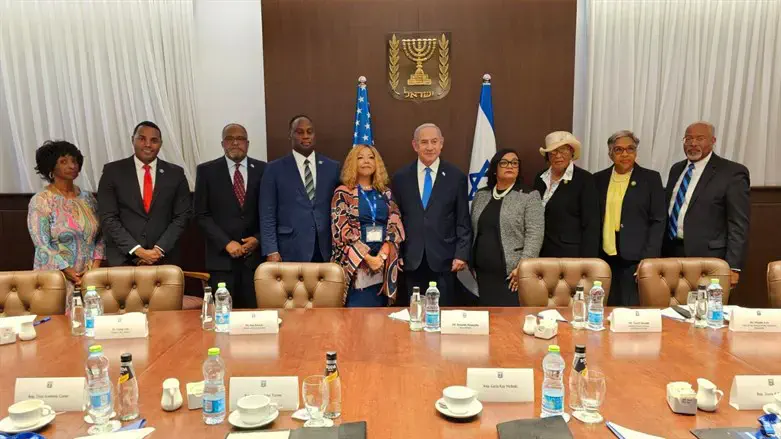
Netanyahu with Democratic members of CongressGPO
A newly released NBC News survey points to a profound realignment in how Americans perceive Israel, with negative views now outweighing positive ones among registered voters. This marks a notable departure from past attitudes and is being driven largely by shifting sentiment among Democrats and independents-an evolution already influencing party dynamics ahead of the 2026 midterms and the 2028 presidential race.
Public sympathy between Israelis and Palestinians is now nearly evenly split. Four in ten voters say they lean toward Israelis, while a nearly identical share favors Palestinians. This represents a dramatic change from 2013, when support for Israel far outpaced sympathy for Palestinians. While Republican voters have largely maintained their pro-Israel stance over time, Democratic voters have moved in the opposite direction, with a clear majority now expressing greater alignment with Palestinians.
Broader perceptions of Israel have also deteriorated among key voting blocs. Nearly six in ten Democrats and about half of independents now hold unfavorable views of the country-figures that have risen significantly since late 2023. At the same time, attitudes toward the Palestinian territories have grown more positive.
Younger voters are at the forefront of this shift. Those under 35, who already leaned critical of Israel in prior surveys, now overwhelmingly express negative views, with most also indicating stronger sympathy for Palestinians.
The findings reflect a growing divide within the Democratic Party, where candidates and advocacy groups are increasingly at odds over US policy toward Israel. The debate has been intensified by substantial political spending from pro-Israel organizations, which has drawn backlash from progressive factions.
Analysts say the turning point came after Hamas’ October 2023 attack on Israel and the subsequent war in Gaza. While some leaders argue the conflict underscores the need for steadfast US support for Israel, others contend that the scale and consequences of Israel’s military response have significantly ero
According to Magen David Adom, no casualties or severe injuries have been reported. MDA paramedics were dispatched to treat individuals who were injured while making their way into protected areas.
Anti-missile batteries fire interception missiles toward incoming ballistic missiles launched from Iran, as seen over Tel Aviv, during the war with Iran and ongoing missile fire toward Israel, March 16, 2026.(photo credit: CHAIM GOLDBERG/FLASH90)ByJERUSALEM POST STAFF
Sirens sounded across central Israel in the early morning hours on Tuesday as the IDF intercepted a barrage of missiles launched towards Israel from Iran.
According to Magen David Adom, no casualties or severe injuries have been reported.
MDA paramedics were dispatched to treat individuals who were injured while making their way into protected areas.