The plan, which was delivered to Iran via Pakistan, reportedly addresses Iran’s ballistic missile and nuclear programs, as well as issues regarding the Strait of Hormuz.
A U.S. Marines F-35C Lightning II prepares to make an arrested landing on the flight deck of the U.S. Navy Nimitz-class aircraft carrier USS Abraham Lincoln, in support of the Operation Epic Fury attack on Iran from an undisclosed locationMarch 7, 2026.(photo credit: U.S. Navy/Handout via REUTERS)ByGOLDIE KATZUpdated: The United States has submitted a 15-point plan to Iran aimed at ending the ongoing war in the Middle East, according to a New York Times report citing two officials briefed on the matter on Tuesday.
The plan, which was delivered to Iran via Pakistan, reportedly addresses Iran’s ballistic missile and nuclear programs, as well as issues regarding the Strait of Hormuz.
According to N12 News, citing three sources familiar with the details of the potential plan, the US is considering declaring a month-long ceasefire during which negotiations on the agreement would take place.
According to N12, the proposed plan would also require the Iranian regime to stop financing and arming all proxies in the region.
A US Navy Boatswain’s Mate stands watch on the island of the USS Gerald R. Ford while underway at an undisclosed location March 17, 2026 (credit: US NAVY/HANDOUT VIA REUTERS)
The Strait of Hormuz, according to N12’s sources, would be declared a free maritime zone and remain open under the potential deal.
US-Iran negotiations ongoing, Trump says
Earlier on Tuesday, US President Donald Trump told reporters in the Oval Office that negotiations between the US and Iran are ongoing and that Iran “badly” wants to make a deal.
“We’re actually talking to the right people, and they want to make a deal so badly, you have no idea how badly they want to make a deal,” Trump said.
Trump stated that Iran had already agreed to halt their pursuit of nuclear weapons and that the US was in a “good bargaining position” for negotiations.
“There won’t be any nuclear weapons. Iran has agreed to that. We’re in a good bargaining position. We’re way ahead of schedule, and they have no navy, air force, or missile protection. Most of their launches we’ve killed.”
Iran’s skepticism is one of the reasons US VP Vance has now become involved in the negotiations. Washington has sought to reassure Tehran that “this is not a ploy, but real negotiations.”
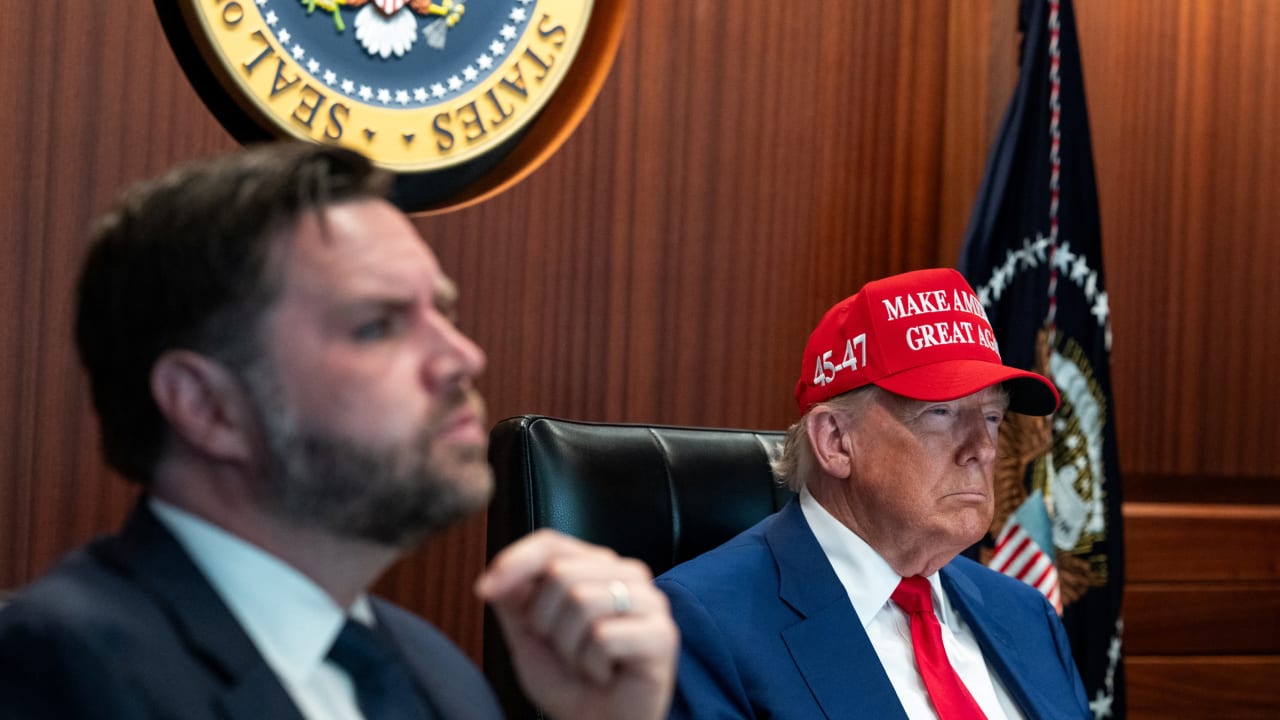
US PRESIDENT Donald Trump holds a meeting, with Vice President J.D. Vance alongside him, in the Situation Room at the White House on Saturday. There should be a swift pivot to negotiations, presenting Tehran with clear and firm terms, says the writer.(photo credit: The White House/Reuters)ByAMICHAI STEINIran has growing concerns that ongoing negotiations with the United States may be an American ploy rather than a genuine attempt to reach a meaningful agreement, sources told The Jerusalem Post on Wednesday.
“Twice we sat down with Witkoff and Kushner for talks, twice we scheduled another meeting — and instead of a meeting, we got a war. You lied to us,” an Iranian message conveyed to Washington said, according to a source familiar with the details who spoke to the Post.
This skepticism is one of the reasons US Vice President JD Vance has now become involved in the negotiations. Washington has sought to reassure Tehran that “this is not a ploy, but real negotiations.”
“Iran is speaking reasonably. There are no guarantees, but I think maybe we will end the war,” the president said.
FILE PHOTO: People attend a gathering to support Iran’s Armed Forces, after US President Donald Trump announced a ceasefire between Israel and Iran, in Tehran, Iran, June 24, 2025. (credit: MAJID ASGARIPOUR/WANA/REUTERS)
What is the US’s 15-point proposal for Iran?
The US administration has presented Tehran with a 15-point proposal and is awaiting a response. The plan, which had in fact been presented to Iran previously, includes the full dismantling of its nuclear program and facilities, a complete halt to uranium enrichment, and limits on ballistic missile range so they would be “for defensive purposes only.”
It also calls for ending Iranian support for proxy groups across the Middle East and ensuring freedom of navigation through the Strait of Hormuz.
In return, Iran would receive full sanctions relief, including the removal of the UN Security Council’s snapback mechanism, which allows sanctions to be reimposed if a member of the agreement claims a violation.
At the same time, Iran has put forward its own demands, including compensation for the war, guarantees against future attacks, the dismantling of US military bases in the Gulf, and a halt to Israeli strikes on Hezbollah in Lebanon.
Israeli officials, along with some American officials who spoke with the Post, assess that given the current positions of both sides, the chances of reaching an agreement remain low.
However, Israeli officials added that “if the Iranians do agree to the 15-point agreement, in the end it would be a good deal for Israel — provided, of course, that Trump insists on all 15 points.”
Iran’s leadership is said to be taking a hardline approach under which there will be no retreat in the war, even at the cost of harm to civilians and civilian infrastructure.
View of the Orot Rabin Power Plant at Sadot Yam beach, central Israel, May 20, 2023(photo credit: YOSSI ALONI/FLASH90)ByREUTERS,
JERUSALEM POST STAFF
MARCH 23, 2026 07:47 Updated: MARCH 23, 2026 09:39
Iran signaled an escalation in its war posture on Monday, warning it would retaliate for strikes on its electricity sector by targeting Israeli power plants and facilities supplying US bases, as reports indicated Tehran has shifted from a strategy of “regional defense” to increased aggression.
A statement issued by the Revolutionary Guard (IRGC) appeared to retract earlier threats against desalination plants in the region, which are crucial for providing drinking water in Gulf countries.
“The lying … US President has claimed that the Revolutionary Guards intend to attack the water desalination plants and cause hardship to the people of the countries in the region,” the statement shared on state media said.Unmute
On Saturday, US President Donald Trump warned that Iranian power plants would be targeted if Tehran failed to “fully open” the Strait of Hormuz to all shipping within 48 hours.
“We are determined to respond to any threat at the same level as it creates in terms of deterrence … If you hit electricity, we hit electricity,” the IRGC said.
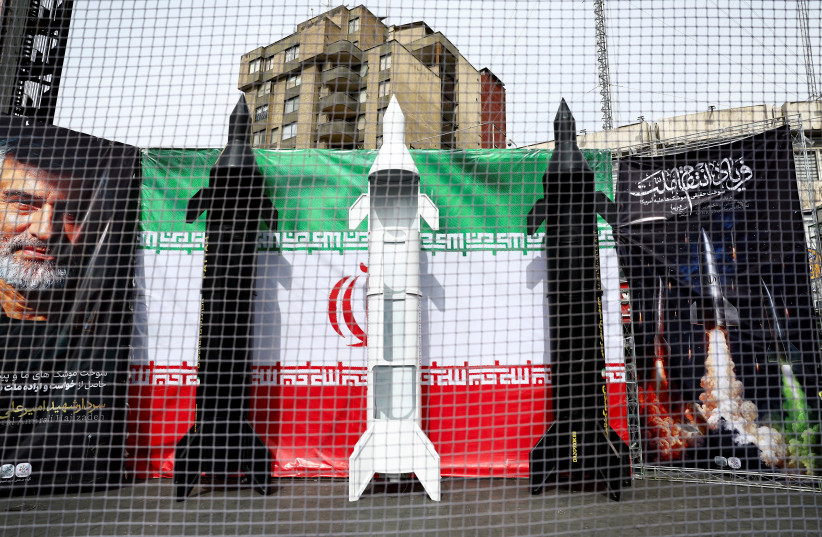
Symbolic mock-ups of Iranian missiles are displayed on a street, amid the U.S.-Israeli conflict with Iran, in Tehran, Iran, March 22, 2026. (credit: MAJID ASGARIPOUR/WANA (WEST ASIA NEWS AGENCY) VIA REUTERS)
Iran adopts new aggressive war approach
KAN News reported Sunday that the IRGC decided to escalate its approach in the war, shifting from a strategy of “regional defense” to increased aggression.
The report said Iran began implementing the decision over the weekend through a series of actions described as operational escalations and threats.
These included intensified Iranian strikes on energy infrastructure in Gulf states, missile barrages toward Dimona, and a long-range strike targeting the US base on Diego Garcia, roughly 4,000 kilometers away.
The report added that Iran has threatened to fully close the Strait of Hormuz, begun collecting transit fees in the area, and expanded its activity by bringing the Houthis into the campaign. Additional threats cited included possible attacks in Doha and at Al Jazeera’s headquarters.
An internal source familiar with developments in Iranian politics told KAN News that the leadership is taking a hardline approach under which there will be no retreat in the war, even at the cost of harm to civilians and civilian infrastructure.
According to the source, the shift follows shifts in power centers, with more extreme elements taking a leading role, indicating that civilian cost is not a decisive consideration at this stage.
The report also said economic pressure in Iran is increasing as the war and tightening sanctions affect dollar flow channels, including routes that had bypassed restrictions through Gulf states.
KAN said the economic impact is increasing pressure on the public, but is not expected at this stage to change the regime’s conduct