Nuclear deal nears, freeing Iranian funds and US prisoners

PM Benjamin Netanyahu has said in the past that Israel would not be obligated to comply with any deal made with Iran.
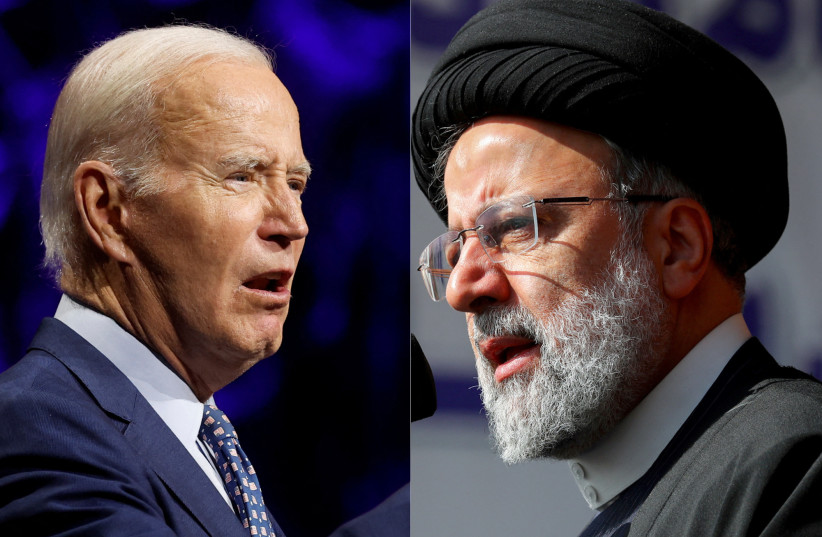
US President Joe Biden and Iranian President Ebrahim Raisi.
(photo credit: Iran’s President Website/WANA (West Asia News Agency)/Handout via REUTERS, REUTERS/JONATHAN ERNST)

Further details of an unwritten agreement between the US and Iran regarding Tehran’s nuclear program emerged overnight Wednesday.

The expected deal, which the sides negotiated in recent weeks via Oman after talks to revive the 2015 nuclear agreement failed last year, would have the US provide sanctions relief in exchange for Iran limiting its nuclear program.

Israeli officials warned an agreement was coming for weeks, and many details of the plan have been reported in Israeli media, including The Jerusalem Post. American officials’ willingness to confirm details to reporters at The New York Times and The Wall Street Journal, at a level that they were not willing to do before, for articles released Wednesday may be an indication of the deal’s imminence.

The agreement, entails Iran curbing its uranium enrichment at 60%, far beyond what was permitted in 2015, but below the 90% needed for a nuclear weapon. The US warned in the talks that it would exact a heavy price from Iran if it enriches to 90%.

Iran would also free Americans it is holding in prison

In addition, Iran would no longer sell ballistic missiles to Russia and stop its proxies’ attacks on US contractors in Syria and Iraq, the Times reported.
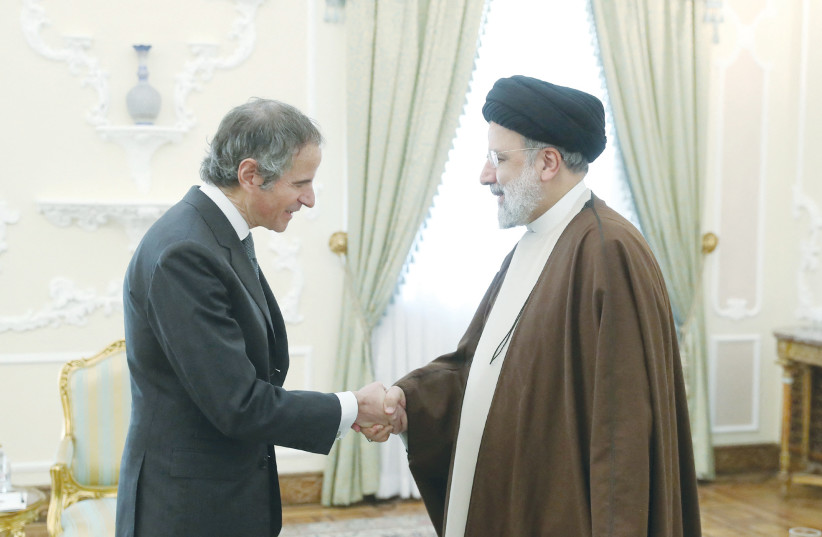
 IRANIAN PRESIDENT Ebrahim Raisi meets with IAEA Director-General Rafael Grossi in Tehran in March. The writer says US President Joe Biden may grant Raisi an end to all IAEA investigations (credit: Iran’s Presidential Website/West Asia News Agency/Reuters)IRANIAN PRESIDENT Ebrahim Raisi meets with IAEA Director-General Rafael Grossi in Tehran in March. The writer says US President Joe Biden may grant Raisi an end to all IAEA investigations (credit: Iran’s Presidential Website/West Asia News Agency/Reuters)

The US would waive sanctions, specifically allowing Iraq to pay over $10 billion it owes Iran for gas and electricity and for South Korea to pay seven billion dollars for oil imports.

It would not add further sanctions or pursue resolutions against Iran in the UN Security Council or the International Atomic Energy Agency. In addition, the US would agree not to seize foreign tankers bearing Iranian oil, according to the Times.

The US already waived sanctions allowing Iraq to pay Iran $2.76 billion last week. The State Department said that the funds are meant to be used for food and medicine from US-approved sources.

The deal is meant to avoid an escalation and keep the Iranian issue off of the political agenda at least until the 2024 presidential election, Israeli diplomatic sources have posited.

State Department spokesman Matthew Miller has repeatedly denied “rumors about a nuclear deal,” which he called “false or misleading,” but that may be a technicality, in that the understandings with Tehran are meant to remain unwritten and not a formal agreement.

The informality of the deal is likely an attempt by the Biden administration to avoid Congressional review in line with the Iran Nuclear Agreement Review Act (INARA). The law requires the president to notify Congress within five days of any agreement with Iran relating to its nuclear program and transmit any related materials for a 30-day review period. It also requires the president to “determine the agreement in no way compromises the commitment of the United States to Israel’s security, nor its support for Israel’s right to exist.”

Earlier this week, Prime Minister Benjamin Netanyahu told the Knesset Foreign Affairs Committee behind closed doors that the US is determined to reach a “small deal,” and there is little chance Washington will change its mind. All that is left, he said, is for the Islamic Republic to give an answer.

Netanyahu characterized the deal as a “mini-deal” or an “understanding,” rather than a formal agreement that would be put in writing.

“Our stance is clear: No agreement with Iran will oblige Israel,” Netanyahu said ahead of the confidential committee meeting on Tuesday. “Israel will continue to do everything to defend itself.”

Israel’s opposition to the 2015 Iran nuclear deal still stands, Netanyahu said: “We still have different views and we do not hide them, even about small agreements. We make our stance clear, in closed rooms and open ones.”
Iran’s President Raisi arrives in Cuba

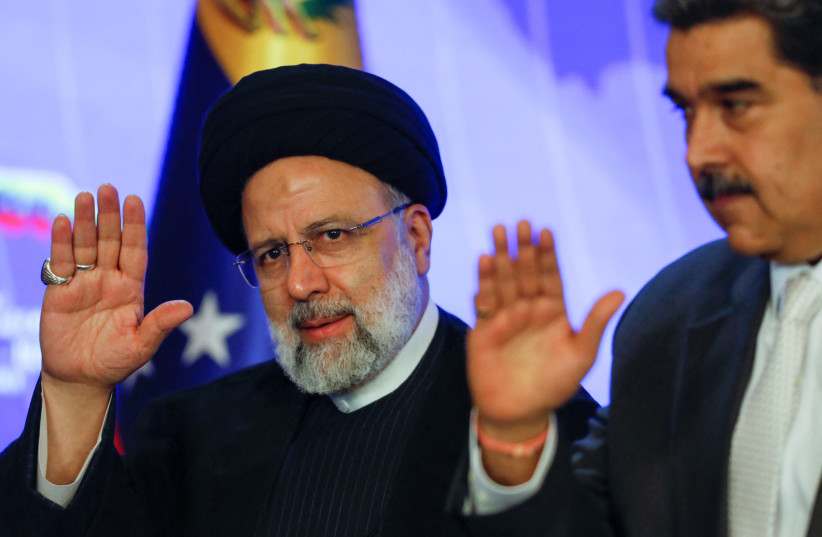
In Venezuela, he spoke about the need to confront the US and create a “new world order” that would overturn the US-led world order that has existed since the end of the Cold War.

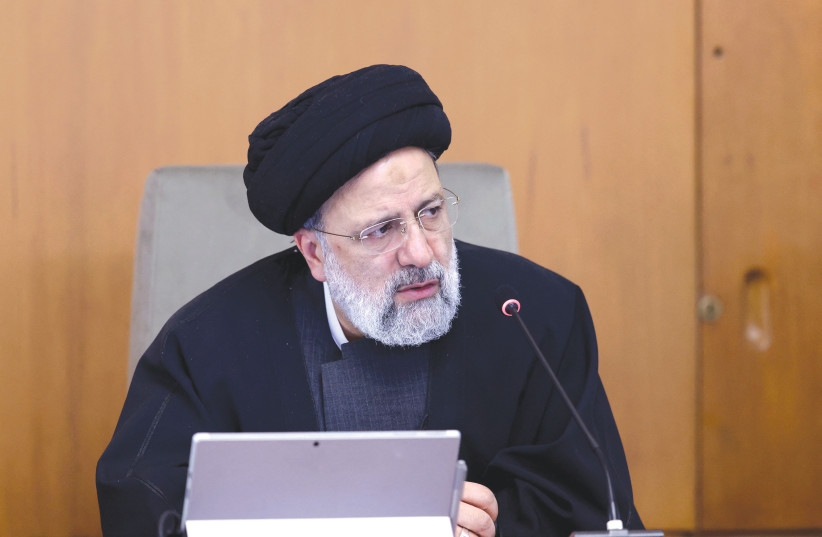
 IRANIAN PRESIDENT Ebrahim Raisi speaks during a cabinet meeting in Tehran, last week.  (photo credit: Presidential Website/West Asia News Agency/Reuters)
IRANIAN PRESIDENT Ebrahim Raisi speaks during a cabinet meeting in Tehran, last week.
(photo credit: Presidential Website/West Asia News Agency/Reuters)

Iran’s President arrived in Cuba overnight, according to Trabajadores, a Cuban pro-government newspaper. He was met at the airport by Bruno Rodríguez Parrilla, member of the Political Bureau of the Central Committee of the Communist Party of Cuba and Minister of Foreign Affairs. Riasi is on a five-day trip to South American countries.

In Venezuela, he spoke about the need to confront the US and create a “new world order” that would overturn the US-led world order that has existed since the end of the Cold War.

Raisi arrived at the José Martí International Airport in Havana. He was met by Iran’s ambassador to Cuba Mohamad Hadi Sobhan. “During his stay, the distinguished visitor will hold talks with Cuban authorities and carry out other activities of interest,” the Cuban media said. Riasi is expected to meet with President Miguel Diaz-Canel today.

“The current president of Cuba was retained in his position for the second five-year term by the National Assembly of this country in April this year. Earlier in April 2018, he was elected president and succeeded Fidel Castro’s brother Raul.”

President Raisi’s world tour

According to Iran’s Fars News Raisi arrived in Cuba and this is the 15th country the Iranian leader has visited. He has also traveled to Central Asia, Oman, Syria, and Indonesia during his time in office.

 Iranian President Ebrahim Raisi and Venezuela's President Nicolas Maduro gesture during a meeting at the Miraflores Palace, in Caracas, Venezuela June 12, 2023.  (credit: REUTERS/LEONARDO FERNANDEZ VILORIA)Iranian President Ebrahim Raisi and Venezuela’s President Nicolas Maduro gesture during a meeting at the Miraflores Palace, in Caracas, Venezuela June 12, 2023. (credit: REUTERS/LEONARDO FERNANDEZ VILORIA)

This is a major trip for Raisi and important for Iran’s influence globally. “Hossein Amirabdollahian, Minister of Foreign Affairs, Javad Oji, Minister of Oil, Mohammad Reza Qaraei Ashtiani, Minister of Defense and Armed Forces Support, Bahram Ainullahi, Minister of Health, and Mohammad Jamshidi, Political Deputy of the President’s Office, are among the President’s companions on this trip,” Iran’s pro-government media said.


Hezbollah to Iran: Israel looks internally weak – analysis

In this case, it claims that Hezbollah has recently trained 8,000 fighters who can “cross the border and occupy an Israeli town within a few hours.”

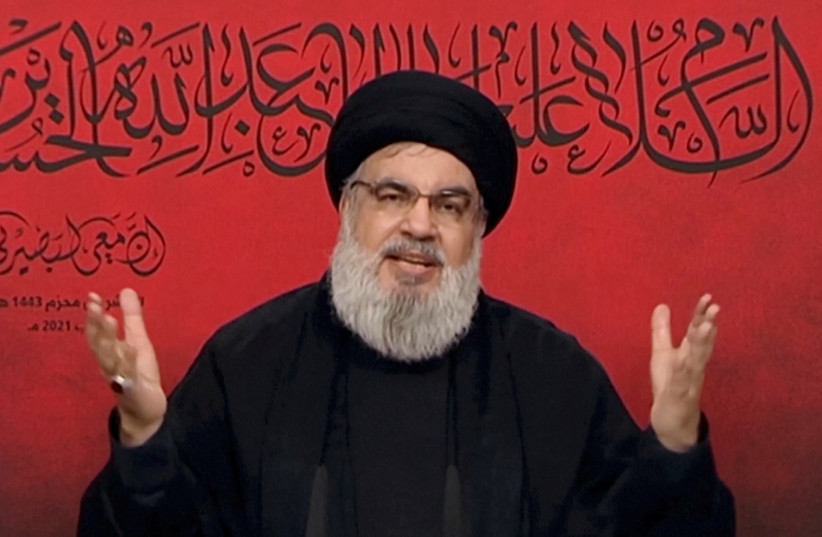
Lebanon’s Hezbollah leader Sayyed Hassan Nasrallah speaks through a screen during a religious ceremony marking Ashura
(photo credit: AL-MANAR/HANDOUT VIA REUTERS)

The chief of Lebanese Hezbollah’s Executive Council Hashim Safiuddin gave an interview to Iran’s Tasnim news, a pro-Iran regime outlet.

In the interview, he sketched out Hezbollah’s general assessment of the situation in the region. The interview comes as Iranian media broadcasted a meeting between Iran’s Supreme Leader and members of Palestinian Islamic Jihad. Taken together this can be seen as Iran utilizing its proxies and considering its next moves.

In general, Iran appears to have assessed that conflicts confined to Gaza do not achieve results. Nevertheless it praises PIJ for the recent conflict against Israel. However, Iran’s real goal is to stoke tensions in the West Bank. It is watching the clashes in Nablus, Jenin and other incidents closely.

Iran’s perception of Israel

Despite evidence of Israel’s obvious strength, such as it’s defense exports and more support for the Abraham Accords in the US, Iran nevertheless believes that the situation is changing in Iran’s favor.

The long interview and article uses a common Iranian technique of quoting what it says is Israeli or foreign media to reaffirm its own views. In this case, it claims that Hezbollah has recently trained 8,000 fighters who can “cross the border and occupy an Israeli town within a few hours.”

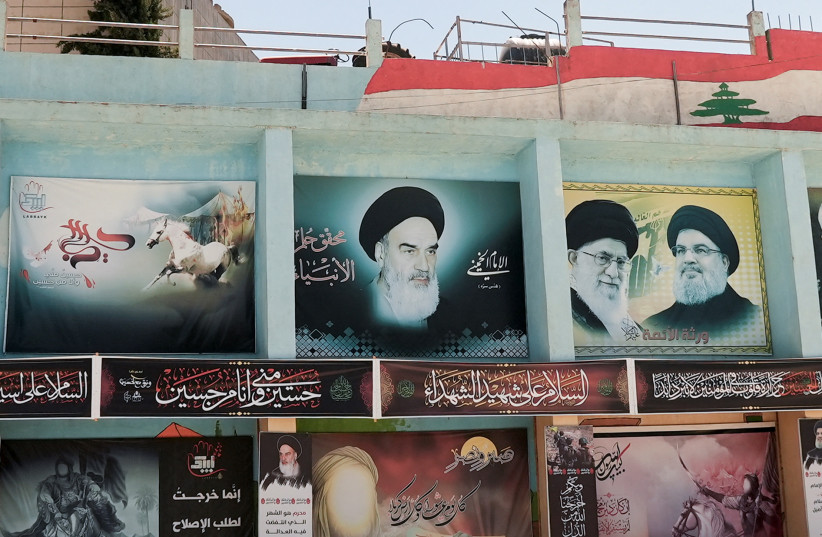
 CURTAILING IRAN’S smuggling of advanced weaponry to Hezbollah: Banners depict (from L) Iran’s late leader Ayatollah Ruhollah Khomeini, Iran’s Supreme Leader Ayatollah Ali Khamenei and Hezbollah leader Sayyed Hassan Nasrallah, in Yaroun, southern Lebanon, August 15. (credit: REUTERS/ISSAM ABDALLAH)CURTAILING IRAN’S smuggling of advanced weaponry to Hezbollah: Banners depict (from L) Iran’s late leader Ayatollah Ruhollah Khomeini, Iran’s Supreme Leader Ayatollah Ali Khamenei and Hezbollah leader Sayyed Hassan Nasrallah, in Yaroun, southern Lebanon, August 15. (credit: REUTERS/ISSAM ABDALLAH)

Hashim Safiuddin says that, in the next conflict, Hezbollah intends to attack Israel and “enter the occupied territories.” This doesn’t mean the West Bank probably, but rather trying to attack northern Israel or even Mount Dov.

“I believe that one day we will enter Palestine and Jerusalem.”

He claims that Palestinian groups are increasing their power and gives the example of PIJ. Clearly Hezbollah is seeking with Iran to empower PIJ.

Hezbollah and its Iranian backers believe that Israel is growing more weak internally due to political chaos.

It also claims that the US is declining and that this decline means that Israel will also decline alongside the US. This is because they believe the US is Israel’s key backer in the region.

Iran also believes its recent inroads in the Gulf have been a setback to the Abraham Accords, despite the fact that evidence points to the contrary.

What matters in the recent interviews is that Iran presents this as a full court press, involving talks with Hezbollah and the PIJ, alongside stronger ties with Syria’s regime and Iran’s outreach to South America.  …