Israel is leading an energy industry revolution

The meeting creates an opportunity to create awareness of the great opportunities inherent in the connection between the oil and gas industry and Israeli innovation.
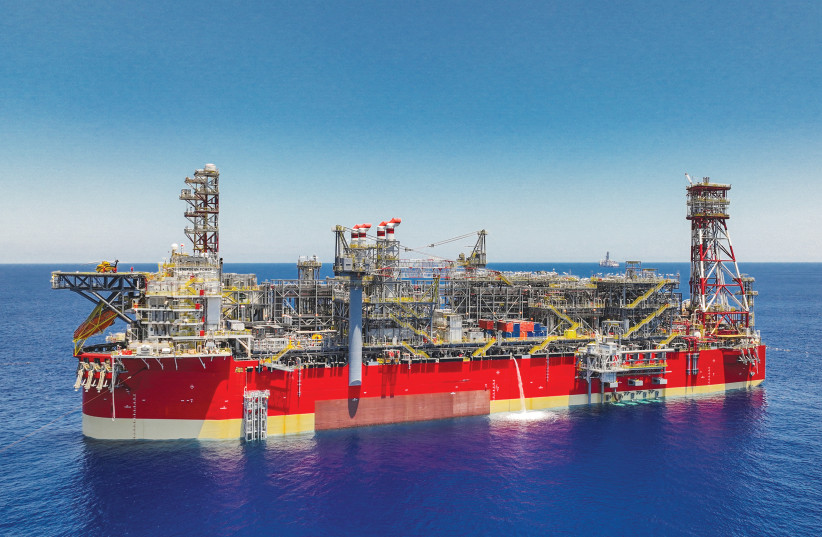
 ENERGEAN’S FLOATING production unit is seen offshore in the Eastern Mediterranean last year (photo credit: Energean/handout via Reuters)
ENERGEAN’S FLOATING production unit is seen offshore in the Eastern Mediterranean last year
(photo credit: Energean/handout via Reuters)

When I arrived a few months ago at one of the largest oil and gas industry conferences in Madrid, for a moment I thought I had come to the wrong place. The display of heavy and expensive machines, which opens every conference, was replaced by a display of autonomous submarines and advanced, small autonomous robots. The heavy seismic data analysis software was replaced by systems streamlining and data analysis software, and the outdated control rooms were replaced with innovative displays based on simulations of facilities, remote command-and-control, and management of digital models of the facilities.

Suddenly there was no trace of the old, heavy industry with the environmental impact. The companies were careful to present an image of environmental, advanced, digital energy companies investing in technology that reduces the environmental footprint and focuses on renewable energy and technological innovation.

A senior executive at one of the largest oil and gas companies told me: “We’re investing more and more in renewable energies because that is the future, but the big money is invested in digital technologies that lead to efficiency, lowering costs, and reducing the environmental footprint.”

Beneath the surface, a revolution is taking place

Beneath the surface, a revolution is taking place in the oil and gas industry: from an industry focused on fossil fuels to one looking for environmentally-friendly energy alternatives; from a conservative industry to an open industry seeking extra-organizational technological solutions; from an industry focused on working with a small number of huge subcontractors to one open to working with a variety of innovative companies; from an industry focused on internal R&D to an industry looking to implement new, extra-organizational technologies and solutions.
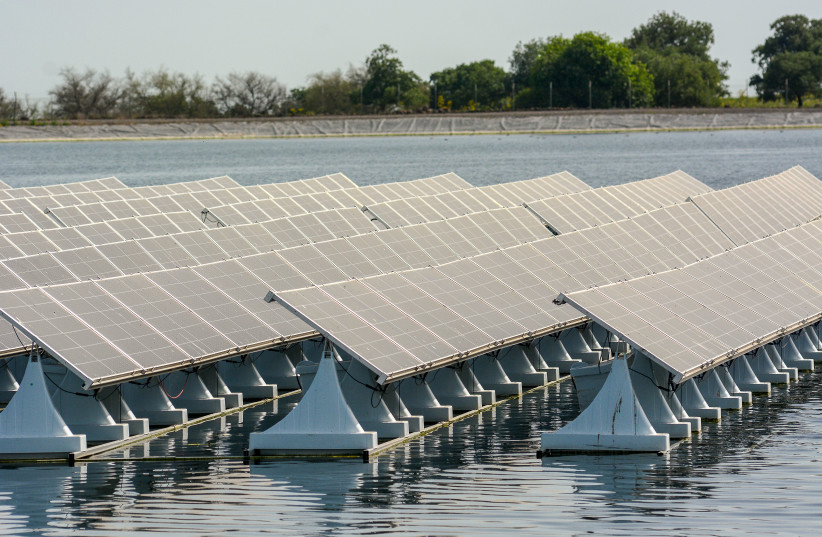
INVESTING IN renewable energies: World's first patented floating solar energy system with adjustable panels, amde by Israeli hi-tech company Xfloat, at the Golan Height's Tzur water reservoir, April 10. (credit: MICHAL GILADI/FLASH90)INVESTING IN renewable energies: World’s first patented floating solar energy system with adjustable panels, amde by Israeli hi-tech company Xfloat, at the Golan Height’s Tzur water reservoir, April 10. (credit: MICHAL GILADI/FLASH90)

Today, more and more people understand that the real expectation is that in the next 30 to 40 years, fossil energies, with an emphasis on natural gas – which constitutes a transition energy between old (oil and coal) and renewable energies – will remain key energy sources in the global energy mix. Therefore, we are witnessing a paradigm shift and huge investments with a view to the future.

We are at the threshold of an extraordinary opportunity. A huge, rich industry puts its trust in internal and external innovation, and is willing to invest tremendous resources. In order to search for new technologies in the field, companies in the industry have established dozens of investment entities with huge capital earmarked for non-organizational investments, including huge venture capital funds, accelerators, incubators, programs for developing collaborations between industry and academia, and more.

Right now, an opportunity is being created for the Israeli innovation community to begin establishing leadership in the field. This is a historic juncture: to turn Israel into the “hub” of innovation for the renewable oil and gas industry. The large energy companies know the potential of Israeli innovation and look up to Israel – with expectations. They seek advanced solutions in the entrepreneurial and technological ecosystem, in academia, industry and the Israeli innovation community.

A recent example of this is the visit of the innovation team from the leading E&P company Energean, which has joined forces with the giant Halliburton company, and is coming to meet with start-ups, entrepreneurs and academics in Israel, in a first-of-its-kind event. The meeting creates an opportunity to create awareness of the great opportunities inherent in the connection between the oil and gas industry and Israeli innovation. It’s likely that this will be the opening shot for a long line of connections of this kind – paving the way for the inevitable revolution in tomorrow’s energy world.

The author is CEO of ISROG and is a special consultant to the energy minister on oil and gas innovation.
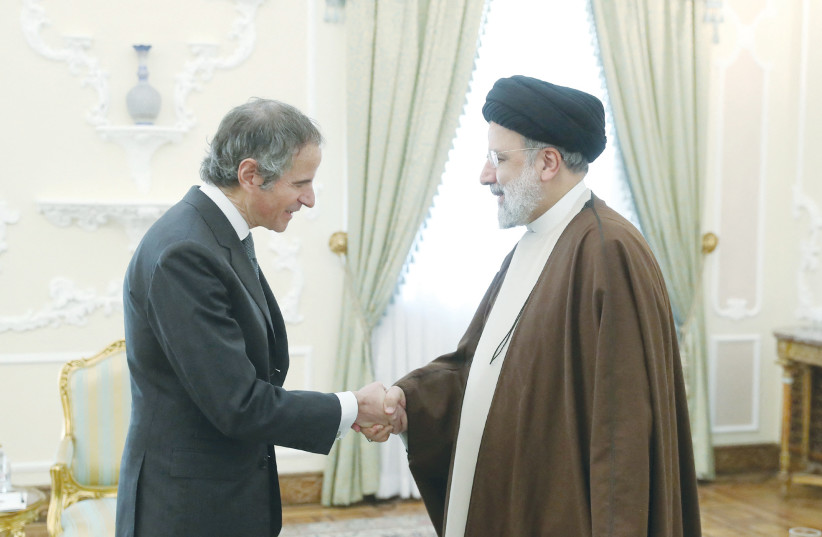
US President Joe Biden may grant Iranian President Ebrahim Raisi an end to all past and current IAEA investigations into Iran’s nuclear violations alongside the suck-up deal above.

 IRANIAN PRESIDENT Ebrahim Raisi meets with IAEA Director-General Rafael Grossi in Tehran in March. The writer says US President Joe Biden may grant Raisi an end to all IAEA investigations (photo credit: Iran’s Presidential Website/West Asia News Agency/Reuters)
IRANIAN PRESIDENT Ebrahim Raisi meets with IAEA Director-General Rafael Grossi in Tehran in March. The writer says US President Joe Biden may grant Raisi an end to all IAEA investigations
(photo credit: Iran’s Presidential Website/West Asia News Agency/Reuters)

Believe it or not, the Biden administration apparently is once again offering the mullahs of Tehran a sweetheart deal: the release of $10 billion or more in frozen Iranian assets and clemency for Iran’s near-breakout nuclear advances of recent years, in exchange for Iranian release of American hostages, and warmed-over pious Iranian pledges to freeze the Shi’ite atomic bomb program.

This, even though Washington would be freezing the Iranian nuclear program with 16 cascades spinning to enrich uranium to 60% purity, which is just shy of weapons-grade. In February, Iran was caught with some uranium enriched to 84% purity and was called out for manufacturing uranium metal, a material used in nuclear weapon cores.

This month, intelligence photos showed Iran again digging tunnels at its Natanz nuclear site – supposedly deep enough to withstand an American or Israeli military strike. This tells us that Iran has what to hide, a clear sign that it has not given up on its quest for a nuclear bomb.

Nevertheless, US President Joe Biden may grant Iranian President Ebrahim Raisi an end to all past and current International Atomic Energy Agency (IAEA) investigations into Iran’s nuclear violations alongside the suck-up deal above.

Biden ignoring Iran’s other regional muckraking and hegemonic advances

Biden also seems happy to ignore Iran’s other regional muckraking and hegemonic advances, including its harassment of internationally flagged merchant ships in the Straits of Hormuz, and its placement of “floating terror bases” (civilian ships converted into mini-aircraft and commando carriers) in the strategic waterway. The situation there is so bad that in protest the United Arab Emirates last month pulled out of a US naval alliance group meant to protect shipping in the Arabian Gulf.

John Hannah and Richard Goldberg of the Washington-based Foundation for the Defense of Democracies warned this week in a special alert publication that the above contours would be “a bad, even a desperate, deal made from a position of American weakness.”

“It looks like the administration is reviving an idea out of the old Obama playbook because it’s not willing to do what’s necessary to stop Iran’s program by restoring deterrence through coercive diplomacy. Biden is scared to death that if Iran keeps advancing its nuclear program, either the United States or Israel will be forced to make good on their promise to stop Iran militarily.”

“From the administration’s perspective, paying Iran off is the easiest way to hold at bay the worst-case outcomes of a nuclear Iran, on the one hand, or another major military conflict, on the other. And suspending sanctions to get there is a lot easier and less risky in their minds than doing the hard work and committing the resources needed to establish a credible US military option to destroy the Iranian program.”

“But the price for America will be stabilizing and strengthening a terror-supporting Iranian regime now under pressure not only from sanctions but from profound domestic discontent and turmoil among its own population,” they added.

Equally distressing, they warned, is that “Biden risks undermining American support for the war in Ukraine by asking Congress to approve billions of taxpayer dollars to support Kyiv while offering Iran billions of dollars to help resupply Moscow.” (It has been well documented that Iran is supplying Russia with military attack drones and other critical technologies with which to clobber Ukraine.)

Given that Washington appears unwilling, even now, to place hard limits on the crucial elements of Iran’s illicit nuclear weapons program (fissile material production, weaponization, and means of delivery/missile development), and is unwilling to apply maximum economic pressure (as President Trump did) or to present a credible military threat to Iran – it is no surprise that Israel is ramping-up its preparations for confrontation.

At the Herzliya Conference last week, IDF Chief-of-Staff Lt.-Gen. Herzi Halevi said plainly, in a rare speech focused directly on Iran, that Israel may “take action” against Iran’s nuclear facilities because of “possible negative developments on the horizon. We have the ability to hit Iran, and we are not indifferent to what Iran is trying to build around us.” National Security Adviser Tzachi Hanegbi added that “there is no place that can’t be reached,” (referring to the new Natanz tunnels).

THIS IS where broader regional diplomacy comes into the picture and complicates Israel’s calculations.

Washington expects Israeli acquiescence in the emerging US surrender to Iran in exchange for a series of other things important to Israel. These include US backing for Israel against escalated Palestinian assaults expected this fall in UN forums, toning down US criticism regarding settlement and security matters (at a time when the IDF is going to have to intensify its anti-terrorist operations in Judea and Samaria), an easing of US pressures on Israel in connection with domestic matters (like judicial reform), a warm Washington visit for Prime Minister Netanyahu (this is not just a political concession but rather is critical to Israel’s overall deterrent posture), and most of all, significant American moves towards reconciliation with Saudi Arabia (critical to driving a breakthrough in Israeli-Saudi ties).

It is worth dwelling on the latter point because renewed close cooperation between Washington and Riyadh is central to the stability of the region and is the cornerstone of what should and can be Saudi entry to the Abraham Accords. In other words, the road to Israel-Saudi normalization runs through Washington.

It will take serious intent and deft maneuvering from America to get there, and there is good reason to doubt that Biden is prepared or capable of paying the mostly justified Saudi price for renewed close Saudi-US partnership. (This may include a defense treaty, high-quality arms supply, a comprehensive economic agreement, and most controversially, US agreement to a Saudi civilian nuclear program. Israel may have a problem with parts of this package, too.)

The further problem is that even an expensive package of US “concessions” to Saudi Arabia will not truly compensate for US capitulation to Iran (something we know from experience will only embolden the hegemonic ambitions of the mullahs). And this capitulation will make it more difficult for the Saudis to publicly embrace Israel (although the quiet security coordination between the two countries assuredly will continue to grow).

In the end, Israel must prioritize its most naked, existential security interests – which clearly are stopping Iran’s nuclear bomb effort and scuttling Iran’s attempts to encircle Israel with well-armed proxy armies. Accepting another ruinous US nuclear deal with Iran is not in accordance with these interests.

The writer is a senior fellow at the Misgav Institute for National Security & Zionist Strategy. The views expressed here are his own. His diplomatic, defense, political, and Jewish world columns over the past 26 years are archived at davidmweinberg.com.


This came after multiple top US officials said that Iran could jump from the 60% medium uranium enriched level to the 90% level in 12 days.

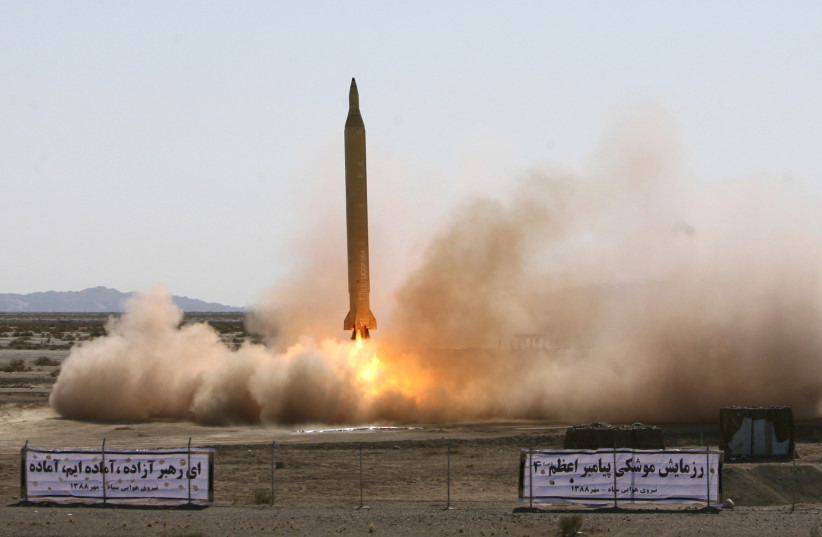
A Ghadr 1 class Shahab 3 long range missile is prepared for launch during a test from an unknown location in central Iran (photo credit: REUTERS)
A Ghadr 1 class Shahab 3 long range missile is prepared for launch during a test from an unknown location in central Iran
(photo credit: REUTERS)

Iran is closer to nuclear “midnight” in being able to obtain nuclear weapons than it has ever been before.Note that the talk has shifted from weapon (singular) to weapons (plural).

Defense Minister Yoav Gallant said Iran had enough enriched uranium to produce 90% weaponized uranium for up to five nuclear bombs in short-shift if it decided to do so.

This came after multiple top US officials said that the Islamic Republic could jump from the 60% medium uranium-enriched level to the 90% level in 12 days.

hat mtters vs What doesn’t?


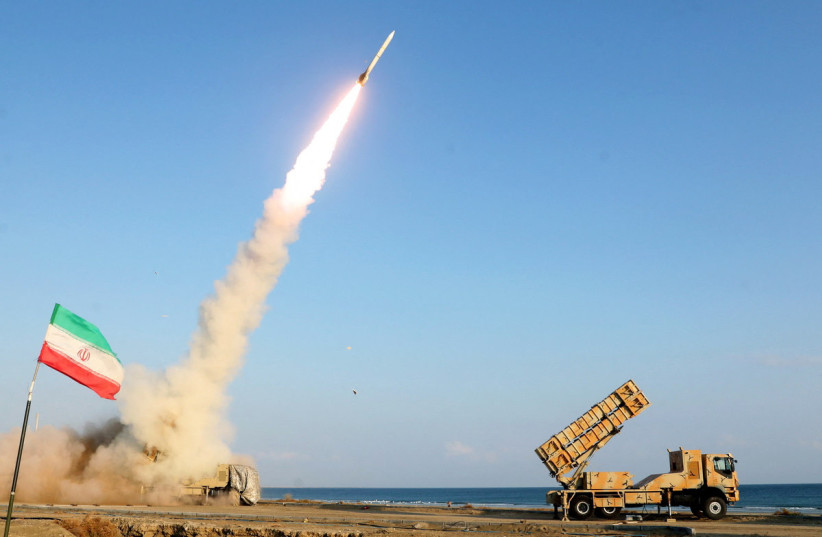
 A missile is launched during an annual drill in the coastal area of the Gulf of Oman and near the Strait of Hormuz, Iran (credit: REUTERS)A missile is launched during an annual drill in the coastal area of the Gulf of Oman and near the Strait of Hormuz, Iran (credit: REUTERS)

With those facts out there, we must ask: What matters at this point – from pieces of two IAEA leaked reports and information obtained by The Jerusalem Post from a source involved in negotiations with Iran, as well as other recent disclosures – and what does not?

It seems from the IAEA reports that the agency and the West are going to close or shelve their probe into how and why the Islamic Republic produced a small amount of 84% enriched uranium molecules in February.

This is significant in a negative way for Israel because Jerusalem briefly thought that the violation was so blatant and so close to the 90% weaponized level that it might finally rally the West, and possibly even Russia and China, to act more decisively to freeze and even rollback Tehran’s nuclear program.

Though the probe does not seem to be completely closed, the fact that it is being tabled means the West is still afraid to go into a full confrontation with the ayatollahs.

The Post understands that many Western countries believe that a referral to the UN Security Council to snap back global sanctions would fail.

They worry that in the current political climate where the East and West are divided over Russia’s invasion of Ukraine, that Moscow, Beijing, and others would refuse even a binding vote of the UN Security Council (Russia and China gave up their veto on this specific issue as part of the 2015 Iran nuclear deal.)

If so, the West would rather keep that “bullet” in the “chamber” as a threat to fire, since Tehran would not know for sure how everything would play out.

The possibility that the IAEA might shelve its probe into the undeclared Marivan/Abadeh nuclear site is also less important.

Iranian technicians work at a uranium processing site in Isfahan. (credit: REUTERS)Iranian technicians work at a uranium processing site in Isfahan. (credit: REUTERS)

No one expected that the probe by itself would lead to major new pressure on the ayatollahs or that shelving it would lead to the opposite – a return to the 2015 JCPOA deal.

What really matters with the IAEA these days is whether they keep some probes open, as that impacts whether there will be a return to the nuclear deal, and how much access it has to maintain surveillance on Iran’s nuclear program.

There is some good news in the report in Iran granting the IAEA some additional surveillance within the underground Fordow nuclear facility.

Many observers have worried that Tehran would use Fordow to sneak out to a nuclear weapon.But IAEA inspectors have been blind on a lot of what Iran has been doing in the nuclear realm in some areas for a year, and in others for much longer.

It is quite possible that the Islamic Republic had concealed critical elements of its nuclear program at other new sites.

Maybe the least important issue in the report is that Iran now has 23 times as much uranium as allowed by the JCPOA.

This is not really new and important because it has had enough uranium for a nuclear weapon at low enriched levels since early 2020 and at higher levels – possibly only four weeks away from a bomb – since late 2021.By mid-2022, Tehran had potentially enough enriched uranium to jump within a matter of months to four nuclear weapons.

Once all of these levels were breached: one weapon, multiple weapons – whether Iran has enough for five or a few more is not all that significant because it already has crossed certain thresholds.The main danger then becomes detecting whether Iran actually starts advancing “weapons group” activities to be able to detonate and deliver the enriched uranium – something which still gives the West and Israel more time to act as things currently stand.

There is no real information on this from the IAEA. Israeli defense officials said this past month that the weapons group was making advances, but nothing substantial enough to require the Jewish state to act quite yet.The most important issues remaining at this point are probably keeping an eye on whether Iran jumps to 90% weaponized uranium, the weapons’ group progress, and on Iran’s building of a new underground facility at Natanz even deeper than Fordow.