
New Defense Ministry website with over 20,000 files includes previously unseen intelligence assessments, diaries of SIGINT commander, eyewitness accounts of fall of Hermon outpost

A IDF Sho't Kal (Centurion) tank is seen driving in the northern Golan Heights on October 11, 1973, during a counterattack by the 7th Brigade or 179th Brigade during the Yom Kippur War. (Avraham Vered/Defense Ministry Archives)

A IDF Sho’t Kal (Centurion) tank is seen driving in the northern Golan Heights on October 11, 1973, during a counterattack by the 7th Brigade or 179th Brigade during the Yom Kippur War. (Avraham Vered/Defense Ministry Archives)

The Defense Ministry on Sunday launched a website hosting dozens of newly declassified documents, images, videos and other files from the 1973 Yom Kippur War, in honor of the conflict’s 50th anniversary later this year.

Among the documents being published for the first time were Military Intelligence assessments from the month prior to the conflict, later submitted to a commission that investigated the war; the diaries of Brig. Gen. Yoel Ben-Porat, head of the Israel Defense Forces’ signals intelligence unit, which described the intelligence failures in the leadup to the war; and eyewitness accounts of the fall of the Hermon outpost during the first day of the conflict.

In all, the website (Hebrew link) comprises 15,301 photographs, 6,085 documents, 215 videos, 40 audio recordings and 169 maps related to the Yom Kippur War, some of which have only recently been cleared for publication.

Sponsored by Sheba: The Stem Cell Revolution at Sheba Medical Center

Loaded: 57.45%

“The Yom Kippur War website was established in order to tell the story of the generation of the war, to commemorate the bravery of the fighters, and to be an official platform for passing down the legacy of the war to future generations,” the ministry said in a statement.

IDF’s final intel assessment hours before conflict

Excerpts provided by the ministry from the final IDF Military Intelligence assessment before the war, on October 6, 1973, at 9 a.m., showed how Israel was still unsure that Egypt and Syria would launch a surprise attack just hours later.

“It seems to us that Egypt and Syria are coordinating their steps… The armies of Egypt and Syria are essentially ready for war, the forces near the borders are of unprecedented strength. If a decision is made at a strategic level to start fighting, then they will be able to do so from the current preparation without the need for additional preparations… On the one hand, we assume that the strategic echelon in Egypt and Syria is aware of the lack of chance of success in war and the risks involved. On the other hand, we are witnessing broad military preparations and we also have news about trends [indicating the] start of a war in the immediate timeframe,” the now-declassified assessment read.

An Israeli military position in Ras Sedr, in the Sinai Peninsula, during a sandstorm or under bombing on October 6, 1973 during the Yom Kippur War. (Michael Tzarfati/Defense Ministry Archives)

A previously published assessment from one day earlier stated that “the likelihood that the Egyptians intend to renew fighting is low… The likelihood of an independent Syrian action (without the Egyptians) remains low.”

Many other IDF Military Intelligence assessments and documents, later presented to the Agranat Commission, were released by the Defense Ministry on the new website.

Mossad knew a week earlier: ‘War imminent’

An entry in Ben-Porat’s diary lamented that the Mossad spy agency knew a full week in advance that Egypt was planning to launch a surprise attack on Yom Kippur 1973, but did not pass the information on in an orderly and explicit way to prime minister Golda Meir’s office or other officials.
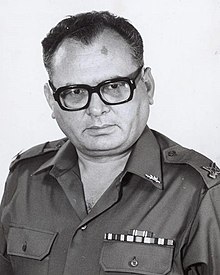
Yoel Ben-Porat (Wikipedia)

“Already on Friday at 2:30 [a.m.] (36 hours before the fighting), a telegram arrived at the Mossad encrypted with code words that were ambiguous, but two words from it were completely clear: war imminent,” the declassified diary entry read.

“Except for the three (the head of the Mossad, the office manager, and the head of Military Intelligence), no one heard about the information — not the prime minister, not the defense minister, not the chief of staff,” Ben-Porat, who headed the SIGINT (signals intelligence) unit, added.

Tales from the fall of the Hermon outpost

The Defense Ministry also published the eyewitness accounts of then-lieutenant Gadi Zidover, commander of the Hermon outpost in the Golan Heights, and sergeant. David Nahliel, a Golani soldier, as they managed to escape the post during the Syrian invasion on the first day of the war. Their accounts described the outpost’s lack of readiness for war and the battle in which many of the post’s soldiers were killed or captured. Zidover had retreated from the outpost with Nahliel and a number of other soldiers as it was being invaded.

“We heard shouting in Arabic and bullets [hitting] the doors. This is when the force began to panic… The people blocking the openings were barely carrying a single magazine, no belt, no grenades, and no weapons. After they would shoot a few rounds, and maybe hit some Syrians, they would be eliminated,” said Zidover.

A map showing the military situation on the Golan Heights front during the Yom Kippur War, on the afternoon of October 7, 1973. (Defense Ministry Archives)

“I had two magazines, the rest were without weapons and without ammunition. I had one grenade… I saw that there was no point in fighting… I started gathering people by shouting,” he said.

In Nahliel’s account, he was asked whether or not the outpost’s troops were told to be on alert. “We knew that there was an alert, but we certainly didn’t think about a war, maybe a day of fighting. It was not clear to us that there was a war,” the soldier said.

“On Saturday at [2 p.m.] there was a shelling of the outpost. I happened to be near the observation post together with the commander of the post, and the Golani platoon commander. The observation post took a direct hit and we all flew back,” Nahliel said.

“We opened fire on them. I saw that a Syrian guy was shooting at the anti-aircraft position… and the position was hit. Right as the [heavy machine gun operator] started shooting back, because he was a little bit visible, he took a burst of gunfire to the heart. He fell and shouted, ‘I’ve been hit.’ I and the platoon commander grabbed him and pulled him inside,” the soldier continued.

“All the men of the outpost were actually Air Force and Communications Corps. They had firearms, but they did not have ammunition for war. They did not know how to fight and were also afraid,” he added.
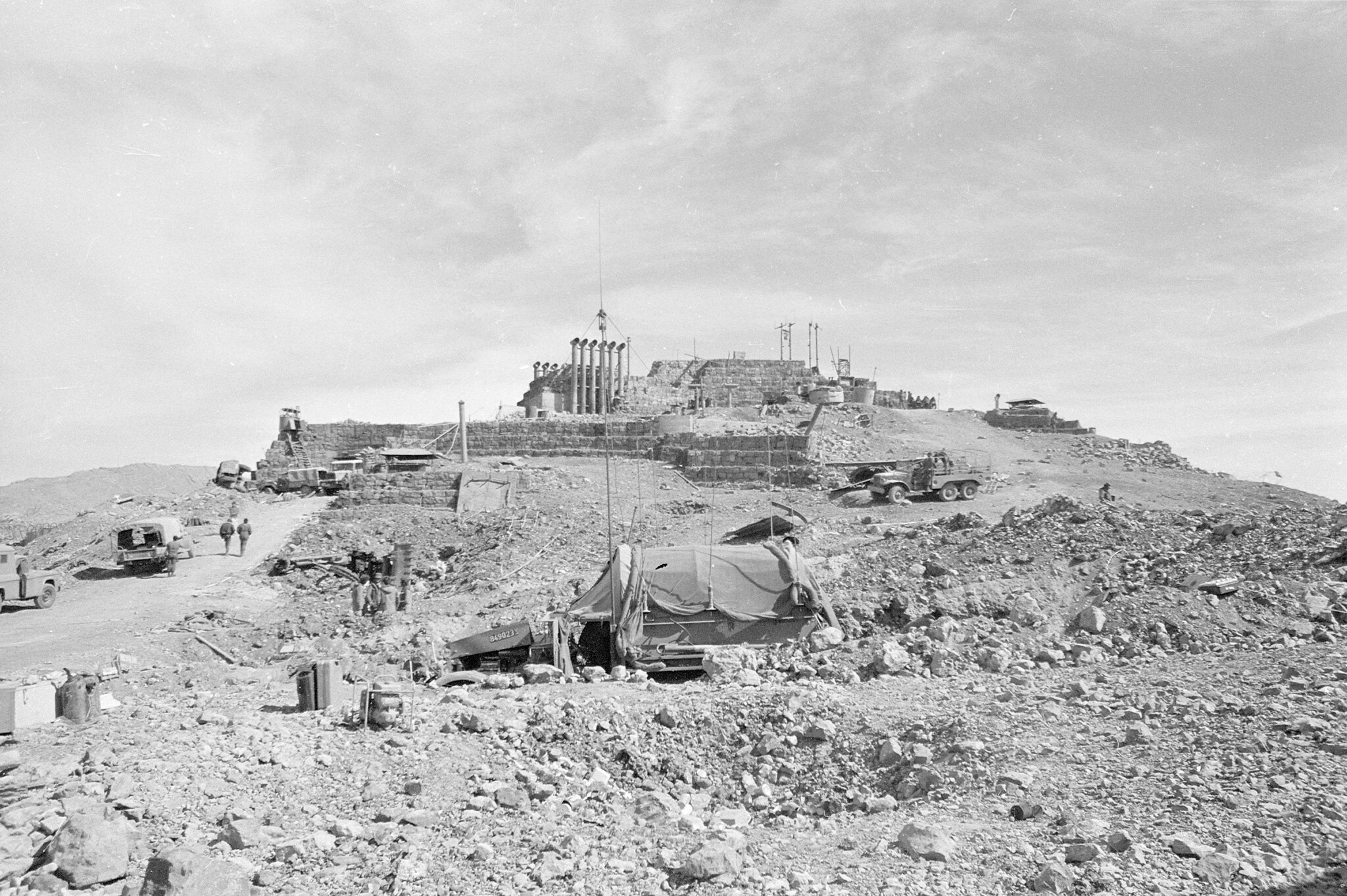
The IDF’s Hermon Outpost in the Golan Heights on October 20, 1973, during the Yom Kippur War. (Defense Ministry Archives)

The ministry said it would continue to update the site with new content on the war as they are declassified.

The 1973 war ended via a final ceasefire on October 25, with Israel retaining control of the Sinai Peninsula and Golan Heights, which it had conquered in the Six Day War.

Over 2,500 Israeli soldiers died and thousands more were injured in the fighting, along with thousands of Egyptian, Syrian, and Iraqi dead and wounded troops.
Nasrallah threatens war if Israel ‘takes a wrong step’

Israel is weak and we can hit all of it, Hezbollah leader claims in a speech marking Israel’s withdrawal from Lebanon in 2000.

By Batya Jerenberg, World Israel News

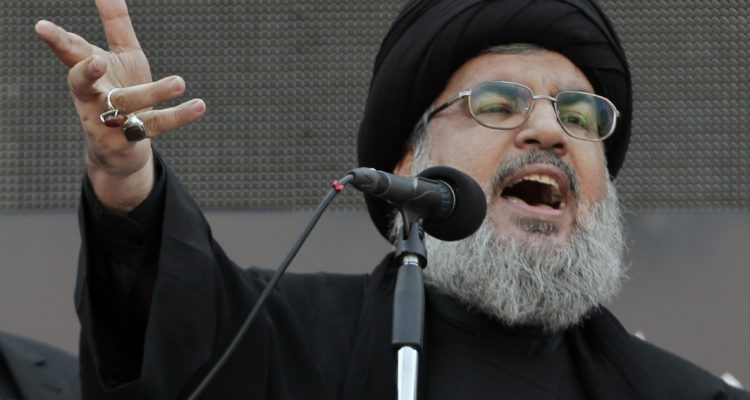
Hezbollah Secretary-General Hassan Nasrallah threatened Israel Thursday with a major war in a speech marking Israel’s withdrawal from Lebanon in 2000.

Speaking on what Hezbollah dubbed the “Day of Resistance,” the terror chief addressed the IDF, saying: “You are not the ones threatening war, it is we who do so, and any such war will include all of Israel’s borders.”

Nasrallah’s Iranian-backed organization has “hundreds of thousands of fighters,” he claimed, who would participate in the fight.

A “major war,” he added, could be the result of “any wrong action in Palestine, Syria or Iran.”

Israel “is facing an ideological retreat” and has been weakened, Nasrallah further claimed, while the Palestinians have grown stronger.

“After the Israeli withdrawal from Lebanon in 2000 and the withdrawal from Gaza, the concept of ‘Greater Israel’ no longer exists,” he said. “Today, it hides behind walls of fire and is unable to impose its terms in any negotiations with the Palestinians….. One of the most important transformations that have taken place is the deterrent power of the resistance forces. The Israelis failed to strengthen their own deterrent power, and realized that they will pay the price for every crime they commit.”

  ‘WE’LL TEACH ISRAEL A LESSON,’ GAZA TERROR GROUPS PLEDGE

The Jewish state’s major backer is also having trouble, which will directly affect Israel’s abilities as well, he noted.

“American hegemony no longer exists in the world, and the mentality in the Arab world has shifted, and this is what worries Israel,” Nasrallah maintained.

The longtime leader of Hezbollah was reacting in part to a speech IDF Intelligence head Maj.-Gen. Aharon Haliva gave Wednesday in which he described a “high potential for escalation in the region” but sent the warning that Israel is prepared and should not be trifled with.

“Unfortunately, Nasrallah is close to making a mistake that could degenerate the region into a major war. He is close to this mistake from Lebanon and Syria,” Haliva said at Reichman University’s annual Herzliya Conference.

He referred to a Hezbollah operative who had infiltrated from Lebanon in March and set off an explosive at Megiddo Junction, injuring an Israeli-Arab driver, which he noted was “not a one-time story” because Nasrallah thinks he can start up with Israel again.

“We need to be prepared for our enemies not to understand the message we are conveying. Make no mistake, we are ready to use force and will do everything possible and everything necessary to bring quiet,” Haliva said.

  CHILLING: HEZBOLLAH MILITARY DRILL SIMULATES ATTACK ON ISRAEL

While the intelligence chief did not denigrate Washington’s strength as Nasrallah did, calling it the “omnipotent power” and still “the global policeman” whose policy “shapes the entire world,” he did seem to imply that Israel’s “peerless ally” was currently dealing with many difficulties, including competition with China and internal ideological battles that are far from over.

This, in addition to “entire global processes,” including the current economic crisis, has led to “all the players” understanding “that it is impossible to just lean on one pillar no matter how good it is,” he said, “and therefore agreements are signed, alliances are formed and the State of Israel needs to examine in depth its position in the region in the face of these developments.”

Haliva then struck a positive note, saying, “Even today Israel is an asset country. It has technological, military, intelligence capabilities and a strong economy, and it is a powerful country that needs to take advantage of its assets. This requires a partnership with the US and an understanding of the tapestry that is developing and where it is right for


The United States has said the world faces the gravest nuclear danger since the 1962 Cuban Missile Crisis because of remarks by President Vladimir Putin during the Ukraine conflict.

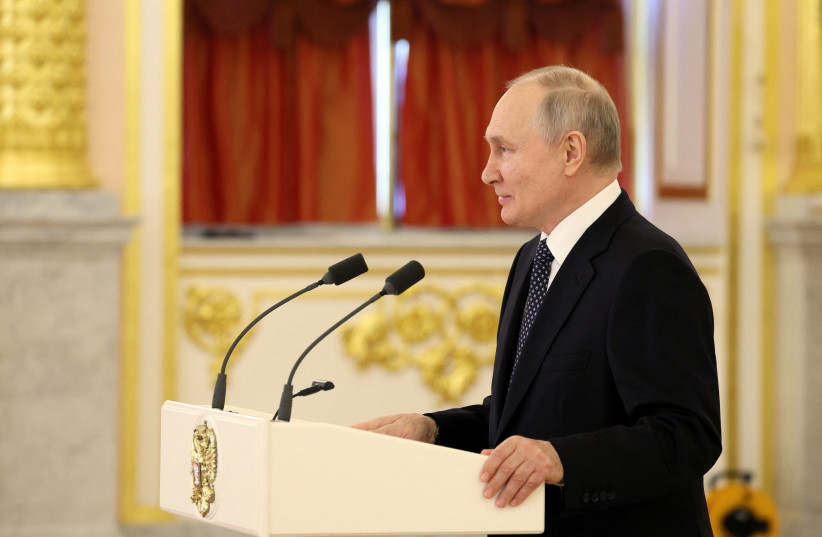
Russian President Vladimir Putin delivers a speech during a ceremony to receive diplomatic credentials from newly appointed foreign ambassadors at the Alexander Hall of the Grand Kremlin Palace in Moscow, Russia, April 5, 2023.  (photo credit: SPUTNIK/GAVRIIL GRIGOROV/KREMLIN VIA REUTERS)
Russian President Vladimir Putin delivers a speech during a ceremony to receive diplomatic credentials from newly appointed foreign ambassadors at the Alexander Hall of the Grand Kremlin Palace in Moscow, Russia, April 5, 2023.
(photo credit: SPUTNIK/GAVRIIL GRIGOROV/KREMLIN VIA REUTERS)

Russia on Saturday dismissed criticism from US President Joe Biden over Moscow’s plan to deploy tactical nuclear weapons in Belarus, saying Washington had for decades deployed just such nuclear weapons in Europe.

Russia said on Thursday it was pushing ahead with the first deployment of such weapons outside its borders since the 1991 fall of the Soviet Union and Belarusian President Alexander Lukashenko said the weapons were already on the move.

Biden said on Friday he had an “extremely negative” reaction to reports that Russia has moved ahead with a plan to deploy tactical nuclear weapons in Belarus. The US State Department denounced the Russian nuclear deployment plan.

“It is the sovereign right of Russia and Belarus to ensure their security by means we deem necessary amidst of a large-scale hybrid war unleashed by Washington against us,” Russia’s embassy in the United States said in a statement.

“The measures we undertake are fully consistent with our international legal obligations.”

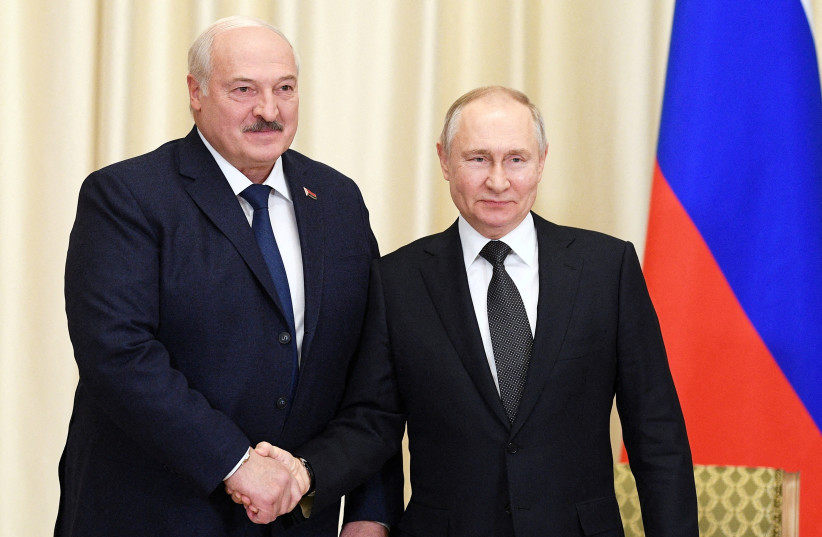
Russian President Vladimir Putin shakes hands with Belarusian President Alexander Lukashenko during a meeting at the Novo-Ogaryovo state residence outside Moscow, Russia, February 17, 2023. (credit: SPUTNIK/VLADIMIR ASTAPKOVICH/KREMLIN VIA REUTERS)Russian President Vladimir Putin shakes hands with Belarusian President Alexander Lukashenko during a meeting at the Novo-Ogaryovo state residence outside Moscow, Russia, February 17, 2023. (credit: SPUTNIK/VLADIMIR ASTAPKOVICH/KREMLIN VIA REUTERS)

Russia portrays the issue as a fight for survival

The United States has said the world faces the gravest nuclear danger since the 1962 Cuban Missile Crisis because of remarks by President Vladimir Putin during the Ukraine conflict, but Moscow says its position has been misinterpreted.

Putin, who has cast the Ukraine war as a battle for the survival of Russia against an aggressive West, has repeatedly warned that Russia, which has more nuclear weapons than any other country, will use all means to defend itself.

Tactical nuclear weapons are used for tactical gains on the battlefield, and are usually smaller in yield than the strategic nuclear weapons designed to destroy US, European or Russian cities.

The Russian Embassy called the US criticism of Moscow’s planned deployment hypocritical, saying that “before blaming others, Washington could use some introspection.”

“The United States has been for decades maintaining a large arsenal of its nuclear weapons in Europe. Together with its NATO allies it participates in nuclear sharing arrangements and trains for scenarios of nuclear weapons use against our country.”

The United States has deployed nuclear weapons in Western Europe since US President Dwight D Eisenhower authorized their deployment in the Cold War as a counter to the perceived threat from the Soviet Union. The first US nuclear weapons in Europe were deployed in Britain in 1954.

Much of the detail about the current US deployment is classified, though the Federation of American Scientists says that the US has 100 B61 tactical nuclear weapons deployed in Europe – in Italy, Germany, Turkey, Belgium and the Netherlands.
