Iranian president describes 2-day trip to Syria, the first by Tehran’s head of state since 2010, as a ‘turning point’ in bilateral relations

Syria's President Bashar al-Assad, right, shakes hands with his Iranian counterpart Ebrahim Raisi in Damascus on May 3, 2023. (LOUAI BESHARA / AFP)

Syria’s President Bashar al-Assad, right, shakes hands with his Iranian counterpart Ebrahim Raisi in Damascus on May 3, 2023. (LOUAI BESHARA / AFP)

Iran and Syria agreed to boost ties and develop economic relations, with a focus on reconstruction, as the Islamic Republic’s President Ebrahim Raisi on Friday concluded a landmark visit to Damascus.

Tehran has been a key ally to Damascus throughout Syria’s long-running civil war, offering vital economic and military assistance that has helped the Syrian government claw back most of the territory it lost at the start of the conflict.

During late-night talks Thursday, Raisi and his Syrian counterpart Bashar Assad discussed “ways to develop and strengthen bilateral relations” and “emphasized existing cooperation in the field of reconstruction”, according to a joint statement released Friday.

Into the Land: A Tale of Two Cities

Loaded: 9.07%

Raisi concluded his two-day trip early Friday and had described the visit, the first by an Iranian president to Syria since 2010, as a “turning point” in bilateral relations.

The visit positions Tehran in a leading role in Syria’s reconstruction, with Assad seeking to focus on reviving his country’s devastated economy and infrastructure, despite Western sanctions on both countries.

The pair also expressed a “willingness to take any action to develop commercial-economic relations”.

On Thursday, Raisi said Iran and Syria had signed 15 “cooperation documents” that would allow “both countries to open a new chapter in economic relations”.

He also praised Syria for “achieving victory” in the country’s war and invited Assad to officially visit Tehran.

The Syrian conflict was sparked by the repression of peaceful protesters in 2011 and has killed more than 500,000 people and displaced millions.

Large parts of northern Syria remain outside government control.

Diplomatic shake-up

Raisi’s visit comes weeks after Iran and arch-rival Saudi Arabia agreed to restore ties, prompting regional capitals to re-engage with the internationally isolated Damascus and Tehran governments.

“Iran and Saudi Arabia are two great nations,” Raisi said during an interview broadcast on Syrian television on Friday evening, according to an official Arabic translation provided by state news agency SANA.

The restoration of ties between the countries would change and “bring order” to the region, Raisi said.

“We refuse to consider Saudi Arabia as an enemy or be hostile to it.”

On Sunday, Arab League foreign ministers will hold an emergency meeting, discussing the conflict in Sudan and Syria’s readmission to the bloc, after it was suspended in 2011 for its brutal crackdown on protesters.

Raisi also said during his interview that Iran was playing a mediating role in Russian-facilitated talks aiming to normalize ties between Syria and Turkey.

Moscow has encouraged renewed diplomatic relations between its Syrian ally and Ankara, which has supported rebels and the opposition in a bid to remove Assad from power.

A meeting of Syrian, Iranian, Russian, and Turkish foreign ministers is scheduled in the next few days in Moscow.
In the coming years we expect to see more partnerships with Greece and Cyprus.

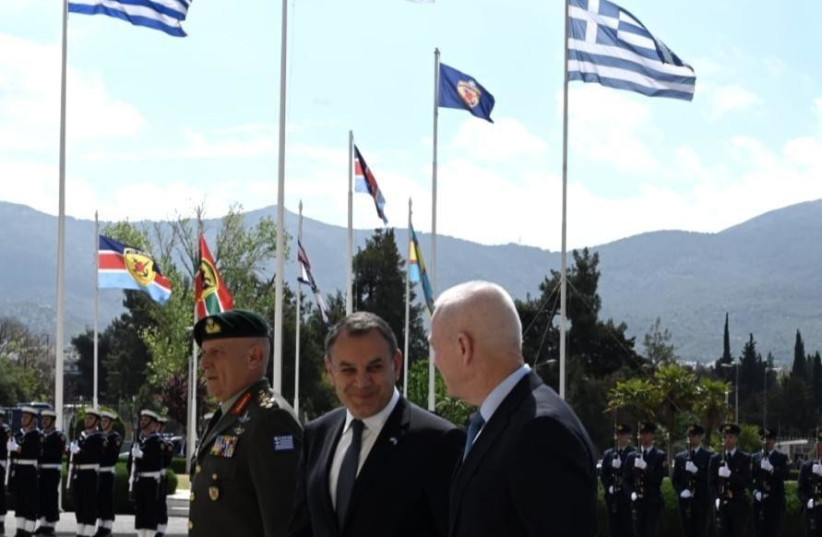
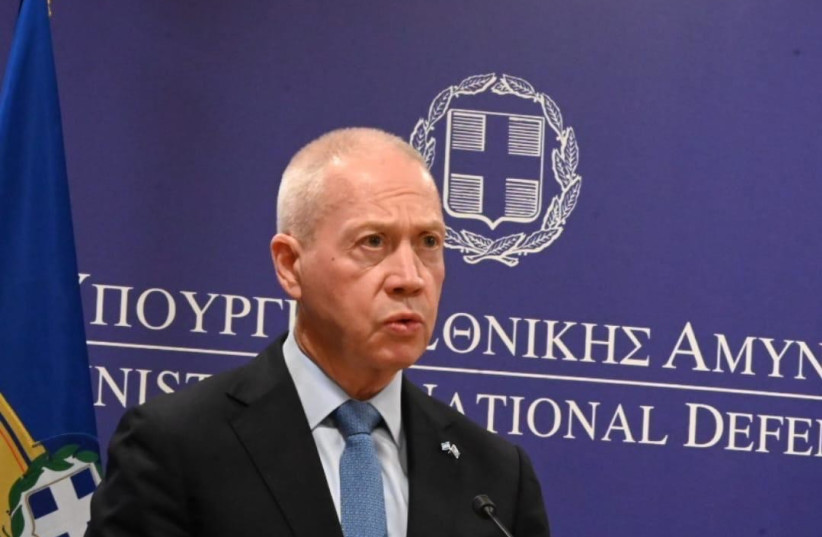
 Defense Minister Yoav Gallant meets with Greek defense officials, May 2023 (photo credit: ARIEL HERMONI/DEFENSE MINISTRY)
Defense Minister Yoav Gallant meets with Greek defense officials, May 2023
(photo credit: ARIEL HERMONI/DEFENSE MINISTRY)

Defense Minister Yoav Gallant traveled to Athens on Thursday as part of an important trip to Greece and Cyprus.

Israel, Greece and Cyprus have become key strategic partners in recent years, cooperating closely on such areas as trade, energy, and defense and security. This new partnership is also part of a broader series of relationships in which Greece and Cyprus work with members of NATO and also with other countries such as Egypt, the UAE and India – which are close partners of Israel, as well. Gallant’s trip to these two countries is thus important for Israel’s alliances throughout the region and the world.

Gallant began his trip in Athens, where he met his Greek counterpart, Defense Minister Nikolaos Panagiotopoulos, at the Hellenic Ministry of Defense. Gallant praised the bilateral ties between Israel and Greece and discussed the intelligence cooperation that had prevented a terrorist attack in Greece. This is an important reminder of how Iran’s Islamic Revolutionary Guard Corps has sought to extend its threats to Athens.

Gallant noted that the recent arrest in Greece of two terrorists sent by Iran is significant. “This is not the only attack that was prevented. In fact, Iran has launched a global terror campaign, under the direct command of its leader,” he said. He also raised concerns in Greece about Iran’s nuclear weapons program, noting that Tehran has enriched uranium to 20% and 60% for five nuclear bombs.

Iran poses a threat not only to Israel, but also to other countries in the region. The fact that the Islamic Republic has threatened Greece, by trying to recruit or infiltrate terrorists into it, is a clear example of that. Tehran has also targeted Israelis in Bulgaria, Greece’s neighbor to the north. Iran’s actions show it does not respect the borders of countries and that it is willing to violate basic principles of international law to achieve its nefarious designs.

 Defense Minister Yoav Gallant meets with Greek defense officials, May 2023 (credit: ARIEL HERMONI/DEFENSE MINISTRY)Defense Minister Yoav Gallant meets with Greek defense officials, May 2023 (credit: ARIEL HERMONI/DEFENSE MINISTRY)

Gallant’s trip helps underscore how important it is for Israeli ministers and leaders to travel and meet their colleagues abroad. He highlighted industrial projects and intelligence sharing. The defense minister also mentioned the flight school at Kalamata Air Base, which is part of a program by Israel’s Elbit Systems to offer an important training facility for Greek pilots.

Israeli defense companies have done important work with their Greek colleagues in recent years. Rafael, for instance, recently concluded a deal to sell its Spike anti-tank missiles to Greece, which is also acquiring drones as part of that deal. Athens also signed a deal several years ago to lease IAI drones. Taken together, the overall trend is toward an unprecedented level of cooperation between Jerusalem and Athens.

Israel working to expand strategic ties with neighbors

Gallant praised the close relationship between Greece and Israel as an anchor of stability in our region. The trip to Greece, along with Foreign Minister Eli Cohen’s recent trip to Azerbaijan and Turkmenistan, are part of Israel’s efforts to significantly expand its strategic ties with countries in our vicinity.

They also reflect some of the changing dynamics in our region. Energy security in the Eastern Mediterranean, for instance, is an important issue these days because of the gas exploration off the coast and the maritime deal with Cyprus. In addition, recent joint drills with US Central Command, as well as other naval exercises undertaken by Israel, help cement our naval partnerships across the swath of water between us and Cyprus and Greece.

In the coming years, we expect to see more partnerships with Greece and Cyprus, which will include more ministerial visits as well as trade and defense deals. It is important that we invest in these agreements while working toward broadening our ties with other partners in the Mediterranean, such as France, Italy, Egypt and Turkey.

While there is an opportunity now for greater efforts toward peace and security in our region, there are also actors that would like to upset that trend, particularly Iran. That is why Gallant’s mention of Iranian threats during his visit was so important. Our partners should understand that Iran is not only a threat to Israel but also to Europe and the wider region. Gallant’s trip signals to our friends in the Mediterranean that we value their partnership.


“This is an ideological force that views us, Israel, as a small satan, and views you as the great satan.”

By World Israel News Staff

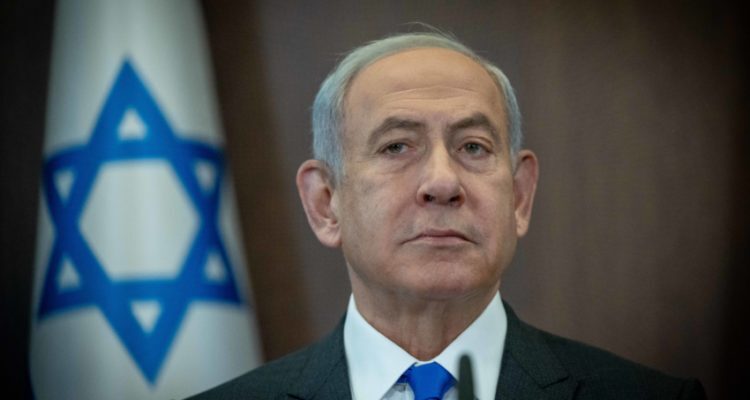
Prime Minister Benjamin Netanyahu on Thursday told a visiting group of bipartisan members of Congress that Iran could threaten “every city in the United States” if it gets a nuclear weapon.

“Iran is 50 North Koreas; it is not merely a neighborhood bully like the dynasty that rules North Korea,” he said.

“This is an ideological force that views us, Israel, as a small satan, and views you as the great satan — and to have Iran being able to threaten every city in the United States with nuclear blackmail is a changing of history.”

Netanyahu also addressed an IDF operation earlier that eliminated the terrorists behind the murder of Lucy, Rina and Maia Dee over Passover.

“There is a message here that needs to be understood: Over the past few months, we have eliminated 110 murderers,” he said.

“Our message to the murderers, to those who try to harm us or have harmed us, is: We will reach you,” he adds. “You can hide, you can try to hide — but it won’t help. The long hand of the State of Israel will reach you.”

gress members: Iran is like ’50 North Koreas’ threatening ‘every US state’