The IDF dropped leaflets in the area warning the Syrian Army against cooperating with Iran and Hezbollah.

The Syrian area of Quneitra is seen in the background as an out-of-commission Israeli tank parks on a hill, near the ceasefire line between Israel and Syria, in the Golan Heights. (photo credit: BAZ RATNER/REUTERS)
The Syrian area of Quneitra is seen in the background as an out-of-commission Israeli tank parks on a hill, near the ceasefire line between Israel and Syria, in the Golan Heights.
(photo credit: BAZ RATNER/REUTERS)

An Israeli artillery strike targeted a site belonging to the Hezbollah terrorist movement near Quneitra in southwest Syria early Monday morning, according to Syrian reports.


According to local reporter, Nour Abo Hassan, Israeli artillery targeted the Qurs al-Nafl site near the Syrian-Israeli border.

An explosion could be heard in video reportedly from the area. The pro-Assad al-Watan newspaper reported that 20 shells were fired at the Qurs al-Nafl site.

The Lebanese Al-Mayadeen TV reported that no injuries were reported in the attack.

Israeli soldiers chat as they stand near the Quneitra crossing in the Golan Heights on the border line between Israel and Syria, October 15, 2018 (credit: AMIR COHEN/REUTERS)Israeli soldiers chat as they stand near the Quneitra crossing in the Golan Heights on the border line between Israel and Syria, October 15, 2018 (credit: AMIR COHEN/REUTERS)

Syrian and Israeli officials have not confirmed the reports.

IDF leaflets warn Syrian Army against working with Iran

Later in the morning, leaflets were reportedly dropped by the IDF in the area warning the Syrian Army against cooperating with Iran and Hezbollah. The leaflets stressed that such cooperation “brought more harm than benefit.”


The leaflet included a photo of Samer al-Dana, the commander of the 41st Brigade of the Fourth Division of the Syrian Army, and an individual named Tariq Maher who it identified as the head of Hezbollah intelligence in Syria.

The Qurs al-Nafl site has been targeted repeatedly by alleged Israeli strikes in recent years. Last May, an alleged Israeli strike targeted the site. Additional strikes have targeted other sites in the area.

The strike comes just a few days after Defense Minister Yoav Gallant said that Israel had “doubled” the pace of strikes in Syria in the first quarter of 2023 in order to prevent Iranian weapons deliveries, according to Walla. “We are systematically harming Iranian abilities and assets in the area. We will not allow Iran to set up a Syrian army that will turn the Golan Heights into Lebanon.”

The strike also comes two weeks after the IDF conducted airstrikes in the Damascus area and fired artillery shells and conducted UAV strikes against rocket launchers in Syria after six rockets were fired in two waves toward the Golan Heights.


i24NEWSlatest revision 

A military drone launched from an Iranian navy submarine in the Indian Ocean
IRANIAN ARMY OFFICE / AFPA military drone launched from an Iranian navy submarine in the Indian Ocean

The IDF says that they are preparing for a deteriorating naval situation

The Israeli military (IDF) said on Sunday that they are preparing for a deteriorating naval situation, which according to evaluations, includes the Iranians in the Red Sea.

They also pointed out that Hezbollah is in possession of dozens of surface-to-sea missiles that can target ships, oil rigs, and sensitive facilities along the coast.

The Lebanese terrorist organization has acquired several unmanned underwater vessels, as well as unmanned aerial vehicles (UAVs), and precision missiles. Thus, the IDF has warned about the wide-ranging threats to the State of Israel.

Direct and indirect threats have expanded to include Iraq, Yemen, Syria, Lebanon and Gaza, as proxies of Iran. Above all, the Ayatollah-regime has been increasing their viable threats against the Jewish democracy.

One danger is civilian-Iranian ships that have been converted for military function, operating in the Red Sea, outfitted with surface-to-sea missiles, surface-to-air missiles, and UAVs.

Welcome back. Thanks for staying with us now to news just in

Current Time 0:00
Duration 0:47
Loaded: 21.04%

The Israeli navy is already operating missions against Iran, Yemen, and beyond. The threats are not only against Israel’s interests, but international maritime trade routes.

Alongside the acquisition of additional submarines and ships, the IDF’s navy has accelerated the adoption of artificial intelligence. In addition, the Iron Dome will be established at sea.


Analysis / Will Israel Share Iran Strike Plans With US?

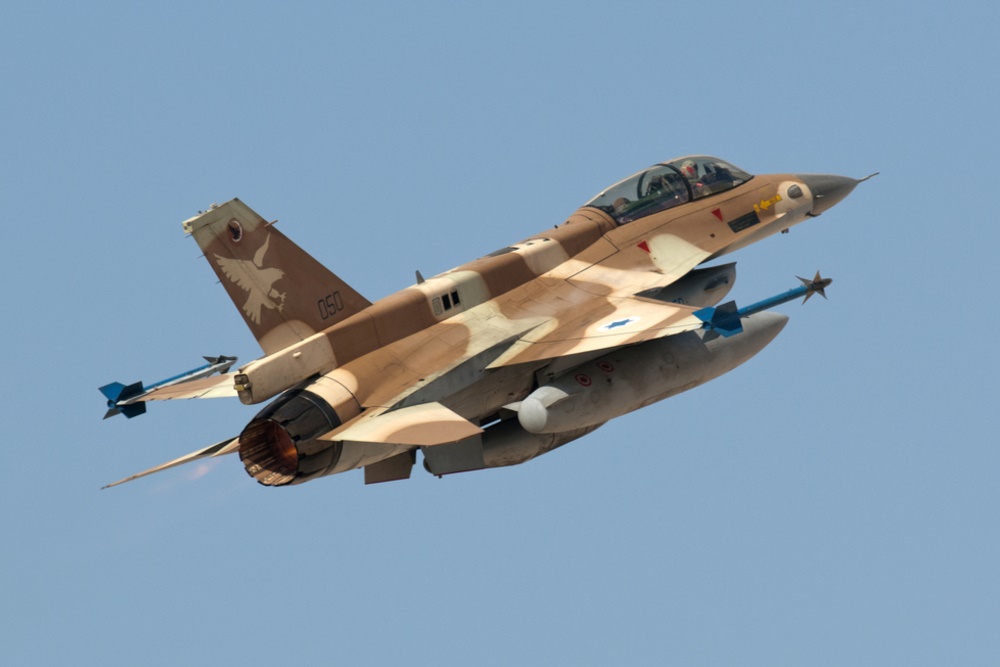
Israeli fighter jet (Archive: Peter R. Foster IDMA/Shutterstock.com)

Israel’s leaders would love to get an American green light to attack Iran’s nuclear project with US support. But under some circumstances, Netanyahu’s government could decide to strike on its own, without informing the United States of every detail.

While Israel closely coordinates military moves with America, Jerusalem does not share everything. Israeli leaders are also known for taking action without US approval, most famously in the bombing of Iraq’s nuclear reactor in 1981.

Recently leaked Pentagon documents revealed that the CIA is unaware of Israel’s plans and intentions for the near future. The Americans invest large resources in monitoring Israeli moves, but the Israelis are good at keeping some secrets.

The leaked documents also revealed that the Israel held a large Iran strike drill in February without publicizing it, Ynet reported. The Air Force carried out the exercise independently, without US involvement.

It is true that Israel and the US have extensive military ties, and that Israel’s inclusion in CENTCOM has created more opportunities to cooperate. Notably, the IDF and US Military now regularly engage in joint exercises, share intelligence, and work together on a range of security issues.

But while the US-Israel defense relationship is strong and intimate, Israel still keeps some sensitive information to itself. There are areas of Israeli military and intel operations that are highly classified and not shared with US partners.

Moreover, while Israel and America have many joint interests, their views and priorities on some key issues diverge. An ultimate attack on Iran’s nuclear sites could be one of those issues.

Israel Moves Closer to Strike

Meanwhile, Israel is moving closer to full readiness for a strike on Iran’s nuclear program, a senior officer says. The Israeli Air Force does not yet have 100% of what it needs for a fully effective attack but can already hurt the Iranians badly, Brigadier General Gilad Keinan told Walla News.

Keinan is the commander of Nevatim, the most important airbase for Iran strike operations. The base brings together multiple squadrons and capabilities that are vital for an assault on Tehran’s nuclear sites.

Among other things, Nevatim hosts a unit that specializes in converting areas deep in enemy territory into landing strips. This enables Israeli aircraft to land anywhere in the Middle East and beyond, the senior officer said.

These and other skills are crucial for long-distance missions in Iran and other locations far beyond Israel’s borders.

Israel has superpower expertise when it comes to refueling and long-range flights, Keinan said. He noted that in order to attend the recent Red Flag exercise with the US Air Force, Israeli jets flew distances that are much longer than the route to Iran.

Overall, the Israelis no doubt update the Americans about the progress of strike preparation and planning. However, the details of Israel’s precise strategy and timeline could remain a closely guarded secret.