Analysis: How will Israel confront Iran’s multi-front assault?

Israel must fight the right way and time to respond to the Resistance Axis’ “unification of fronts” strategy.

By Yoni Ben Menachem, JNS

Escalating terrorist and rocket attacks against Israel during Passover are only the first stages in the war of attrition being waged by the “Axis of Resistance” led by Iran.

Tehran’s “uniting the fronts” strategy was devised by the late Gen. Qassem Soleimani, former commander of the Islamic Revolutionary Guard Corps’ Quds Force. The current round of fighting is only the first stage in Iran’s phased plan to destroy Israel.

The Axis of Resistance estimates that Israel’s judicial reform debate and its recent crises in relations with the United States have weakened the Jewish state. They believe that the Israel Defense Forces cannot fight simultaneously on several fronts while dealing with tens of thousands of rockets, precision missiles and drones launched across several borders, accompanied by a wave of terror in the West Bank.

Since the 2006 Second Lebanon War, Hezbollah’s power has grown exponentially; today, it has an estimated arsenal of 150,000 rockets and precision missiles. Moreover, Hezbollah Secretary General Hassan Nasrallah claims he is not afraid of a military confrontation with Israel (while continuing to operate from a bunker deep under Beirut).

Following the pummeling of Hamas in the 2021 Gaza war, Iran, Hezbollah and Hamas established Hamas bases in Lebanon, recruiting fighters from refugee camps north of Israel. The IED bomb explosion at Israel’s Megiddo Junction on March 13, 2023, was believed to have been rigged by a Hamas operative who crossed into the country from Lebanon.

  JUDICIAL REFORM PROTESTS THREATEN TO UNDERMINE IDF, FORMER COMMANDERS SAY

Recent disturbances inside Jerusalem’s Al-Aqsa Mosque were also planned and provoked by Hamas. As expected, Israeli police dispersed rioters by force, and the stark images of the clashes were quickly distributed on Hamas social media and beyond. The social media posts triggered outrage and a call for revenge across the Muslim world. The Temple Mount violence also sought to ignite Israel’s Arab sector to riot as it did in May 2021 during the “Guardians of the Walls” military operation against Hamas in Gaza.

The overall goal of the Axis of Resistance is to gradually weaken the IDF, tarnish Israel’s image as a democracy, erase the IDF’s reputation as the strongest army in the Middle East, and erode the morale of the Israeli public. Iran’s strategic vision is to trigger a significant conflict liberating all of “Palestine” from Israel, “from the river to the sea”—which the regime sees as possible.

Iran is in no hurry; it believes the battle is long. It believes that the first stage in the disintegration of Israel has begun, the Zionist project has begun to collapse and that the pressure on Israel should be increased gradually.

“We have said that [Israel] will not see the next 25 years, but it seems that they are in a hurry and want to leave quickly,” Khamenei said on April 4, 2023, commenting on the country’s internal political crisis. “This entity [Israel], since its inception, has never faced such terrible problems as it has today, and it is now suffering from political instability, and within four years, it has changed four prime ministers, and party alliances are disintegrating before they are formed,” he added.

  WATCH: HOW DID A TERRORIST CROSS FROM LEBANON INTO ISRAEL, PLANT A BOMB AND RETURN HOME?

Nasrallah has scheduled a speech ahead of Jerusalem Day, which falls this year on May 19, in which he is to address the recent events on the Temple Mount, Gaza and the Lebanese border. His deputy, Sheikh Naim Qassem, foreshadowed the message on his Twitter account on April 7:

“Zionist leaders’ arrogance was threatening; deterrence is active. The Palestinian Jihad fighters are in the field, and the entire axis of resistance is vigilant. The defeats of the Zionist enemy are accumulating, and victory will come.”

Iran estimates that Israel is at one of its lowest points since its establishment, while Iran’s strength waxes. The Islamic Republic is close to obtaining nuclear weapons. It has joined the Russian-Chinese axis, while the United States is being pushed out of the Middle East. It has improved its relations with Saudi Arabia and will soon draw closer to more countries in the Gulf.

In Iran’s estimation, the balance of power in the Middle East has tilted in its favor. Israel’s military attacks on Iran and Hezbollah in Syria cannot defeat them. The Palestinians, Iraq, Yemen, Syria and Lebanon have a common interest in uniting with Iran against Israel.

The Israeli Response

Senior political officials in Jerusalem say that the Israeli military response to the rocket attacks from Gaza and southern Lebanon was careful and measured so as to not lead to an all-out multi-front war. Israel does not seek such a war at the current time.

  BEN-GVIR DROPS IDF IMMUNITY LAW FOR ANTI-EXTORTION LEGISLATION: REPORT

The Resistance Axis’ unification of fronts is dangerous for Israel, and it needs to find the right way and time to deal with it. In the most recent fighting, Israel lost the initiative and the ability to surprise. It had to respond to the enemies’ aggression in a way that would not lead to further escalation.

The primary consideration of the political echelon was to quietly pass the current period until after Passover, Ramadan and Israel Independence Day celebrations. Israel’s leaders will avoid being dragged by the provocations of Hamas and Hezbollah.

According to a senior security official, the Axis of Resistance is utterly wrong in its assessment of the situation regarding Israel’s national strength. It is Lebanon that is in danger of disintegration, not Israel, the official said. Despite Hezbollah’s large arsenal of weapons, a strong Israeli strike against Hezbollah and Lebanon’s civilian infrastructure will lead to its collapse.

Israel is now preparing for a military attack on Iran’s nuclear facilities, and will not allow it to obtain nuclear weapons. Israel has the power to achieve this goal.

The last word has not yet been said, and Israel is now reorganizing to thwart Iran’s phased plan.

Yoni Ben Menachem, a veteran Arab affairs and diplomatic commentator for Israeli radio and television, is a senior Middle East analyst at the Jerusalem Center for Public Affairs. He served as Director General and Chief Editor of the Israel Broadcasting Authority.

Israel is closer to war than calm, IDF intel warns government

Security tensions will not disappear at the end of Ramadan and an unusual response against terror organizations should be held off, intel suggests.

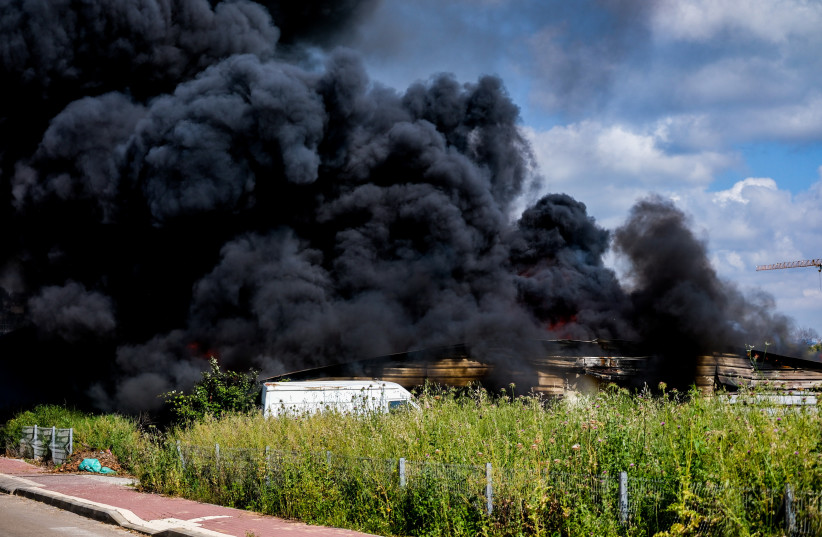
 Firefighters try to extinguish a fire caused after a rocket fired from Lebanon hit near the Israeli town of Shlomi, April 6, 2023 (photo credit: FLASH90/FADI AMUN)
Firefighters try to extinguish a fire caused after a rocket fired from Lebanon hit near the Israeli town of Shlomi, April 6, 2023
(photo credit: FLASH90/FADI AMUN)

The IDF’s Military Intelligence Directorate warned the political echelon in recent days that war is closer than calm, according to information Walla! received on Tuesday.

According to intel estimates, security tensions will not disappear after the end of the month of Ramadan, and the security trend could lead to war.

According to the same estimates, an unusual response against Hamas, Hezbollah and Iran’s affiliates in Syria should be held off to cool down the explosive religious tension that has developed around the Temple Mount.

Al-Aqsa tensions increase online incitement

The intelligence division’s data also shows that the tensions around al-Aqsa Mosque capture the various arenas, and increase the effect of incitement against Israel on social networks.

Additionally, Israel’s enemies recognized the United States’ withdrawal from the Middle East, which included removing advanced aircraft from the region and replacing them with less advanced aircraft.

 The Military Intelligence Directorate's symbol. (credit: Wikimedia Commons)The Military Intelligence Directorate’s symbol. (credit: Wikimedia Commons)

This change affects Israeli deterrence, alongside the growing American preoccupation with China and Russia.

Also, the intelligence estimates that Iran’s Supreme Leader Ali Khamenei decided a year ago to respond to Israel’s actions against the regime in Tehran.

According to the estimates, the Iranian leader demands a response to the assassinations and attacks attributed to Israel, and therefore the Iranians are making an effort to move the terrorist activities into Israel and not stay on the borders.

At this stage, according to the same estimates, the Iranians are not succeeding in their mission, but continue to apply pressure from Iraq, Syria, Lebanon, Gaza and the West Bank.

Escalation during Passover

Passover began last week with a security escalation in several arenas.

Even before the Seder night, rockets were fired from the Gaza Strip at the Israeli settlements near the strip, while a day later, barrages from the Lebanese territory against the settlements of Western Galilee joined them.

A new arena was opened earlier this week when several rockets were also fired from Syria toward the southern Golan Heights.

At the same time, on Friday, two terrorist attacks occurred – in the Jordan Valley, where a mother and her two daughters were murdered, and in Tel Aviv, where a tourist was murdered.


The confirmation that Iran did supply Syria with weapons and military items after the earthquake shows how cynical and dangerous Iran has become.

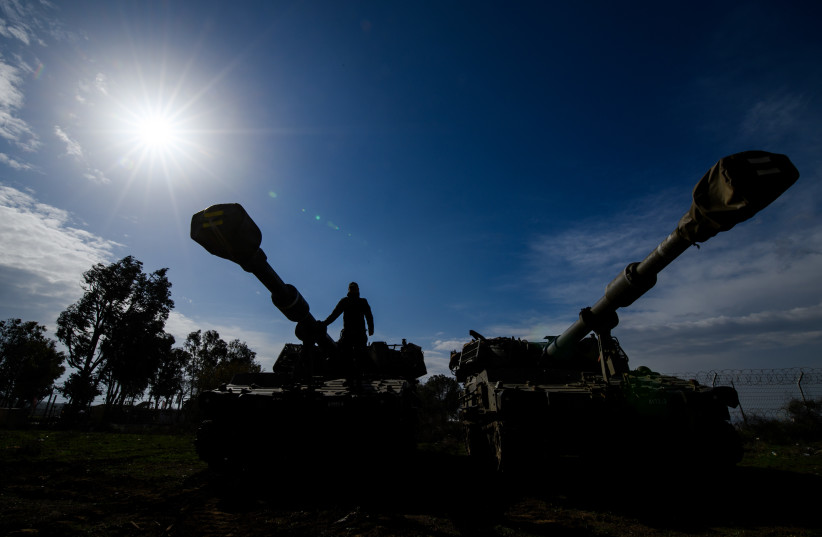
 IDF (Israel Defense Force) Artillery Corps near the border with Syria, in the Golan Heights, January 2, 2023.  (photo credit: AYAL MARGOLIN/FLASH90)
IDF (Israel Defense Force) Artillery Corps near the border with Syria, in the Golan Heights, January 2, 2023.
(photo credit: AYAL MARGOLIN/FLASH90)

A new report says that Iran used the cover of earthquake aid to move weapons and military equipment to Syria. The Reuters reports said that the report is based on what “nine Syrian, Iranian, Israeli and Western sources said.”

The fact that Iran was likely using the cover of earthquake aid has been suspected for three months since the February 6 earthquakes in Turkey that also damaged parts of northwest Syria.

Previous reports in the Jerusalem Post noted that Iran and Hezbollah were rushing to claim they were giving aid to Syria after the earthquake. Iran used a Qeshm Fars Air 747 to move what it claimed was aid to Damascus. Flights like this can easily conceal military equipment. In mid-February, we also speculated that Iran was taking advantage of the earthquake to smuggle aid and on February 9 a report noted, based on an interview in Saudi Arabia’s Elaph newspaper, that Israel would strike any weapons Iran sends to Syria under this pretext.

The confirmation that Iran did supply Syria with weapons and military items after the earthquake shows how cynical and dangerous Iran has become. While other countries sought to help victims, Iran’s goal was not to help Syrians, but to use Syrians and endanger them further by moving weapons.

The supplies included radar batteries and spare parts required for a planned upgrade of Syria’s Iran-provided air defense system in its civil war, said sources, two regional sources and a Western intelligence source said.

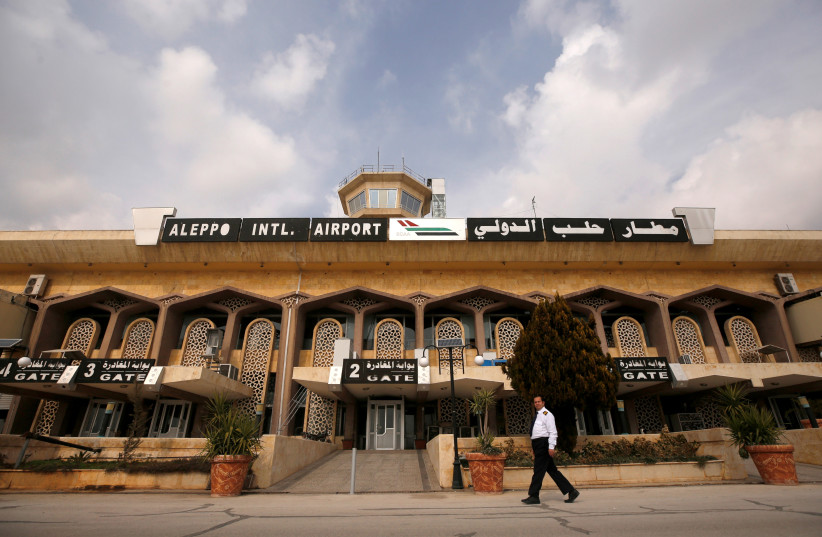
A man walks at Aleppo international airport after it was reopened for the first time in years, Syria, February 19, 2020. (credit: REUTERS/OMAR SANADIKI)A man walks at Aleppo international airport after it was reopened for the first time in years, Syria, February 19, 2020. (credit: REUTERS/OMAR SANADIKI)

Iran moves weapons through airport affected by quakes

Iran purposely moved the aid via Aleppo International Airport. This is a new method of Iran, which previously would send munitions via Damascus, or to T-4 near Palmyra, or via other methods such as routing them through Iraq and then to Albukamal.

Aleppo airport is near areas affected by the earthquake. This is one reason moved the equipment there. Another reason is likely that it thought the flights would not appear suspicious, whereas had it sent flights there prior to the earthquake there would be a lot of focus on why Iran was flying to Aleppo. Indeed, Aleppo is near the border with Turkey and is near areas that Ankara occupies in northern Syria. It is also almost a three hour drive from Aleppo to the Lebanese border. Iran didn’t choose an airbase closer to Lebanon. The Al-Dab’a airbase was hit by an airstrike recently. Al-Dab’a is near Qusayr in Syria, and both are near the Lebanese border.

According to the report at Reuters, the shipments may have ended up with the “Syrian division of the Quds Force, the foreign espionage and paramilitary arm of Iran’s Revolutionary Guards, led by Hassan Mehdoui. Ground transportation was handled by the Quds Force’s Transport Unit 190 led by Bahanem Shahariri, he said. Reuters was unable to reach Mehdoui and Shahariri for comment. The Revolutionary Guards declined comment.”

The report notes that “Aleppo’s runway was hit by Israel just hours after two Iranian cargo planes had landed with arms shipments under the pretext of aid relief, said a regional source, information that was confirmed by two other Western intelligence sources.” Supposedly IRGC Quds Force head Ismael Qaani flew in to the area as well, soon after the earthquake.

Iran operates in the shadows

Iran operates in the shadows in places like Syria. The extent to which it used earthquake aid as a cover isn’t known.

However, the fact that it did use it as a cover shows how cynical it is. It also shows how dangerous Iran is. The Syrian regime used the earthquake in order to get high-level meetings with other Arab countries and end its isolation. The regime has had key meetings with the UAE, Oman, Egypt and Saudi Arabia in the wake of the earthquake. In fact, Syria’s foreign minister arrived in Saudi Arabia for the first visit since 2011 this week. While the Syrian regime was working on normalization, Iran was moving weapons to Syria. This creates instability for the Syrian regime. It also undermines the regime’s narrative that it is the “government” of Syria.

If it’s the government, why do Iran and Hezbollah operate openly in Syria and not under a Syrian regime chain of command?

Iran’s role in Syria has been emboldened in the wake of the earthquake. It has carried out multiple attacks on US forces in eastern Syria using its proxies. It has also continued to threaten Israel. This illustrates that Iran’s entrenchment is not being diminished, but is continuing. That means that the post-earthquake period has actually eroded the Syrian regime’s control and yet at the same time paradoxically, the regime has been rewarded by several important Arab states, without any clear demand that Iran reduce its weapons smuggling. Now more is worse to come. Iran and Saudi Arabia are reconciling and Iran is ending its support for using Houthis as a proxy against Riyadh. Iran likely already shifted priorities to Syria from Yemen, and the earthquake weapons scandal is a key part of the shift.

Politico reported this week that Iran is in secret talks with China and Russia to acquire sanctioned missile fuel. “Tehran has held concurrent negotiations with officials and government-controlled entities from both countries, including the state-owned Russian chemical maker FKP Anozit, to acquire large amounts of ammonium perchlorate, or AP, the main ingredient in solid propellants used to power missiles, said the diplomats, who requested anonymity in order to discuss confidential information,” the report said.

Reuters reported that Russia started fuel supplies to Iran via rail. In addition, there are new reports about Iran’s potential to weaponize its drive for nuclear weapons. The top US general Mark Milley, who visited Syria in March, said the US was committed to not letting Iran have a “fielded” nuclear weapon, a word that raised eyebrows last week. The Times in the UK even ran an article two days ago claiming Israel might have to accept a nuclear Iran. Iran’s foreign minister also says the window for a return to the JCPOA won’t remain open forever.

All of this points to a dangerous escalation by Iran in Syria. Part of that danger was on display with the recent tensions, but the report at Reuters indicates a larger problem. Iran feels impunity to move weapons to Syria. This impunity does not appear deterred.