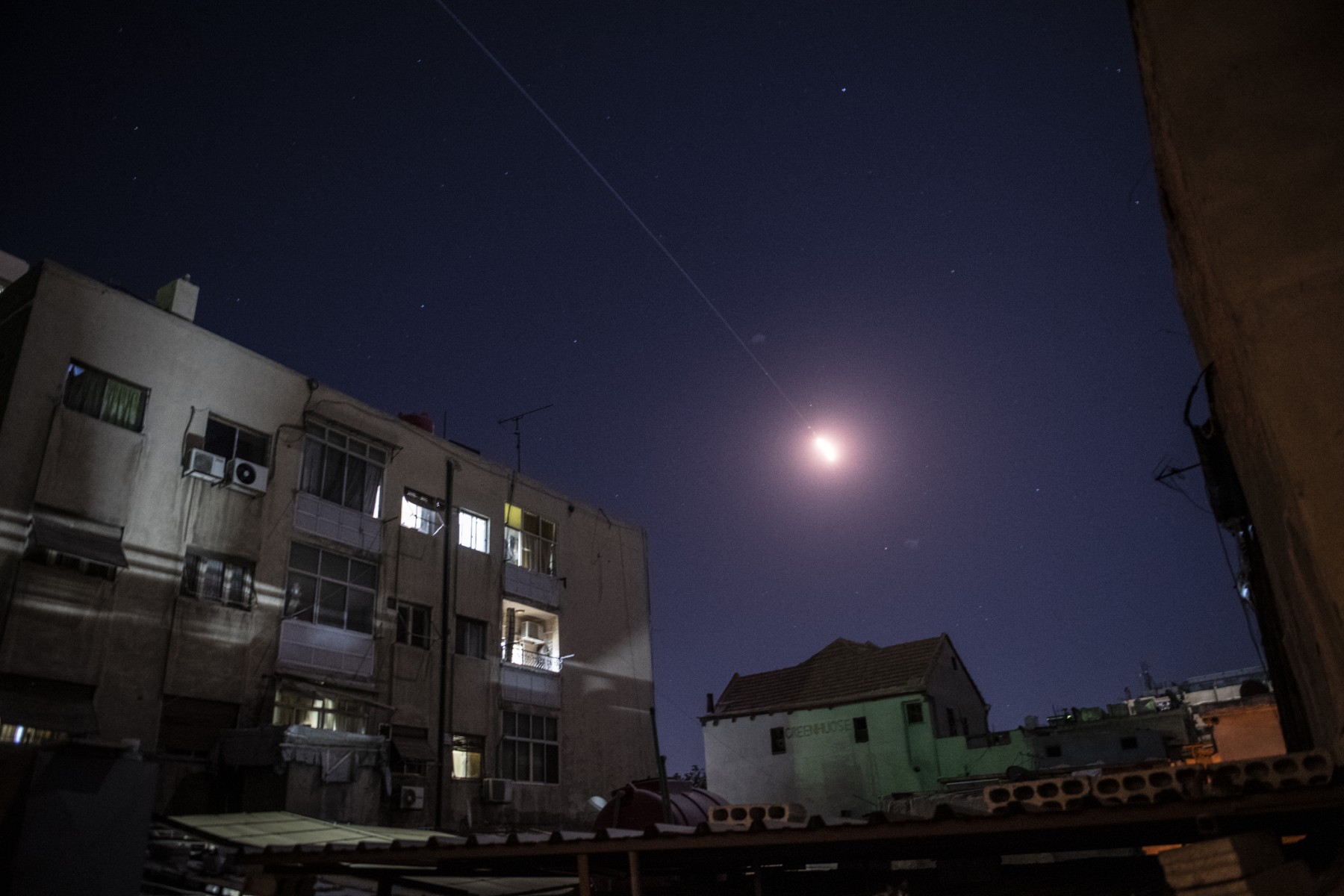
Recent reports say there have been almost 80 attacks on US forces in Iraq and Syria over the last several years.
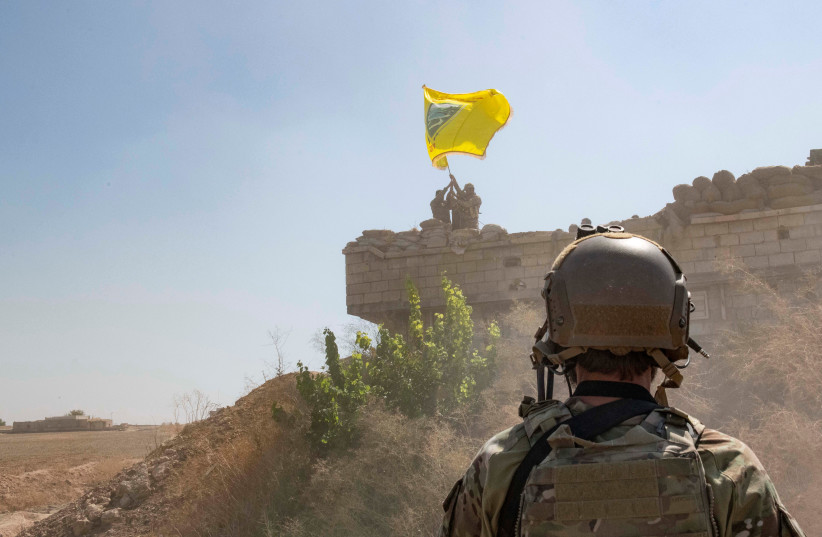
A US soldier oversees members of the Syrian Democratic Forces as they demolish a YPG fortification Syria (photo credit: US ARMY/STAFF SGT. ANDREW GOEDL/HANDOUT VIA REUTERS)
A US soldier oversees members of the Syrian Democratic Forces as they demolish a YPG fortification Syria
(photo credit: US ARMY/STAFF SGT. ANDREW GOEDL/HANDOUT VIA REUTERS)

US forces in Syria responded to what the US-led anti-ISIS Coalition called an “indirect fire attack in the Deir ez-Zor region” on April 10 just before sunset. In March two rounds of attacks carried out by Iranian-backed groups targeted US forces in Syria. Those attacks involved a drone attack and rocket barrage on US forces in eastern Syria on March 24.

It’s important to note that the US didn’t mention Iran or Iran-backed groups regarding the April 10 attack. However the attack fits the modus operandi of Iran-backed groups. Apparently the April 10 attack struck Mission Support Site Conoco in eastern Syria, according to an article at The Hill.

The Coalition put out a statement on April 11 saying that “there were no Coalition casualties and no damage to Coalition infrastructure.”

“The commanding US general of Combined Joint Task Force – Operation Inherent Resolve, condemned the attacks.” These attacks are reckless and needlessly endanger the people of northeast Syria,” said US Major General Matthew McFarlane. “This appears to be yet another attempt to detract us from our mission, but we remain firmly committed.”

The Coalition generally does not comment on these attacks. Recent reports say there have been almost 80 attacks on US forces in Iraq and Syria over the last several years.
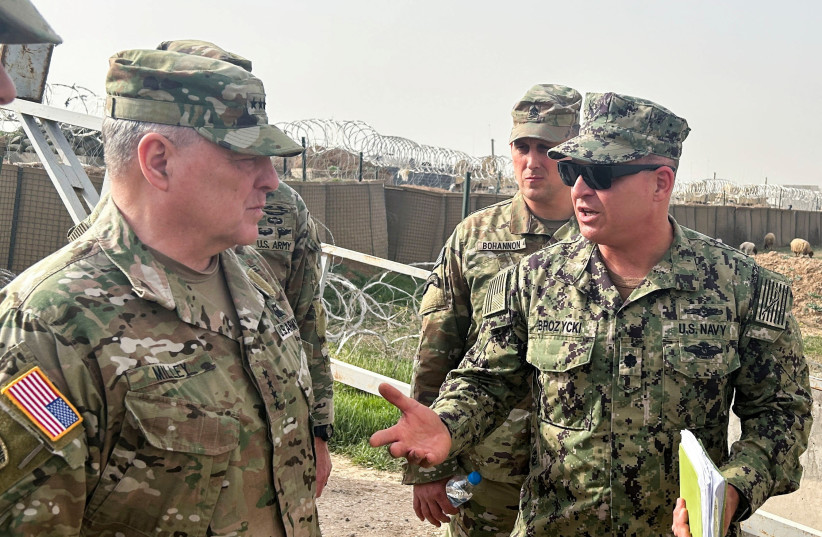
  US Joint Chiefs Chair Army General Mark Milley speaks with US forces in Syria during an unannounced visit, at a U.S. military base in Northeast Syria, March 4, 2023.  (credit: REUTERS/PHIL STEWART)US Joint Chiefs Chair Army General Mark Milley speaks with US forces in Syria during an unannounced visit, at a U.S. military base in Northeast Syria, March 4, 2023. (credit: REUTERS/PHIL STEWART)

In January the Coalition said that “members of the Syrian Free Army and Coalition Forces responded to an attack by three unmanned aerial systems in the vicinity of al-Tanf Garrison at approximately 9:20 a.m., Jan. 20, 2023. Coalition Forces successfully engaged two of the three UAS preventing their impact. The third UAS landed within an SFA compound, resulting in zero Coalition casualties and zero reported damage to Coalition infrastructure.”

In August and September of 2022, the Coalition also put out statements on another attack in eastern Syria that targeted the “Green village” location, which has been targeted numerous times. There was also an August 2022 drone attack at Tanf garrison which is located in Syria near the Jordan and Iraq borders.

What is the nature of Iranian attacks?

The Iranian threat against US forces in Syria tends to consist of these kinds of harassing attacks. They attack the same sites usually using the same methods. This means they usually use drones against Tanf and they use drones and rockets against the Green Village and Conoco sites. Explosives were also planted in April 2022.

The Iranian-backed attacks on US forces in Syria is similar to how Iran also tries to operationalize groups to strike at Israel. The use of simile rockets and drones is part of the method. These systems are typical to the groups Iran backs. These kinds of rockets may include 107mm or other types of rockets that have a relatively short range. The drones are more sophisticated but are much cheaper than the kinds of drones being used by western countries. The drones are kamikaze drones and they are designed to be destroyed.

Iran traffics this technology to various armed groups and then has them do the dirty work for Tehran. The goal of Iran is to keep adversaries off balance and to keep the threat up everyday. That means extensive resources have to be devoted to combat the threat and that distracts from the kinds of missions the US is doing in Syria, such as keeping ISIS defeated.

The goal is also to fuel instability. While much of the region is becoming more stable and doing high level diplomacy, Iran prefers to use small groups to destabilize areas. As the Syrian regime is now apparently seeking to return to the Arab League it could be an opportunity for countries to demand Iran stop this behavior. However, the fact that Iran has now reconciled with Saudi Arabia and it is increasing its attacks using Syria shows that reducing Iran’s threats from Syria is not yet part of any discussion about Syria’s reconciliation with various Arab countries.

The US is aware of the increased Iranian threat, it has kept an aircraft carrier in the Mediterranean and sent other naval assets to the region, according to recent reports.
Tehran saw ‘God’s help’ in chance to move arms and ‘restocked quantities lost in previous Israeli drone strikes,’ sources tell Reuters; also say Israel hit key Hezbollah, Iran base


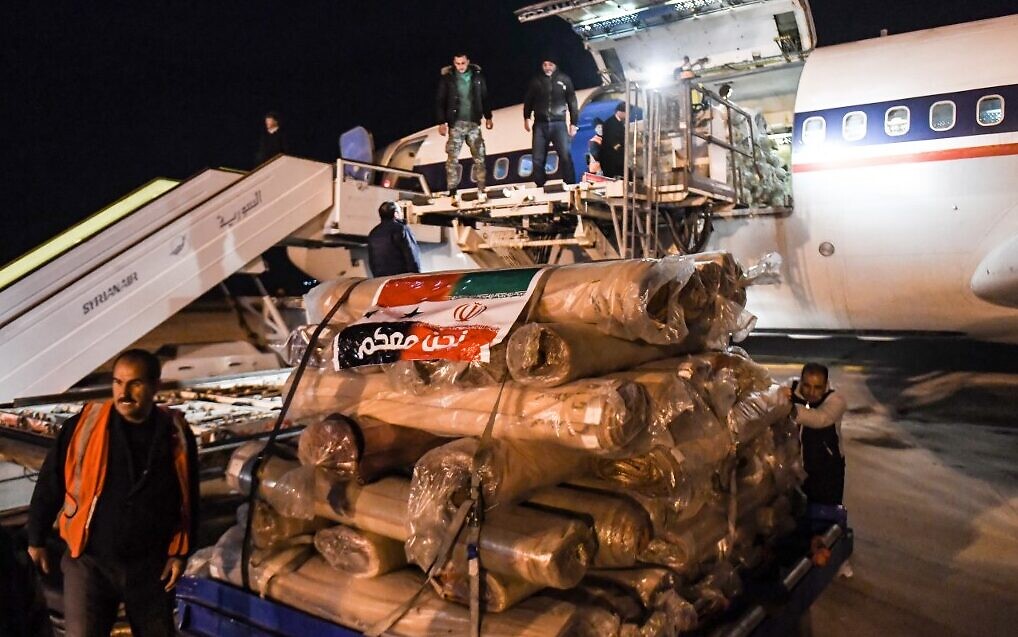
Illustrative: Workers unload aid from a plane sent by Iran, at the airport in Syria's northern city of Aleppo, early on February 8, 2023, following a deadly earthquake. (AFP)

Illustrative: Workers unload aid from a plane sent by Iran, at the airport in Syria’s northern city of Aleppo, early on February 8, 2023, following a deadly earthquake. (AFP)

Iran has transported weapons and military equipment into Syria on flights bringing in humanitarian aid after February’s devastating earthquake, it was reported Wednesday.

Nine Syrian, Iranian, Israeli and Western sources told the Reuters news agency that the weaponry was to “buttress Iran’s defenses against Israel in Syria,” as well as to bolster Syrian President Bashar Assad, a key ally of Tehran.

The report said the equipment included advanced communications equipment and radar batteries, as well as spare parts required for an upgrade of Syria’s air defense system that was provided by Tehran.

Haviv Rettig Gur and David Horovitz on the judicial overhaul – ToI Community webinar

Reuters said that its sources for the report included Western intelligence officials, sources close to the Iranian and Israeli leadership, a Syrian military defector and a serving Syrian officer.

The sources told Reuters that Israeli defense officials became aware soon after the earthquake that Tehran was exploiting the situation to transfer weapons.

“Under the guise of shipments of earthquake aid to Syria, Israel has seen significant movements of military equipment from Iran, mainly transported in parts,” an anonymous Israeli defense official told Reuters.

The official said that most of the military equipment was sent to Aleppo Airport, adding that it was organized by the Unit 18000 Syrian division of Iran’s Islamic Revolutionary Guards’ Quds Force, under the leadership of Hassan Mehdoui.

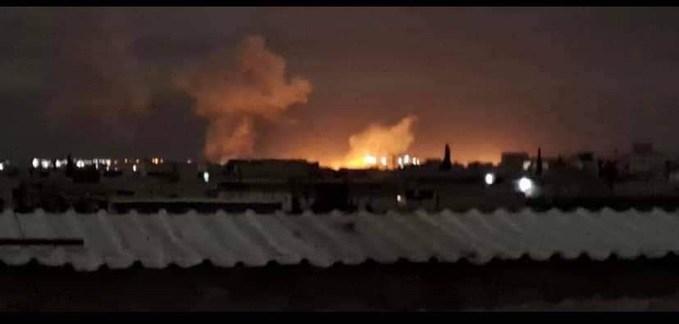
A screenshot from Twitter showing a fire at Aleppo airport following an alleged Israeli airstrike, March 7, 2023. (Screenshot/Twitter; used in accordance with Clause 27a of the Copyright Law)

The official said ground transportation of the weapons was then undertaken by the Quds Force’s Transport Unit 190, led by Bahanem Shahariri.

Cargo planes quickly began to arrive at Aleppo from Iran, where they were supervised by Esmail Ghaani, who heads the Islamic Revolutionary Guard Corps’ expeditionary Quds Force.

Within days of the earthquake, the Saudi-owned Elaph news site cited an Israeli military official as saying if Iran ships weapons to its regional proxies under the guise of humanitarian aid to Syria following the major earthquake there, the IDF would not hesitate to strike.

Last month, Aleppo International Airport was shuttered for nearly three days after its runway was damaged in an airstrike attributed to Israel.

Sources confirmed to Reuters that the runway was hit shortly after two cargo planes arrived from Iran carrying arms shipments.

At the time, Syria’s Foreign Ministry decried a “double crime,” saying the strike targeted both “a civilian airport… and one of the key channels for the arrival of humanitarian aid” for victims of the deadly earthquake.

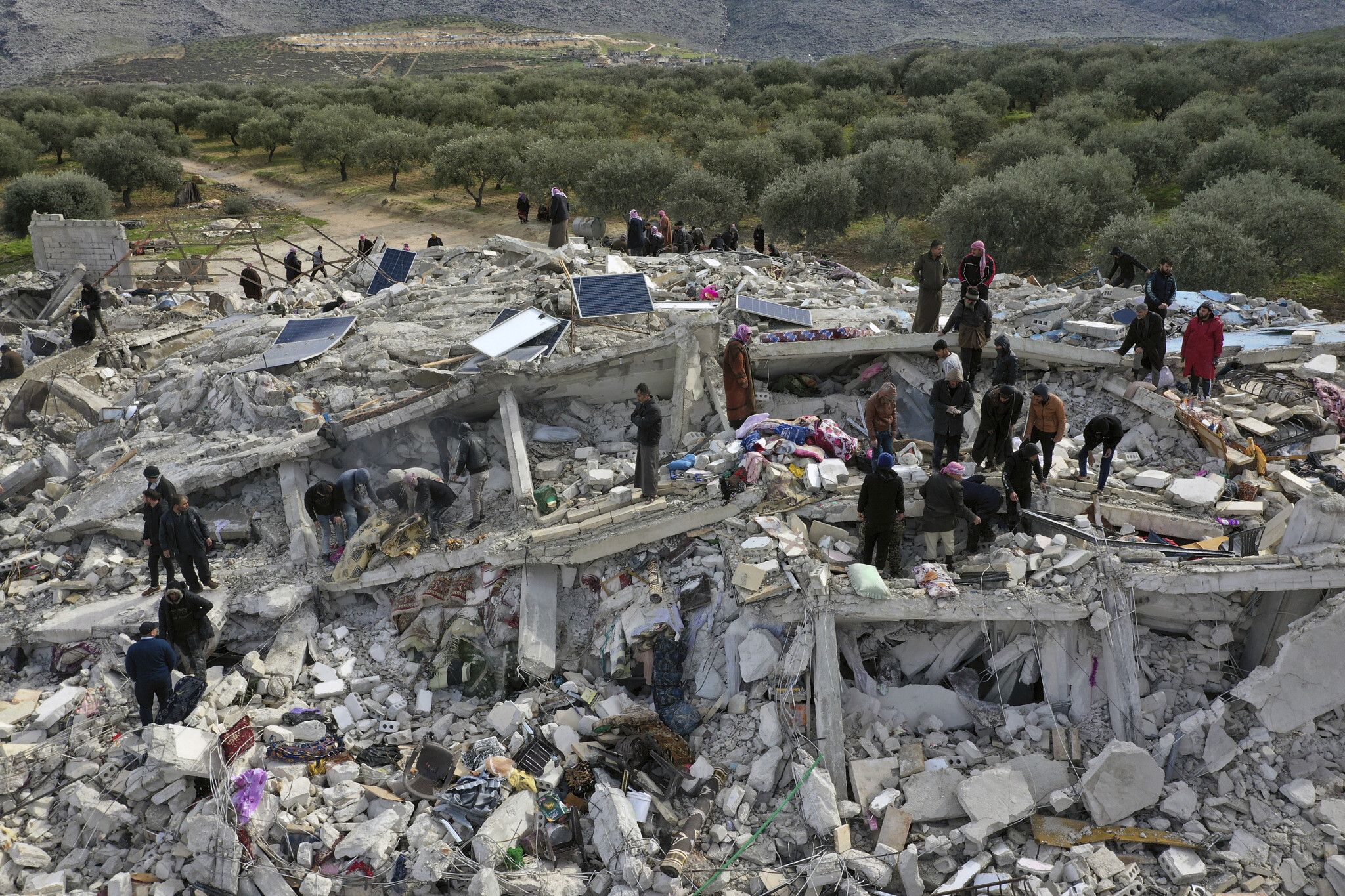
More than 6,000 people are believed to have been killed by the temblor in Syria, with over 50,000 killed in Turkey.

Civil defense workers and residents search through the rubble of collapsed buildings in the town of Harem, Idlib province, Syria, Feb. 6, 2023 (AP Photo/Ghaith Alsayed)

“Israel’s strikes also targeted a meeting of commanders of Iranian militias and shipments of electronic chips to upgrade weapons systems,” Syrian military defector Col. Abduljabbar Akaidi told Reuters, without giving further details on the meeting.

A Syrian army officer who remained anonymous said that Israel was increasing its strikes in Syria “because they have information that something is being developed quickly.”

“They must stop it and hit it to slow it. The quake created the right conditions. The chaos that ensued allowed Iranian jets to land with ease,” the Syrian source said.

Other sources confirmed to Reuters that since the start of the month Israel has targeted weapons warehouses in the Jabal Manea Kiswa mountain range south of Damascus.

The report said the site was probably the most fortified military site in Syria built by Iranian troops and Lebanon’s Hezbollah terror group.

The report said a radar station used for drones had also been hit in a strike.

“We believe that Iranian militias have transferred huge quantities of ammunition — they have restocked quantities lost in previous Israeli drone strikes,” a Western intelligence source said, referring to the Iranian flights in the wake of the earthquake.

Mourners attend the funeral procession for two of Iran’s Revolutionary Guard forces killed in Syria strikes blamed on Israel, held in Tehran on April 4, 2023 (ATTA KENARE / AFP)

A regional source close to Iran’s clerical leadership told the outlet that while the earthquake was a disaster, it provided a God-sent opportunity to transfer weaponry.

“The quake was a sad disaster, but at the same time, it was God’s help to us to help our brothers in Syria in their fight against their enemies. Loads of weapons were sent to Syria immediately,” the source said.

Iran’s mission to the United Nations denied to Reuters that it had used humanitarian flights to transfer weaponry to Syria. Damascus did not respond to Reuters’ request for comment on the matter.

Several airstrikes against alleged Iranian weapon shipments disguised as seemingly harmless products have been attributed to Israel in the recent past.

Israel is believed to have carried out hundreds of strikes on targets inside government-controlled parts of Syria in recent years, including attacks on the Damascus and Aleppo airports, but it rarely acknowledges or discusses the operations.

Israel has acknowledged, however, that it targets bases of Iran-allied groups, such as Lebanon’s Hezbollah, which has sent thousands of fighters to support Syrian President Bashar Assad’s forces.

Israel views Iran’s expansion throughout Syria as a continued threat to its national security and has conducted strikes across a broad range of targets in an effort to curb Iran’s forces in the region.

Flares of Syrian air defense rockets are seen in the sky of Damascus on April 4, 2023. (STRINGER / AFP)

Israel considers Iran to be its greatest enemy, citing the country’s hostile rhetoric, support for terror groups like Hezbollah, and its suspected nuclear program. Iran denies Western allegations that it is pursuing a nuclear bomb.

Israel is alleged to have carried out a number of strikes in Syria this month, including one which killed two members of the IRGC.

Six rockets were launched from southern Syria at the Golan Heights on Saturday night and early Sunday in two separate barrages hours apart, with three landing in Israeli territory, the military said.

The attack came as tensions soared across the region, with a barrage of rockets from Lebanon; tit-for-tat rocket fire from the Gaza Strip and Israeli strikes; clashes at Al-Aqsa Mosque in Jerusalem’s Temple Mount; deadly terror attacks in Israel and the West Bank; as well as a suspected Iranian drone launched from Syria earlier in the week.

Israel appears to have stepped up its activities in Syria recently, and earlier this month, Defense Minister Yoav Gallant warned Iran and the Lebanese terror group Hezbollah that Israel would not tolerate any efforts to harm the country or its citizens after a man was seriously wounded in a Megiddo bomb attack blamed on the Iran-backed organization.

Emanuel Fabian contributed to this report.


Nuclear Chief: Iran Can Enrich Uranium ‘At Any Rate’

Monday, 10 April, 2023 – 06:30
London – Tehran – Asharq Al-Awsat

Iran can enrich uranium whenever it wants, and at any rate, announced head of the Atomic Energy Organization of Iran (AEOI) Mohammad Eslami.

In an interview with Iranian television, Eslami stated that the US wanted to stop Iran’s nuclear technology but failed.

Asked about the failed negotiations to revive the nuclear deal, Eslami said that it was proved that the US reasons for not agreeing were mere excuses and that Washington’s primary goal was to prevent Iran’s progress.

Asked about reaching 60 percent of enriched uranium, the official said this step had a noticeable impact, and it was only normal to affect the negotiations.

He added that the US officials have an impression that Iran is a nuclear state and they cannot get rid of that quickly. More importantly, they realized these local abilities could not be eliminated.

Eslami pointed out that Iran recently carried out an unprecedented amount of enrichment, proving to all, whether friends or enemies, that the Iranian ability is real and undeniable.

Negotiations to revive the nuclear agreement between Iran and the major powers stalled in Vienna more than a year ago. Last September, the EU’s attempt to renew the talks failed.

Tehran enriched uranium to 20 percent at the Natanz plant days after US President Joe Biden assumed his position in January 2021 and raised the enrichment rate to 60 percent at the facility in April.

In January 2022, Tehran began enriching uranium by 20 percent at the Fordow facility, and in June, it raised the enrichment to a purity of 60 percent.

In February, the director of the International Atomic Energy Agency (IAEA), Rafael Grossi, said Iran’s estimated stockpile of enriched uranium had reached more than 18 times the limit set out in the 2015 accord between Tehran and world powers.