Israel and water: The Zionist dreams and nightmares

A direct hit to Israel’s Leviathan gas rig is nearly inevitable if there is an IDF attack on Iran’s nuclear facilities

 Sitting duck? A view of the Leviathan gas field from the air. (photo credit: MARC ISRAEL SELLEM)
Sitting duck? A view of the Leviathan gas field from the air.
(photo credit: MARC ISRAEL SELLEM)

Just as the combination of two hydrogen atoms with an oxygen atom to form water preceded the creation of heaven and earth in Genesis, so too Zionist dreams preceded the creation of the State of Israel. Theodor Herzl, in making his last great literary splash with the publication of his novel Altneuland, envisioned taking advantage of the world-leading drop in height from the Mediterranean Sea to the Dead Sea. Herzl’s vision was that all of Israel’s energy would be supplied by a massive, roaring hydroelectric plant modeled on Niagara Falls, and it would produce enough energy to share with our neighbors in the interest of promoting peaceful relations.  Many Zionist dreams are transboundary, mostly due to the precarious position of the Hashemite Kingdom of Jordan, which is the 10th-driest country on the planet, with which we share a water border – the river previously known as the mighty Jordan.

The Jordan River was once so mighty that in 1920 Pinchas Rutenberg, the founding father of what later became the Israel Electric Company, submitted to the British a plan to build more than a dozen hydroelectric plants on the river. A year later, he received a concession granting him all the water power rights to the Jordan and to build the first station. The plant, which produced 18 MW, operated successfully for 16 years until it was ransacked by Iraqi forces on May 14, 1948.

However, Israeli control of the Sea of Galilee ensured that David Ben-Gurion could began work on the national water carrier, 130 kilometers of pipes and canals, and the national faucet for agriculture and drinking water was turned on in 1964 by prime minister Levi Eshkol. Today, Israel is producing so much desalinated water that we have fulfilled the miraculous equivalent of Psalm 114, “The Jordan reversed and flowed upstream,” with this year reversing the direction of the carrier flow back into the Kinneret.


Former defense minister Benny Gantz said that he believes Netanyahu has abandoned the security of Israel and its citizens.

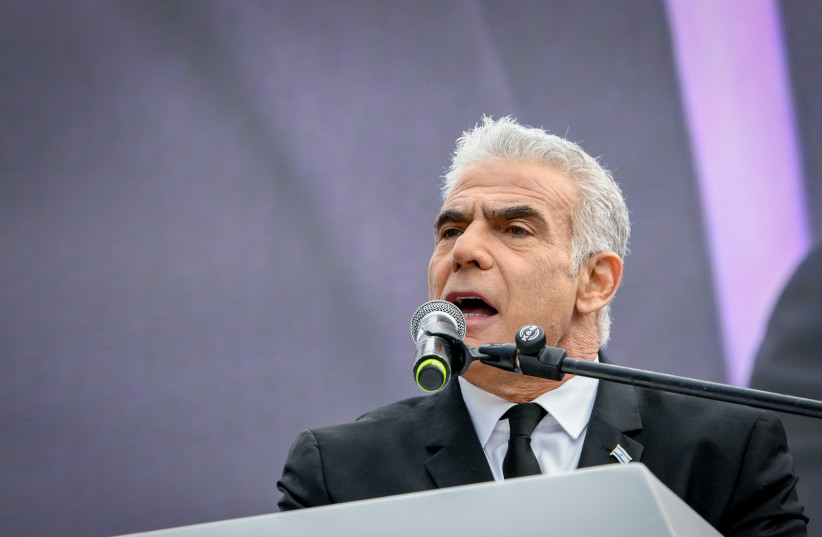
 MK Yair Lapid seen at a protest against the judicial overhaul, outside the Israeli parliament in Jerusalem. February 13, 2023.  (photo credit: ARIE LEIB ABRAMS/FLASH 90)
MK Yair Lapid seen at a protest against the judicial overhaul, outside the Israeli parliament in Jerusalem. February 13, 2023.
(photo credit: ARIE LEIB ABRAMS/FLASH 90)

The Saudi-Iran deal is a dangerous development that strips Israel of its regional defensive wall against Iran, former prime minister Yair Lapid said on Friday.

“The agreement between Saudi Arabia and Iran reflects the complete and dangerous failure of the Israeli government’s foreign policy,” Lapid said as he used the moment to attack Prime Minister Benjamin Netanyahu.

Iran and Saudi Arabia agreed to re-establish diplomatic relations on Friday after talks in Beijing between top security officials from the two rival Middle East powers, Iranian state media reported on Friday.

“As a result of the talks, Iran and Saudi Arabia agreed to resume diplomatic relations and re-open embassies…within two months,” Iranian news agency IRNA reported.

Israeli politicians immediately expressed concern as the move appeared to throw a monkey wrench in one of Netanyahu’s new government’s chief policy initiatives — to normalize ties with Saudi Arabia.


Israel has presumed that the necessity of creating a Gulf alliance between Israel and its Arab partners against Iran, would help provide an incentive for the establishment of ties between Israel and the Jewish state.

“Countries in the world and the region are watching Israel in turmoil over the dysfunctional government that is engaged in systematic self-destruction.”

Former prime minister Naftali Bennett

“This is what happens when one deals with legal insanity all day instead of doing one’s job against Iran and strengthening relations with the United States,” he added.

How would diplomatic ties between Saudi Arabia and Iran impact Israel?

Former prime minister reacts

Former prime minister Naftali Bennett called news of the renewed Iran-Saudi alliance a “serious and dangerous development for Israel” and a “political victory for Iran.”

“This delivers a fatal blow to efforts to build a regional coalition against Iran,” said Bennett.

He used the moment to attack Netanyahu charging the Iran-Saudi alliance reflected the “resounding failure of the Netanyahu government and stems from a combination of political neglect with the country’s general weakness and internal conflict.”

“Countries in the world and the region are watching Israel in turmoil over the dysfunctional government that is engaged in systematic self-destruction,” Bennett said adding in this case one of those countries chose a side.

“Netanyahu government is a resounding economic, political and security failure, and every day of its existence endangers the State of Israel.

“We need a broad national emergency government, which will work to repair the damage,” Bennett added.

Bad for Israel, bad for the world

Former defense minister Benny Gantz commented on renewed diplomatic relations between Iran and Saudi Arabia, stating that it was a cause for concern and a development that cannot be ignored. Gantz criticized the prime minister, stating that “the enormous security challenges facing the country are increasing and the Prime Minister and his cabinet are busy with a coup d’état.”

Gantz added that he believed the security of Israel and its citizens had been abandoned by Netanyahu.

Knesset Foreign Affairs and Defense Committee Chairman Yuli Edelstein said the alliance was “bad for Israel and the entire free world.”

Experts weigh in

Iranian expert Danny (Dennis) Citrinowicz from the Institute of National Security Studies at Tel Aviv University tweeted that the new alliance was a message to Israel that its dream of a regional alliance was not feasible and never had been.

It underscored the point that most of the countries in the region view dialogue as the best way to deal with Iran, leaving Israel as the sole country that is focused on a military option.

Analyst and former MK Ksenia Svetlova of the Mitvim, the Israeli Regional Institute for Foreign Policy noted on Twitter that “Saudi Arabia is normalizing relations. No, not with Israel but rather with Iran” while it has rebuked Israel publicly for its treatment of the Palestinians.

“Only two months ago, Netanyahu promised to bring peace with Saudi Arabia. We seem to be moving in the opposite direction,” she wrote.

Reuters contributed to this report


Tehran and Riyadh sent officials for talks in China, where eventually Iran-Saudi ties were restored.

 TOP: The flag of Iran BOTTOM: The flag of Saudi Arabia (photo credit: Canva, Wikimedia Commons)
TOP: The flag of Iran BOTTOM: The flag of Saudi Arabia
(photo credit: Canva, Wikimedia Commons)

Iran and Saudi Arabia have agreed to re-establish diplomatic relations after talks in Beijing between officials from the two rival Middle East powers, Iranian state media reported on Friday.

The agreement was reached after talks in Beijing between top security officials from the two rival Middle East powers.

“As a result of the talks, Iran and Saudi Arabia agreed to resume diplomatic relations and re-open embassies…within two months,” Iranian news agency IRNA reported.

Iranian and Saudi media said a statement by the two countries emphasized respect for sovereignty and non-interference in each other’s internal affairs.

Saudi Arabia’s state news agency said they also agreed to activate a security cooperation agreement signed in 2001, as well as another earlier accord on trade, economy and investment.

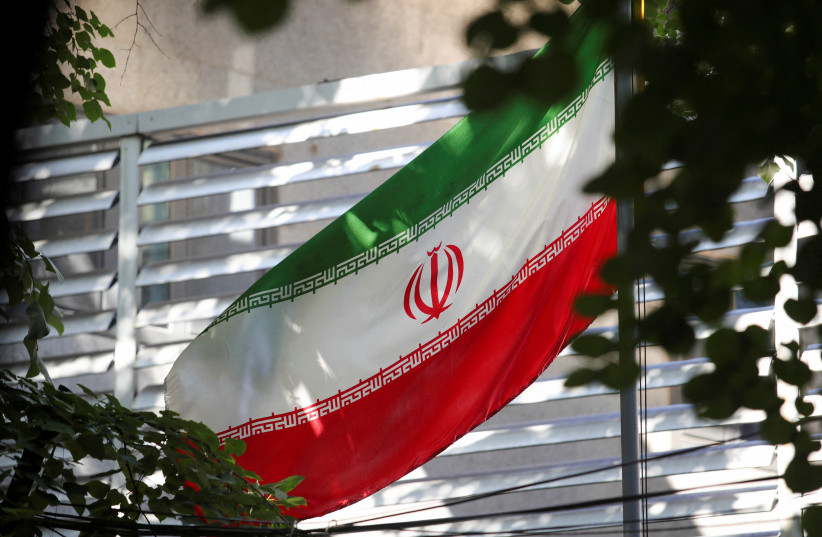
 Iranian flag is seen at the Embassy of the Islamic Republic of Iran, as Albania cuts ties with Iran and orders diplomats to leave over cyberattack, in Tirana, Albania, September 8, 2022 (credit: REUTERS/FLORION GOGA)Iranian flag is seen at the Embassy of the Islamic Republic of Iran, as Albania cuts ties with Iran and orders diplomats to leave over cyberattack, in Tirana, Albania, September 8, 2022 (credit: REUTERS/FLORION GOGA)

Iran’s top security official, Ali Shamkhani, who signed the agreement with Saudi Arabia’s national security adviser, Musaed bin Mohammed Al-Aiban, praised China for its role in the rapprochement, Iran’s Nour News reported. Both Saudi Arabia and Iran thanked Iraq and Oman for hosting talks in 2021 and 2022.

China’s foreign ministry did not immediately respond to a request for comment.

A White House national security spokesperson said the United States was aware of reports of the agreement and welcomed any efforts to help end the war in Yemen and de-escalate tensions in the Middle East.

Iranian-Saudi diplomatic history

The two leading Shi’ite and Sunni Muslim powers in the Middle East have been at odds for years, and backed opposite sides in proxy wars from Yemen to Syria and elsewhere.

Saudi Arabia cut ties with Iran in 2016 after its embassy in Tehran was stormed during a dispute between the two countries over Riyadh’s execution of a Shi’ite Muslim cleric.

Iran’s Foreign Minister Hossein Amirabdollahian said that normalizing relations offered great prospects for both countries and for the Middle East, and hinted at further steps.

“The neighborhood policy, as the key axis of the Iranian government’s foreign policy, is strongly moving in the right direction and the diplomatic apparatus is actively behind the preparation of more regional steps,” Amirabdollahian tweeted.

A senior Iranian security official said Friday’s agreement had been endorsed by Supreme Leader Ayatollah Ali Khamenei.

“That is why Shamkhani traveled to China as the supreme leader’s representative,” the official told Reuters. “The establishment wanted to show that the top authority in Iran backed this decision.”

Hezbollah leader praises agreement

The head of Lebanon’s powerful armed group Hezbollah said on Friday the resumption of ties between its backer Iran and longtime rival Saudi Arabia was a “good development.”

Iran and Saudi Arabia agreed on Friday to re-establish relations after years of hostility that had threatened stability in the Gulf and prompted political disputes in Lebanon.

Bahrain, UAE, Oman, Iraq welcome resumption of diplomatic ties between Riyadh and Tehran

Bahrain welcomed the agreement between Iran and Saudi Arabia, its news agency reported, citing the foreign ministry.

A diplomatic advisor to the United Arab Emirates president said on Friday he also welcomed the agreement.

“We welcome the agreement between Saudi Arabia and Iran to resume diplomatic relations, and we hail the Chinese role in this regard,” Anwar Gargash tweeted.

“The UAE believes in the importance of positive communication and dialogue among the countries of the region towards consolidating the concepts of good neighborliness and starting from a common ground to build a more stable future for all.”

Oman also welcomes the agreement, the foreign ministry said in a statement on Friday.

Iraq welcomed “turning a new page” between Iran and Saudi Arabia, the state news agency said.

The two countries have thanked Iraq for hosting previous talks.

Both Oman and Iraq have hosted talks between Iran and Saudi Arabia in the past, something which the two countries thanked them for.

Support for move from Hezbollah

The head of Lebanon’s powerful armed group Hezbollah said on Friday the resumption of ties between its backer Iran and longtime rival Saudi Arabia was a “good development.”

Iran and Saudi Arabia agreed on Friday to re-establish relations after years of hostility which had threatened stability in the Gulf and prompted political disputes in Lebanon.

US says it was not directly involved in talks

Saudi Arabia kept Washington informed of its talks with Iran to restore diplomatic relations but the United States was not directly involved, White House spokesman John Kirby said on Friday.

“The Saudis did keep us informed about these talks that they were having, just as we keep them informed on our engagements, but we weren’t directly involved,” Kirby told reporters.