At press conference marking year since invasion, Ukrainian leader says he recognizes Israel’s ‘complex’ situation vis-a-vis Russia, cites improvement in Kyiv’s ties with Jerusalem

Ukrainian President Volodymyr Zelensky leaves a hall after his press conference on the occasion of the Russia Ukraine war one year anniversary in Kyiv, Ukraine on February 24, 2023. (AP Photo/Efrem Lukatsky)

Ukrainian President Volodymyr Zelensky leaves a hall after his press conference on the occasion of the Russia Ukraine war one year anniversary in Kyiv, Ukraine on February 24, 2023. (AP Photo/Efrem Lukatsky)

Ukrainian President Volodymyr Zelensky said Friday that he would like Israel to “choose a side” amid Russia’s ongoing invasion of his country, rather than try to mediate.

Speaking during a press conference on the one-year anniversary of Russia’s invasion, Zelensky said he recognized Israel’s “complex” situation and noted an “improvement” in Kyiv’s ties with Jerusalem. His remarks also underscored Ukraine’s continued frustration with Israel over the latter’s refusal to supply weapons while also refusing to forcefully condemn Russia.

As the war has progressed, Israel has increasingly insisted that it is in fact on Ukraine’s side, providing over $22.5 million in humanitarian aid and setting up a field hospital to treat wounded Ukrainians in the early days of the war. On Thursday, it voted alongside 140 other countries for a UN General Assembly resolution drafted by Kyiv calling for Russia to withdraw its forces from Ukraine.

Still, Israel’s refusal to send weapons — a position it has justified by arguing that it cannot risk upending its ties with Russia whose approval it needs in order to operate in the Moscow-controlled skies over Syria to prevent Iran’s military entrenchment on its northern border — has contributed to the perception that the Jewish state has staked out a neutral position on the war.

Earlier this week, a pair of Israeli lawmakers said it was time for Jerusalem to stop “sitting on the fence” and provide “meaningful” support to Ukraine, including at the military level, after they met with Zelensky in Kyiv.

At Friday’s press conference, Zelensky was asked by an Israeli reporter how Israel is assisting Ukraine in curbing Iranian assistance to Russia and whether alleged Israeli strikes on Iranian weapons transfers have helped Ukraine.

Zelensky said that while he could answer those questions, he declined to do so in order not to “jeopardize the improvement of Ukraine-Israel relations that has begun.”

Prior to that remark, he lamented that “for a long time during this war, I’ve really been eager for Israeli support, not just from the public — because there’s a lot of support there — but also from its political leadership.”

“Historically, Ukraine has had excellent relations with Israel,” he noted, explaining that he has held a wide variety of conversations with Israeli officials regarding Jerusalem’s stance.

“It has been difficult to change their position because Israel has a complex situation regarding its relations with Russia, Iran, Syria, etc.,” he continued.

“But I very much would like them not to be a mediator in this war, but to choose a side — the Ukrainian side,” Zelensky said.

In the first months of the war, Israel sought to use its unique position enabled by its close working ties with both Russia and Ukraine to serve as a mediator between the parties. Then-prime minister Naftali Bennett flew to Moscow and held a series of calls with Russian President Vladimir Putin and Zelensky over a span of several weeks.

Ukrainian President Volodymyr Zelensky, left, meets Prime Minister Benjamin Netanyahu, right, in Jerusalem, January 24, 2020. (Haim Zach/GPO)

However, the effort failed to bear fruit and Bennett shelved the initiative altogether as his own political position at home worsened. Prime Minister Benjamin Netanyahu pledged before entering office to review Israel’s position and also speculated that he could well be called on to mediate between the sides, as Bennett tried to do.

But Zelensky made clear on Friday that this was not what Ukraine wants.

“I cannot imagine Israel supporting war,” he said, seemingly equating anything less than full-throttled support for Ukraine as backing continued bloodshed.

“Israel is a country that for dozens of years had war, so I couldn’t even fathom [it supporting war here],” Zelensky added.

The implications of Iran’s claims are clear, it wants to show that it can supply Syria with a system that is important and a potential game-changer.

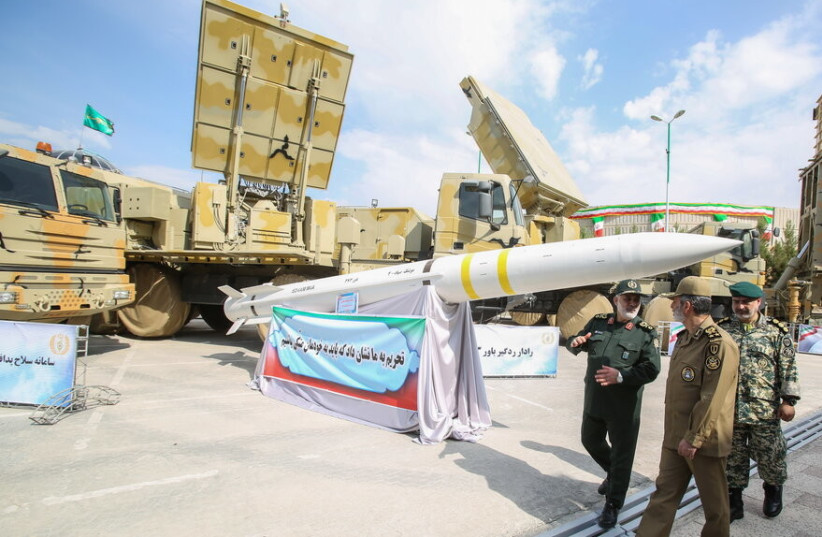
 The IRGC's Bavar-373 air-defense system (photo credit: MEHR NEWS AGENCY)
The IRGC’s Bavar-373 air-defense system
(photo credit: MEHR NEWS AGENCY)

Reports that Iran may supply Syria with an air defense system represent a potential new threat in Syria.

This is because Iranian air defense systems can provide cover for other types of Iranian entrenchment in Syria. Iran has tried to move air defense systems to Syria over the last several years. However, recent reports show Tehran is openly announcing that it could send Damascus a system.

Iranian state media made the announcement Friday. It comes amid praise in Iranian media for the Iranian armed forces and IRGC. It also comes as Iran has supplied Russia with drones and there are reports of closer Russia-Iran cooperation. Iran is also continuing to enrich uranium and this is part of the larger Iranian tensions in the region.

Iranian state television said that “Syria needs to rebuild its air defense network and requires precision bombs for its fighter planes.” The report went on to say that “it is very likely that we will witness the supply by Iran of radars and defense missiles, such as the 15 Khordad system, to reinforce Syria’s air defenses.”

What are the implications of Iranian air defense systems in Syria?

The announcement has created a buzz on social media among experts, commentators and Iran watchers.

The overall assessment is that this is important for Syria and will increase its air defenses. It has implications for Syria as it does outreach to the region, especially after Bashir al Assad, the regime leader, visited Oman this week. Also, it has implications for Russia’s role in Syria, potentially for Turkey and the US’s role, and also Israel’s policy of preventing Iranian entrenchment in Syria.

Abdolrasool Divsallar, a visiting Prof. at the Università Cattolica and Non-Resident Scholar at the Middle East Institute tweeted “Iranian state TV claims Tehran is selling EW and air defense systems to Syria, including 3-Khordad SAMs.  There were many considerations in Tehran opposing this decision. Yet seems that finally Tehran is decided. If happens, it will take Iran-Israel confrontation to another level.”


Other assessments of the news included claims that the system is very capable and that it can detect things out to 150km using radar, and engage targets at 45-75km. The system is mounted on the back of a truck, like other air defense systems. Each truck carried four launchers and the system can supposedly counter numerous threats at the same time. It uses a missile called the Sayyad 3. Some assessments see it as an improvement on the S-300, the Russian-made system.

Russia had said it would provide Syria with the S-300 back in 2018 but it’s not clear if and how the regime has used that system. Syria generally relies on the S-200, Pantsir and other systems that have proven inadequate. This is supposed to represent a “qualitative” kind of support by Iran, increasing Syria’s military abilities much more than in the past. It’s not clear how many air defense systems the regime might get, ostensibly the reports indicate several systems would be sent. It is also not clear if and when they will be delivered or if Iran already tried to deliver them.

Syria hopes earthquakes will attract foreign aid 

The Syrian regime has sought to use the earthquake that harmed northwestern Syria as a way to attract more foreign aid and also get around sanctions. It has received support in the region and is making new connections in the Gulf. In addition, the Syrian regime would like to possibly use the aid support as a way to hide deliveries of weapons from places like Iran.

In the past, Iran trafficked weapons to Syria via Iraq and moved the arms to Hezbollah. Iran also tried to fly munitions and systems to places like T-4 base. Iran has also sought to move munitions through Damascus.

The Khordad 15 system was first unveiled in 2019 and Iran boasted at the time that the new system could trace 6 targets at the same time, including jets, drones and other threats.

“Iran will increase its military capabilities to protect its national security and interests, and it will not ask permission from anyone on this matter,” said defense minister Amir Hatami at the time.

 Police officers stand on the rubble of a damaged building at the site of a rocket attack, in central Damascus' Kafr Sousa neighborhood, Syria, February 19, 2023. (credit: FIRAS MAKDESI/REUTERS)Police officers stand on the rubble of a damaged building at the site of a rocket attack, in central Damascus’ Kafr Sousa neighborhood, Syria, February 19, 2023. (credit: FIRAS MAKDESI/REUTERS)

Iran signed an air defense pact with Syria in 2020. An article at the Washington Institute for Near East Policy noted in 2020 that “on July 8, Syrian defense minister Ali Abdullah Ayoub and Maj. Gen. Mohammad Bagheri, chairman of Iran’s Armed Forces General Staff, signed an agreement in Damascus to significantly expand bilateral military cooperation, especially in the field of air defense. Seeing a dual need to counter aerial threats against Iran and its allies while also undermining the coalition military presence in the Middle East, Tehran has developed a strategic vision that requires effective protection and (in time) denial of airspace. Toward that end, it has repeatedly proposed to augment Iraqi, Lebanese, and now Syrian air defense systems and integrate them with its own network.”

The article by Farzin Nadimi noted at the time that “Iran has a number of S-200, S-75/HQ-2, and 2K12 systems in service back home and has upgraded them over the years, so it could offer to upgrade Syria’s batteries as well. In addition, it could send Assad indigenously developed systems such as the Raad, Tabas, 15th of Khordad, Talash, and 3rd of Khordad.” The 3rd Khordad was used to shoot down a US Global Hawk drone in 2020. “Tehran might also intend to help Syria set up local production/assembly lines for such systems, most likely in underground facilities (similar production capabilities could conceivably be offered to Iraq or even Hezbollah),” the report noted.

“Iran’s longest-range and supposedly most-advanced air defense system, the Bavar-373, is still under development and has yet to enter full-scale production. Iran claims that the system is comparable to an American Patriot missile battery and superior to Russia’s S-300PMU-2, but for now, all it can offer Syria is to deploy an unproven example there for testing and evaluation purposes.”

The implications of Iran’s claims are clear, it wants to show that it can supply Syria with a system that is important and a potential game-changer. However, Iran has exaggerated its support for Syria in the past. Syria has also believed Russia would supply it with systems that have never materialized or had an impact. Iran’s latest claims could also end to be more smoke and mirrors.


Explosions heard in Karaj, Iran, air defenses activated – report

Video reportedly from the scene shared on social media showed Iranian air defense batteries firing towards unseen targets.

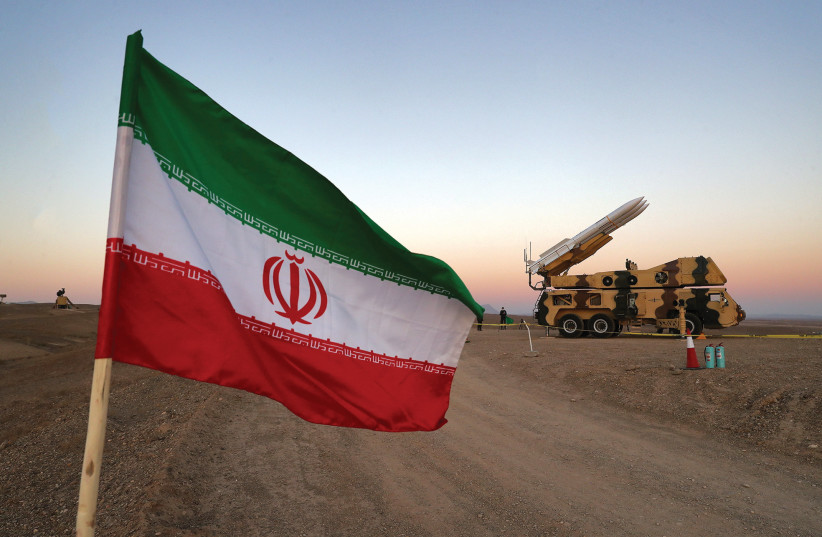
AN IRANIAN FLAG is pictured near in a missile during a military drill, with the participation of Iran’s air defense units in October.  (West Asia News Agency/Reuters) (photo credit: WEST ASIA NEWS AGENCY/REUTERS)
AN IRANIAN FLAG is pictured near in a missile during a military drill, with the participation of Iran’s air defense units in October. (West Asia News Agency/Reuters)
(photo credit: WEST ASIA NEWS AGENCY/REUTERS)

Explosions were heard in Karaj near Tehran in central Iran on Thursday night, with initial reports indicating that air defenses in the area were activated.

The official Iranian IRNA news outlet claimed that the explosions and the activation of air defenses were part of an IRGC defense exercise near Karaj.

Video reportedly from the scene shared on social media showed air defense batteries firing towards unseen targets.

The background of the incident is as of yet unclear.

 ISLAMIC REVOLUTIONARY Guard Corps Commander-in-Chief, Maj.-Gen. Hossein Salami, reviews military equipment during an IRGC ground forces drill in Iran last year. (credit: IRGC/WANA/via Reuters)ISLAMIC REVOLUTIONARY Guard Corps Commander-in-Chief, Maj.-Gen. Hossein Salami, reviews military equipment during an IRGC ground forces drill in Iran last year. (credit: IRGC/WANA/via Reuters)

The incident comes just a few weeks after suicide drones targeted an IRGC facility in Isfahan. Iran has blamed Israel for that attack and claimed that no significant damage was caused.

Attacks on Iranian defense infrastructure

Defense facilities in and near Karaj have been targeted by attacks repeatedly in recent years.

In July 2021, Iran blamed Israel for a sabotage operation that targeted a building belonging to Iran’s Atomic Energy Organization (IAEO) in Karaj the month before.

In September 2021, a fire broke out at the Shahid Hemmat Industrial Group missile base in Karaj, near Tehran, killing two workers and injuring one at the facility. The IRGC-affiliated Sobh-e-Sadegh newspaper later reported that the fire was caused by an Israeli attack.

In June of this year, an explosion shook western Tehran, with satellite imagery shared by the Intelli Times website appearing to show damage to the roof of a structure at the Shahid Hemmat Base, indicating that the base had been targeted for a second time.

This is a developing story.