
By World Israel News Staff

Iran’s hard-line leadership used a two-month negotiating window with the United States to rebuild military capabilities, tighten the Islamic Revolutionary Guard Corps’ grip over the armed forces and prepare Tehran’s regional allies for an expanded war, according to a new Wall Street Journal report.

The preparations, undertaken under Supreme Leader Mojtaba Khamenei, have included accelerating missile and drone production, reorganizing Iran’s security leadership and coordinating with allied groups in Yemen and Iraq for possible attacks extending from the Persian Gulf to the Red Sea, the Journal reported Monday, citing Iranian and Arab officials and regional intelligence.

The moves suggest that while Iranian diplomats continued exploring arrangements with Washington, influential figures in Tehran increasingly viewed the negotiations as a temporary respite rather than a path toward ending the conflict.

“There is also a widespread view in Iran that the main war has not yet begun,” Tehran-based defense analyst Mohammad Hassan Sangtarash told the Journal.

According to the report, Iranian hard-liners suspected that the United States and Israel were using diplomacy partly to relieve pressure on the global economy while preparing for another major confrontation.

Tehran consequently used the relative lull to restore access to missile facilities damaged during the war, increase weapons production and strengthen preparations for offensive operations.

  WATCH: CENTCOM bombards Iran for tenth straight night

The reported strategy comes as the 60-day period connected to the June US-Iran memorandum expires without a broader peace agreement.

The interim understanding was intended to halt major fighting and provide a framework for reopening the Strait of Hormuz and negotiating longer-term disputes.

It quickly deteriorated, however, as Washington accused Tehran of failing to reopen the waterway and Iran accused the United States of failing to honor economic commitments. Efforts by mediators to revive the arrangement had made “absolutely no progress” by last week, according to an Iranian source cited by Reuters.

Iranian Foreign Minister Abbas Araghchi said Sunday that Tehran had made no decision to resume negotiations with Washington. Oil prices rose Monday as the diplomatic impasse and severely reduced traffic through Hormuz renewed concerns about global energy supplies.

One of the most consequential elements of Tehran’s preparations has reportedly been a reorganization of the country’s military and security hierarchy.

The Journal reported that the leadership has moved to give the IRGC greater influence over Iran’s conventional military while placing veterans of the 1980-88 Iran-Iraq War and previous domestic crackdowns in important security positions.

That shift has already become visible at the highest levels of government.

Earlier this month, Khamenei appointed former longtime IRGC commander Mohsen Rezaei as secretary of the Supreme National Security Council, putting one of Iran’s best-known military hard-liners in a central position coordinating national security and foreign policy.

  Two American soldiers killed defending US base as Iran expands attacks

Rezaei commanded the Revolutionary Guard for 16 years and led it through most of the Iran-Iraq War.

Rezaei has also taken a hard line over Hormuz. Iran announced last week that the strait would remain closed unless Washington agreed to Tehran’s conditions, including steps toward ending the war and releasing frozen Iranian assets.

Former US diplomat and Iran nuclear negotiator Alan Eyre told the Journal that for Iran’s leadership, “the baseline is war,” with the regime preparing itself for another major attack even while diplomacy continues.

Iran nevertheless faces significant internal disagreement over that strategy. President Masoud Pezeshkian and more pragmatic figures have argued that the country needs a negotiated settlement and sanctions relief to prevent its severely damaged economy from deteriorating further, according to the Journal.

Iran has meanwhile moved faster than some Israeli officials expected in restoring infrastructure and regaining access to missile sites damaged by US and Israeli attacks, the Journal reported.

The IRGC has publicly acknowledged using pauses in the fighting to improve its capabilities.

An IRGC spokesman said in July that the force had accelerated missile production and worked to increase missile accuracy during the period of reduced hostilities.

Tehran has also demonstrated that it retains the ability to strike American military facilities and targets throughout the Gulf.

  Iran assassination threat forced Trump into secret Air Force One decoy operation

Iranian missiles increasingly targeted US positions in Jordan in July. Three American service members were killed when an Iranian missile struck sleeping quarters at Muwaffaq Salti Air Base, according to US officials.

Later that month, Jordan said it intercepted five Iranian missiles during another attack, while the IRGC said it had targeted American military installations in the country.

The reported preparations are not confined to Iran itself.

Arab intelligence services have detected communications between Iranian officials and allied armed groups indicating that Tehran is preparing its regional network for a broader conflict.

IRGC personnel have reportedly traveled to Yemen and coordinated with Iran-backed forces over potential operations in the Red Sea.

Reuters reported in July that Iran had instructed Yemen’s Houthis to prepare to close the Bab el-Mandeb Strait if the United States attacked Iran’s electrical infrastructure.

A source close to the Houthis said IRGC representatives already present in Yemen would have authority over when such a closure should occur.

The Houthis subsequently declared a naval blockade against Saudi Arabia on July 20, threatening Saudi-linked shipping through the Bab el-Mandeb after accusing Riyadh of participating in a siege of Yemen.
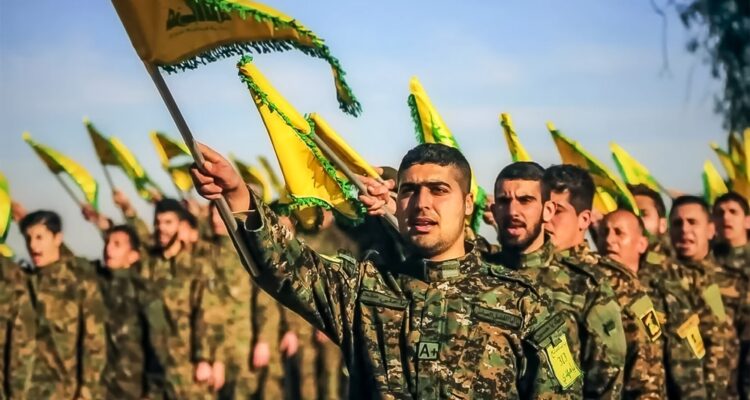

Hezbollah preparing for new campaign against Israel – report

August 17, 2026

Hezbollah preparing for new campaign against Israel – report

Hezbollah. (Shutterstock)

Hezbollah gearing up for new confrontation with Israel in southern Lebanon aimed at torpedoing peace talks, while waiting for approval from Iran.

By World Israel News Staff

Hezbollah is deliberately stepping up military pressure in southern Lebanon while waiting for approval from Iran to widen the confrontation with Israel, according to a Lebanese political source, raising fears that renewed fighting could derail US-backed negotiations between Jerusalem and Beirut.

The assessment, first reported by Lebanon’s Nidaa al-Watan, said Hezbollah was seeking to undermine the direct negotiations and was awaiting instructions from Tehran before deciding whether to escalate further.

The reported deliberations come as tensions between Iran and the United States have also intensified, tying developments in Lebanon increasingly closely to the wider regional confrontation.

Hezbollah has not publicly announced that it is waiting for Iranian authorization for further action.

However, indications of Tehran’s influence over the current confrontation have emerged elsewhere in Lebanese reporting.

Nidaa al-Watan reported Friday that an unnamed military expert said decisions concerning the strategic Ali al-Taher ridge were now effectively in the hands of Iran’s Islamic Revolutionary Guard Corps rather than Hezbollah’s leadership in Lebanon.

The warnings follow some of the most serious violence in southern Lebanon since a truce took effect in June.

Israeli strikes on Saturday killed at least 11 people and wounded 19, according to Lebanon’s Health Ministry and state media.

 Iran rejects Omani proposal to reopen Strait of Hormuz

Seven were killed in Ansar, while four others were killed in Deir al-Zahrani. Israel said the strikes followed Hezbollah attacks on Israeli forces and targeted commanders and military infrastructure belonging to the group.

The IDF said one of those killed in Ansar was Ali Samir al-Haj Hassan, whom it identified as a commander in Hezbollah’s elite Radwan Force.

The military acknowledged that members of Hassan’s family were present at the site and were also killed, while saying they had not been deliberately targeted.

On Sunday, the IDF said another strike had killed Abu Hassan Alaa, described as a senior Hezbollah commander involved in attacks on Israeli troops.

Prime Minister Benjamin Netanyahu’s office accused Hezbollah of violating the ceasefire by attacking Israeli soldiers and seriously wounding three of them.

“The IDF responded by striking the Hezbollah terror headquarters which ordered the attack,” the Prime Minister’s Office said, adding that the military learned afterward that civilians had been inside the compound.

Hezbollah, meanwhile, threatened retaliation, saying the Israeli attacks would be “met with what they deserve.”

The group also stepped up its criticism of Lebanon’s government for conducting direct negotiations with Israel and called on Beirut to use other means to stop Israeli military operations.

The latest flashpoint is the Ali al-Taher ridge, a strategically important area overlooking Nabatieh and routes through southern Lebanon.

Israeli forces have been operating around the area for months, while Hezbollah has repeatedly attempted to attack troops there. Israeli and Lebanese reports have described extensive Hezbollah underground facilities beneath the ridge.

 Graham’s sudden death sparks historical assassination comparisons

Asharq Al-Awsat reported Sunday, citing political sources in Israel, that Washington understands Israel’s decision to intensify operations around Ali al-Taher but does not want the fighting to develop into another full-scale war.

According to the report, the US has also pressed Israel to take steps that would help preserve the diplomatic track with Lebanon.

The newspaper said Israeli officials believe a network beneath Ali al-Taher has eight entrances and serves as a major Hezbollah command complex.

Israeli assessments cited in the report claimed a number of Hezbollah operatives remain trapped underground and that some may be members or trainers from Iran’s Revolutionary Guard. Those claims have not been independently confirmed.

The same report said Iran has warned that it could intervene if Israel significantly expands operations at Ali al-Taher, a threat that has contributed to Israeli caution over launching a full ground assault on the underground complex.

Against that backdrop, the Lebanese source cited by Nidaa al-Watan warned that Hezbollah’s current actions could trigger a chain of escalation ending both the ceasefire and the diplomatic process.

The source also accused Netanyahu of seeking a military success in Lebanon ahead of Israel’s October 27 election and using pressure on the battlefield to strengthen Israel’s negotiating position.

Hezbollah has made a similar political accusation publicly. Following Saturday’s strikes, the group accused Netanyahu of trying “to strengthen his domestic political position” through military escalation.

 Hunt the archer, not the arrow – opinion

Israel, however, argues that continued military pressure is necessary because Hezbollah remains armed and continues to threaten Israeli troops and communities in the north.

Defense Minister Israel Katz said Thursday that Israel would “not withdraw from the security zone in Lebanon” as long as Hezbollah remained armed and continued to pose a threat.

He said he had ordered the IDF to prepare for an “extended presence” until those conditions were met.

The position has created tension with Washington.

A US State Department official said Israel had committed under the US-brokered framework to a progressive withdrawal from Lebanon tied to verified Hezbollah disarmament, and that a permanent Israeli military presence would be inconsistent with that agreement.

At the same time, Washington has increasingly blamed Hezbollah for the deteriorating situation.

A State Department spokesperson said Sunday that the group “bears sole responsibility for Israel’s presence on Lebanese soil,” according to Lebanese outlet Naharnet.

The June 26 framework links the gradual withdrawal of Israeli forces to the disarmament of Hezbollah and other non-state armed groups and the deployment of the Lebanese army in their place.

Hezbollah was not a party to the agreement and has rejected demands that it disarm before Israel withdraws.


According to a senior official, the talks expected in Jerusalem will focus on ways to accelerate the implementation of Trump’s 20-point plan, with the end goal being a demilitarized Hamas.

US President Donald Trump listens, as his son-in-law Jared Kushner speaks, during the inaugural Board of Peace meeting at the US Institute of Peace in Washington, DC, US, February 19, 2026.

US President Donald Trump listens, as his son-in-law Jared Kushner speaks, during the inaugural Board of Peace meeting at the US Institute of Peace in Washington, DC, US, February 19, 2026.(photo credit: KEVIN LAMARQUE/REUTERS)Which committee is set to take control of Gaza?What condition must be met before Israeli forces withdraw?Why is Jared Kushner pressuring Netanyahu in Jerusalem?Who is Nikolay Mladenov?

ByIDAN KWELLERAUGUST 17, 2026 08:15Updated: AUGUST 17, 2026 08:27

Jared Kushner, Nikolay Mladenov, and Tony Blair are expected to meet with Prime Minister Benjamin Netanyahu and other senior Israeli officials on Monday, continuing to apply pressure on Israel to move forward with the next stage of the US plan for Gaza and advance US President Donald Trump’s 20-point plan, including the 15-point document on disarming Hamas.

Ahead of the meeting in Jerusalem, a senior Board of Peace official told The Jerusalem Post on Sunday that Kushner, Mladenov and Blair had held meetings in El Alamein, Egypt, with senior Egyptian officials and the other mediators, with the aim of turning the next steps in the roadmap into concrete measures for implementation.

The three also met with the National Committee for the Administration of Gaza and reviewed plans with its members ahead of the transfer of governing authority in the Gaza Strip to the technocratic body.

According to the senior official, the talks expected in Jerusalem will focus on ways to accelerate the implementation of Trump’s 20-point plan, with “the United States and Israel agreeing on the end state: a demilitarized Hamas.”

The official added that the goal is to reach a demilitarized Gaza in which Hamas has fully relinquished governing authority to the Palestinian technocratic government, thereby allowing the reconstruction of the Gaza Strip to proceed.

Palestinians walk past the rubble of residential buildings destroyed during the war, at Jabalia refugee camp in the northern Gaza Strip, August 5, 2026.
Palestinians walk past the rubble of residential buildings destroyed during the war, at Jabalia refugee camp in the northern Gaza Strip, August 5, 2026. (credit: Mahmoud Issa/Reuters)

Additionally, the official stated that the steps are intended to preserve the ceasefire, begin transferring all governing authority to the National Committee for the Administration of Gaza, and ensure that Hamas has no role whatsoever in managing the future of the Gaza Strip. At the same time, the process is intended to begin the comprehensive disarmament of Hamas and the decommissioning of its military infrastructure, enable the deployment of the International Stabilization Force, and accordingly allow Israeli withdrawals.

BoP attempting to speed up entry of humanitarian aid into Gaza, begin rebuilding

The Board of Peace is also seeking to accelerate the entry of humanitarian aid and the reconstruction and rebuilding process in the Gaza Strip, while ensuring that aid is neither stolen nor diverted under threat. The official stressed that, from the Board of Peace’s perspective, there is no longer any room for ambiguity regarding what is required of Hamas.

“Hamas must relinquish governing authority and all weapons and military infrastructure. Gaza can never again serve as a source of terrorism against Israel,” he said.