
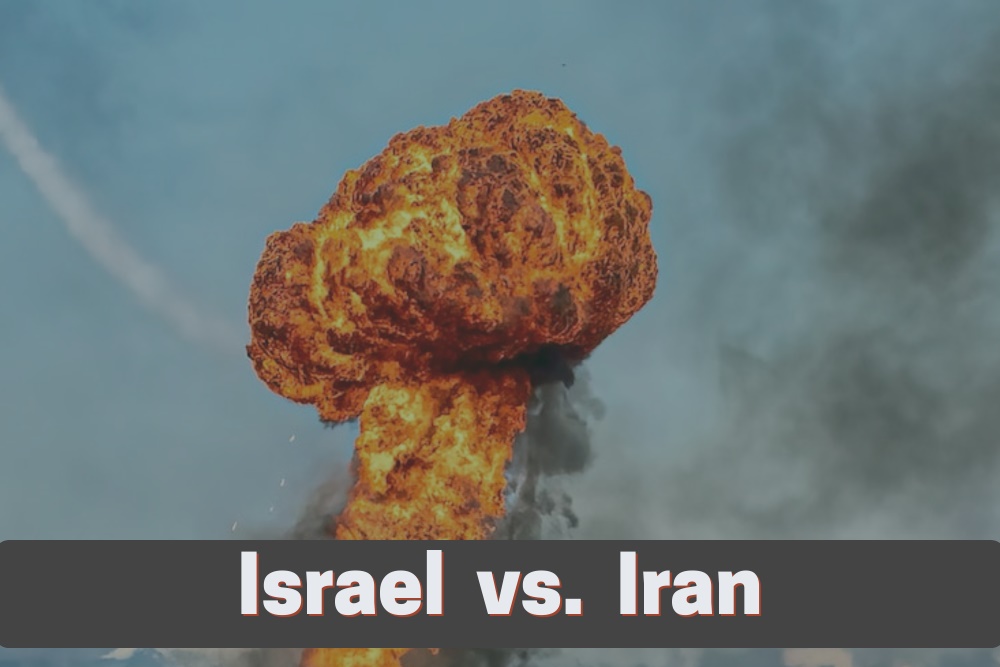
Israeli Air Force Ready to Attack Iran in 2023

Will Israel attack Iran in 2023?

In recent months, Israeli defense officials have been vocal about plans to knock out Iran’s nuclear program. By now, the Israeli Air Force is at a heightened state of readiness to launch a large-scale assault.

Israel has finalized plans to attack Iran and is working to improve them with new weapons and munitions, Ynet reports. The IDF designed three different strike operations against Iran and its regional allies, the report says.

Veteran journalist Ron Ben-Yishai reports that the plans are not limited to bombing Iran’s nuclear sites. He writes that the blueprints also outline an all-out assault on the Iranian regime and its military arm, the Revolutionary Guards. The IDF could also target vital infrastructure sites that enable Iran to threaten Israel.

The Air Force is ready to attack Iran now if the government orders a strike, the Ynet report says.

Notably, Israel held two large drills in recent months to practice a full-scale strike in Iran. The US military actively participated in one of the exercises as Israel and the United States elevate their military cooperation.

Separately, the Israeli Air Force is engaged in intensive training to prepare for attacking Iran’s nuclear facilities. This includes practicing long-range flights and simulating strike operations with precision-guided munitions.

In parallel, the Air Force bolstered its order of battle with new F-35 fighter jets and hundreds of UAVs. The IDF is also upgrading existing aircraft and recruiting more pilots and other personnel needed for a broad assault.

Attack in 3 phases

Israel’s military planners are relying on detailed intelligence acquired from many sources to plan flight routes and strike methods for each target. The Air Force will employ multiple types of high-precision munitions, including cruise and anti-radar missiles as well as laser and GPS guided bombs.

The Iran mission will likely be executed in three phases. The first will involve airstrikes supported by electronic and cyber warfare to disable and destroy Iran’s air defenses. This will be followed by a heavy aerial bombardment of up to 15 critical nuclear and military sites.

In the third phase, Israel will aim to launch another wave of strikes possibly supported by the Navy and elite forces on the ground. Based on damage assessments, this stage will include operations to eliminate the remaining parts of Iran’s nuclear program.

Israel is fully capable of destroying Tehran’s nuclear project, a military analyst has argued previously. An Israeli strike would wipe out Iranian nuclear and missile sites plus other vital military assets, analyst Kenneth S. Brower said.

The IDF will overpower Iran’s air defenses and weak air force, Brower wrote in a detailed study. Israel can stage an extended assault with hundreds of airstrikes a day and paralyze Iran’s strategic infrastructure if the war expands, Brower estimated.

Last year, a high-ranking IDF officer said that Israel has the military and intelligence capabilities to attack and demolish Iran’s nuclear facilities. Since then, the army built an even greater strike force and upgraded the attack plans.

This week, military chief Aviv Kochavi revealed at the INSS think tank that the IDF acquired dedicated munitions for bombing Iran’s nuclear sites. The army significantly improved its readiness to strike in the past year and will be ready to attack when the order comes, he said.

Mossad’s mission

At this time, Israel’s plan for attacking Iran appears to be firmly in place with all preparations completed or well underway. However, Israel’s political and defense leadership hopes to delay the strike to further improve attack plans and the country’s readiness for war.

The IDF will upgrade its battle plans in the coming years with advanced military gear, the Ynet report says. This includes powerful armaments as well as a laser-based air defense system. Israel will also need to adjust its economy for huge wartime expanses.

Meanwhile, Mossad will likely resort to covert action to disrupt and slow down Iran’s program and buy more time for other options. In parallel, the spy agency will continue to invest large resources to obtain intelligence for a military strike.

Another critical factor for an Israeli attack is American and global support. Current geopolitical conditions are favorable, as Iran is increasingly isolated due to its close ties to Russia. A friendly president at the White House in 2025 could offer another major boost.

But Israel may not have the time to wait. As Iran advances its nuclear program and enriches more uranium, the incentive to strike could peak within months. Ultimately, Tehran’s actions will determine if Israel moves forward with its grand plan to attack Iran in 2023.



Jordanian King Abdullah II on Wednesday said he was ready for a conflict should Israel’s incoming government violate “red lines” by changing the status quo governing relations at Jerusalem’s Jewish holy sites.

“If people want to get into a conflict with us, we’re quite prepared,” Abdullah said in an interview with CNN. “I always like to believe that let’s look at the glass half full, but we have certain red lines… And if people want to push those red lines, then we will deal with that,” he added.

Since 1967, Israel has let Jordan be the custodian of holy sites in the Israeli capital’s Old City, including the Al Aqsa Mosque that sits atop the southern section of the Temple Mount, Judaism’s most sacred location.

While Muslims are allowed to freely visit and worship at the mosque, Jews are severely restricted from accessing the site where two biblical temples stood and are banned from praying there, although the latter stringency has been relaxed in recent years.

Abdullah also warned that PA Arabs could launch another terror war – perhaps unaware of all the ongoing Arab terror attacks.

“We have to be concerned about a next intifada,” he said, adding: “If that happens, that’s a complete breakdown of law and order and one that neither the Israelis nor the Palestinians will benefit from. I think there is a lot of concern from all of us in the region, including those in Israel that are on our side on this issue, to make sure that doesn’t happen.”

A spokesman for Palestinian Authority leader Mahmoud Abbas on Wednesday said the incoming Israeli government’s policy agenda constituted a “dangerous escalation.” Nabil Abu Rudeineh issued a veiled warning that there would be ongoing violence unless a “Palestinian” state was created, according to the official Palestinian Wafa news agency.

Abu Rudeineh called on the Biden administration “to turn its words into deeds since it is committed to the two-state solution, without which there will be no stability in the region


Jordanian and Egyptian senior officials reportedly working to prepare the Palestinian Authority for Mahmoud Abbas’ death, in the hopes of staving off a total collapse of the PA.

By Baruch Yedid, TPS

The Lebanese newspaper Al Akhbar reported on Wednesday from sources in Fatah that in recent months, several meetings have been held between Palestinian Authority officials and senior Jordanian and Egyptian officials to settle the “future status of the Palestinian Authority and Fatah” in the event Palestinian President Mahmoud Abbas dies.

The 87-year-old Abbas is a heavy smoker, is known to have heart problems and once overcame a battle with prostate cancer. He has no designated successor.

Both Abbas and the PA are deeply unpopular.

In a recent Palestinian survey, 81% said the PA was corrupt and 75% said Abbas should resign.

Palestinians have not held national elections since 2005 and Abbas is in the 17th year of what was supposed to be a four-year term.

According to Al Akhbar, Palestinian officials, including Hussein al-Sheikh, who was promoted by Abbas to the position of Fatah Secretary General, met with representatives of Jordan’s Royal Court and intelligence service to discuss various scenarios expected in Palestinian areas after Abbas’s death.

Most of the discussions dealt with Fatah-Hamas relations, and relations between Fatah leaders themselves, several of whom are fighting to succeed Abbas as chief of the Palestinian Authority.

A similar meeting was held in Egypt, in which the Palestinians demanded Egyptian aid to prevent the collapse of the PA. They also asked for financial help against efforts by Hamas and Palestinian Islamic Jihad to erode popular support for Fatah.

  ABBAS THREATENS TO OPENLY SUPPORT INTIFADA AGAINST ISRAEL

Palestinian officials appealed to the Egyptian and Jordanian sides with a request to help them also control the rival factions after the death of Abbas and to recognize Fatah as “representatives of the Palestinian people.” The PA civil service is the largest employer of Palestinians with more than 150,000 people on the payroll, and Fatah wants to control the funding for all the salaries after the demise of Abbas.

Referring to Abbas by his nickname, Abu Mazen, Al Akhbar‘s sources added, “Those present at the meetings came to the conclusion that the collapse of the government after the death of Abu Mazen must be prevented, and Arab support must be ensured for one Fatah leader, after he is elected with the consent of the movement’s leadership, which will convene the day after Abu Mazen to regulate its internal conditions.”

According to the report, it was also agreed that the split in Fatah should be ended, with the return of prominent defectors such as Mohammed Dahlan, Nasser al-Kidwa and Marwan Barghouti, and to hold an internal reconciliation conference where new roles would be distributed by agreement.