On the morning of Tuesday, December 20, fighter jets fired missiles at and around Damascus airport, destroying several weapons storage facilities and other infrastructure belonging to Iran’s local proxies. According to Al Arabiya TV, an anti-aircraft battery positioned near the airport was also struck, shortly after an Iranian plane had landed. The Syrian authorities hold the Israel Defense Forces responsible for the attack.
Later that same day, a Hezbollah drone attempted to enter Israeli airspace from Lebanon. The IDF shot it down. It was intercepted near the moshav of Zarit (population around 250), which is located close to the Lebanese border in Upper Galilee. The drone was identified as a quadcopter, a small device with four rotors.
This tit-for-tat exchange was the latest in a recent spate of military encounters in what has been termed for more than a decade as the war between wars. On November 9, for example, The Wall Street Journal reported that a convoy believed to have been smuggling Iranian weapons into Syria had been hit by Israel. According to the report, the strike was near the Syrian border town of Abu Kamal and destroyed several vehicles. There were at least 10 casualties.
Israeli sources usually refrain from acknowledging the counter-measures it takes but on December 14, Lt. Gen. Aviv Kohavi, the IDF chief of staff, appeared to confirm this particular operation. Speaking at Reichman University in Herzliya, Kohavi referred to Israeli intelligence and its strike capabilities. He said, “We could not have known, a number of weeks ago, about the Syrian convoy moving from Iraq to Syria. We could not have known what was in there. We could not have known that among 25 trucks, this is the truck – truck number eight – that was the truck with the weapons.”
And even knowing, he continued, “We must send the pilots. They must know how to evade surface-to-air missiles. Make no mistake: There are operations in which 30, 40 – at peak times, 70 – surface-to-air missiles are fired at them during sorties. They must strike, hit and come back, and they must, in some of the attacks, avoid killing those who should not be killed. Those are very advanced capabilities.”
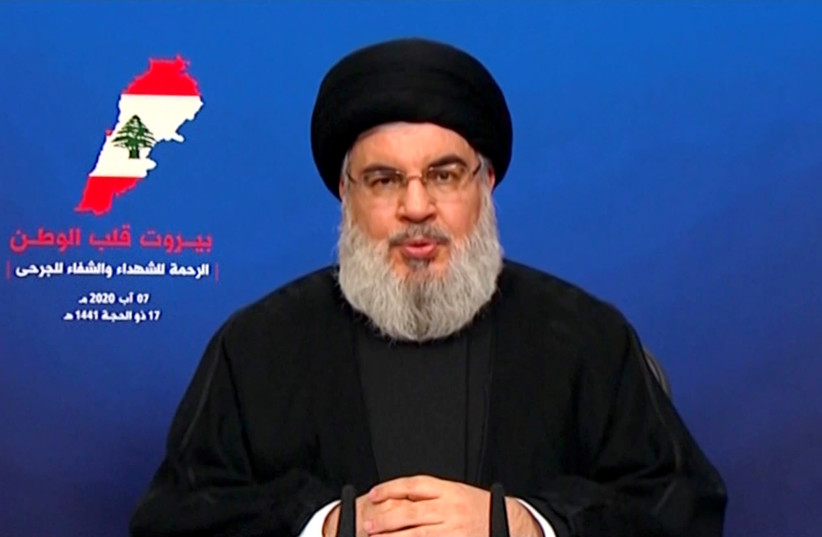
Hezbollah leader Sayyed Hassan Nasrallah gives a televised speech following Tuesday’s blast in Beirut’s port area, Lebanon August 7, 2020 in this still picture taken from a video (credit: AL-MANAR/HANDOUT VIA REUTERS)
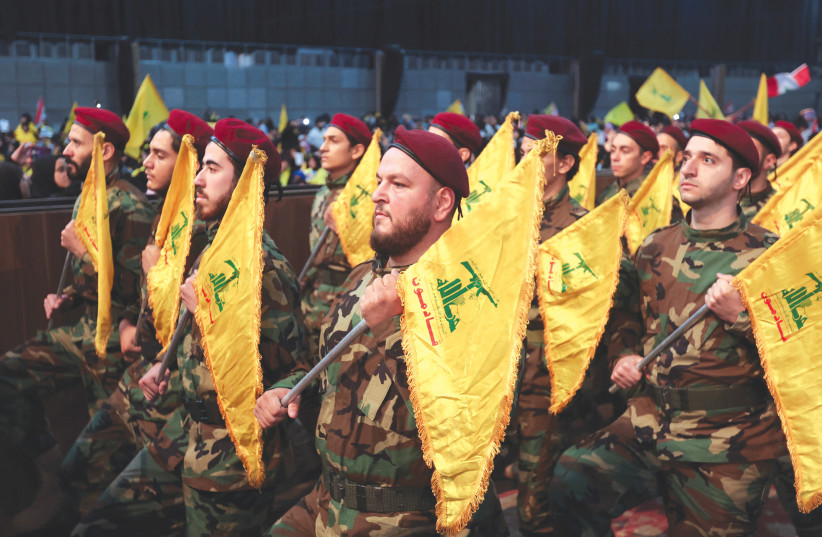
Recently, Hezbollah operatives have been increasingly active on the Lebanon-Israel border. They have set up dozens of lookout posts, increased their patrols, and openly monitor and document Israeli troop movements. Also, Hezbollah’s use of Iran-supplied drones has increased over the last few months. In the summer, drones were dispatched to film Israel’s offshore gas rig prior to the Israel-Lebanese maritime agreement. They were destroyed by the IDF.
IN ADDITION, Hezbollah is continuing efforts to strengthen its presence in Syria. Earlier in December, it was reported that the IDF attacked a radar site at Tal Qalib belonging to the Syrian military. The next day, the Israel Air Force dropped leaflets in the Quneitra area of southwestern Syria, warning Syrian soldiers against working with Hezbollah. “The continued presence of Hezbollah in the Syrian site of Tal Qalib,” they read, “and cooperating with them will go badly for you. The presence of Hezbollah in the region has brought you humiliation and you are paying the price for that.”
The effort to contain or diminish Iran’s anti-Israel efforts has spilled over to social media. The Al-Monitor website recently reported that posts on Twitter from various sources claimed that Israel has the names of 63 pilots employed at the Iranian Mahan airline who are involved in flying weapons from Tehran to Beirut. The tweets promised to post the pilots’ names and photos soon. There was no indication of what action, if any, might follow.
Iran is engaged in a determined effort to smuggle advanced weapons by air through various Syrian airports6 and also by land through Iraq and Syria to Hezbollah in Lebanon. Israel has been waging an equally determined campaign over the past decade to frustrate Iran’s intentions, which are clearly aimed at arming Hezbollah in preparation for an eventual conflict with Israel.
This campaign took a new turn on December 10 when rumors emerged that Iran was planning to launch an aerial smuggling route from Tehran to Beirut using civilian flights. Meraj Airlines, operated by Iran’s Islamic Revolutionary Guard Corps (IRGC), started direct flights from Tehran to Beirut in mid-November. This corridor would reportedly complement or replace the arms smuggling to Hezbollah carried out in recent years through Syria, shipments that Israel is believed to have targeted repeatedly.
Hezbollah must be viewed as a major strategic threat
Israel must view Hezbollah’s growing precision missile arsenal as a major strategic threat on a par with Iran’s nuclear program. Indeed, if Iran eventually developed a nuclear capability, there would be nothing to prevent it from arming its proxies similarly. The London-based Asharq Al-Awsat newspaper reported earlier in December that Israel had formally warned Lebanon’s government that it would consider bombing Beirut airport if it serves as a destination for weapons smuggling from Iran.
The implications of such an attack, were it ever carried out, are incalculable. The mere threat may be sufficient to deter any attempt by Lebanon’s Hezbollah-dominated administration from using civilian flights as a new route for smuggling Iranian arms.
As long as Iran is intent on pursuing its obsessional anti-Israel policies, Israel’s response must continue to be deterrence by every means, including the destruction of weaponry clearly intended to turn Syria into an Iranian armory or to boost Hezbollah’s military capacity. For deterrence to remain effective, Israel must enhance its world-class intelligence capabilities even further. It also needs to take to heart the well-known motto of the Scouting movement: Be prepared. This is the only way to thwart the enemy’s malign intentions without resorting to an all-out conflict.
The writer is the Middle East correspondent for Eurasia Review. His latest book is Trump and the Holy Land: 2016-2020. Follow him at: www.a-mid-east-journal.blogspot.com.