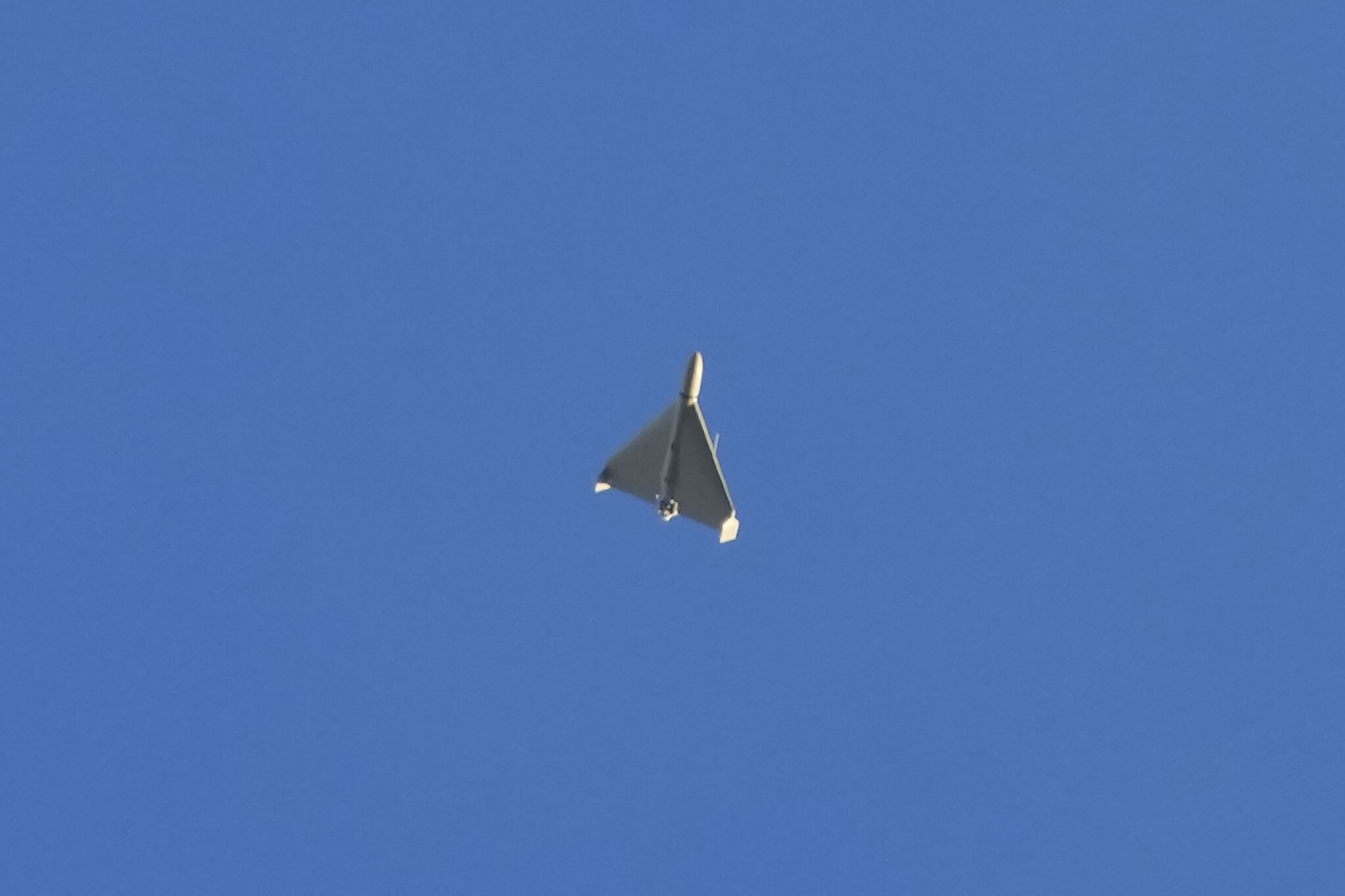
Iran reveals ‘ideal targets’ to bomb in Israel

“The general situation of the Zionist regime at the military level and its equipment has been examined,” and the list of sites reflect that research, Iran’s state-controlled news agency reported.

By Lauren Marcus, World Israel News

The Knesset, the Prime Minister’s office, and Ben Gurion Airport were all revealed to be on an Iranian hit list as sites to target in a future war, according to reports by the Hezbollah-affiliated Lebanese news outlet Al-Mayadeen and Iran’s state-controlled Tasnim news agency.

A Jerusalem Post report on Monday summarized the list of “sensitive sites” that Iran’s Revolutionary Guard Corps (IRGC), an internationally designated terror group, believes would be ideal targets for bombing by the Islamic regime.

The Post report noted that the publication list is unusual, as it appears to be one of the only times that Iran has directly threatened specific sites within the Jewish State and may signal that Iran’s regional proxies may be preparing to ramp up their activity against Israel.

Israeli government buildings, such as the Knesset, the Prime Minister’s office, and the Defense Ministry are on the Iranian list, along with educational institutions including the Weizmann Institute of Science in Rehovot and Haifa’s Technion – Israel Institute of Technology.

The list erroneously categorized the Jerusalem-based government buildings as “nuclear sites” and the universities as “warehouses,” presumably for weapons or other military assets.

  IRAN’S REVOLUTIONARY GUARD LAUNCHES NEW ROCKET

Ben Gurion International Airport, which is the main port of entry into Israel, and Ramon Airport in the southern Negev desert, some 20 kilometers north of Eilat, were also included as potential sites to attack.

“The general situation of the Zionist regime at the military level and its equipment has been examined,” and the list of sites reflect that research, Tasnim reported.

The list of potential attack locations in Israel comes as Jerusalem steps up airstrikes and other military action against Iranian assets in Syria.

Last week, a senior IRGC commander was killed in a roadside bombing in Syria. Arab and Iranian news sources have attributed responsibility for the slaying to Israel.


Israelis said to be lobbying allies through local missions to increase pressure on Tehran, according to Axios report

Russian President Vladimir Putin meets with his Iranian counterpart Ebrahim Raisi on the sidelines of the Shanghai Cooperation Organisation (SCO) leaders' summit in Samarkand on September 15, 2022. (Alexandr Demyanchuk / SPUTNIK / AFP)

Russian President Vladimir Putin meets with his Iranian counterpart Ebrahim Raisi on the sidelines of the Shanghai Cooperation Organisation (SCO) leaders’ summit in Samarkand on September 15, 2022. (Alexandr Demyanchuk / SPUTNIK / AFP)

Israel has provided intelligence to dozens of Western countries and NATO about Iran’s weapons transfers to Moscow to support its war on Ukraine, and has been lobbying allies to put pressure on Tehran, according to a new report this week.

Jerusalem began supplying intelligence to allies on the arms sales in late October via its embassies in world capitals, Axios reported on Wednesday citing unnamed officials and Israeli Foreign Ministry cables, in a move that “represents a change in Israeli behavior around Iran’s role in the war in Ukraine.”

According to the report, Israel’s intel-sharing with allies on the matter did not include active lobbying until last month, as the Israelis have walked a fine line to avoid tensions with Russia. Moscow began using Iranian-made suicide drones across Ukraine with devastating effect starting in the fall, slamming the UAVs into Ukrainian energy infrastructure and civilian targets in recent weeks.

While providing ample humanitarian assistance and expressing solidarity with Kyiv, Israel has maintained a strict policy of not providing military aid to Ukraine, including systems that could help it intercept Russian missile and drone attacks — despite repeated requests from Kyiv. Israeli officials regularly cite the strategic need to maintain freedom of operations in Syria, whose airspace is largely controlled by Russia, as part of its efforts to prevent Iranian entrenchment on its doorstep.

But since late October, Israel has been actively raising the issue of Iranian drone transfers to Russia and the possible transfer of ballistic missiles to Moscow with allies, the report said, in a bid to increase international pressure on Tehran.

According to the report, a senior Israeli diplomat traveled to Brussels to brief European officials on the intelligence dossier. Separately, Israel’s ambassador to Moscow, Alexander Ben Zvi, brought up the issue with the Russian deputy foreign minister, Sergei Ryabkov, last week to present Israel’s mounting concers, the report added. There were no details about Russia’s response.

A Shahed-136 drone is seen in the sky seconds before it hit buildings in Kyiv, Ukraine, October 17, 2022. (AP Photo/Efrem Lukatsky)

Israeli officials were also hoping to organize an international conference in Israel “about the proliferation of Iranian-made drones,” Axios said.

Iran and Russia initially denied the use of Iranian drones in Ukraine, contradicting multiple Western officials and evidence in Ukraine showing the remains of explosive drones appearing to match Iran’s Shahed drones. Tehran later admitted sending drones but insisted they were supplied to its ally before Moscow’s invasion of Ukraine in February. Western nations have disputed this, saying the first shipment was arranged in the summer.

US and other spy agencies reported in late summer that Iran delivered its first shipments to Moscow of the Mohajer-6, a surveillance and combat drone capable of carrying four precision-guided munitions, and two types of Shahed drones: the Shahed-129, a long endurance drone that appears to be based on a combination of the Israeli Hermes 450 and the US MQ-1/9 Predator drone, and the Shahed-191, a stealth drone developed from the RQ-170 captured by Iran in 2011, according to the Aviationist.

The wreckage of what Kyiv has described as an Iranian Shahed drone downed near Kupiansk, Ukraine, September 13, 2022. (Ukrainian military’s Strategic Communications Directorate via AP)

Last week, the Washington Post reported that Russia reached a deal with Iran to begin manufacturing Iranian kamikaze drones on Russian soil.

The signs of increased cooperation between Moscow and Tehran have added to concerns over Iran’s nuclear efforts, with negotiations to restore the 2015 deal with world powers all but abandoned.

Earlier this month, CNN reported that Iran had requested assistance from the Kremlin for its nuclear program if it fails to restore the deal.

Lazar Berman contributed to this report.


While previous intel assessments said Iran would need 2 years to assemble weapon, NYT finds growing gaps in West’s knowledge of Tehran’s progress, particularly at Fordo site

An Iranian cruise missile is launched during a naval exercise in the Gulf of Oman, June 18, 2020. (Iranian Army via AP)

An Iranian cruise missile is launched during a naval exercise in the Gulf of Oman, June 18, 2020. (Iranian Army via AP)

Iran has reportedly been developing large cruise missiles that could potentially “eliminate many of the obstacles” toward delivering a nuclear bomb.

Citing several US intelligence and security sources and experts, The New York Times reported Thursday that Tehran has moved closer toward achieving weapons-grade enrichment and could soon possess the technology required to deliver nuclear bombs.

While both American and Israeli intelligence officials have suggested that Tehran would require at least two years to reach sufficient levels of enrichment and build a bomb that could fit atop a missile, the report said “growing gaps in knowledge” about the pace of Iran’s nuclear development could significantly change that estimation.

The report noted that Iran has recently notified inspectors from the International Atomic Energy Agency (IAEA) that it plans to advance its nuclear enrichment efforts at its underground Fordo site, which was previously sabotaged by Israel and the US.

The enrichment to 60% purity — a technical step from weapons-grade levels of 90% — was being carried out using the advanced IR-6 centrifuges at the facility and was described as a response to the IAEA’s resolution last week criticizing Tehran’s lack of cooperation with the nuclear watchdog.

The Times suggested that the Fordo site — located deep within a mountain range — would be “hard to bomb,” even if Israel’s incoming hawkish government led by Benjamin Netanyahu wants to carry out an attack. Netanyahu had reportedly considered ordering a strike on the site when he was premier in 2012.

Iran’s underground Fordo nuclear facility outside of Qom, Iran, October 23, 2021. (Planet Labs Inc. via AP)

As hopes of returning to the 2015 nuclear agreement with Iran have dissipated, the US has shifted its focus to undermine Iran’s nuclear plans, and according to The New York Times, the Fordo site has been a cause for concern among Pentagon officials.

“Imagine telling the incoming administration in January 2021 that within two years, Iran would be enriching to near weapons-grade uranium at Fordo, deploying its most advanced centrifuges in large numbers, accepting severely limited international monitoring, accumulating multiple bombs’ worth of highly enriched uranium and rejecting diplomatic efforts,” Henry Rome, a senior fellow at the Washington Institute for Near East Policy, was cited as saying.

“That’s not quite a worst-case scenario, but it’s pretty close.”

Under the terms of the 2015 agreement, Iran was only permitted to enrich uranium to 3.67% purity. That deal gave Iran sanctions relief in return for curbs on its nuclear program to prevent the production of a weapon. The deal also called for Fordo to become a research and development facility.

The report said it’s hard to know how long Iran would need to produce a bomb and build a suitable missile to deliver it under the current conditions and available information, but suggested that current estimations may be lacking “at a time that inspections have been limited and cameras installed by the IAEA have been shut off by the Iranians.”

Lacking intelligence would make the diversion of nuclear fuel hard to detect, the newspaper added, adding that reports of military cooperation between Tehran and Moscow in Ukraine further complicate things, with the report suggesting it could be extended to missile development as well.

This picture released by the official website of the Iranian Defense Ministry on Saturday, Feb. 2, 2019, shows a Hoveizeh cruise missile at the Imam Khomeini grand mosque in Tehran, Iran. (Iranian Defense Ministry via AP)

Earlier this month, Iran claimed to have developed a hypersonic missile capable of penetrating all defense systems.

Hypersonic missiles, like traditional ballistic missiles which can deliver nuclear weapons, can fly more than five times the speed of sound.

“This hypersonic ballistic missile was developed to counter air defense shields,” General Amirali Hajizadeh, the commander of the IRGC’s aerospace unit said.

The US has repeatedly voiced concern that testing such missiles could boost Iran’s ballistic missile technology, extending to the potential delivery of nuclear warheads.

In March, the US government imposed sanctions on Iran’s missile-related activities.

It said in a statement at the time that the punitive measures followed “Iran’s recent missile attack on Arbil, Iraq, as well as missile attacks by Iranian proxies against Saudi Arabia and the United Arab Emirates.”

“These attacks are a reminder that Iran’s development and proliferation of ballistic missiles pose a serious threat to regional and international security,” it said.

Agencies contributed to this report.