Russia’s foreign minister is signaling that Russia’s future lies in the East, rather than in the “Russophobic” West.
Russian Foreign Minister Sergei Lavrov made an important comment this week when he said that Russia would draw down its diplomatic presence in the West.
“The Russian foreign minister recalled that many Russian diplomats due to the Russophobic policy of the West,” Russian state media said. It also said he “stopped their business trips abroad ahead of schedule.” This matters for the Middle East and Israel and it will have ramifications for the region.
The statement is important as Moscow now says that it sees “no point in maintaining the previous diplomatic presence in Western states.” He said this while talking to college graduates admitted for diplomatic service for the first time.
Russia’s future is in the East
That means he is permanently signaling that the future of Russia is in the East. This isn’t a Lavrov initiative. Russia’s president has openly challenged the West and invaded Ukraine. This is Russia’s policy.
However, Lavrov’s articulation is important because it is one more step, one more symbol, of Russia’s rapid adjustment toward the East. That means that Russia will focus more on countries linked to the SCO and CICA, two international groupings that recently met in Uzbekistan and Kazakhstan respectively.
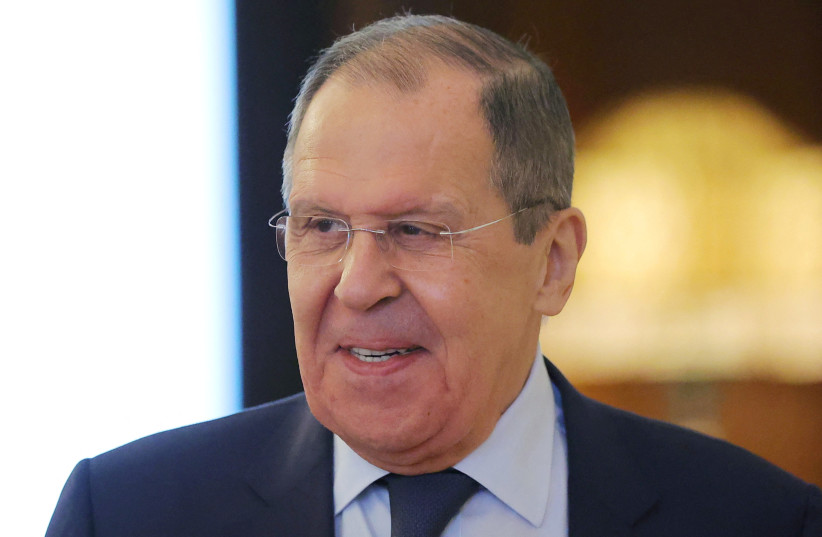
 Russian Foreign Minister Sergei Lavrov attends a meeting with Venezuelan Foreign Minister Carlos Faria in Moscow, Russia July 4, 2022. (credit: REUTERS/Evgenia Novozhenina/Pool)
Russia is meeting with China, India, Iran, Turkey, the Central Asian states, and some other countries that it wants to work with, such as Azerbaijan, Armenia, Belarus, Pakistan and Malaysia.
It also meets with the countries it sees as traditional friends such as Venezuela, Syria and a few countries in Latin America and Africa. Furthermore, Russia has interests in Hungary, Serbia and some states in the Middle East.
“There is neither point nor desire to maintain the previous presence in Western states. Our people work there in conditions that can hardly be called human. Problems are being created constantly for them; they face threats of physical assaults. And, most importantly, there’s no work to do since Europe decided to shut off from us and sever any economic cooperation. You can’t force love,” Lavrov said.
“You can’t force love”
Russian Foreign Minister Sergei Lavrov on ties with the West
He says Russia is shifting its center of gravity, or rather it is hoping the world’s center of gravity will shift to Asia.
What is Russia saying here?
This isn’t a “new Cold War” but rather a huge shift in the world, from a Eurocentric world that was rooted in European power and the era of colonial rule – as well as the World Wars – from a world where the US was a global hegemonic power that led an international, rules-based world order, to a new world that is ostensibly supposed to be multi-polar and led by China, Russia, Iran, Turkey and their friends; mostly authoritarian regimes.
Prophets of the rise of Asia, and particularly China, have been making this argument for ages. It’s not a huge secret that there is a rise in Asia, and a predicted decline in the West. A quick Google search will give you ample reading material.
However, Russia’s point is that it is openly embarking on this “geographical reorientation of activities both abroad and in the central office.” That means it has already instructed its foreign ministry to drawdown in the West. It is hoping the decline of the US and the West accelerates faster.
Russia is now pivoting to do what it was already doing in the Soviet era; focusing on the global south. Russia used to have the Patrice Lumumba University, later renamed inn 1992, which was supposed to concentrate on training personnel from Asia, Africa, Eastern Europe and Latin America. Lavrov is thus borrowing from Soviet era policies, but he is rebranding them.
Why does this matter to the Middle East?
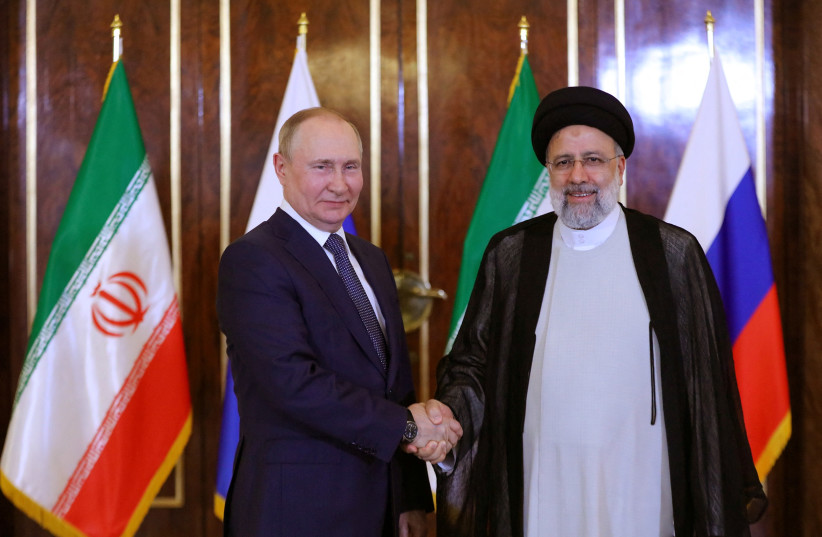
In the Middle East, this matters because Russia in the Soviet era was generally hostile to Israel. Iran is now supplying Russia with drones and may supply it with missiles. Iran is also working more closely with China. A Russia-China-Iran grouping is emerging; and this will include more work with Turkey, which is a fellow authoritarian regime; as well as their work with Central Asian states and Pakistan. In addition, Russia will seek to get Gulf countries to hedge on relations with the West. US anger at Saudi Arabia, for instance, could be exploited by Moscow.
The real ramifications for Israel can already be heard in comments from Moscow warning Israel about military support for Ukraine. At the same time Iran’s provision of drones and drones technology is badly harming Ukraine and making the case for Israel supporting Ukraine more clear. There is no greater recognition of the Iranian threat in Kyiv and also in other states in the Baltic. The BBC reported that the blackout affected more than 1,000 towns and villages in Ukraine due to Russian attacks this week.
The Ukraine war is now clearly more of an issue in the Middle East. Russia is openly shifting focus to the region and to the East. Meanwhile, Europe is waking up to the Iranian drone threat. This means that there is a rapid acceleration of convergence of policy issues that tie Israel to Ukraine; Russia to Iran; for instance.
Convergence means also that Russia may focus more on what happens in Syria or actively work to make Iran more dangerous in the region. Where once Russia sold itself as promising “stability” to the Middle East via backing authoritarians; accusing the US of backing “chaos” and endless wars, now the situation may be reversed; Russia may stoke chaos and endless wars, and the challenge for the region will be to bring stability.
It remains to be seen how the Moscow shift in foreign policy goals reaches the Middle East, but it may have very serious ramifications if the Moscow-Tehran partnership grows and Iran feels winds in its sails from Russia and China to resume missile and drone attacks in the region.