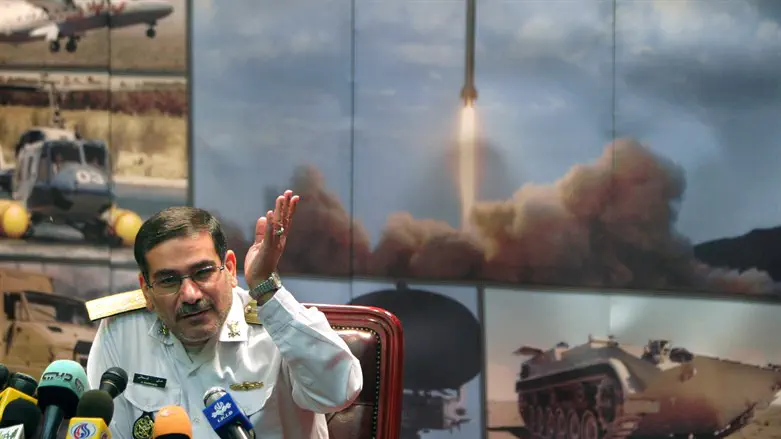
Iran’s missile capabilities are a “red line” and will not be a subject of negotiation, said Ali Shamkhani, an adviser to Iran’s Supreme Leader, on Wednesday, according to the Reuters news agency.
His remarks came as Tehran and Washington prepare for a new round of talks aimed at preventing further conflict.
Shamkhani’s statement, which was reported by state media, came during a march commemorating the 47th anniversary of the Islamic Revolution. “The Islamic Republic’s missile capabilities are non-negotiable,” Shamkhani declared.
Diplomatic discussions between US and Iranian officials took place last week in Oman, although they were indirect talks.
Following the talks, President Donald Trump described the discussions as “very good” and confirmed that further negotiations are expected.
The Wall Street Journal reported following last week’s talks that Iran rejected US calls to halt its uranium enrichment, although both sides agreed to continue negotiations in order to prevent an escalation.
Iran’s Foreign Minister Abbas Araghchi stated on Sunday that indirect nuclear negotiations with the United States will proceed if Tehran concludes that Washington possesses the “necessary seriousness” to reach a negotiated resolution and has agreed to drop what Araghchi described as the US’ “excessive and unrealistic” demands.
Two leaders end highly anticipated DC meeting, held amid negotiations over Iran’s nuclear program, with no major announcements or statements to the press; pair also discuss Gaza
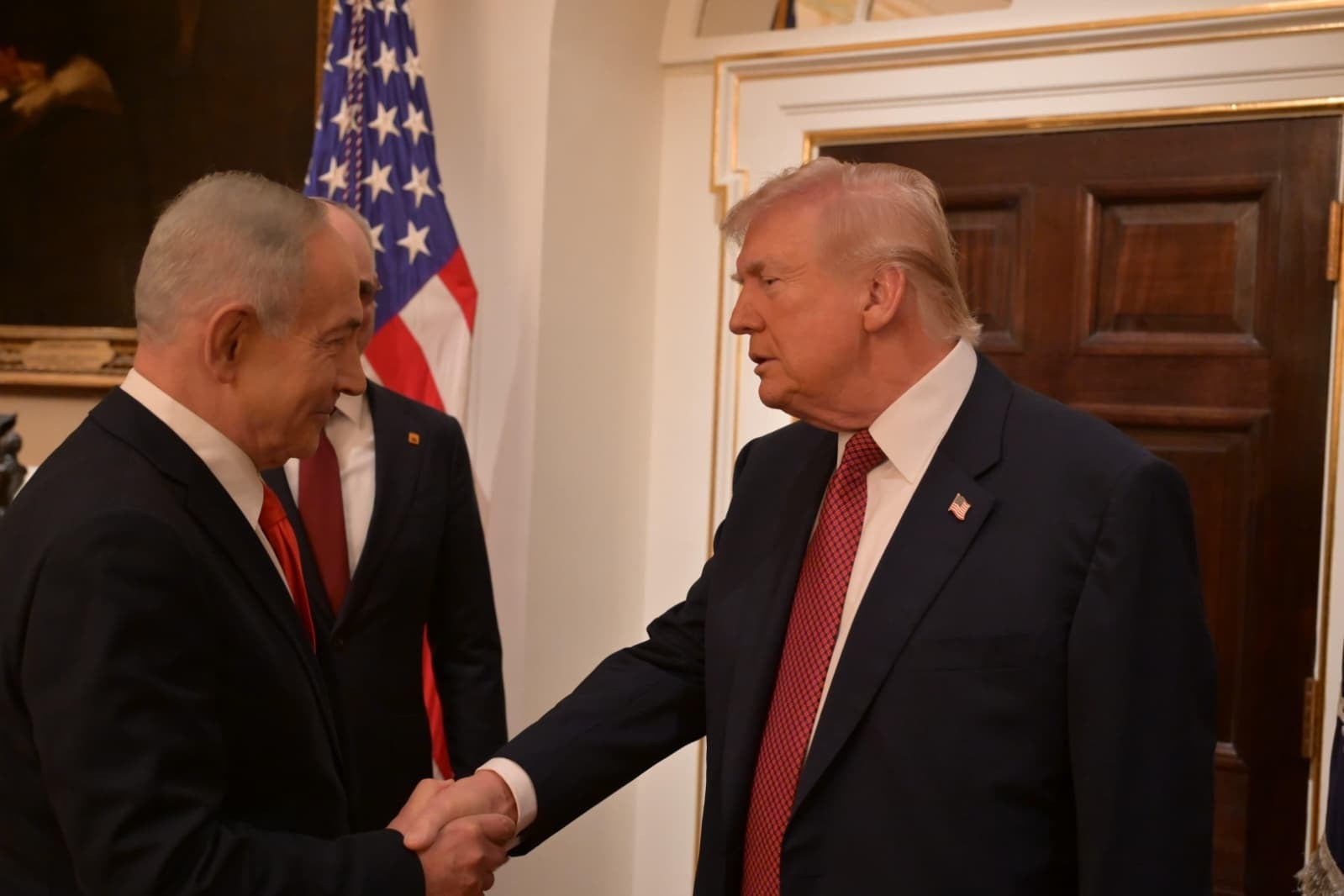
Prime Minister Benjamin Netanyahu (L) meets US President Donald Trump at the White House, February 11, 2026. (Avi Ohayon/ GPO)
WASHINGTON — US President Donald Trump met privately with Prime Minister Benjamin Netanyahu at the White House on Wednesday, and later said he had insisted to the Israeli leader that American negotiations with Iran continue.
Netanyahu said following the meeting that he had stressed Israel’s security needs. The meeting lasted three hours, but was not followed by public statements or a press conference, with both Trump and Netanyahu preferring to put out brief statements.
The highly anticipated meeting, the leaders’ seventh since Trump returned to office last year, came at a tense time in the Middle East, as the US president has threatened to attack Iran over its brutal repression of anti-regime protests last month. Iran has said it would strike Israel and US targets in response.
The US has built up forces in the Middle East, and is readying to send more, but it has also embarked on negotiations with Iran over the Islamic Republic’s nuclear program. Those talks were expected to be the focus of the meeting.
But despite the charged lead-up, the event itself was relatively muted. Unlike other times they have met, the two leaders did not speak to press, take questions, or make any bombshell announcements. Netanyahu did not enter the White House via the West Wing entrance where reporters were waiting, but took the south entrance.
“It was a very good meeting, the tremendous relationship between our two Countries continues,” Trump posted afterward on social media. “There was nothing definitive reached other than I insisted that negotiations with Iran continue to see whether or not a Deal can be consummated.”
He added, “If it can, I let the Prime Minister know that will be a preference. If it cannot, we will just have to see what the outcome will be.”
In his own short readout after the meeting, Netanyahu said the two sides “addressed negotiations with Iran, Gaza, and regional developments.”
“The prime minister emphasized Israel’s security needs in the context of the negotiations, and the two agreed to maintain close coordination and ongoing communication,” said the Prime Minister’s Office.
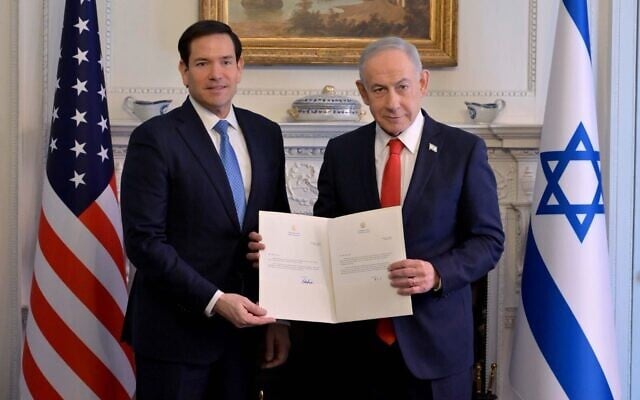
Prime Minister Benjamin Netanyahu (right) meets US Secretary of State Marco Rubio in Washington and joins the Board of Peace on February 11, 2025. (Avi Ohayon/GPO)
Netanyahu had originally planned to travel to Washington next week, but flew to Wednesday’s flash meeting given the sky-high regional tensions. Trump has threatened to attack Iran over its protest crackdown, which rights groups estimate may have killed tens of thousands, and boasted of bringing a US “armada” to the region.
Against that backdrop, the US opened talks with Iran, with the first round taking place last weekend in Oman, and a second round planned soon. Trump has reportedly said that coming to an agreement on Tehran’s nuclear program is a “no-brainer,” and US Secretary of State Marco Rubio said earlier this week that negotiations would need to also address Iran’s missiles, its proxy groups, and its treatment of its own population. Trump also said the talks should cover the missile program.
Despite Trump’s insistence that he was prioritizing talks, the Wall Street Journal reported on Wednesday that the US Defense Department ordered a second carrier strike group to deploy to the Middle East.
Iran has said it is prepared to discuss curbs on its nuclear program in exchange for lifting sanctions, but it has ruled out linking the issue to missiles and it has insisted on the right to enrich uranium.
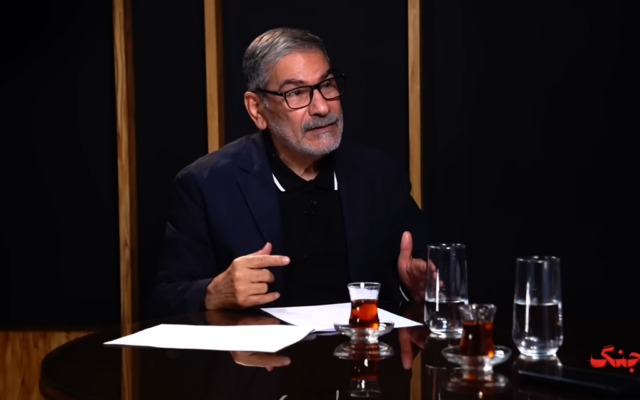
“The Islamic Republic’s missile capabilities are nonnegotiable,” Ali Shamkhani, an adviser to Iran’s supreme leader, said on Wednesday.
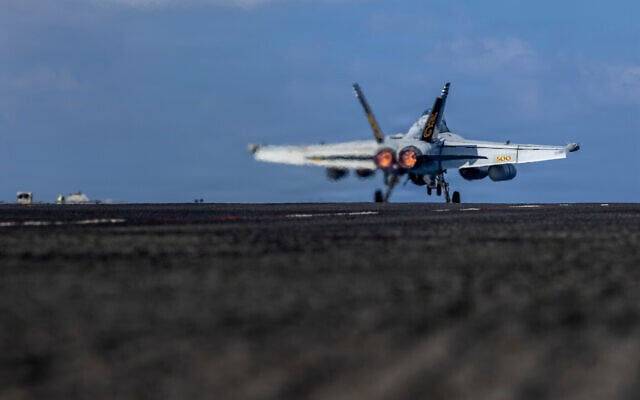
In a handout image, an EA-18G Growler launches from the flight deck of the Nimitz-class aircraft carrier USS Abraham Lincoln in the Indian Ocean on January 23, 2026. (Mass Communication Specialist Seaman Daniel Kimmelman/US Navy via AP)
In his social media post following the meeting with Netanyahu, Trump referred to negotiations held last year between the US and Iran, which ended shortly before the US bombed Iranian nuclear facilities at the end of the 12-day Israel-Iran war in June.
“Last time Iran decided that they were better off not making a deal, they were hit with Midnight Hammer — that did not work well for them,” he wrote. “Hopefully this time they will be more reasonable and responsible.”
For his part, US Vice President JD Vance indicated that the US is not planning to overthrow the Iranian regime, and is focused on preventing it from obtaining nuclear weapons.
Asked by reporters if he wanted to see regime change in Iran, Vance replied, “If the Iranian people want to overthrow the regime, that’s up to the Iranian people. What we’re focused on right now is the fact that Iran can’t have a nuclear weapon.”
The US had recently appeared to be open to the idea of regime change in Iran, with Trump calling on protesters to “take over” government institutions, given the mass protests there, and reportedly asking aides for a strike plan that could help spur the toppling of the government in Tehran.
Vance also alluded to military action.
“The president has told his entire senior team that we should be trying to cut a deal that ensures the Iranians don’t have a nuclear weapon,” Vance said. “But if we can’t cut that deal, then there’s another option on the table. The president is going to continue to preserve his options.”
Secretary of Iran’s Supreme National Security Council Ali Shamkhani in an interview, October 2025. (YouTube screenshot)
Ahead of Wednesday’s meeting, Netanyahu said he would present Israel’s “principles” on the US-Iran talks. Israel is wary of a narrow deal on Iran’s nuclear program that does not put an end to the regime’s uranium enrichment, require the moving overseas of its existing near-weapons-grade uranium, halt its ballistic missile development, and end its support for proxy terror groups, which have attacked Israel.
Netanyahu met with Rubio prior to the meeting, and also met with top White House advisers Steve Witkoff and Jared Kushner. According to Netanyahu’s office, Witkoff and Kushner provided “an update on the first round of talks they held with Iran last Friday.”
The meeting with Trump, according to a White House official, also included Rubio, US Defense Secretary Pete Hegseth, Witkoff, and Kushner.
According to a Channel 12 report aired as the meeting was taking place, it aimed to establish a joint course of action should Washington fail to reach an agreement with Iran.
The report, which cited US and Israeli officials, said Washington is skeptical that a deal with Iran can be reached — even one focused solely on Iran’s nuclear program, as opposed to one addressing missiles as well, a senior US official told the network. The official was said to add that if Israel and the US were to agree on a joint strike in the absence of a deal, it would be much more effective if done together.
The political and security establishments in Israel do not expect a deal to emerge, the report added, saying that Netanyahu seeks to preserve Israel’s freedom of action surrounding Tehran, regardless of whether a deal is reached.
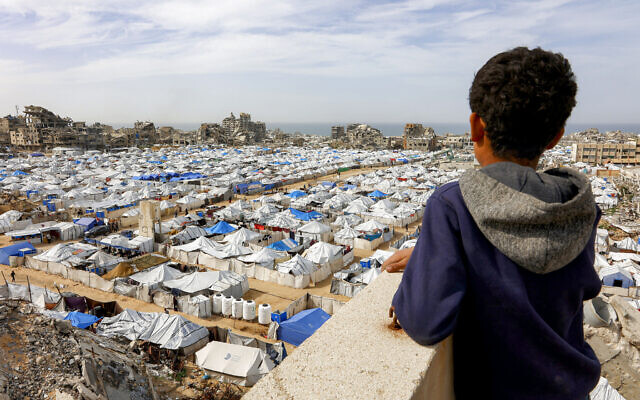
A boy looks at tents sheltering Palestinians displaced by conflict pitched near destroyed and heavily damaged buildings in the Muqusi area of Gaza City on February 7, 2026. (Omar AL-QATTAA / AFP)
Trump hails progress in Gaza
Also on the agenda was Gaza, with Trump looking to push ahead with the ceasefire agreement he helped broker that took effect in October. Progress on his 20-point plan to end the war and rebuild the war-torn enclave has stalled, with major gaps over steps such as Hamas disarming as Israeli troops withdraw in phases.
“We discussed the tremendous progress being made in Gaza, and the Region in general,” Trump wrote after the meeting.
Trump plans to hold the first meeting next week of his Board of Peace, which was initially framed to oversee future steps of the Gaza ceasefire plan but has taken shape with Trump’s ambitions of resolving other global crises. Netanyahu signed on to the body in his meeting with Rubio.
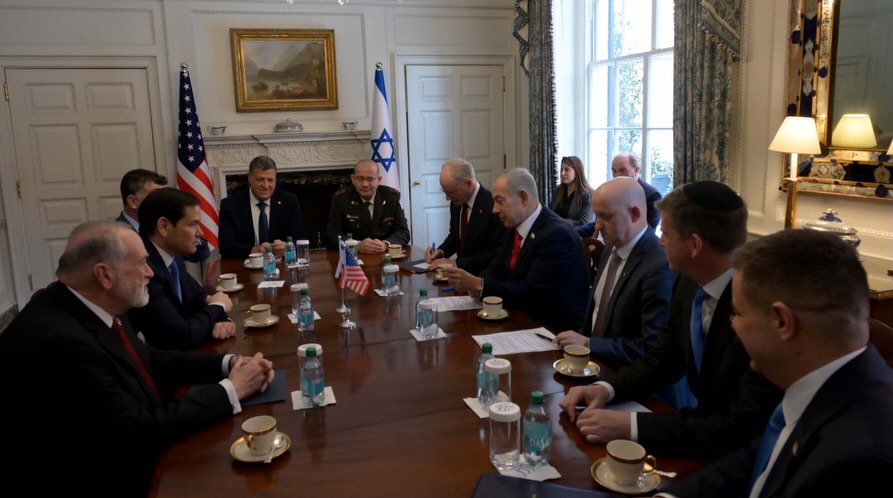
Prime Minister Benjamin Netanyahu meets at Blair House in Washington with US Secretary of State Marco Rubio and their delegations, February 11, 2026. (Avi Ohayon / GPO)
The day before the meeting, Trump stressed to the Axios news site that he opposes any Israeli move toward annexing the West Bank, declaring, “I am against annexation.”
He had previously ruled out Israel annexing the West Bank, despite calls from some of Netanyahu’s coalition partners to do so.
“We have enough things to think about now,” Trump said. “We don’t need to be dealing with the West Bank.”
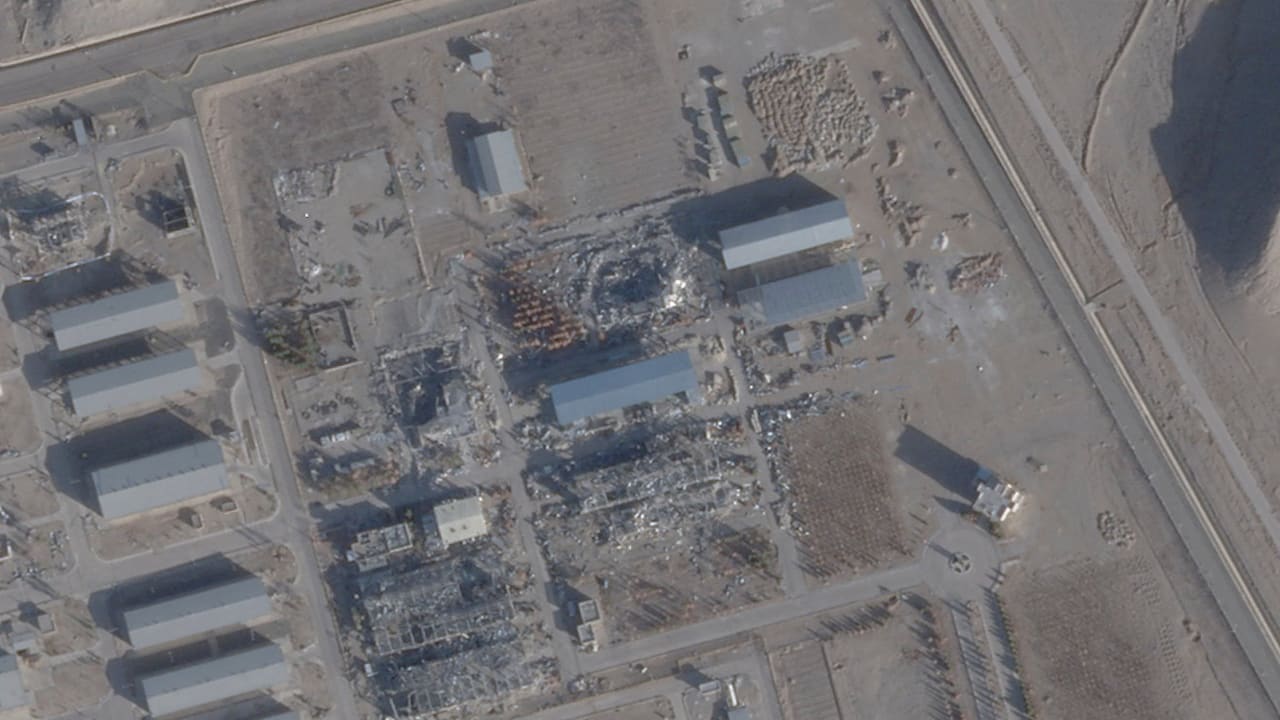
The images revealed the regime has covered the middle and southern entrances of the nuclear facility with soil, and the northernmost tunnel entrance, which features additional passive defense measure
A satellite imagery taken on February 1, 2026, shows a new roof over a previously destroyed building at Isfahan nuclear site, Iran.(photo credit: 2026 PLANET LABS PBC/Handout via REUTERS)ByDANIELLE GREYMAN-KENNARD Updated: The Islamic Republic is likely preparing for the possibility of a US strike, experts told The Jerusalem Post on Tuesday after reviewing high-resolution Sunday satellite images of the Isfahan nuclear complex.
Center and southern entrances to the nuclear facility have been covered with earth, and the northernmost tunnel entrance, which features additional passive defensive measures, has also been backfilled with soil, the images revealed.
“Backfilling the tunnel entrances would help dampen any potential airstrike and also make ground access in a special forces raid to seize or destroy any highly enriched uranium that may be housed inside, or the more difficult,” the Institute of Science and International Security said.
“Preparations like these were last observed in the days before Operation Midnight Hammer struck facilities at Fordow, Natanz, and Isfahan.”
“The late January and early February 2026 activity around the Isfahan nuclear complex is likely part of a larger push to create defensive layers to the Islamic Republic’s nuclear and ballistic missile facilities in anticipation of a possible US strike,” Jonathan Hackett, a former US Marine Corps veteran, told the Post.
He served for 20 years, specializing in counterintelligence with affiliations to the US National Security Agency, the US Defense Intelligence Agency, and special operations units.
“While engineering units were backfilling these tunnels in Isfahan, the Islamic Revolutionary Guard Corps was similarly surging to protect ballistic missile sites,” he continued.
“On January 31, 2026, specialized IRGC Ground Forces units deployed around the country to provide additional security at strategic missile facilities critical to Iran’s defense-in-depth against a US attack.”Iranian parliament members chant in support of the IRGC while wearing military uniforms in Tehran, Iran, February 1, 2026. (credit: Hamed Malekpour/Islamic consultative assembly news agency/WANA (West Asia News Agency)/Handout via )
Tehran and Washington hold talks as tension rises
Hackett said that the distribution of forces was part of Iran’s two-decade-old strategy called “the Mosaic Doctrine.
“The IRGC’s Ground Forces and Aerospace Forces work together to secure the physical infrastructure the regime needs to transport, store, and protect short- and medium-range ballistic missiles at sites throughout the country that would be used against regional targets in the event of a US attack against Iran.”
Tehran and Washington held indirect talks last week as tensions have been mounting over the Islamic Republic’s nuclear ambitions and its brutal crackdown on protests, which have seen tens of thousands murdered across Iran and widespread human rights violations.
While some Iranian officials have said that Iran could agree to dilute its stockpile of 60% enriched uranium in exchange for the lifting of all sanctions imposed against its nuclear program, Iranian Foreign Minister Abbas Araghchi previously insisted that a complete halt to uranium enrichment is absolutely unacceptable to Iran.
“The discussions should focus on scenarios in which uranium enrichment continues, alongside assurances that the enrichment is solely for peaceful purposes,” he said.
Dr. Lynette Nusbacher, a former British Army intelligence officer and one of the architects behind two of the UK’s National Security Strategies, pertaining to Britain’s National Security Secretariat, told the Post that the movement around the Isfahan site was likely meant as a message connected to the latest talks.
“Iran is protecting these facilities in ways that are observable from satellites,” Nusbacher said. “It is certainly easier to get a couple of bulldozers to clear the entrances than it is to rebuild the place after a Tomahawk or a Massive Ordnance Pentetrator turns these facilities into craters.”
“I think that Iran’s national security people have clearly assessed, perhaps in light of last week’s face-to-face discussions between Iran’s foreign minister and the American envoys, that they are being told either to give up their nuclear program or have it destroyed by American forces,” Nusbacher continued.
The only solution to Iran’s nuclear ambitions is for its people to establish a new government
While Tehran is conveying a message, Nusbacher said, Washington is “in the process of rather theatrically demonstrating a readiness and even an eagerness to attack Iran, including regime targets.”
“This buildup is, in my view, designed to shape Iran’s participation in talks with [US President Donald] Trump’s envoys on the future of its nuclear program,” the doctor said.
Still, it is also “a signal that the United States might be ready to make a far more committed set of attacks against Iranian nuclear targets than they did last year. This is particularly so because last year’s attacks, whatever their intent, appear not to have had a decisive effect.”
Noting that Tehran has previously agreed not to pursue nuclear weapons, and denied the existence of its ambitions while continuing to enrich Uranium, Nusbacher stressed that in her opinion, the “only long-term solution to the Iranian nuclear program is for the Iranian people to find themselves a government that is more interested in the needs of the Iranian people than in seeking to dominate the region.”
Sharing similar views, Dr. Efrat Sopher, an Iranian-Israeli security analyst and the chair of the Board of Advisors at the Ezri Center for Iran and Gulf States Research at the University of Haifa, said, “One wonders what the Iranians are hiding in Isfahan.”
“They also seem to expect some form of kinetic engagement. This is puzzling as one would assume that in the event of an attack on the complex in Isfahan, it would be bombed from the air.”