Mossad chief meets top Biden official in Washington


Mossad chief David Barnea met yesterday with US National Security Adviser Jake Sullivan in Washington, a White House National Security Council spokesperson tells The Times of Israel.

“Director Barnea has long had a pre-scheduled visit for this time,” the spokesperson says, seemingly pre-empting any possible attempt to tie the talks to the Iran nuclear deal.

He adds that the two discussed “a range of global and regional issues.”

“We appreciate our close consultations, as always, with him and other senior Israeli officials,” the spokesperson adds.

Israeli officials have stepped up contacts with American and European counterparts in recent weeks to weigh in on a possible revival of the Iran nuclear deal.


David Barnea wraps up Washington trip; PM’s office says Israeli spymaster shared ‘sensitive intelligence materials’ with heads of CIA, FBI, Pentagon and other top officials

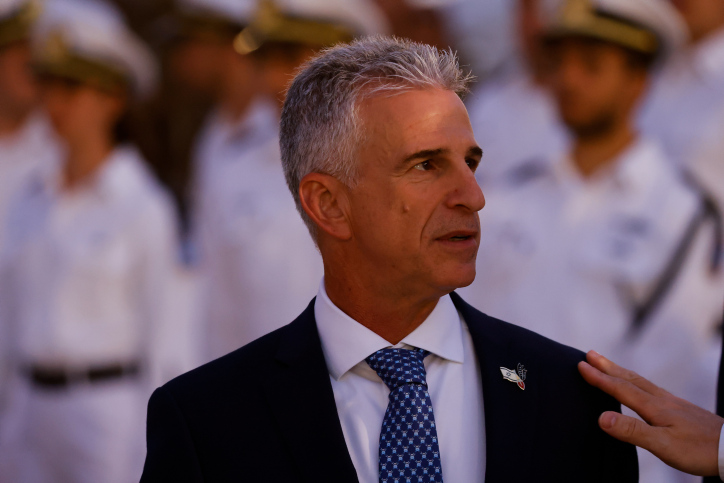
File: Mossad chief David Barnea attends a ceremony marking Remembrance Day for Israel's fallen soldiers and victims of terror in Jerusalem on May 3, 2022. (Olivier Fitoussi/Flash90)

File: Mossad chief David Barnea attends a ceremony marking Remembrance Day for Israel’s fallen soldiers and victims of terror in Jerusalem on May 3, 2022. (Olivier Fitoussi/Flash90)

Mossad chief David Barnea on Thursday wrapped up a trip to Washington for high-level talks with US officials as part of Israeli efforts against a restored nuclear deal with Iran.

According to the Prime Minister’s Office, Barnea held meetings with CIA chief William Burns, FBI Director Christopher Wray, National Security Adviser Jake Sullivan, US Defense Secretary Lloyd Austin, Chairman of the Joint Chiefs of Staff Mark Milley and senior officials at the State Department.

Barnea, who left for the US on Monday, showed the officials “sensitive intelligence materials” and stressed “Israel will not be able to stand idly by while Iran continues to deceive the world,” according to a statement from the Prime Minister’s Office.

“The director of the Mossad heard from his counterparts that the US remains committed to the security of the State of Israel,” the statement added.

“The Americans emphasized that they will not allow Iran to obtain a nuclear weapon and that they will continue to act in full cooperation with the State of Israel with regards to regional issues in the Middle East concerning the security of the State of Israel.”

A White House National Security Council confirmed Barnea’s meeting with Sullivan on Wednesday.

White House national security adviser Jake Sullivan speaks during a press briefing at the White House, July 11, 2022, in Washington. (AP Photo/Evan Vucci)

“Director Barnea has long had a pre-scheduled visit for this time,” the spokesperson told The Times of Israel, seemingly pre-empting any possible attempt to tie the talks to the Iran nuclear deal.

He added that the two discussed “a range of global and regional issues.”

“We appreciate our close consultations, as always, with him and other senior Israeli officials,” the spokesperson added.

Israeli officials have stepped up contacts with American and European counterparts in recent weeks to weigh in on a possible revival of the Iran nuclear deal, as the sides appeared to be nearing an agreement.

However, talks appear to have hit a snag over the past week, with Iran raising a number of demands rejected by the US and European Union. Zman Yisrael, The Times of Israel’s sister site, reported that US officials — including President Joe Biden — conveyed to Prime Minister Yair Lapid during recent talks that the restoration of the deal is off the table for now.

Israel has been pressuring the US not to reenter the 2015 nuclear accord. A senior defense official said last month that Israel had two main issues with the emerging deal: the so-called sunset clause, which would lift limitations on Iran’s nuclear program when the accord expires; and sanctions relief that would allow Iran to increase funding to its proxies.

Biden took office aiming to revive the deal, which was abandoned in 2018 by his predecessor Donald Trump, who unleashed a volley of fresh sanctions on the cleric-run state.

Israel has meanwhile pushed the US to prepare a military option against Iran and Biden said in July that he would be prepared to use force if necessary to prevent Iran from obtaining a nuclear weapon.

Prime Minister Yair Lapid at Nevatim airbase in southern Israel, September 6, 2022. (Video screenshot/GPO)

Israel has long opposed the deal, arguing that Iran is seeking to build a nuclear bomb, and has published intelligence it says reveals the Iranian weapons program. Iran has denied any nefarious intentions and claims its program is designed for peaceful purposes, though it has recently been enriching uranium to levels that international leaders say have no civil use.

Jacob Magid and Emanuel Fabian contributed to this report.


Foreign Ministry spokesperson says closing of investigation needed as ‘guarantee’ for reentering accord; US has called recent Iranian positions ‘not constructive’

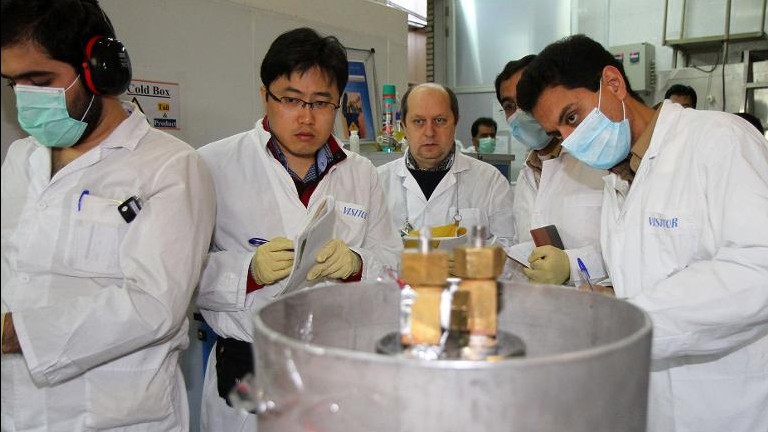
Illustrative: IAEA inspectors at Iran's nuclear power plant in Natanz on January 20, 2014. (IRNA/AFP Kazem Ghane/File)

Illustrative: IAEA inspectors at Iran’s nuclear power plant in Natanz on January 20, 2014. (IRNA/AFP Kazem Ghane/File)

Tehran said Monday that it was seeking a halt to investigations into its nuclear activity by the International Atomic Energy Agency as a condition for entering the nuclear deal.

“An end to the agency’s probes is part of the guarantees that we are seeking to have a sustainable and durable nuclear agreement,” Iranian foreign ministry spokesperson Nasser Kanaani told a televised news conference, according to the Reuters news agency.

The comments are the clearest indication yet that the UN watchdog’s investigations into undeclared nuclear sites have become one of the main sticking points to a return to the 2015 agreement.

The United States said Thursday it had received a new response from Iran on reviving the nuclear deal but that it was “not constructive.”

The response was the latest in a back and forth between the adversaries via mediators from the European Union, whose foreign policy chief Josep Borrell last week had hoped for a resolution within days to revive the accord.

Iranian foreign ministry spokesman Nasser Kanaani said early Friday Iran time that Tehran sent its latest reply in response to the US position, according to state news agency IRNA. He called the Iranian proposal “constructive” and expressed hopes that a deal would be finalized.

Washington did not share Kanaani’s enthusiasm for the proffer.

“We can confirm that we have received Iran’s response through the EU,” State Department spokesman Vedant Patel said late Thursday in Washington.

In this photo released on Thursday, August 11, 2022, by the Iranian Foreign Ministry, Foreign Ministry spokesperson Nasser Kanaani speaks in Tehran, Iran. (Iranian Foreign Ministry via AP)

“We are studying it and will respond through the EU, but unfortunately it is not constructive.”

A senior Biden administration official was similarly critical of the Iranian response, but would not provide specifics.

“We are studying Iran’s response, but the bottom line is that it is not at all encouraging,” the unnamed official told Politico. “Based on their answer, we appear to be moving backward.”

A European diplomat echoed that sentiment, telling the US news site that Tehran’s proposal appeared “negative and not reasonable.”

The US has declined to discuss details publicly but disputes include Iran’s insistence on the UN nuclear watchdog closing a probe of three undeclared sites suspected in nuclear work before the 2015 nuclear deal — something the US and the IAEA both oppose.

US President Joe Biden took office aiming to revive the accord, which was trashed in 2018 by his predecessor Donald Trump, who unleashed a volley of fresh sanctions on the Islamic Republic.