The Middle East is changing, Israel must be ready – opinion

When it comes to negotiating with Iran, one should be ready to haggle: pure diplomacy without a military option in the back pocket could prove to be a recipe for disaster.

By UZI RABI Published: SEPTEMBER 1, 2022 06:53

 US PRESIDENT Joe Biden and Saudi Crown Prince Mohammed bin Salman are among participants at an Arab summit in Jeddah, in July. (photo credit: EVELYN HOCKSTEIN/REUTERS)

US PRESIDENT Joe Biden and Saudi Crown Prince Mohammed bin Salman are among participants at an Arab summit in Jeddah, in July.
(photo credit: EVELYN HOCKSTEIN/REUTERS)

US President Joe Biden’s July visit to the region substantiated the changing paradigm of geopolitics in the Middle East. Tumult has defined the region over the course of the last decade, from the aftermath of the Arab Spring to the signing of the Abraham Accords. The superpowers’ shift in conduct, new regional dynamics, and geo-ecological developments have, however, changed the reality.

While Israel served as the visit’s stepping stone, it was definitely not its most important leg. In other words, the Palestinian issue, conspicuous throughout the 20th century, is now marginal and seems to have lost its centrality. This was best reflected in the president’s remark that “the time is not ripe” for political solutions. Instead, he confined himself to economic gestures, pledging $100 million for Palestinian healthcare. Although unsustainable, the Palestinian issue has garnered less attention from Arab states too, which have instead nurtured their own individual interests amid the upheaval.

The most important part of Biden’s trip was his highly controversial visit to Saudi Arabia. Due to the ramifications of the war in Ukraine, and the rising price of crude oil (over $100 per barrel), his administration has now been forced to step in and walk back its criticism against the Saudi heir, Mohammed bin Salman, who was previously ostracized for the country’s human rights record. This represents a marked shift from its earlier decision to lessen its involvement in the region.

For Israel, these developments heralded new relationships across the wider region, including North Africa in the West, and the Arabian Peninsula in the East, adding to the neighboring states at peace with Israel, Egypt and Jordan – as well as in the Eastern Mediterranean. In this sense, it is possible to speak of a joint architecture of actors advocating for stability and rejecting the Islamist totalitarian subversion in a manner that was unimaginable even a few years ago.

Several interconnected developments propagated this new and evolving geopolitical situation. On the global level, regional actors were jolted by the US shifting of priorities, and its diminishing role in the region. American war fatigue aimed at “ending endless wars,” in conjunction with shifting strategic priorities such as combating China’s rise, has led to the region’s reduced importance.

SAUDI CROWN PRINCE Mohammed bin Salman and US President Joe Biden gesture stand for a ‘family photo’ ahead of the Jeddah Security and Development Summit in Saudi Arabia, July 16. (credit: BANDAR ALGALOUD/COURTESY OF SAUDI ROYAL COURT/HANDOUT VIA REUTERS)
The US is uninterested in using coercive force even against Iranian ambitions, emboldened by the 2015 nuclear deal and widespread regional instability. As such, states in the region must take stock of their own strategic positions and look for alternative security guarantors.

The search is on
THE SEARCH for a new regional security guard encouraged the Gulf’s about-face toward Israel, setting the stage for the Abraham Accords in August 2020. The country’s overwhelming military and technological superiority can balance ascendant Iran. During his visit, Biden himself faced immense pressure to do more to counter Iran. The Gulf Cooperation Council +3 summit in Jeddah was another by-product of the Abraham Accords.

The multilateral engagement and warming of the Arab states toward Israel – catalyzed by the shared threat of Iranian expansion – underscored the interest-based approach to foreign affairs in the region, casting aside previous maxims of Arab or Muslim solidarity with the Palestinians. In the new Middle East, particular state interests have eclipsed these orientations.

Recent events reflect this shift. In the Gaza Strip, not only did Hamas and the Palestinian Authority demonstrate the art of fence-sitting, but most Arab states let the events pass relatively ignored. More critical are recent developments in the Iranian nuclear deal.

The European Union, which regards Iran as an attractive market and a viable source of energy, has always been more lenient in its approach to Tehran and has now brokered a controversial “text” in coordination with US officials to close the deal.

Even by the EU’s own standards, the concessions proposed cut Iran generous slack. It remains to be seen whether the nuclear deal will materialize, but it is safe to assume that no deal will prevent Iran from conducting undeclared nuclear weapons work at several sites.

It seems that the dynamics of the West-East pendulum have come full circle. When it comes to negotiating with Iran, one should be ready to haggle: pure diplomacy without a military option in the back pocket could prove to be a recipe for disaster.

With this in mind, a wiser Israel should be ready for change as it emerges. Amid this regional transformation, Israel will face both new opportunities as well as challenges. The country must be equipped with the knowledge and proficiency in a strategic, well-balanced policy to improve and leverage its position in the Middle East through the 21st century.

The writer is the director of the Moshe Dayan Center for Middle Eastern and African Studies at Tel Aviv University. This article was written in collaboration with UK Israel Future Projects.
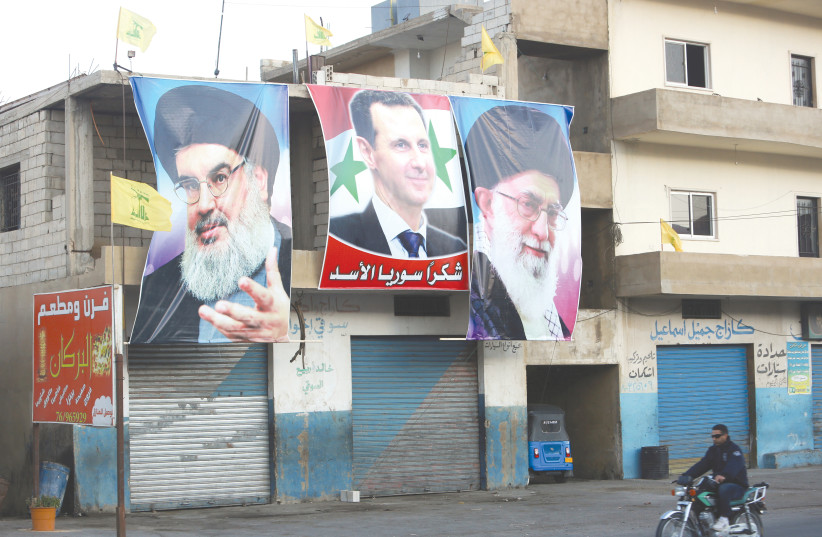


With Russia working closely with Iran and potentially acquiring their drones, the ramifications loom over the Middle East, and especially over Syria.

 POSTERS DEPICT the Hezbollah, Syrian and Iranian leaders near the Lebanese-Syrian border. How can we ignore that Russia allows attacks against targets of Iran and its proxies in Syria? (photo credit: AZIZ TAHER/REUTERS)
POSTERS DEPICT the Hezbollah, Syrian and Iranian leaders near the Lebanese-Syrian border. How can we ignore that Russia allows attacks against targets of Iran and its proxies in Syria?
(photo credit: AZIZ TAHER/REUTERS)

The recent rounds of airstrikes in Syria are raising tensions between Iran and the US as well as potentially between Iran and Israel. They might even affect Russia.

The Syrian Defense Ministry said that at “approximately 20:00 this evening, the Israeli enemy targeted Aleppo International Airport with a missile strike that caused material damage to the airport.”

These strikes come in the wake of two rounds of airstrikes carried out by the US against Iranian affiliates in Syria over the last two weeks.

The spotlight on Israel matters because it comes as pro-Iranian media, like Al-Mayadeen and also Iran’s own Fars News reported the strikes. What Iran is doing is highlighting these strikes in contrast to past incidents.

Additionally, rumors seem to indicate a return to the Iran deal while the US has carried out two rounds of airstrikes on Iranian IRGC affiliates in Syria. This was apparently in response to a large drone attack from Iraq which targeted US forces in Syria. It also comes as Russia is working on acquiring Iranian drones and reports have circulated saying Russia moved an S-300 battery from Syria back to Russia.

 Smoke rises from shelling on the road to Aleppo international airport, Syria October 28, 2016. (credit: REUTERS/Ammar Abdullah)Smoke rises from shelling on the road to Aleppo international airport, Syria October 28, 2016. (credit: REUTERS/Ammar Abdullah)

What do all the airstrikes mean?

The recent incidents in Syria raise many questions about how the Syrian battlefield may be changing and how Syria is becoming a focus of activity, both regionally and globally.

While Iran has been entrenching Syria for years, moving weapons to Hezbollah and constructing bases, moving drones and even trying to move air defenses to Syria. Overall, the focus on Syria matters now because to the Iran deal.

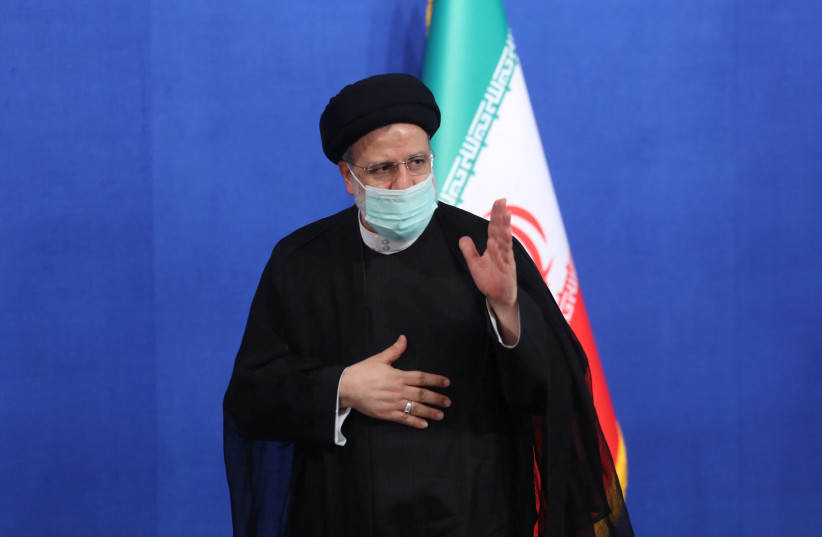
 Iran's President Ebrahim Raisi gestures after a news conference in Tehran, Iran August 29, 2022. (credit: MAJID ASGARIPOUR/WANA/REUTERS)Iran’s President Ebrahim Raisi gestures after a news conference in Tehran, Iran August 29, 2022. (credit: MAJID ASGARIPOUR/WANA/REUTERS)

A lot is happening in the region in this regard: Iran is focused on the political chaos in Iraq; Iran’s Foreign Minister flew to Russia on August 30; the US expressed concern about the amassing of weapons by Hezbollah as the UNIFIL mandate was renewed. And, Israel’s Prime Minister Yair Lapid spoke to US President Joe Biden, during which Lapid praised US airstrikes against Iranian affiliates in Syria.

How can we make sense of this?

The Alma Research & Education Center noted on the evening of August 31, “a short time ago, the #Aleppo international airport in northern Syria was attacked from the air. Apparently, the runway and warehouses were attacked. It seems that the airport has become part of the air corridor in addition to the Damascus airport.”

Why is Iran shifting its air corridor north to Aleppo? Is it because the previous corridor from Albukamal or T-4 heading to Damascus and then to Lebanon or toward the Golan, has become less sustainable? Is this why Iran attempted to attack US forces in Tanf near the Jordanian border and also the threatening US forces in eastern Syria?

After all, Iran must transit between Tanf and the Euphrates to extend that corridor. Using Aleppo can work for it because it is in northern Syria, but it is also close to Turkey as well as to the Russians in Latakia. If the Russians are moving S-300s out of Syria or focused on Ukraine at the moment, then Iran may be taking advantage of that reality.

Overall, the recent airstrikes in Syria paint a picture of heightened tensions right as the West is talking about a return to the Iran deal.

This presents a picture of what the future may look like even with a deal; with Iran increasingly moving its weapons to Syria and toward Lebanon, even as it gets something from the West. With Russia now working closely with the Iranians and potentially acquiring their drones and looking for more defense connections with Tehran, the ramifications loom over the Middle East, and especially over Syria.

https://www.jpost.com/middle-east/article-716023


Biden, Lapid finally discuss brewing Iran deal

The leaders reiterated their commitment to preventing Iran from achieving a nuclear bomb. 

By Debbie Reiss, World Israel News

Prime Minister Yair Lapid and President Joe Biden spoke on Wednesday about the nascent nuclear agreement with Iran, which the European Union’s foreign affairs chief said will be completed “within days.”

Biden and Lapid both reiterated their commitment to preventing Iran from achieving a nuclear bomb, according to a readout from the Prime Minister’s office. The two spoke “at length” about the negotiations surrounding the deal, the statement said, but did not elaborate further.

Lapid also welcomed U.S. efforts against “Iran’s terrorist activity in the Middle East and beyond,” and pointed to recent strikes ordered by Biden against Iranian militias in Syria, in which four Iranians were killed.

According to the EU’s Josep Borell, a new agreement was in its final touch up phase and could be signed between Iran and world powers in the coming days.

U.S. national security spokesman John Kirby said on Wednesday that “we’re closer” than ever to completing a deal.

In their call, Biden “emphasized his deep commitment to the security of the State of Israel, and to preserving Israel’s capability to deter its enemies and to defend itself by itself against any threat,” the PMO statement said.

According to Hebrew reports, the two leaders agreed that Israel will preserve the right to military action against Iran if needed.

Lapid has repeatedly stated in recent days that Israel will not be bound by the agreement, should it come to pass.

Lapid reportedly tried multiple times to organize the telephone conversation with Biden last week, only to be rebuffed with the excuse that the American president was “on vacation.”

Earlier this week, Iran’s President Ebrahim Raisi said he would not be party to a nuclear deal if U.N. inspectors did not drop their investigation of undeclared nuclear sites. Raise also issued a threat to Israel against destroying Iran’s nuclear program, saying “we will see if anything from the Zionist regime will remain or not.”