
American base in Kuwait targeted after US hits Iranian sites in response to downing of a US drone; Trump says Iran ‘wants to make a good deal’ as Tehran makes amendments to MOU
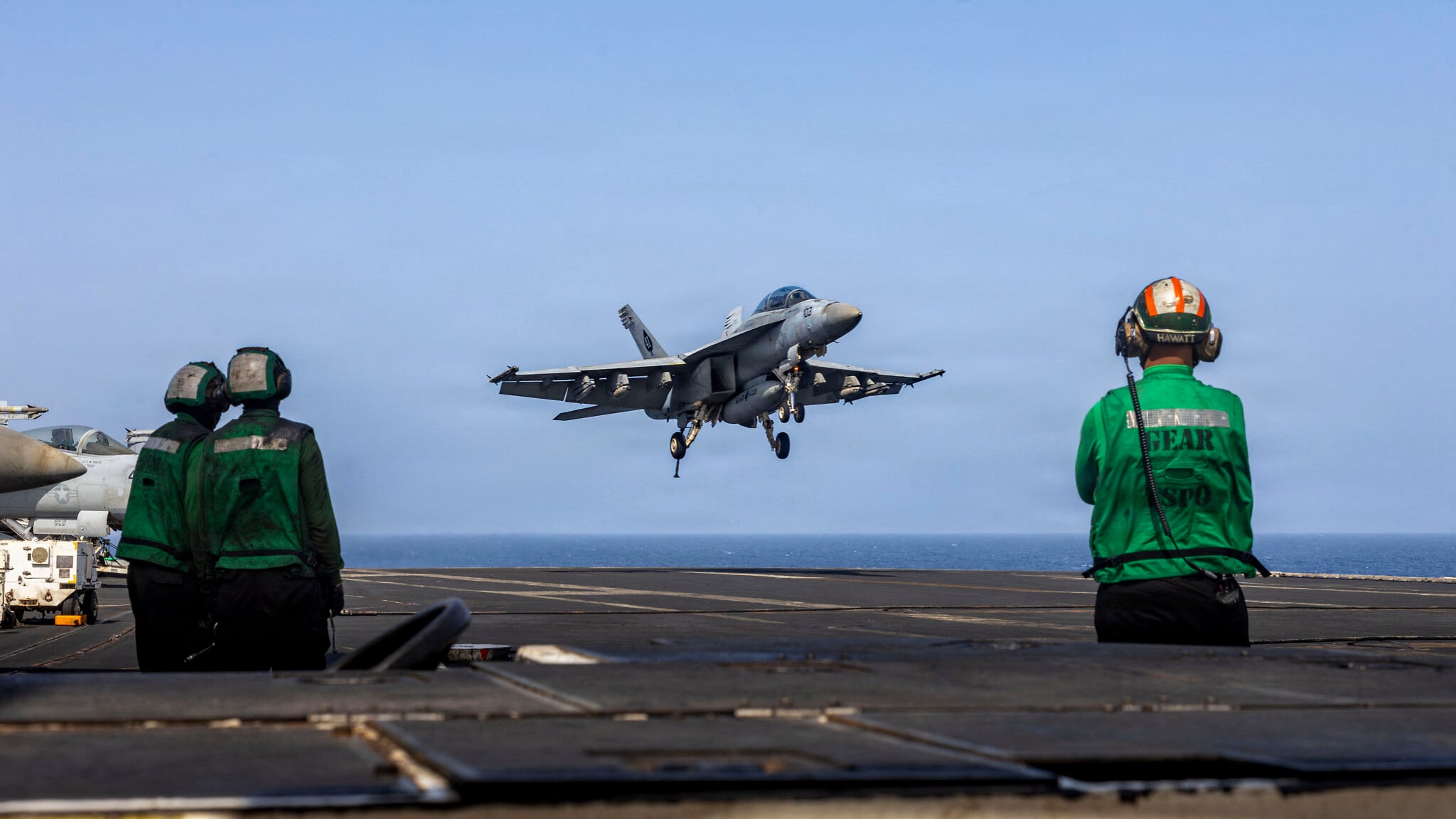
The United States bombed Iranian radar and drone control sites in Iran after Tehran shot down an American MQ-1 Predator drone this weekend, the American military said Monday. Iran acknowledged launching a retaliatory strike, while Kuwait said it had intercepted incoming drone and missile fire.
The dueling attacks reflect the fragility of a weekslong ceasefire in the Iran war, which has been marred by repeated strikes even as American and Iranian officials try to negotiate a deal to extend it. Iran has maintained its chokehold on the Strait of Hormuz in the meantime, disrupting global energy supplies, as a fifth of all oil and natural gas traded once passed through the narrow mouth of the Persian Gulf.
Tehran was, meanwhile, making amendments to a draft Memorandum of Understanding to end the war with the US, after US President Donald Trump reportedly sent back a hardened version of a possible memorandum, even as he insisted that Iran wanted to make a deal, reassuring that “it will all work out well in the end.”
The US military’s Central Command said Monday that it had carried out the strikes in Iran on Saturday and Sunday around the city of Geruk and on Qeshm Island.
“The measured and deliberate strikes occurred … in response to aggressive Iranian actions that included the shootdown of a US MQ-1 drone that was operating over international waters,” Central Command said.
“US fighter aircraft swiftly responded by eliminating Iranian air defenses, a ground control station, and two one-way attack drones that posed clear threats to ships transiting regional waters.”
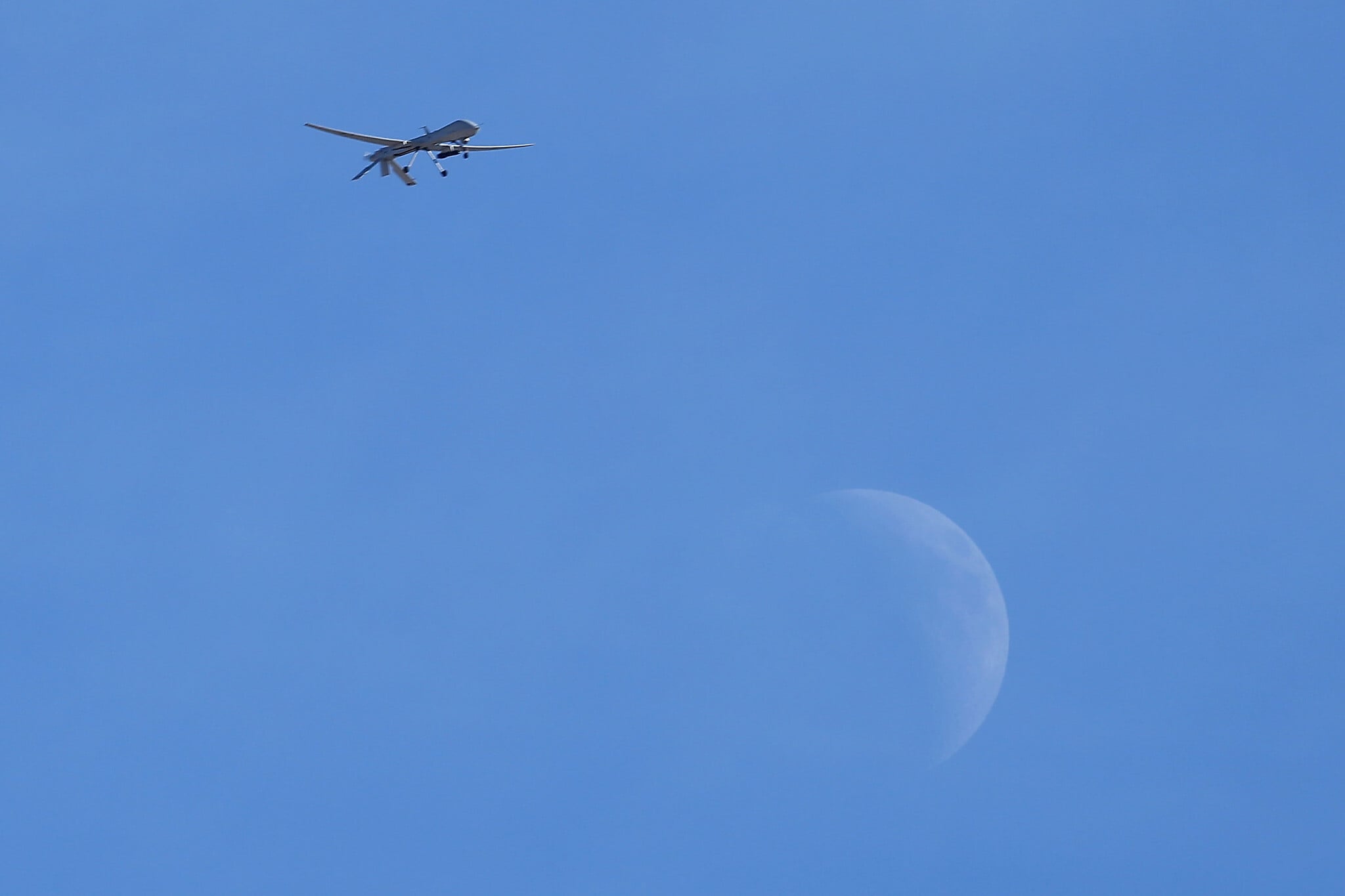
The Predator has been phased out of service by the US Air Force, which now flies the MQ-9 Reaper, though the US Army still flies the Predator. The US military said no American troops were hurt in the attacks.
Kuwait meanwhile said its air defenses had opened fire early Monday morning to intercept incoming drone and missile fire. Iran’s paramilitary Revolutionary Guard said in a statement carried by the state-run IRNA news agency that US forces had targeted a telecommunications tower.
The Guard said it responded with an attack without saying where, likely referring to the attack on Kuwait, which hosts US Army Central, the Mideast forward command for the Army.
Iranian state television later shared footage of the ballistic missile launch, including a close-up showing a sticker on its body depicting a bruised Trump overlaid on a “closed” Strait of Hormuz with the caption: “Until the last American soldier leaves the region.”
Trump has said his key aim in the war is to prevent Iran from developing a nuclear weapon with its highly enriched uranium. While Iran, whose leaders are sworn to Israel’s destruction, denies seeking nuclear arms, it has amassed uranium enriched to levels with no civilian application.
Trump is under pressure to reopen the strait and bring down US gasoline prices ahead of the November congressional elections, as voters grow increasingly frustrated by rising prices. At the same time, he faces a potential backlash from Iran hawks in his own party over any concessions to Tehran.
The two sides remain at odds on several other issues, such as Tehran’s demands for the lifting of sanctions and the release of $12 billion in frozen assets in foreign banks before engaging in substantive talks on its nuclear program.
Ongoing negotiations
Hours after the latest exchange of fire, Trump posted on Truth Social that, “Iran really wants to make a deal, and it will be a good one for the U.S.A. and those that are with us.”
However, Trump also said it was tougher for him to negotiate with Iran with all the domestic political commentary surrounding the conflict.
“… it is MUCH tougher for me to properly do my job and negotiate, when political hacks keep negatively ‘chirping,’ at levels never seen before, over and over again, that I should move faster, or move slower, or go to war, or not go to war, or whatever,” the president wrote on Truth Social.
“Just sit back and relax, it will all work out well in the end – It always does!”
His comments came after Tehran was reported to be making amendments to a draft Memorandum of Understanding to end the war with the US, Iran’s semi-official Tasnim news agency said, citing an unnamed source.
Reports of Iran’s amendments emerged after Trump had sent a tougher MOU proposal back to Iran, and underlined the rift that the parties still need to close.
Appearing to acknowledge the new, tougher proposal that Iran received, Tasnim says that exchanges on the text “are ongoing, with both parties regularly proposing amendments.”
At the same time, Iran’s chief negotiator, Mohammad Bagher Ghalibaf, warned that the US was not to be trusted, saying Tehran will not agree to any deal with Washington unless it fully secures Iranian rights.
Oil prices rose as markets reopened Monday in response to the reports of hardened negotiating points. The increase follows a week where crude prices dropped over 11 percent amid hopes that an imminent peace agreement would lead to the reopening of the Strait of Hormuz.
Iran was already in talks with the United States about the fate of its nuclear program in February when the US and Israel launched air and missile strikes that wiped out much of the Islamic Republic’s senior leadership.
Iranian Foreign Minister Abbas Araghchi, meanwhile, said that “until a clear conclusion is reached…everything that is being said now is speculation,” according to state TV.
Iran dismissed earlier comments by Trump that its enriched uranium stockpile would be destroyed as “baseless,” according to Iranian media.