For the second time in three months, Russia is making noise about its assistance to Iran in the satellite technology sphere.
Any such cooperation and progress greatly concern Israel and the US because aspects of satellite technology can be dual-use applied to nuclear weapons delivery skills as well as that they could greatly enhance the Islamic Republic’s intelligence collection capabilities.
How much of a game changer is the latest news?
On Wednesday, Russia announced that it will launch an Iranian satellite into space next week.
Moscow’s Roscosmos agency developed the Khayyam remote-sensing satellite which will provide “accurate spatial data” to Iran to improve agricultural productivity, monitoring of water resources, management of natural disasters and monitoring of mines, according to Iranian media.
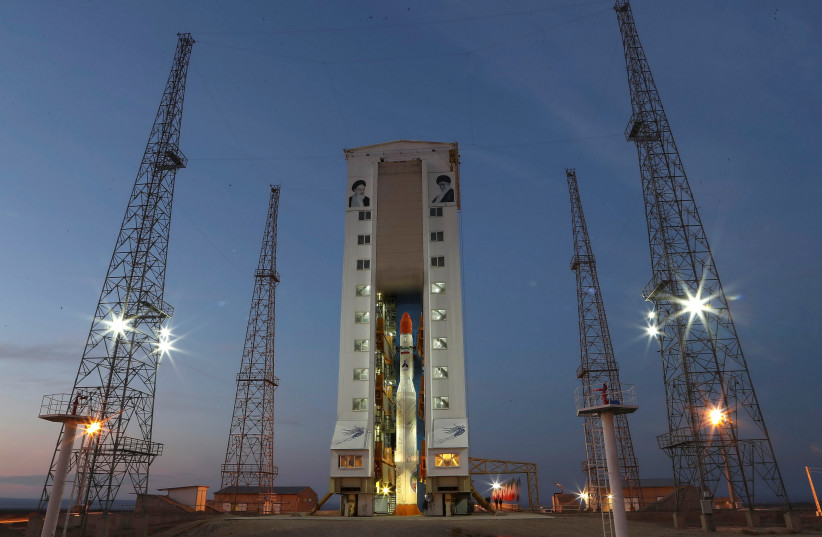
Iran launches a military satellite in April 2020 (credit: REUTERS)
However, wrapped up with agricultural and water, reports also indicated that the satellites would help monitor Iran’s borders and other unspecified uses. This is the part that will cause anxiety in Jerusalem and Washington.
Will Russian assistance to Tehran make it harder to infiltrate Iran’s borders to carry out crucial operations to hold off its nuclear weapons program, and its efforts to carry out terror operations against Israel, the US and moderate Sunni states?
And will Russian help lead to a jump forward in the Islamic Republic’s independent satellite launch capabilities which will transfer to stronger capabilities for delivering future potential nuclear weapons?
In mid-June, the Washington Post reported that Russia was preparing to provide Iran with an advanced satellite that would enable it to track potential military targets across the Middle East, sending shudders through much of the region.
According to the report, Moscow would launch and then deliver control of a Kanopus-V satellite equipped with a high-resolution camera to Iran within months.
Anonymous Israeli officials told KAN that they were concerned by the report, while US officials in public did little to dispel the mystery surrounding the issue. In addition, officials were worried that Tehran might acquire photos and pass them on to proxies like Hezbollah and Hamas to increase the accuracy and effectiveness of their destructive power.
Putin’s response
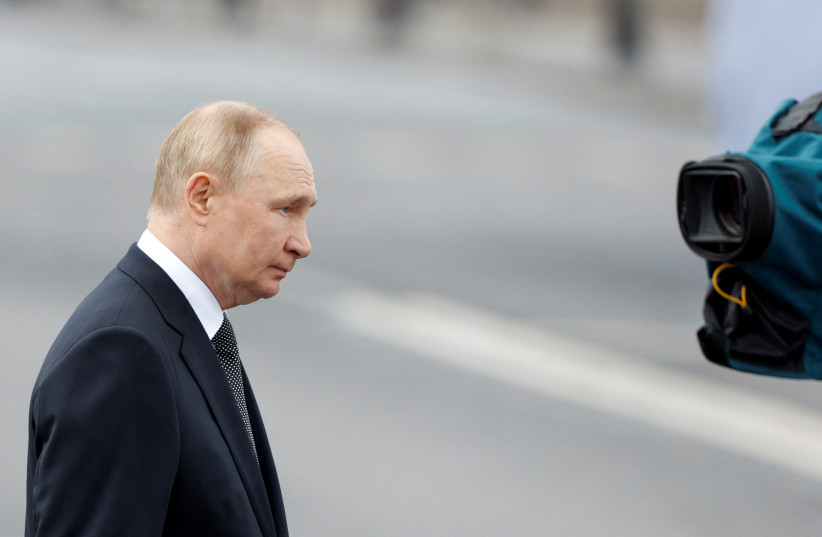
At the time, Russian President Vladimir Putin strongly denied the report, calling it “garbage,” which does distinguish the report from the current developments that Moscow is proudly trumpeting.
On the other hand, the Russian leader rarely admits actions his country takes that much of the world would disapprove of, and possibly the latest announcements are a subtle cover for more insidious goals.
The mid-June report had said that the new satellite would allow “continuous monitoring of facilities ranging from Persian Gulf oil refineries and Israeli military bases to Iraqi barracks that house US troops,” citing three unnamed sources – a current and a former US official and a senior Middle Eastern government official briefed on the sale.
Though the Kanopus-V is marketed for civilian use, seemingly similar to the announcement of next week’s satellite launch, Iran’s Islamic Revolutionary Guards Corps officials had reportedly made several trips to Russia since 2018 to help negotiate the agreement.
Further, the report said that Russian experts traveled to Iran this spring to train crews who would operate the satellite from a newly built facility near Karaj west of Tehran.
The mid-June satellite report said it would feature Russian hardware, “including a camera with a resolution of 1.2 meters — a significant improvement over Iran’s current capabilities, though still far short of the quality achieved” by US or Israeli spy satellites.
The IRGC announced in April 2020 that it had successfully launched the country’s first military satellite into orbit.
US involvement
This led former US Secretary of State Mike Pompeo to demand consequences before the UN Security Council.
In a press briefing in June, US State Department Deputy Spokeswoman Jalina Porter responded to a question about the Russian-Iranian satellite cooperation with a non-answer, injecting more mystery into the issue.
“We’re aware of…these media reports about Russia potentially providing Iran with an advanced satellite system. Outside of that, we have nothing further to announce at this point. We don’t have any responses or any potential responses,” said Porter, killing the conversation.
The US has not yet commented on the latest Russian-Iranian satellite cooperation.
“We’re aware of…these media reports about Russia potentially providing Iran with an advanced satellite system. Outside of that, we have nothing further to announce at this point.”
Jalina Porter
Despite all of the above concerns, the Israel Space program chief and Maj. Gen. (res.) Yitzhak Ben Israel poured cold water on concerns from the mid-June report.
“Who knows if it is true,” he said, noting that Putin’s denial could be more authentic on this issue, which involves a Russian state body, than when the Russian president plays word games about whether his government or state-sponsored private hackers attack the US with cyber tools.
But even if the report is true, Ben Israel said that it lacks any strategic significance. To an average reader, a satellite that can get pictures within 1.2 meters from the ground sounds phenomenal.
However, he said that currently Iran and any other country can buy satellite photos from the commercial sector at a mere $10,000 per shot which is three times better.
The Israeli space chief added that purchasing a satellite from Russia could signal that Tehran is internalizing and admitting that it will take a long time, much longer than expected, before its home-grown satellite industry matures.
It is far from clear what Russia’s latest foray into assisting the Islamic Republic in the satellite arena will mean for the intelligence battle and its nuclear progress.
But despite Ben Israel’s reassurances, there is no question that the cooperation is disconcerting and that US and Israeli intelligence will be working hard to keep tabs on the issue.