Hezbollah demands Israel ‘return’ Rosh Hanikra tunnel to Lebanon

Demand seen as attempt to scuttle efforts to resolve Israel-Lebanon maritime border.

By David Hellerman, World Israel News

Hezbollah is now demanding that Israel “return” to Lebanon a Rosh HaNikra railway tunnel that has been closed since 1948.

“Our sovereign rights lie in our decision to restore every inch of the occupied tunnel, without compromising our decision to restore our land and sea borders as well,” said Ali Hamieh, the Hezbollah-allied caretaker Minister of Public Works on Monday.

The 695-meter-long Rosh HaNikra Tunnel was dug by the British army between 1942-1944 as part of Haifa-Beirut-Tripoli line to speed up military traffic during World War II.

Lebanon calls it the Naqoura Tunnel after a nearby Lebanese town.

In February 1948, the Palmach blew up a nearby rail bridge to prevent Arab weapons shipments from Lebanon. Rebuilding the bridge was considered too expensive and irrelevant in the absence of peace with Lebanon, so Israel filled the tunnel with concrete.

Hamieh associated the tunnel with Shebaa Farms, the Kfarshuba Hills and part of Israel’s offshore gas fields, according to Asharq al-Awsat, a London-based Arab daily.

Hezbollah’s demand for the tunnel is viewed as an attempt to scuttle efforts to resolve the maritime border.

The U.S. has been mediating talks to resolve the maritime border. Lebanon recently softened its demands on the Karish gas field, which lies in Israeli waters.

However, Hezbollah sent a number of aerial drones towards that gas field in July in what appeared to be a show of force. The IDF downed the drones.


Comments come after a senior adviser to Iranian Supreme Leader Ayatollah Ali Khamenei said Iran is technically capable of making a nuclear bomb.

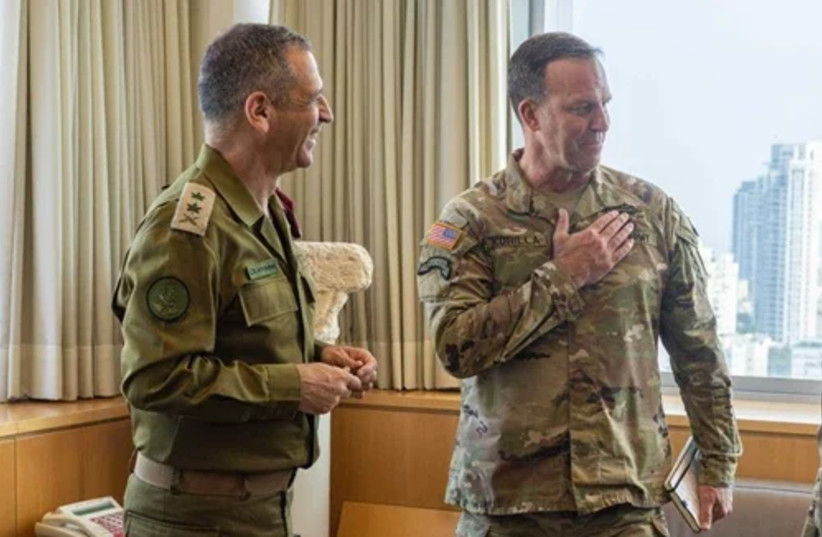
  IDF Chief of Staff (Lt.-Gen.) Aviv Kohavi with US CENTCOM general Erik Kurilla. (photo credit: IDF SPOKESPERSON UNIT)
IDF Chief of Staff (Lt.-Gen.) Aviv Kohavi with US CENTCOM general Erik Kurilla.
(photo credit: IDF SPOKESPERSON UNIT)

In a clear warning to Iran, IDF Chief of Staff Lt.-Gen. Aviv Kohavi said that the military is preparing for the possibility that it would have to act against Iran’s nuclear program.

“Preparing the home front for war is a task that must be accelerated in the coming years, especially in light of the possibility that we will be required to act against the nuclear threat,” he said Sunday evening during the change of command of the Homefront Command.

“The IDF continues to prepare vigorously for an attack on Iran and must prepare for any development and any scenario. Preparing a military option against the Iranian nuclear program is a moral obligation and a national security order.”

According to Kohavi, the plans for military action against the program “are at the center of preparations in the IDF and include a variety of operational plans, the allocation of many resources, the acquisition of appropriate weapons, intelligence and training.”

“The IDF continues to prepare vigorously for an attack on Iran and must prepare for any development and any scenario. Preparing a military option against the Iranian nuclear program is a moral obligation and a national security order.”

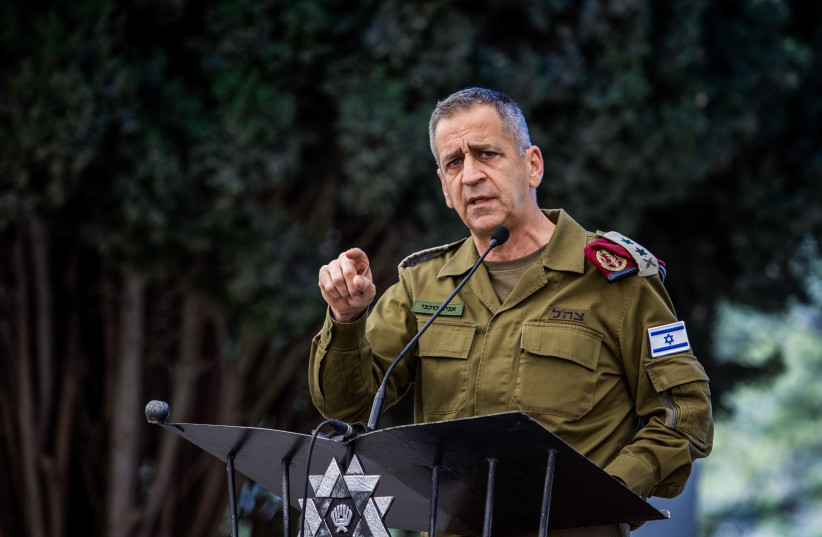
Aviv Kohavi

His comments come after a senior adviser to Iranian Supreme Leader Ayatollah Ali Khamenei told Qatar’s Al Jazeera TV that the Islamic Republic is technically capable of making a nuclear bomb but has not decided whether to build one.

 IDF Chief of Staff Aviv Kohavi attends a ceremony of the Aharai! Youth Program, at Mount Herzl in Jerusalem on June 17, 2022 (credit: FLASH90)IDF Chief of Staff Aviv Kohavi attends a ceremony of the Aharai! Youth Program, at Mount Herzl in Jerusalem on June 17, 2022 (credit: FLASH90)

Kamal Kharrazi spoke a day after US President Joe Biden ended his four-day trip to Israel and Saudi Arabia, vowing to stop Iran from “acquiring a nuclear weapon.”

Kharrazi’s comments were a rare suggestion that Iran might have an interest in nuclear weapons, which it has long denied seeking.

“In a few days we were able to enrich uranium up to 60% and we can easily produce 90% enriched uranium…. Iran has the technical means to produce a nuclear bomb but there has been no decision by Iran to build one,” Kharrazi said.

Iran is already enriching to up to 60%, far above a cap of 3.67% under Tehran’s 2015 nuclear deal with world powers. Uranium enriched to 90% is suitable for a nuclear bomb.

Background

In 2018, former US President Donald Trump ditched the nuclear pact, under which Iran curbed its uranium enrichment work, a potential pathway to nuclear weapons, in exchange for relief from economic sanctions.

In reaction to Washington’s withdrawal and its reimposition of harsh sanctions, Tehran started violating the pact’s nuclear restrictions.

Last year, Iran’s intelligence minister said Western pressure could push Tehran to seek nuclear weapons, the development of which Khamenei banned in a fatwa, or religious decree, in the early 2000s.

Iran says it is refining uranium only for civilian energy uses and has said its breaches of the international deal are reversible if the United States lifts sanctions and rejoins the agreement.

The broad outline of a revived deal was essentially agreed to in March after 11 months of indirect talks between Tehran and the Biden administration in Vienna.

Talks then broke down over obstacles including Tehran’s demand that Washington should give guarantees that no US president will abandon the deal, the way Trump did.

Biden cannot promise this because the nuclear deal is a non-binding political understanding, not a legally binding treaty.

“The United States has not provided guarantees on preserving the nuclear deal and this ruins the possibility of any agreement,” Kharrazi said.

Israel, which Iran does not recognize, has threatened to attack Iranian nuclear sites if diplomacy fails to contain Tehran’s nuclear ambitions.

Kohavi has made it clear that he views the JCPOA as dangerous, saying publicly that he has directed the IDF to prepare fresh operational plans to strike Iran in order to stop its nuclear program if necessary.

Kharrazi said Iran would never negotiate its ballistic missile program and regional policy, as demanded by the West and its allies in the Middle East.

“Any targeting of our security from neighboring countries will be met with a direct response to these countries and Israel.”


The goal of the July 18-19 meeting in Iran is ostensibly part of the Astana process relating to Syria. This could have big ramifications for Syria, but it could also be another mediocre meeting.

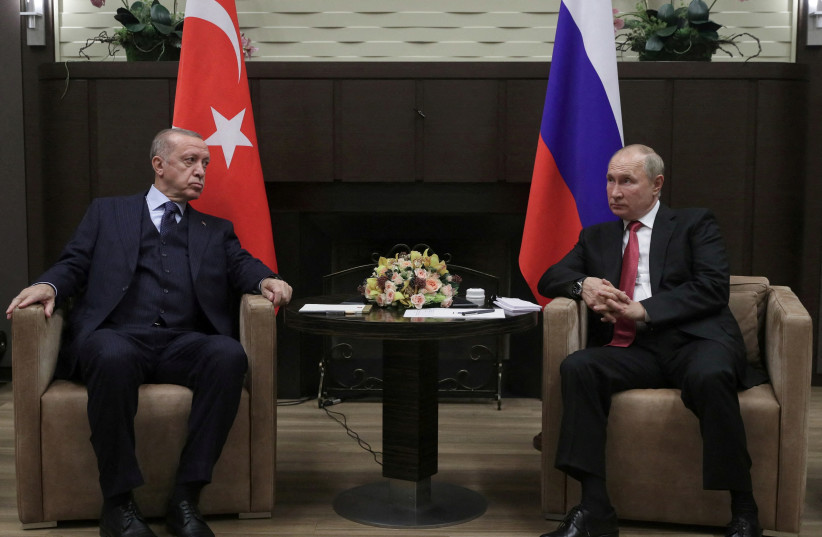
 Russian president Vladimir Putin attends a meeting with Turkish President Tayyip Erdogan in Sochi, Russia September 29, 2021 (photo credit: VIA REUTERS)
Russian president Vladimir Putin attends a meeting with Turkish President Tayyip Erdogan in Sochi, Russia September 29, 2021
(photo credit: VIA REUTERS)

A new era of Turkey-Iran-Russia relations could be forming. Turkish President Recep Tayyip Erdogan is going to meet his Iranian and Russian counterparts this week. This comes in the wake of US President Joe Biden visiting the region. The goal of the July 18-19 meeting in Iran is ostensibly part of the Astana process relating to Syria. This could have big ramifications for Syria, but it could also be another mediocre meeting. On what does the meeting hinge? What matters?

Syria is currently divided. The Russian and Iranian-backed Syrian regime controls the major cities, while Turkey controls northwest Syria and the US-backed Syrian Democratic Forces control eastern Syria.

Russia’s goal in Syria is a stable Syrian regime. Iran’s goal is to use Syria as a base for threats against Israel and also to traffic weapons to Hezbollah in Lebanon. Turkey’s goal in Syria is to use it as a dumping ground for Syrian refugee pushbacks, also to cultivate pro-Turkish Syrian rebel groups; and to remove Kurds from border areas. The US goal in Syria is ostensibly to defeat ISIS, but ISIS was mostly defeated in 2019, and the US overall policy remains unclear.

There are other issues afoot.

Russia is at war in Ukraine and Iran wants to take advantage of Russia’s distraction to expand its influence in Syria. Iran also uses Syria to traffic drugs, mostly captagon pills, a traffic that threatens Jordan and the Gulf. Turkey wants to begin a new invasion, targeting Kurds in Manbij and Tel Rifaat and other areas. Meanwhile, the US recently used a drone to kill another ISIS leader near the Turkish border between Idlib and Afrin. In the wake of the Biden visit, it’s important that Iran and Turkey feel they are getting press and high-level attention from Putin.

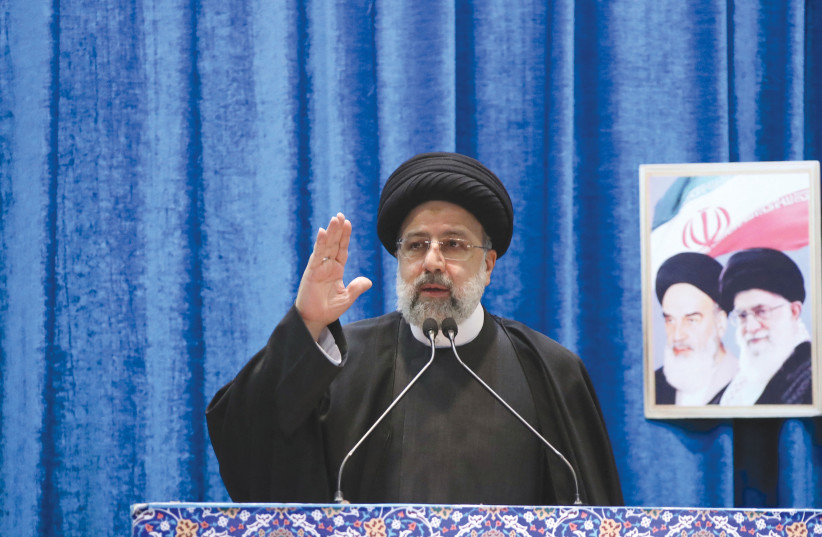
Iranian President Ebrahim Raisi speaks in Tehran on the occasion of the 43rd anniversary of the Islamic Revolution, in February. Built into the DNA of the Iranian Revolution from its start in 1979, is the aim of destroying Israel.  (credit: PRESIDENT WEBSITE/WANA (WEST ASIA NEWS AGENCY)/HANDOUT VIA REUTERS)Iranian President Ebrahim Raisi speaks in Tehran on the occasion of the 43rd anniversary of the Islamic Revolution, in February. Built into the DNA of the Iranian Revolution from its start in 1979, is the aim of destroying Israel. (credit: PRESIDENT WEBSITE/WANA (WEST ASIA NEWS AGENCY)/HANDOUT VIA REUTERS)

“As part of the visit, the seventh meeting of the top-level Turkish-Iranian Cooperation Council will be held on July 19. It is planned to approve steps on the further development of bilateral relations. Along with bilateral matters, it is also planned to discuss regional and global issues.”

Turkish presidential office

The Turkish presidential office released a long statement on the meeting: “As part of the visit, the seventh meeting of the top-level Turkish-Iranian Cooperation Council will be held on July 19. It is planned to approve steps on the further development of bilateral relations. Along with bilateral matters, it is also planned to discuss regional and global issues.”

The Turkish presidential office also said, “on the same day, our president will take part in the seventh Astana-format summit chaired by the Iranian president [Ebrahim Raisi] and attended by Russian President Vladimir Putin. During the summit, the sides will hold political consultations on the situation in Syria, the fight against terrorist organizations posing threats to the region’s security, such as the Kurdistan Workers’ Party and Islamic State (outlawed in Russia), will discuss efforts geared toward reaching a political solution, the humanitarian situation, the problem of voluntary return of Syrian refugees.”

A meeting between Putin and Erdogan, alone, is planned. Russian media didn’t have much to say on the trip. Iranian media noted “all three countries have interests in Syria; Iran and Russia support the legitimate government of Damascus and Turkey is one of the opponents of Bashar Assad.” Other reports say that although Turkey wants to launch a new offensive, Iran opposes this operation. “Tuesday’s meeting will also allow Erdogan to hold his first face-to-face meeting with the Russian president since the start of Moscow’s special military operation in Ukraine,” Iran’s Fars News noted. AFP also reported on the upcoming meeting, noting that Ankara wants a green light for its operation.

Turkey’s Anadolu media said that all aspects of the Turkey-Iran “relations and potential steps that would enhance the bilateral cooperation will be discussed during the Council Meeting, which will be held with the participation of relevant ministers.” Among the issues Turkey is discussing is not only its demand for a new operation against “terror groups” but also a desire to look at “the humanitarian situation and the voluntarily return of Syrians to their homes will be on the agenda of the summit,” it added.

Overallm big questions hang over this meeting. If Russia and Iran approve a new Turkish offensive, then the US will be in a complex position. The US backs the SDF but Turkey seeks to target areas influenced by the SDF but not areas the US controls. The US left parts of Syria in 2019 at the behest of Turkey when Turkey invaded a border area. Ankara has ethnically cleansed Kurds, Yazidis. And others from Afrin and Sere Kaniye. The US has sanctioned one of the Syrian extremist groups backed by Ankara. With the US concentrating on Ukraine, it is unclear if Washington will be able to deal with a new crisis in Syria.